Kirjojen hintavertailu. Mukana 12 592 952 kirjaa ja 12 kauppaa.

Kirjailija

Jörg Rüpke

Kirjat ja teokset yhdessä paikassa: 25 kirjaa, julkaisuja vuosilta 1995-2026, suosituimpien joukossa Religion and its History. Vertaile teosten hintoja ja tarkista saatavuus suomalaisista kirjakaupoista.

Mukana myös kirjoitusasut: Jorg Rupke

25 kirjaa

Kirjojen julkaisuhaarukka 1995-2026.

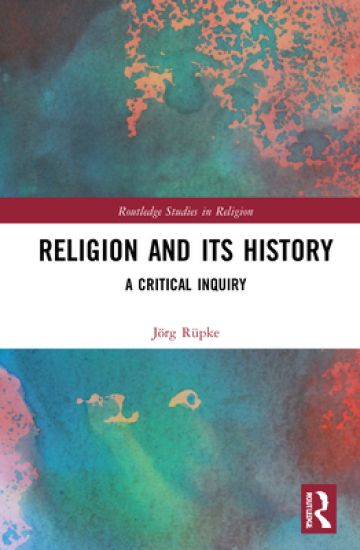
Religion and its History

Religion and its History

Jörg Rüpke

TAYLOR FRANCIS LTD
2023
nidottu
Religion and its History offers a reflection of our operative concept of religion and religions, developing a set of approaches that bridge the widely assumed gulf between analysing present religion and doing history of religion. Religious Studies have adapted a wide range of methodologies from sociological tool kits to insights and concepts from disciplines of social and cultural studies. Their massive historical claims, which typically idealize and reify communities and traditions, and build normative claims thereupon, lack a critical engagement on the part of the researchers.This book radically rethinks and critically engages with these biases. It does so by offering neither an abridged global history of religion nor a small handbook of methodology. Instead, this book presents concepts and methods that allow the analysis of contemporary and past religious practices, ideas, and institutions within a shared framework.
Pantheon

Pantheon

Jörg Rüpke

Princeton University Press
2020
pokkari
From one of the world's leading authorities on the subject, an innovative and comprehensive account of religion in the ancient Roman and Mediterranean worldIn this ambitious and authoritative book, Jörg Rüpke provides a comprehensive and strikingly original narrative history of ancient Roman and Mediterranean religion over more than a millennium—from the late Bronze Age through the Roman imperial period and up to late antiquity. While focused primarily on the city of Rome, Pantheon fully integrates the many religious traditions found in the Mediterranean world, including Judaism and Christianity. This generously illustrated book is also distinguished by its unique emphasis on lived religion, a perspective that stresses how individuals’ experiences and practices transform religion into something different from its official form. The result is a radically new picture of Roman religion and of a crucial period in Western religion—one that influenced Judaism, Christianity, Islam, and even the modern idea of religion itself.
Pantheon

Pantheon

Jörg Rüpke

PRINCETON UNIVERSITY PRESS
2018
sidottu
From one of the world's leading authorities on the subject, an innovative and comprehensive account of religion in the ancient Roman and Mediterranean world In this ambitious and authoritative book, Jorg Rupke provides a comprehensive and strikingly original narrative history of ancient Roman and Mediterranean religion over more than a millennium--from the late Bronze Age through the Roman imperial period and up to full-fledged Christianization. While focused primarily on the city of Rome, Pantheon fully integrates the many religious traditions found in the Mediterranean world, including Judaism and Christianity. This generously illustrated book is also distinguished by its unique emphasis on "lived religion," a perspective that stresses how individuals' experiences and practices transform religion into something different from its official form. The result is a radically new picture of both Roman religion and a crucial period in Western religion--one that influenced Judaism, Christianity, Islam, and even the modern idea of "religion" itself. Drawing on a vast range of literary and archaeological evidence, Pantheon shows how Roman religion shaped and was shaped by its changing historical contexts from the ninth century BCE to the fourth century CE. Because religion was not a distinct sphere in the Roman world, the book treats religion as inseparable from developments in political, social, economic, and cultural life. The narrative emphasizes the diversity of Roman religion, offers a new view of central concepts such as "temple," "altar," and "votive," reassesses the gendering of religious practices, and much more. Throughout, Pantheon draws on the insights of modern religious studies, but without "modernizing" ancient religion. With its unprecedented scope and innovative approach, Pantheon is anunparalleled account of ancient Roman and Mediterranean religion.
Cities of Gods

Cities of Gods

Jörg Rüpke

PRINCETON UNIVERSITY PRESS
2026
sidottu
How cities and religions have shaped each other through history In Cities of Gods, Jörg Rüpke offers an entirely new vision of the history of religion—one in which religion has shaped cities and cities have shaped religion. Rüpke shows how religious actions and ideas have produced cities since urbanization began some 6,000 years ago—and how cities have, in turn, changed religious practices. Cities have created new mass rituals that instill the idea of an encompassing community; priestly hierarchies, religious organizations, and globalized religious traditions follow. Urban religion, Rüpke argues, helps people in cities build a world and an identity that make living in a risky and powerful space more bearable. Rüpke explores early processes of urbanization in Mesopotamia and Asia, showing how people’s willingness to live differently creates urban space. In examining the dynamic relationship between urban and religious change, Rüpke considers the differences and commonalties of cities including Uruk, Jerusalem, Vanarasi, Chang’an, Cairo, Lhasa, and Kyoto. The construction of monuments, the embellishment and appropriation of beliefs and rituals, the inclusion of ancestors and deities in social life: each offers a different lens for a history of the city that is also a history of religion. Much of what we consider characteristic of religion and religious practices comes not from the lone cry of a prophet or the prayer of a saint but from an urban religion built from the solidarity of people living in cities.
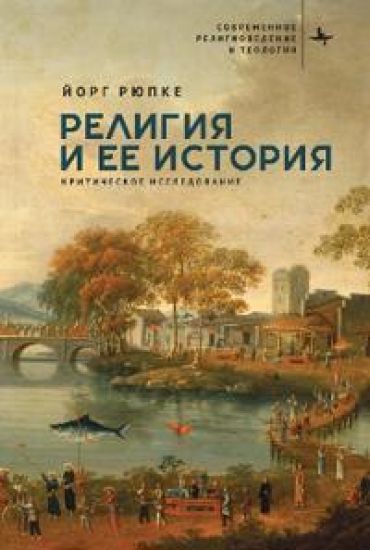
Religion and its History

Religion and its History

Jörg Rüpke

Academic Studies Press
2025
sidottu
?????????????? ???????????? ??????? ?????? ??????? ???????? — ?? ???????????????? ??????? ?????????? ?? ???? ? ????????? ?? ????????????? ? ????????????. ?? ?????? ????? ?????, ???????????????? ??????? ?????? ?????????????? ????????? ???????? ? ???????????? — ??? ????????????? (????? ???? ???? ? ???????????????? ?????? ? ???????? ??? ? ????????? ????????), ??? ? ????????????????? (????? ?? ???????????? ???????? ???????????? ????????). ???????????? ????? ???????? ?????????? ????????????? ? ?????????? ??????????? ??? ?????????????. ????? ?? ??????? ?? ?????????? ???????????????? ?????????????, ?? ????????????????? ???????????. ?????? ????? ?? ?????????? ??????????? ? ??????, ??????????? ????????????? ??????????? ? ??????? ??????????? ????????, ???? ? ????????? ? ?????? ????? ???????????????? ?????????.
Ritual and Resonance

Ritual and Resonance

Jorg Rupke

Kohlhammer
2025
nidottu
Ritual and ritualization have become central concepts in cultural and social studies. This book shows why it is productive neither to equate ritual and religion, nor to simply abandon the concept of religion. Conceiving of religion as communicative action allows ritual to be understood as a form of listening to the world and as a form of changing the world. The book's primary intention is not to make a contribution to theory, but rather to demonstrate - through case studies for representative fields of a wide variety of rituals - the fruitfulness of an approach that links elements of classical theories of ritual to more recent concepts of religion and to the basic idea of the mutual constitution of subjects and objects.
Religion and its History

Religion and its History

Jörg Rüpke

Routledge
2021
sidottu
Religion and its History offers a reflection of our operative concept of religion and religions, developing a set of approaches that bridge the widely assumed gulf between analysing present religion and doing history of religion. Religious Studies have adapted a wide range of methodologies from sociological tool kits to insights and concepts from disciplines of social and cultural studies. Their massive historical claims, which typically idealize and reify communities and traditions, and build normative claims thereupon, lack a critical engagement on the part of the researchers.This book radically rethinks and critically engages with these biases. It does so by offering neither an abridged global history of religion nor a small handbook of methodology. Instead, this book presents concepts and methods that allow the analysis of contemporary and past religious practices, ideas, and institutions within a shared framework.
Urban Religion

Urban Religion

Jorg Rupke

De Gruyter
2020
isokokoinen pokkari
So far religion has been seen as cause for dramatic developments in the history of cities, it has contributed to the monumentalisation of centres and or has given importance to ex-centric places. Very recently, anthropologists have been discovering religion in the contemporary global city. But still awaiting historical investigation is the specific urban character of religious ideas, practices and institutions and the role of urban space shaping this very ‘religion’ in the course of history. The time-span from the Hellenistic age to Late Antiquity was crucial in the establishment of concepts and institutions of ‘religion’ and witnessed extended waves of urbanisation, Rome being central to this. In addressing this problem, this book fills a significant gap in the scholarship on urban religion across time. Taking seriously the proposition that space is condition, medium and outcome of social relations, the development of ‘urban religion’ in lived urban space and urban culture or urbanity offers a lens onto processes of religious change that have been neglected for the history of religion and for the study of urbanism. The key thesis is that city-space engineered the major changes that revolutionised religions. »This stimulating book makes use of archaeology and history to address religion as an essential component of urban life in both the past and the present. -With a strong basis in the ancient Mediterranean as well as an insightful view of modern urban life, Rüpke emphasizes that the practice and performance of religion at the everyday level is as essential in the creation of an urban ethos as the grand temples and institutions promulgated by the elite.« Monica L. Smith, author of Cities: The First 6,000 Years »Jörg Rüpke offers a characteristically original and learned series of reflections on some of the many ways in which the history of religions and the history of cities might be entangled. Urban Religion offers no single overarching thesis, but it is consistently thought-provoking and suggests many intriguing lines of investigation for the future.« Greg Woolf, Institute of Classical Studies, London
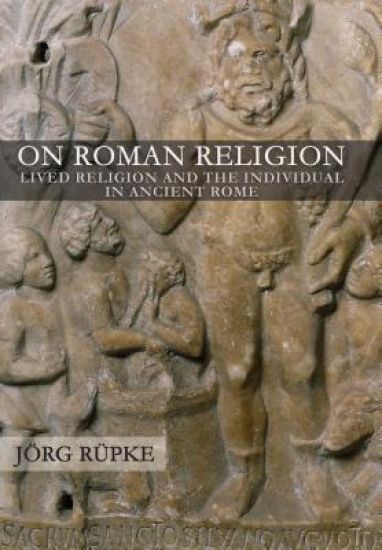
On Roman Religion

On Roman Religion

Jörg Rüpke

Cornell University Press
2019
pokkari
Provocative reading for anyone interested in Roman culture in the late Republic and early Empire.â• Religious Studies Review Was religious practice in ancient Rome cultic and hostile to individual expression? Or was there, rather, considerable latitude for individual initiative and creativity? Jörg Rüpke, one of the world’s leading authorities on Roman religion, demonstrates in his new book that it was a lived religion with individual appropriations evident at the heart of such rituals as praying, dedicating, making vows, and reading. On Roman Religion definitively dismantles previous approaches that depicted religious practice as uniform and static. Juxtaposing very different, strategic, and even subversive forms of individuality with traditions, their normative claims, and their institutional protections, Rüpke highlights the dynamic character of Rome’s religious institutions and traditions. In Rüpke’s view, lived ancient religion is as much about variations or even outright deviance as it is about attempts and failures to establish or change rules and roles and to communicate them via priesthoods, practices related to images or classified as magic, and literary practices. Rüpke analyzes observations of religious experience by contemporary authors including Propertius, Ovid, and the author of the "Shepherd of Hermas." These authors, in very different ways, reflect on individual appropriation of religion among their contemporaries, and they offer these reflections to their readership or audiences. Rüpke also concentrates on the ways in which literary texts and inscriptions informed the practice of rituals.
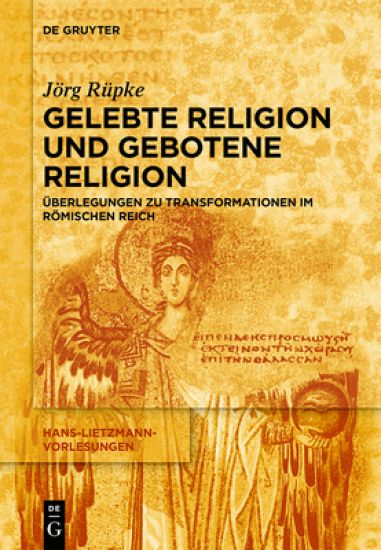
Religiöse Transformationen im Römischen Reich

Religiöse Transformationen im Römischen Reich

Jörg Rüpke

De Gruyter
2018
isokokoinen pokkari
Die römische Kaiserzeit stellt insgesamt eine Epoche dar, deren religiöse Transformationen die nachantike mediterrane, europäische und westasiatische Religionsgeschichte geprägt haben. Trotz oder gerade wegen der Fülle der Details, die wir aus dieser Epoche kennen, bleibt der Versuch, ein Modell für die Beschreibung oder gar Erklärung dieser Veränderungen zu entwerfen, eine große Herausforderung.Jörg Rüpke nähert sich einem solchen Modell von zwei Seiten: Zum einen legt er für die Beschreibung den Interpretationsrahmen einer „gelebten antiken Religion“ zu Grunde. Der individuellen Aneignung religiöser Traditionen und der daraus resultierenden Dynamik wird hohe Aufmerksamkeit eingeräumt, Gruppenbildungen werden erst als Folgeerscheinungen analysiert. Zum anderen wird der große politische Raum des Imperium selbst als struktureller Rahmen individuellen Handelns interpretiert, in dem neue Normen religiösen Handelns entwickelt werden.
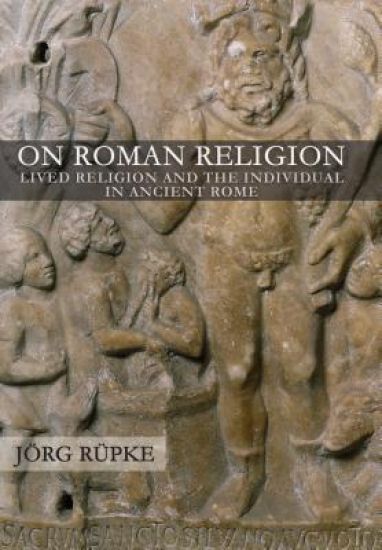
On Roman Religion

On Roman Religion

Jörg Rüpke

Cornell University Press
2016
sidottu
Provocative reading for anyone interested in Roman culture in the late Republic and early Empire.â• Religious Studies Review Was religious practice in ancient Rome cultic and hostile to individual expression? Or was there, rather, considerable latitude for individual initiative and creativity? Jörg Rüpke, one of the world’s leading authorities on Roman religion, demonstrates in his new book that it was a lived religion with individual appropriations evident at the heart of such rituals as praying, dedicating, making vows, and reading. On Roman Religion definitively dismantles previous approaches that depicted religious practice as uniform and static. Juxtaposing very different, strategic, and even subversive forms of individuality with traditions, their normative claims, and their institutional protections, Rüpke highlights the dynamic character of Rome’s religious institutions and traditions. In Rüpke’s view, lived ancient religion is as much about variations or even outright deviance as it is about attempts and failures to establish or change rules and roles and to communicate them via priesthoods, practices related to images or classified as magic, and literary practices. Rüpke analyzes observations of religious experience by contemporary authors including Propertius, Ovid, and the author of the "Shepherd of Hermas." These authors, in very different ways, reflect on individual appropriation of religion among their contemporaries, and they offer these reflections to their readership or audiences. Rüpke also concentrates on the ways in which literary texts and inscriptions informed the practice of rituals.
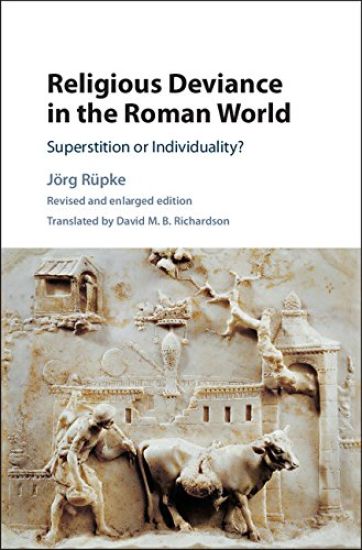
Religious Deviance in the Roman World

Religious Deviance in the Roman World

Jörg Rüpke

Cambridge University Press
2016
sidottu
Religious individuality is not restricted to modernity. This book offers a new reading of the ancient sources in order to find indications for the spectrum of religious practices and intensified forms of such practices only occasionally denounced as 'superstition'. Authors from Cicero in the first century BC to the law codes of the fourth century AD share the assumption that authentic and binding communication between individuals and gods is possible and widespread, even if problematic in the case of divination or the confrontation with images of the divine. A change in practices and assumptions throughout the imperial period becomes visible. It might be characterised as 'individualisation' and informed the Roman law of religions. The basic constellation - to give freedom of religion and to regulate religion at the same time - resonates even into modern bodies of law and is important for juridical conflicts today.
From Jupiter to Christ

From Jupiter to Christ

Jörg Rüpke

Oxford University Press
2014
sidottu
The history of Roman imperial religion is of fundamental importance to the history of religion in Europe. Emerging from a decade of research, From Jupiter to Christ demonstrates that the decisive change within the Roman imperial period was not a growing number of religions or changes in their ranking and success, but a modification of the idea of 'religion' and a change in the social place of religious practices and beliefs. Religion is shown to be transformed from a medium serving the individual necessities - dealing with human contingencies like sickness, insecurity, and death - and a medium serving the public formation of political identity, into an encompassing system of ways of life, group identities, and political legitimation. Instead of offering an encyclopaedic presentation of religious beliefs, symbols, and practices throughout the period, the volume thematically presents the media that manifested and diffused religion (institutions, texts, and law), and analyses representative cases. It asks how religion changed in processes of diffusion and immigration, how fast (or how slow) practices and institutions were appropriated and modified, and reveals how these changes made Roman religion 'exportable', creating those forms of intellectualisation and enscripturation which made religion an autonomous area, different from other social fields.
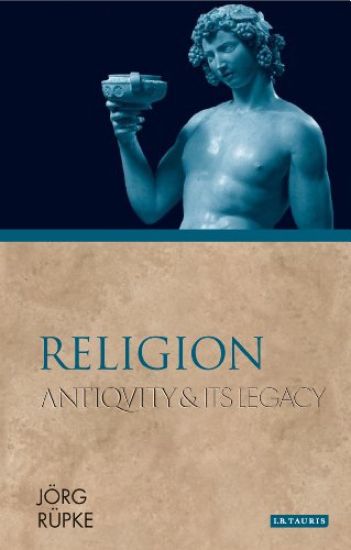
Religion

Religion

Jörg Rüpke

I.B. Tauris
2013
nidottu
What is a religion? What triggered the spontaneous development of distinct religions throughout the ancient world? How do religions evoke the ultimate realities they claim to address? Such questions are as evergreen as belief itself. The Hellenistic and Roman worlds were a fertile seedbed of the monotheistic faiths that dominate today's western image of religion, as well as many global conflicts. In this concise and elegant overview, Jorg Rupke addresses the similarities and differences of religions in antiquity, tracing their sometimes complex lineage into modern systems of belief. Greek and Roman religion is discussed not in isolation, but in the broader context of western Asia and Egypt. The author also addresses developments relating to early Islam on the south-eastern margins of the Byzantine Empire. Examining such topics as the functions of priests and religious functionaries; religious individualism; the relationship between religion and political identity; the acceptance of the pagan Julian calendar by Christians; and contrasting ancient and modern understandings of divination, Rupke shows that study of pre-modern culture enables us more daringly to explore the contemporary religious world.
Religion

Religion

Jörg Rüpke

I.B. Tauris
2013
sidottu
What is a religion? What triggered the spontaneous development of distinct religions throughout the ancient world? How do religions evoke the ultimate realities they claim to address? Such questions are as evergreen as belief itself. The Hellenistic and Roman worlds were a fertile seedbed of the monotheistic faiths that dominate today's western image of religion, as well as many global conflicts. In this concise and elegant overview, Jorg Rupke addresses the similarities and differences of religions in antiquity, tracing their sometimes complex lineage into modern systems of belief. Greek and Roman religion is discussed not in isolation, but in the broader context of western Asia and Egypt. The author also addresses developments relating to early Islam on the south-eastern margins of the Byzantine Empire. Examining such topics as the functions of priests and religious functionaries; religious individualism; the relationship between religion and political identity; the acceptance of the pagan Julian calendar by Christians; and contrasting ancient and modern understandings of divination, Rupke shows that study of pre-modern culture enables us more daringly to explore the contemporary religious world.
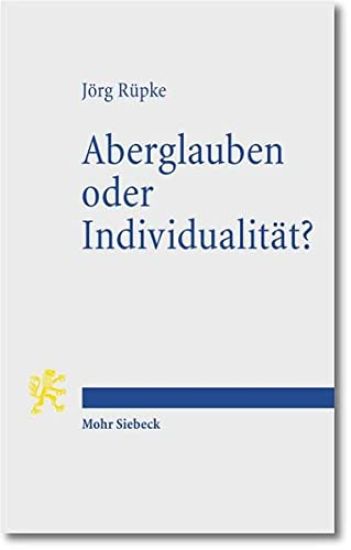
Aberglauben oder Individualität?

Aberglauben oder Individualität?

Jörg Rüpke

Mohr Siebeck
2011
nidottu
Die jüngeren Untersuchungen zur Devianz in der griechisch-römischen Antike haben sich auf den polemischen Gebrauch des Wortes superstitio konzentriert, das in unterschiedlichen Kontexten zur Ausgrenzung sozialer Gruppen, ethnischer Minoritäten, von Frauen oder bestimmten religiösen Praktiken verwendet wird. Jörg Rüpke unternimmt den Versuch, daraus auch Informationen über Bandbreiten und Intensivierungsformen religiöser Praktiken zu gewinnen: Was sind die Grundannahmen der normativen Äußerungen über Religion? Die Annahme authentischer und individuell verbindlicher religiöser Kommunikation von einzelnen mit Göttern ist ein von Cicero bis in die spätantiken Gesetze weithin geteilter Ausgangspunkt, der die Normierung religiösen Verhaltens vor große Schwierigkeiten stellt. Der Umgang mit religiösen Entscheidungen einzelner über Sakralisierung von Gegenständen oder Kultstätten erfordert so oft umständliche Konstruktionen, um die Verbindlichkeit für Dritte einzuschränken. Vor diesem Hintergrund ist es bezeichnend, dass sich auch die Polemiken auf bestimmte Felder konzentrieren, die sich am besten mit dem Begriff individueller "Erfahrung" beschreiben lassen. Hier spielt die Divination - der Zugang zu göttlichem Wissen oder, anders ausgedrückt, göttliche Offenbarung - eine wichtige Rolle. Große Bedeutung besitzt auch die Begegnung mit Götterbildern, zumal in Tempeln. Die Untersuchung polemischer Äußerungen eröffnet hier einen Zugang zur Konzeptualisierung religiöser Erfahrung, unbeschadet der normativen Wertung, die sich sofort anschließt.