Kirjojen hintavertailu. Mukana 12 207 402 kirjaa ja 12 kauppaa.

Kirjailija

Jorge Duany

Kirjat ja teokset yhdessä paikassa: 6 kirjaa, julkaisuja vuosilta 2009-2025, suosituimpien joukossa Puerto Rico. Vertaile teosten hintoja ja tarkista saatavuus suomalaisista kirjakaupoista.

6 kirjaa

Kirjojen julkaisuhaarukka 2009-2025.

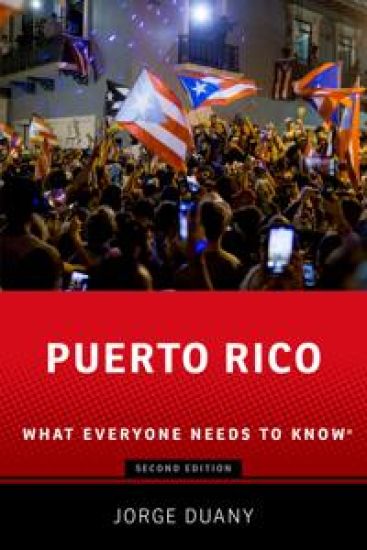
Puerto Rico

Puerto Rico

Jorge Duany

OXFORD UNIVERSITY PRESS INC
2025
nidottu
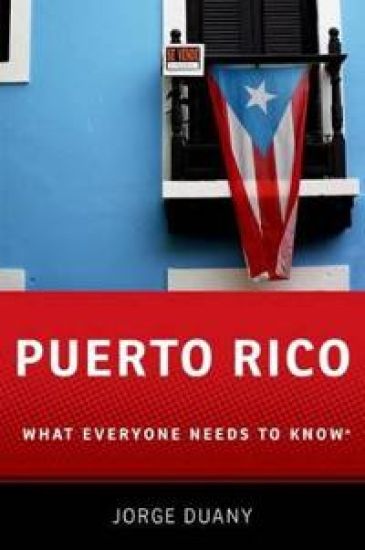
In the second edition of Puerto Rico: What Everyone Needs to Know®, Jorge Duany unravels the fascinating and turbulent past and present of an island that is politically and economically tied to the United States, yet culturally distinct. Acquired by the United States from Spain in 1898, Puerto Rico has a peculiar status among Latin American and Caribbean countries. As a US Commonwealth, the island enjoys limited autonomy over local matters, but the US has dominated it militarily, politically, and economically for much of its recent history. Though they are US citizens, Puerto Ricans do not have their own voting representatives in Congress and cannot vote in presidential elections (although they are able to participate in the primaries). In recent years, Puerto Rico's colossal public debt sparked an economic crisis that catapulted it onto the national stage and intensified the exodus to the US, bringing to the fore many of the unresolved remnants of its colonial history. In the second edition of Puerto Rico: What Everyone Needs to Know®, Jorge Duany provides a succinct, authoritative introduction to the island's rich history, culture, politics, and economy, as well as its diaspora. Beginning with a historical overview of Puerto Rico, Duany covers the Spanish colonial period (1493-1898) and the first five decades of the US colonial regime. He then delves into the demographic, economic, political, and cultural features of contemporary Puerto Rico--the inner workings of the Commonwealth government and the island's relationship to the United States. Moreover, the book explores the massive population displacement that has characterized Puerto Rico since the mid-twentieth century. New material examines the multiple issues affecting Puerto Rico in the last decade, including a prolonged recession, the devastating impact of two hurricanes, and the largest migrant wave ever recorded from Puerto Rico. While a popular tourist destination, few beyond Puerto Rico's shores are familiar with its complex history and diverse culture. Duany takes on the task of educating readers on the most important facets of the unique, troubled, but much beloved isla del encanto.
Puerto Rico

Puerto Rico

Jorge Duany

Oxford University Press Inc
2017
nidottu
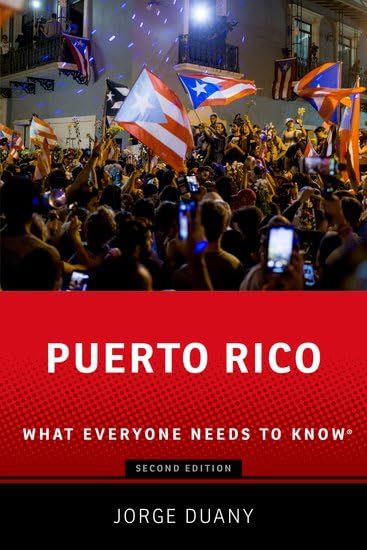
Puerto Rico, acquired by the United States from Spain in 1898, has a peculiar status among Latin American and Caribbean countries. As a Commonwealth, the island enjoys limited autonomy over local matters, but the U.S. has essentially dominated it militarily, politically, and economically for much of its history. Though they are citizens, Puerto Ricans do not have their own voting representatives in Congress and cannot vote for the president or VP. The island's status is a topic of perennial debate, evidenced by the 2012 referendum, in which a majority voted for statehood for the first time. More recently, the island's colossal public debt has sparked an economic crisis that is the focus of an upcoming Supreme Court case. The issue is intimately tied to the question of status, and consensus on the solution has proven elusive. Despite their ongoing colonial dilemma, Puerto Ricans display a strong national identity-after 118 years of occupation, the Island remains a Spanish-speaking, Afro-Hispanic-Caribbean nation. At the same time, the island's population is constantly in flux, with an estimated 60.7% of boricuas living stateside, while many others are also returning to the island. Despite the island's popularity as a tourist destination, few beyond its shores are familiar with its history. Puerto Rico: What Everyone Needs to Know provides a succinct, authoritative, and well-documented introduction to the Island's rich history, culture, politics, and economy. Jorge Duany, takes on the task of educating readers on the most important facets of the unique, troubled, but much beloved isla del encanto.
Puerto Rico

Puerto Rico

Jorge Duany

Oxford University Press Inc
2017
sidottu
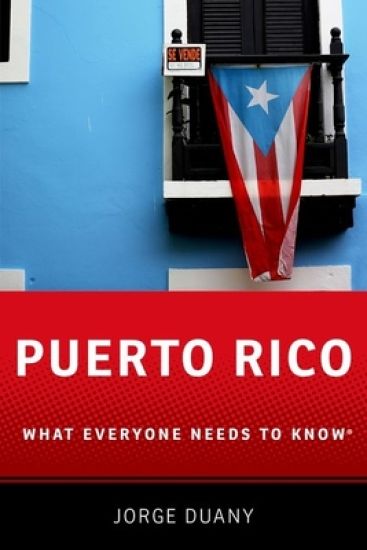
Puerto Rico, acquired by the United States from Spain in 1898, has a peculiar status among Latin American and Caribbean countries. As a Commonwealth, the island enjoys limited autonomy over local matters, but the U.S. has essentially dominated it militarily, politically, and economically for much of its history. Though they are citizens, Puerto Ricans do not have their own voting representatives in Congress and cannot vote for the president or VP. The island's status is a topic of perennial debate, evidenced by the 2012 referendum, in which a majority voted for statehood for the first time. More recently, the island's colossal public debt has sparked an economic crisis that is the focus of an upcoming Supreme Court case. The issue is intimately tied to the question of status, and consensus on the solution has proven elusive. Despite their ongoing colonial dilemma, Puerto Ricans display a strong national identity-after 118 years of occupation, the Island remains a Spanish-speaking, Afro-Hispanic-Caribbean nation. At the same time, the island's population is constantly in flux, with an estimated 60.7% of boricuas living stateside, while many others are also returning to the island. Despite the island's popularity as a tourist destination, few beyond its shores are familiar with its history. Puerto Rico: What Everyone Needs to Know provides a succinct, authoritative, and well-documented introduction to the Island's rich history, culture, politics, and economy. Jorge Duany, takes on the task of educating readers on the most important facets of the unique, troubled, but much beloved isla del encanto.
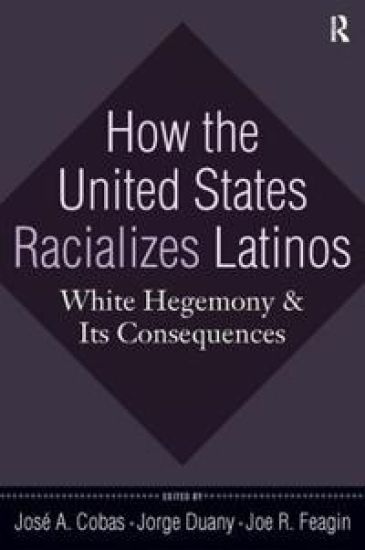
How the United States Racializes Latinos

How the United States Racializes Latinos

José A. Cobas; Jorge Duany; Joe R. Feagin

Paradigm
2009
nidottu
Mexican and Central American undocumented immigrants, as well as U.S. citizens such as Puerto Ricans and Mexican-Americans, have become a significant portion of the U.S. population. Yet the U.S. government, mainstream society, and radical activists characterize this rich diversity of peoples and cultures as one group alternatively called "Hispanics," "Latinos," or even the pejorative "Illegals." How has this racializing of populations engendered governmental policies, police profiling, economic exploitation, and even violence that afflict these groups? From a variety of settings-New York, New Jersey, Los Angeles, Central America, Cuba-this book explores this question in considering both the national and international implications of U.S. policy. Its coverage ranges from legal definitions and practices to popular stereotyping by the public and the media, covering such diverse topics as racial profiling, workplace discrimination, mob violence, treatment at border crossings, barriers to success in schools, and many more. It shows how government and social processes of racializing are too seldom understood by mainstream society, and the implication of attendant policies are sorely neglected.
How the United States Racializes Latinos

How the United States Racializes Latinos

José A. Cobas; Jorge Duany; Joe R. Feagin

Paradigm
2009
sidottu
Mexican and Central American undocumented immigrants, as well as U.S. citizens such as Puerto Ricans and Mexican-Americans, have become a significant portion of the U.S. population. Yet the U.S. government, mainstream society, and radical activists characterize this rich diversity of peoples and cultures as one group alternatively called "Hispanics," "Latinos," or even the pejorative "Illegals." How has this racializing of populations engendered governmental policies, police profiling, economic exploitation, and even violence that afflict these groups? From a variety of settings-New York, New Jersey, Los Angeles, Central America, Cuba-this book explores this question in considering both the national and international implications of U.S. policy. Its coverage ranges from legal definitions and practices to popular stereotyping by the public and the media, covering such diverse topics as racial profiling, workplace discrimination, mob violence, treatment at border crossings, barriers to success in schools, and many more. It shows how government and social processes of racializing are too seldom understood by mainstream society, and the implication of attendant policies are sorely neglected.