Kirjojen hintavertailu. Mukana 12 595 353 kirjaa ja 12 kauppaa.

Kirjailija

Jos J. Eggermont

Kirjat ja teokset yhdessä paikassa: 12 kirjaa, julkaisuja vuosilta 2007-2025, suosituimpien joukossa The Correlative Brain. Vertaile teosten hintoja ja tarkista saatavuus suomalaisista kirjakaupoista.

12 kirjaa

Kirjojen julkaisuhaarukka 2007-2025.

The Auditory Cerebellum

The Auditory Cerebellum

Jos J. Eggermont

ELSEVIER SCIENCE PUBLISHING CO INC
2025
nidottu
The Auditory Cerebellum: Function and Dysfunction focuses on the sensory and cognitive aspects of the cerebellum, with an emphasis on hearing, speech, music, speaking, and singing. This book fills the gap for information needed in audiology and auditory neuroscience, tinnitus, and developmental disorders with a strong auditory component. This book starts with a general overview on the connectivity between the cerebellum and auditory subcortical and cortical areas, including general cortical networks. There are several chapters devoted to the timing aspects of the cerebellum underlying speech and music perception as well as motor aspects in speaking and singing. Also discussed is the role of the cerebellum in hearing impairment, tinnitus, developmental disorders with a strong auditory component, including dyslexia, autism, attention deficit, and hyperactivity disorder. Dr. Jos Eggermont, a leading researcher in the field, uses a systems analysis approach that covers electrophysiology and neural imaging, both in animals and humans.
Brain Responses to Auditory Mismatch and Novelty Detection

Brain Responses to Auditory Mismatch and Novelty Detection

Jos J. Eggermont

ELSEVIER SCIENCE PUBLISHING CO INC
2023
nidottu
Brain Responses to Auditory Mismatch and Novelty Detection: Predictive Coding from Cocktail Parties to Auditory-Related Disorders provides the connections between changes in the ‘error-generating network’ and disorder-specific changes while also exploring its diagnostic properties. The book allows the reader to appreciate the outcomes of predictive coding theory in fields of auditory streaming (including the cocktail-party effect) and psychiatric disorders with an auditory component. These include mild cognitive impairment (MCI), Alzheimer’s disease, attention-deficit and hyperactivity disorder (ADHD), autism spectrum disorder (ASD), schizophrenia and the cognitive aspects of Parkinson’s disease. The book combines animal experiments on adaptation, human auditory evoked potentials, including MMN and their maturational, as well as aging aspects into one comprehensive resource.
Tinnitus and Hyperacusis

Tinnitus and Hyperacusis

Jos J. Eggermont

ELSEVIER SCIENCE TECHNOLOGY
2022
nidottu
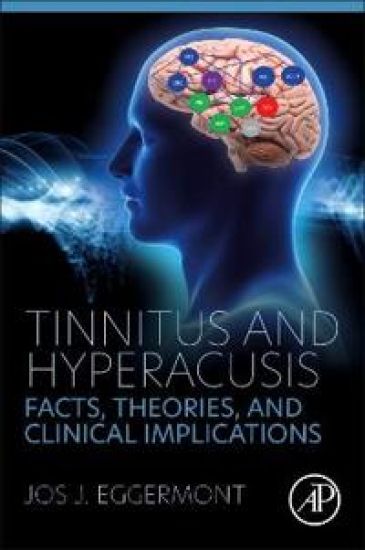
Tinnitus and Hyperacusis: Facts, Theories, and Clinical Implications provides an overview on this burgeoning field, covering the underlying mechanisms and potential treatments for these disorders. The book begins with an overview of the etiology and genetics behind tinnitus and hyperacusis. The author then proposes two parallel neural pathways underlying these conditions and provides a basis for connecting animal to human research. Neurotransmitters, neuromodulators and immediate early genes are discussed, along with a detailed comparison of about a dozen models aimed at explaining tinnitus and hyperacusis, including the neurophysiological model, the neural synchrony model and the cortical map reorganization and filling-in model. Potential treatments of tinnitus and hyperacusis, from behavioral to non-invasive neuromodulation are also discussed. This book is written for clinical neuroscientists, audiologists, neuro-otologists, neurologists and clinical psychologists.
Brain Oscillations, Synchrony and Plasticity

Brain Oscillations, Synchrony and Plasticity

Jos J. Eggermont

Academic Press Inc
2021
nidottu
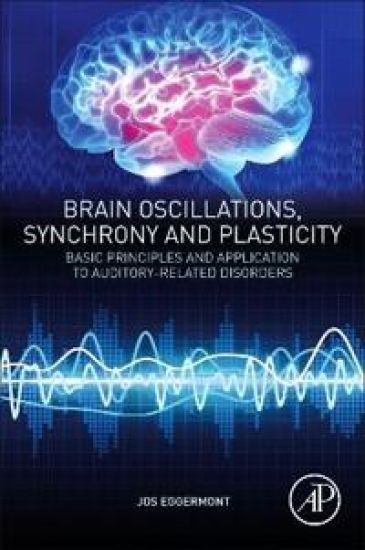
Brain Oscillations, Synchrony and Plasticity: Basic Principles and Application to Auditory-Related Disorders discusses the role of brain oscillations, especially with respect to the auditory system and how those oscillations are measured, change over the lifespan, and falter leading to a variety of psychiatric and neurological disorders. The book begins with a description of these cortical rhythm oscillations and how they function in both the normal and pathological brain. It explains how these oscillations are important to auditory, executive and attention brain networks and how they relate to the development, production and deterioration of speech and language. In addition, treatment of malfunctioning cortical rhythms are reviewed using neuromodulation, such as transcranial magnetic, direct current, random noise, and alternating current stimulation, as well as focused ultrasound. The book concludes by describing the potential role of oscillations in dyslexia, autism, schizophrenia and Alzheimer’s disease.
The Auditory Brain and Age-Related Hearing Impairment
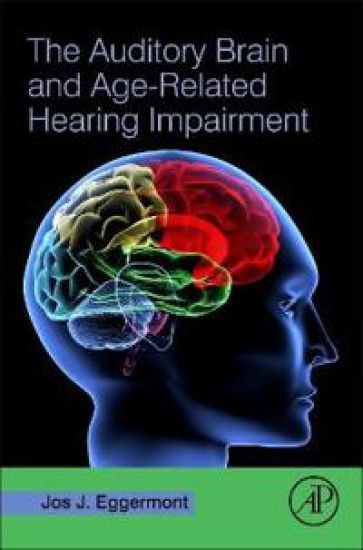
The Auditory Brain and Age-Related Hearing Impairment provides an overview of the interaction between age-related hearing impairments and cognitive brain function. This monograph elucidates the techniques used in the connectome and other brain-network studies based on electrophysiological methods. Discussions of the manifestations of age-related hearing impairment, the causes of degradation of sound processing, compensatory changes in the human brain, and rehabilitation and intervention are included. There is currently a surge in content on aging and hearing loss, the benefits of hearing aids and implants, and the correlation between hearing loss, cognitive decline and early onset of dementia. Given the changing demographics, treatment of age-related hearing impairment need not just be bottom-up (i.e., by amplification and/or cochlear implantation), but also top-down by addressing the impact of the changing brain on communication. The role of age-related capacity for audio-visual integration and its role in assisting treatment have only recently been investigated, thus this area needs more attention.
Hear, Hear!: A Culinary Infused Autobiography
Jos Eggermont (1942-) was born in Lamwaarde, the Netherlands, and educated at Leiden University (MSc in physics, 1967, PhD in 1972). After graduating he became a Research Associate at the Ear Nose Throat Department of Leiden University Hospital, and subsequently Research Fellow at the Ear Research Institute in Los Angeles. In 1978 he became a professor in experimental physics at Nijmegen University. In 1986 he joined the University of Calgary, Department of Psychology, as professor and Alberta Heritage Foundation for Medical Research Scientist. In 1997 he was named Campbell McLaurin Chair for Hearing Deficiencies in the faculty of Medicine. He then joined the Department of Physiology and Biophysics and became emeritus professor in 2013. Starting with his student days in Leiden, Eggermont became interested in cooking and wine, both on a semi-professional level and as a concerned amateur. Travelling the world for scientific exchanges and conferences allowed him to experience large varieties of food and wine. Jos loves to cook for guests, of whom there has never been a shortage in his and his wife's life. Hear Hear combines an overview of Eggermont's academic life and his exploits as a gourmet cook. Different fonts make it easy to seek out the recipes of which there are about 175. His solely academic endeavors, articles and books surpass this number of recipes by far.
Hearing Loss

Hearing Loss

Jos J. Eggermont

Academic Press Inc
2017
sidottu
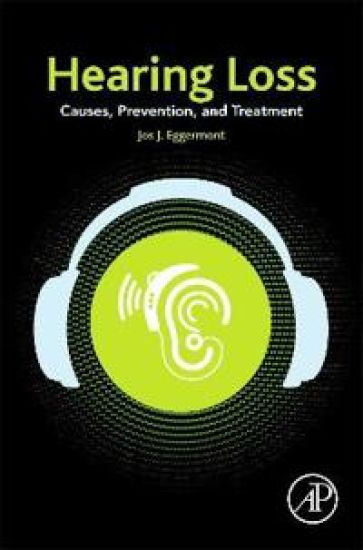
Hearing Loss: Causes, Prevention, and Treatment covers hearing loss, causes and prevention, treatments, and future directions in the field, also looking at the cognitive problems that can develop. To avoid the “silent epidemic? of hearing loss, it is necessary to promote early screening, use hearing protection, and change public attitudes toward noise. Successful treatments of hearing loss deal with restoring hearing sensitivity via hearing aids, including cochlear, brainstem, or midbrain implants. Both the technical aspects and effects on the quality of life of these devices are discussed. The integration of all aspects of hearing, hearing loss, prevention, and treatment make this a perfect one-volume course in audiology at the graduate student level. However, it is also a great reference for established audiologists, ear surgeons, neurologists, and pediatric and geriatric professionals.
Auditory Temporal Processing and its Disorders

Auditory Temporal Processing and its Disorders

Jos J. Eggermont

Oxford University Press
2015
sidottu
'Auditory temporal processing' determines our understanding of speech, our appreciation of music, our ability to localize a sound source, and even to listen to a person in a noisy crowd. Sound is dynamic and as such has temporal and spectral content. In disorders such as auditory neuropathy and MS, problems can occur with these temporal representations of sound, leading to a mismatch between auditory sensitivity and speech discrimination. In dyslexia, specific language impairment, and auditory processing disorders, similar problems occur early in life and set up additional cognitive speech processing problems. It has also been found that in disorders such as autism, schizophrenia and epilepsy, temporal processing deficits can occur. This book reviews comprehensively the mechanisms for temporal processing in the auditory system, looking at how these underlie specific clinical disorders, with implications for their treatment. Written by a prolific researcher in auditory neuroscience, this book is valuable for auditory neuroscientists, audiologist, neurologists, and speech language pathologists.
Noise and the Brain

Noise and the Brain

Jos J. Eggermont

Academic Press Inc
2013
sidottu
In our industrialized world, we are surrounded by occupational, recreational, and environmental noise. Very loud noise damages the inner-ear receptors and results in hearing loss, subsequent problems with communication in the presence of background noise, and, potentially, social isolation. There is much less public knowledge about the noise exposure that produces only temporary hearing loss but that in the long term results in hearing problems due to the damage of high-threshold auditory nerve fibers. Early exposures of this kind, such as in neonatal intensive care units, manifest themselves at a later age, sometimes as hearing loss but more often as an auditory processing disorder. There is even less awareness about changes in the auditory brain caused by repetitive daily exposure to the same type of low-level occupational or musical sound. This low-level, but continuous, environmental noise exposure is well known to affect speech understanding, produce non-auditory problems ranging from annoyance and depression to hypertension, and to cause cognitive difficulties. Additionally, internal noise, such as tinnitus, has effects on the brain similar to low-level external noise. Noise and the Brain discusses and provides a synthesis of hte underlying brain mechanisms as well as potential ways to prvent or alleviate these aberrant brain changes caused by noise exposure.
The Neuroscience of Tinnitus

The Neuroscience of Tinnitus

Jos J. Eggermont

Oxford University Press
2012
sidottu
Tinnitus - the perception of sound in the ear, in the absence of external sound - affects around 250 million people worldwide. It occurs in adults as well as in children, in war veterans and factory workers, in classical musicians, rockstars, and disc jockeys. Consequently, a history of recreational, occupational, and firearm noise exposure may all be associated with an increased likelihood of acquiring tinnitus. Being a subjective phenomenon, tinnitus is difficult to measure, though, in the past decade, it has become the subject of intensive scientific research. Research in neuroscience has revealed how tinnitus is generated by the brain when hearing loss occurs, and this research has played a part in helping us understand the cause, diagnosis, and treatment of this disorder. The Neuroscience of Tinnitus reviews our current knowledge of the neural substrates of tinnitus. It draws heavily on the author's own extensive work in this field, and is divided into two parts, the first focusing on human models, the second on animal models. The book describes the search for the neural mechanisms that underlie the amplification process resulting in tinnitus, and ways to manage its maladaptive side effects. Based on over 1000 references and the author's own experience, both of tinnitus and the research into its mechanisms, this book is the most comprehensive single-author book on the market. It is a valuable reference source for auditory neuroscientists, and also to those in the fields of audiology, psychology, neurology, and otolaryngology.
The Correlative Brain

The Correlative Brain

Jos J. Eggermont

Springer-Verlag Berlin and Heidelberg GmbH Co. K
2012
nidottu
This monograph is the result of a course given to graduate students and to the faculty of the Dept. of Medical Physics and Biophysics of Nijmegen University, Nijmegen, The Netherlands, in the fall of 1984 and 1985. The course was intended to put together experi­ ment, theory, and analysis methods in order to study neural in­ teraction and coding in the brain. The following pages give a survey of neural interaction and its experimental substrate: cor­ related neural activity. The basic reason for restricting myself to vertebrate brains was to keep the material concise. As the text developed, however, it became more of a review, than a research monograph, in the attempt to balance theoretical and experimen­ tal aspects in brain research. Consequently, the book can be read from various points of view: that of requiring an overview of theories and theoretical principles, or an overview of experimental studies in neural interaction and the methods that can be used, or with the conviction that theory and experiment cannot be separat­ ed. In the latter case the book should be read from beginning to end. A way to read through the theoretical sections and the ex­ perimental sections of the book is presented in the following flow chart; Theory: /Chap. 2 -Chap. 4 -Chap. 5 ___ ~ Introduction -+ Chap. 1 \, Chap. 10 -+ Chap. 14 Experim~Chap. 3 -Chap. 6 -Chap. 7 -Chap. 8 ~ Chap.
Correlative Learning

Correlative Learning

Zhe Chen; Simon Haykin; Jos J. Eggermont; Suzanna Becker

John Wiley Sons Inc
2007
sidottu
Correlative Learning: A Basis for Brain and Adaptive Systems provides a bridge between three disciplines: computational neuroscience, neural networks, and signal processing. First, the authors lay down the preliminary neuroscience background for engineers. The book also presents an overview of the role of correlation in the human brain as well as in the adaptive signal processing world; unifies many well-established synaptic adaptations (learning) rules within the correlation-based learning framework, focusing on a particular correlative learning paradigm, ALOPEX; and presents case studies that illustrate how to use different computational tools and ALOPEX to help readers understand certain brain functions or fit specific engineering applications.