Kirjojen hintavertailu. Mukana 12 390 323 kirjaa ja 12 kauppaa.

Kirjailija

José Alfonso Ortega-Santos

Kirjat ja teokset yhdessä paikassa: 5 kirjaa, julkaisuja vuosilta 2007-2020, suosituimpien joukossa Wild Turkeys in Texas. Vertaile teosten hintoja ja tarkista saatavuus suomalaisista kirjakaupoista.

5 kirjaa

Kirjojen julkaisuhaarukka 2007-2020.

Wild Turkeys in Texas

Wild Turkeys in Texas

Leonard A. Brennan; José Alfonso Ortega-Santos; Damon L. Williford; Jason B. Hardin; Humberto L. Perotto-Baldivieso; Landon Fritz; Clayton D. Hilton; Fred C. Bryant; Stephan A. Nelle; Brandon M. Mitchell; Nova Silvy

Texas A M University Press
2020
sidottu
The wild turkey is an iconic game bird with a long history of association with humans. Texas boasts the largest wild turkey population in the country. It is the only state where one can find native populations of three of the five subspecies of wild turkeys - the Eastern wild turkey (Meleagris gallopavo silvestris), the Rio Grande wild turkey (M. g. intermedia), and the Merriam's wild turkey (M. g. merriami). Bringing together experts on game birds and land management in the state, this is the first book in Texas to synthesize the most current information about ecology and management focused exclusively on these three subspecies.Wild Turkeys in Texas addresses important aspects of wild turkey ecology and management in Texas, but its principles are applicable anywhere Eastern, Rio Grande, or Merriam's turkeys exist. This book marks the continuation of one of the biggest success stories in the research, restoration, and management of the wild turkey in North America.
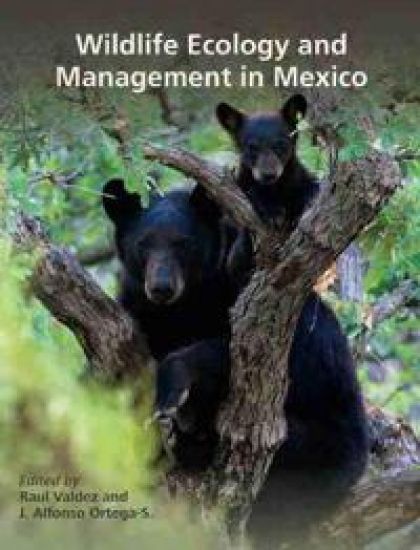
Wildlife Ecology and Management in Mexico

Wildlife Ecology and Management in Mexico

Raul Valdez; José Alfonso Ortega-Santos

Texas A M University Press
2019
sidottu
Mexico is the fourteenth largest country in the world and ranks fifth in biodiversity. Located in the transition zone between the temperate and tropical regions of North and South America, Mexico is an important migratory corridor for wildlife and also provides wintering habitat for several species of bats, monarch butterflies, and temperate North American nesting birds. Mexico faces several challenges to wildlife management and conservation efforts. While there is increased public education and acknowledgment of the valuable benefits wildlife provides, there is still much work to do to incentivize conservation efforts. Fortunately, there is growing recognition that Mexico's wildlife resources can be a critical component in the rural economic development of the country. Bringing together an international team of wildlife experts across North America, Wildlife Ecology and Management in Mexico provides information on the status, distribution, ecological relationships, and habitat requirements and management of the most important game birds and mammals in Mexico. It also reviews current threats and challenges facing wildlife conservation as well as strategies for resolving these issues. This reference is a valuable tool for wildlife biologists, wildlife management professionals, and anyone interested in conserving Mexico's wealth of natural resources. By laying out the challenges to conservation research, editors Raul Valdez and J. Alfonso Ortega-S. hope to encourage interdisciplinary communication and collaboration across borders.
White-Tailed Deer Habitat

White-Tailed Deer Habitat

Timothy Edward Fulbright; José Alfonso Ortega-Santos

Texas A M University Press
2013
nidottu
The original, 2006 edition of Timothy Edward Fulbright and J. Alfonso Ortega-S.’s White-Tailed Deer Habitat: Ecology and Management on Rangelands was hailed as “a splendid reference for the classroom and those who make their living from wildlife and the land” and as “filling a niche that is not currently approached in the literature.”In this second, full-colour edition, revised and expanded to include the entire western United States and northern Mexico, Fulbright and Ortega-S. provide a carefully reasoned synthesis of ecological and range management principles that incorporates rangeland vegetation management and the impact of crops, livestock, predation, and population density within the context of the arid and semiarid habitats of this broad region. As landowners look to hunting as a source of income and to the other benefits of managing for wildlife, the clear presentation of the up-to-date research gathered in this book will aid their efforts. Essential points covered in this new edition include: White-tailed deer habitat requirements; Nutritional needs of White-tailed deer; Carrying capacity; Habitat management; Hunting. Focused across political borders and written with an understanding of environments where periodic drought punctuates long-term weather patterns, this revised and expanded edition of White-Tailed Deer Habitat: Ecology and Management on Rangelands will aid landowners, researchers, and naturalists in their efforts to integrate land management and use with sound ecological practices.
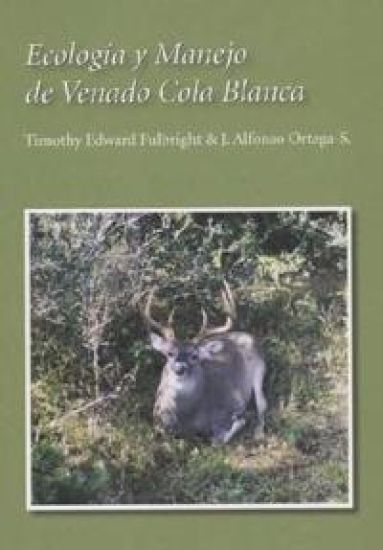
Ecología Y Manejo De Venado Cola Blanca

Ecología Y Manejo De Venado Cola Blanca

Timothy Edward Fulbright; José Alfonso Ortega-Santos

Texas A M University Press
2007
nidottu
Originally published in English as ""White-Tailed Deer Habitat: Ecology and Management on Rangelands"" (Texas A&M University Press, 2005), this Spanish-language edition brings a valuable management tool to a new reading audience. Unlike other books on white-tailed deer in places where rainfall is relatively high and the environment stable, this book takes an ecological approach to deer management in the semiarid lands of Oklahoma, Texas, and northern Mexico. These are the least productive of white-tail habitats, where periodic drought punctuates long-term weather patterns. The book's focus on this landscape across political borders is one of its original and lasting contributions and makes this Spanish language edition particularly appropriate.
Ecología y Manejo de Venado Cola Blanca

Ecología y Manejo de Venado Cola Blanca

Timothy Edward Fulbright; José Alfonso Ortega-Santos

Texas A M University Press
2007
sidottu
Originally published in English as ""White-Tailed Deer Habitat: Ecology and Management on Rangelands"" (Texas A&M University Press, 2005), this Spanish-language edition brings a valuable management tool to a new reading audience. Unlike other books on white-tailed deer in places where rainfall is relatively high and the environment stable, this book takes an ecological approach to deer management in the semiarid lands of Oklahoma, Texas, and northern Mexico. These are the least productive of white-tail habitats, where periodic drought punctuates long-term weather patterns. The book's focus on this landscape across political borders is one of its original and lasting contributions and makes this Spanish language edition particularly appropriate.