Kirjojen hintavertailu. Mukana 12 595 353 kirjaa ja 12 kauppaa.

Kirjailija

Jose Donoso

Kirjat ja teokset yhdessä paikassa: 13 kirjaa, julkaisuja vuosilta 1994-2025, suosituimpien joukossa El lugar sin límites. Vertaile teosten hintoja ja tarkista saatavuus suomalaisista kirjakaupoista.

Mukana myös kirjoitusasut: José Donoso

13 kirjaa

Kirjojen julkaisuhaarukka 1994-2025.

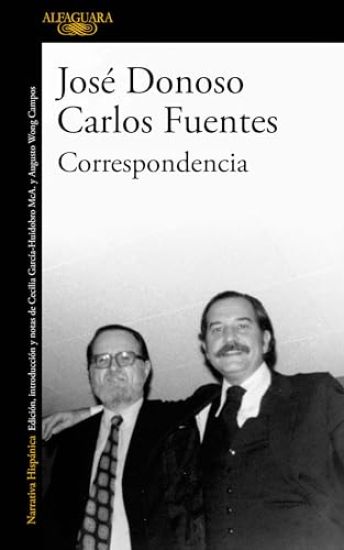
Correspondencia / Letters

Correspondencia / Letters

Carlos Fuentes; José Donoso

Alfaguara
2025
nidottu
«No necesito decirte a cada rato que considero nuestra amistad como una de las relaciones m s valiosas de mi vida. -Carlos Fuentes a Jos Donoso La correspondencia entre Jos Donoso y Carlos Fuentes, in dita hasta hoy, ofrece una ventana nica hacia la intimidad y el pensamiento de dos de los m s grandes autores de la narrativa latinoamericana. A lo largo de tres d cadas, intercambiaron cartas que abarcan uno de los periodos m s trascendentales de la historia y la literatura en nuestro continente. Como amigos, compartieron hasta el fin de sus d as triunfos y fracasos personales, alegr as y tristezas. Como escritores, revelan no solo agudas cr ticas de sus propios trabajos, sino contradicciones, sus cambios de humor, la necesidad de apoyo y consejo para alcanzar la cumbre, primero, y mantenerse en ella, despu s. Este libro, cuidadosamente editado por Cecilia Garc a- Huidobro McA. y Augusto Wong Campos, constituye una mirada a las brillantes mentes de ambos autores y refleja sus vidas dedicadas a la escritura. A trav s de sus cartas, los lectores podr n sumergirse en un di logo en pausa que revela la profundidad de su amistad y la riqueza de sus reflexiones literarias y personales. ENGLISH DESCRIPTION "I don't need to keep telling you that I consider our friendship one of the most valuable relationships of my life." -Carlos Fuentes to Jos Donoso The unpublished correspondence between Jos Donoso and Carlos Fuentes offers unique insights into the personal lives and thoughts of two of the greatest figures in Latin American literature. Over three decades, the authors exchanged letters that cover a key period in our continent's history and literary heritage. As friends, they shared their personal triumphs, failures, joys and sorrows. As authors, they offered not only sharp critiques of their own works but also contradictions, moods, support and advice for reaching the peak of their craft and, once there, continue to perform at their full potential. Lovingly edited by Cecilia Garc a-Huidobro McA. and Augusto Wong Campos, this book is a glimpse into the minds of two brilliant authors and their dedication to their art. Their dialogue reveals the depth of their friendship and the richness of their literary and personal reflections.
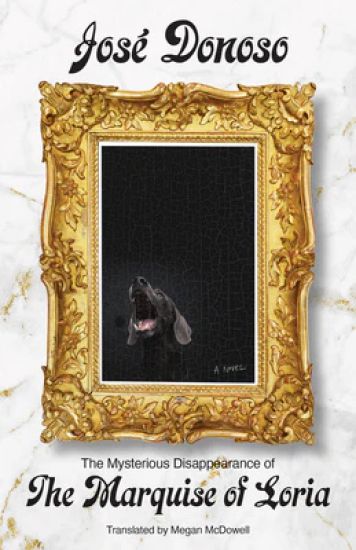
The Mysterious Disappearance of the Marquise of Loria

The Mysterious Disappearance of the Marquise of Loria

José Donoso

NEW DIRECTIONS PUBLISHING CORPORATION
2025
nidottu
All of a sudden, Blanca Arias has it all. The daughter of middling Nicaraguan diplomats posted to Madrid, she marries, at the age of 19, the equally young and passionate Marquess of Loria, her darling Paquito, heir to one of the largest fortunes (and most august titles) in Spain. Paquito, as if on cue, dies of diphtheria, leaving his young widowed Marquise alone, free, and inconceivably rich. Donoso’s luxurious and disturbing work details the sexual awakening of the Marquise of Loria as her white-gloved chauffeur shuttles her from tryst to tryst. But it’s not all Patek Phillipes and pink champagne: Blanca’s mother-in-law Casilda is scheming with her gang of sycophants to take back “their” fortune from this newly-minted Loria, and there’s no low they won’t sink to to get it. The mysterious presence of Luna, a Weimaraner pup who infiltrates Blanca’s chambers and hypnotizes her with his lunar gaze, twists this glittering elegy to the literary erotica of 1920s Madrid into something more: a psychological thriller and a profound investigation into the surfaces that the fortunate gild and polish to hide the darkness that lies beneath. As exuberant as it is explicit—and elegantly translated into English for the first time by Megan McDowell—The Mysterious Disappearance of the Marquise of Loria—shows the Boom-era master Donoso in a lighter mode, and the result is irresistible.
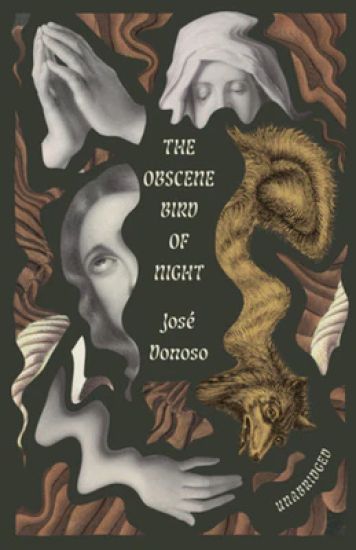
The Obscene Bird of Night

The Obscene Bird of Night

José Donoso

NEW DIRECTIONS PUBLISHING CORPORATION
2024
nidottu
Deep in a maze of musty, forgotten hallways, Mudito rummages through piles of old newspapers. The mute caretaker of the crumbling former abbey, he is hounded by a coven of ancient witches who are bent on transforming him, bit by bit, into the terrifying imbunche: a twisted monster with all of its orifices sewn up, buried alive in its own body. Once, Mudito walked upright and spoke clearly; once he was the personal assistant to one of Chile’s most powerful politicians, Jerónimo de Azcoitía. Once, he ruled over a palace of monsters, built to shield Jeronimo’s deformed son from any concept of beauty. Once, he plotted with the wise woman Peta Ponce to bed Inés, Jerónimo’s wife. Mudito was Humberto, Jerónimo was strong, Inés was beautiful—once upon a time... Narrated in voices that shift and multiply, The Obscene Bird of Night frets the seams between master and slave, rich and poor, reality and nightmares, man and woman, self and other in a maniacal inquiry into the horrifying transformations that power can wreak on identity. Now, star translator Megan McDowell has revised and updated the classic translation, restoring nearly twenty pages of previously untranslated text that was mysteriously cut from the 1972 edition. Newly complete, with missing motifs restored, plots deepened, and characters more richly shaded, Donoso’s pajarito (little bird), as he called it, returns to print to celebrate the centennial of its author’s birth in full plumage, as brilliant as it is bizarre.
El Obsceno Paajaro de la Noche

El Obsceno Paajaro de la Noche

Jose Donoso

Debolsillo
2022
nidottu
Un viaje por los laberintos de la identidad, la degradaci n y el olvido.La novela cumbre de Jos Donoso. La voz que narra El obsceno p jaro de la noche fluye infatigable de los labios del Mudito, como en un viaje desde el ser hacia la nada, elaborando un mundo destinado -por la maldici n intr nseca de la existencia- al deterioro, la p rdida o la confusi n de cualquier identidad posible. Las viejas que pueblan la Casa de la Encarnaci n de la Chimba y los monstruos de la Rinconada ilustran cada matiz de la desesperaci n y cada uno de los nfimos placeres cotidianos, anudando siempre al ciego instinto de la vida un inextinguible terror ante lo oscuro, lo innombrable, lo que ya no tiene forma. ENGLISH DESCRIPTION A journey through the labyrinths of identity, deterioration, decay, and nonexistence. This is the pinnacle of Jose Donoso's novels. The voice that narrates The Obscene Bird of Night flows tirelessly from the lips of the Mute, as in a journey from being to nothingness, creating a world destined --by the inherent curse of existence-- to deterioration, loss, or a perplexity of any possible identity. The old women that live in the House of the Incarnation of La Chimba and the monsters of La Rinconada illustrate every nuance of despair as well as every one of the smallest daily pleasures; adding to the blind instinct of life an everlasting fear in the face of darkness, of the unnamable, and of that which no longer has a shape.
Coronación / Coronation

Coronación / Coronation

Jose Donoso

Debolsillo
2022
nidottu
Primera novela del gran autor chileno Jos Donoso en la que prefigura los temas que marcar n su obra: decadencia, identidad, transgresi n y locura... Andr s, solitario y cincuent n, es el desconcertado testigo de los ltimos d as de una abuela nonagenaria que se debate entre la niebla y los rel mpagos de la demencia. Esperp ntica a la vez que realista, la primera novela del m s c lebre narrador chileno de este fin de siglo prefigura los temas que marcar n su obra: decadencia, identidad, transgresi n y locura...En esta obra, el lector despierta a una realidad grosera, donde los personajes desnudan sus recuerdos y la historia de algunas rancias familias santiaguinas, encerradas en caserones que nutren sus obsesiones m s oscuras. Un cl sico de la novela latinoamericana. «El m s literario de los escritores de nuestra generaci n. Carlos Fuentes ENGLISH DESCRIPTION This first novel from renowned Chilean author exposes the themes that would mark his future works: deterioration of society, identity questions, transgression and madness... Andres, a fifty year-old lonely man, is the bewildered witness of the last days of a ninety-plus year-old grandmother struggling with the ins and outs between the fog and clarity of dementia. Grotesque yet realistic at the same time, this first novel by the most famous Chilean narrator of the end of the last century, foreshadows the themes that would mark his work: decadence, identity questions, transgression and madness ... In this work, the reader wakes up to a gross reality, where the characters expose their bare memories and also the stories of some rancid families in Santiago, locked up in mansions that nurture their darkest obsessions. This novel is a classic in Latin American literature. "The most literary writer of our generation." --Carlos Fuentes
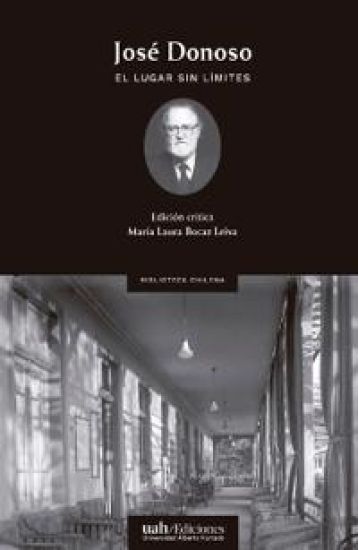
El lugar sin límites

El lugar sin límites

José Donoso

Ediciones Universidad Alberto Hurtado
2019
pokkari
En El lugar sin l mites, la situaci n particular de un peque o villorrio campesino se ilumina y universaliza a trav s de la incorporaci n de los correlatos que entregan la imagen subyacente de un infierno, de un cielo al rev s, de un universo regido por las fuerzas del mal. Este infierno no tiene l mites; es un territorio inabarcable al que pertenecen todos los hombres. All , a pesar de las diferencias sociales, en gran medida causantes del mal, todos son iguales, un mismo destino los une y los conduce a la destrucci n. Aunque los seres que habitan dicho mundo son capaces de so ar, de anhelar, de sentir y de luchar, la presi n que sobre ellos ejercen las condiciones concretas en las que realizan sus vidas o en las que se han formado, les impide salir de aquella situaci n.
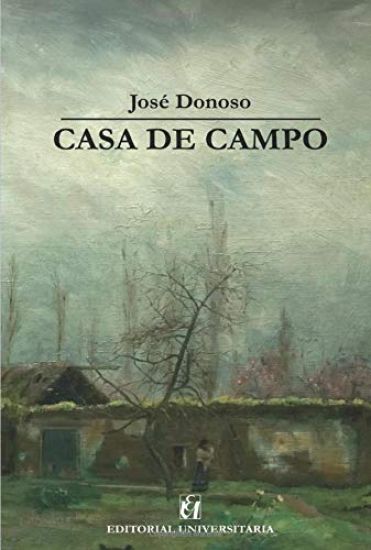
Casa de campo

Casa de campo

José Donoso

Editorial Universitaria de Chile
2019
pokkari
Casa de Campo es la obra maestra de Donoso y tal vez una de las grandes obras de la narrativa en lengua castellana. "El horizonte cultural de la novela es complejo y por momentos fas-ci-nan-te. Donoso volc aqu su conocimiento apa-sionado de la pintura, de la m sica, de la literatura, de la historia europea e hispanoamericana", dice Jorge Edwards en el pr logo de este libro. Y agrega m s adelante: "la voz del autor, el recurso al artificio narrativo, siempre est n presentes. Hay un tejido denso, una verdadera selva de significados y de s mbolos. En alguna medida, Casa de Campo no evita los recursos cl sicos de la novela de aventura". Es este un libro complejo y apasionante, que per-ma-ne-cer en la historia de la novela chilena. Bajo el sello de esta editorial Jos Donoso ha publicado tambi n Veraneo y otros cuentos (1955), Tres novelitas burguesas (1985) y Sue os de mala muerte (1985, en colaboraci n con el ictus).
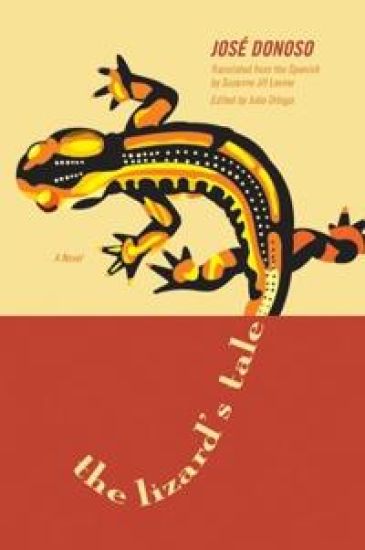
The The Lizard's Tale

The The Lizard's Tale

Jose Donoso

Northwestern University Press
2011
nidottu
José Donoso was the leading Chilean representative of the Latin American “Boom” of the sixties and seventies that included Gabriel García Márquez, Mario Vargas Llosa, and Manuel Puig, among others. Written as a draft in 1973, set aside, and forgotten, The Lizard’s Tale was discovered among Donoso’s papers at Princeton University by his daughter after his death. Edited for publication by critic and poet Julio Ortega, it was published posthumously in Spanish under the title Lagartija sin cola in 2007. Suzanne Jill Levine, who knew Donoso and translated two of his earlier works, brings the book to an English-language audience for the first time. Defeated and hiding in his Barcelona apartment, painter Antonio Muñoz-Roa—clearly Donoso’s alter ego—relates the story of his flight with Luisa, his cousin, lover, and benefactor, after his scandalous desertion from the “Informalist” movement (a witty reference to a contemporary Spanish art movement and possibly an allusion to the Boom as well), in which he had been a member of a certain standing. Frustrated, old, and alone, the artist looks back on his years in the small town of Dors, a place he unsuccessfully tried to rescue from the crushing advance of modernity, and on the decline of his own family, also threatened by the changing times. In Levine’s able hands, Donoso’s clear prose shines through, forming a compact, powerful, and still-relevant meditation on the commercialization of art and the very places we inhabit.
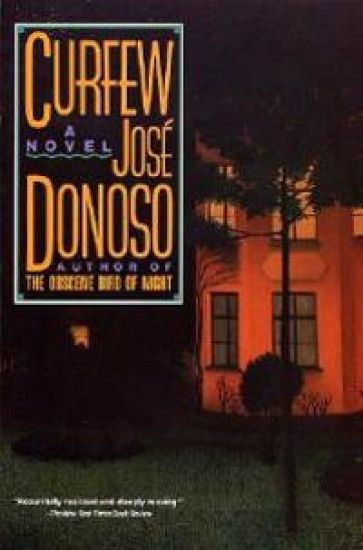
Curfew

Curfew

Jose Donoso

AldineTransaction
2000
nidottu
Jose Donoso has created a hauntingly beautiful novel of contemporary Chile and the human condition. Curfew takes place during a twenty-four-hour period in January 1985. Matilde Neruda, widow of the Nobel Prize-winning poet, has just passed away and Chile's various factions rally to turn the event to their advantage. For Pinochet's junta it represents a chance to assert political authority; for the intellectuals who had basked in Neruda's light, it is an opportunity to grab the spoils of the estate.
Taratuta and Still Life with Pipe: Two Novellas

Taratuta and Still Life with Pipe: Two Novellas

Jose Donoso; Jos Donoso

W. W. Norton Company
1994
nidottu
In them he poses many of the questions raised by his fellow Latin American writers, Fuentes, Garc a Marquez, and Vargas Llosa: What is truth? How does one use history in fiction? How does an artist create? Taratuta is a mystery story in which a writer tries to track a slippery Russian revolutionary in history and in life. Still Life with Pipe shows the comeuppance of an ambitious man when he meets true art and can't escape its grasp. Donoso is the author of the classic novel The Obscene Bird of Night.
Curfew

Curfew

Jose Donoso

Grove Press / Atlantic Monthly Press
1994
pokkari
Curfew takes place during one twenty-four hour period in January 1985. Matilde Neruda, widow of the Nobel Prize-winning poet, has just passed away, and various factions are rallying to turn the event to their advantage: for Pinochet's junta, it represents a chance to assert political authority, while for the intellectuals who had basked in the Nerudas' light, it is an opportunity to grab the spoils of the estate. Against this backdrop of complex, often conflicting motivations, Donoso weaves a portrait of a society struggling to fashion a daily existence for itself, and of an intelligentsia vainly attempting to salvage the remnants of glory days long gone by. But Curfew is also a story of the tragic love between Judit Torre, an upper-middle-class radical who wants to escape her bitter past; and Mañungo Vera, a native son returning after a successful career as a European pop singer. In the zone between documentary-like realism and grotesque absurdity, José Donoso evokes the suffocating atmosphere of a country under dictatorship, and its quietly devastating effect on the actions of those who live there.
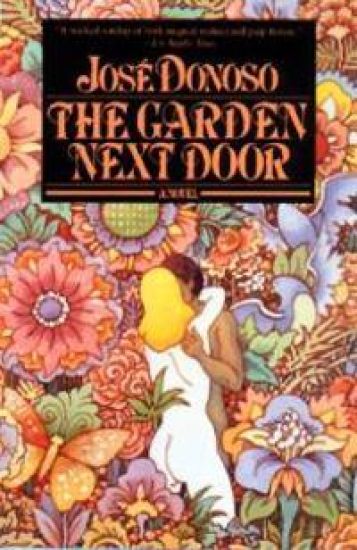
Garden Next Door

Garden Next Door

Jose Donoso

Avalon Travel Publishing
1994
nidottu
A Chilean writer named Julio and his wife, Gloria, are at a low point in their lives. Constantly bickering, the pair are beset by worries about money, their writing, and their son (who may or may not be plying the oldest profession in Marrakesh). When Julio's boyhood best friend, now a famous artist, lends the couple his luxurious Madrid apartment for the summer, it is an escape for both - but in particular for Julio, who fantasizes about the garden next door and the erotic life of the lovely young aristocratic woman who inhabits it. But Julio's life - and career - unravel In Madrid: he is rebuffed by a famous literary agent, Nuria Monclus, who detests him and his novel; his son's friend from Marrakesh moves in and causes havoc; and Gloria begins to drink. In the face of pitiless adversity, Julio's talent inexorably begins to fade. The garden next door, however, is also Gloria, who has been doing some creating of her own. It is this twist that transforms Donoso's brilliant satire of the writer's life into something even greater: a carefully crafted and bitteily comic meditation on gardens, deceit, and the nature of a writer's muse.