Kirjojen hintavertailu. Mukana 12 595 353 kirjaa ja 12 kauppaa.

Kirjailija

José E. Limón

Kirjat ja teokset yhdessä paikassa: 4 kirjaa, julkaisuja vuosilta 1992-2024, suosituimpien joukossa The Streets of Laredo. Vertaile teosten hintoja ja tarkista saatavuus suomalaisista kirjakaupoista.

4 kirjaa

Kirjojen julkaisuhaarukka 1992-2024.

The Streets of Laredo

The Streets of Laredo

José E. Limón

TEXAS A M UNIVERSITY PRESS
2024
sidottu
Arguing that the well-known cowboy ballad “The Streets of Laredo” is an early expression of “discontent with an encroaching modernity,” author JosÉ E. LimÓn draws upon ethnomusicology, folklore, history, contemporary literature, and other sources to provide a deeply contextualized analysis of the song. He explores its place in the imaginative construction of the American West and its role in the interpretation of both Anglo-American and Mexican American identity in the Texas borderlands and beyond. With the ballad as his point of departure, LimÓn takes readers on a tour that includes formative experiences from his childhood in Laredo and Corpus Christi; examination of the works of AmÉrico Paredes, Larry McMurtry, and others; and considerations of American popular music, cinema, baseball, and associated socio-cultural phenomena. The result is a complex and intriguing view of Texas and American culture as seen through the lens of a “simple” cowboy song. “It is my hope,” LimÓn writes in his introduction, “that this account of these central figures in Texas history—the ordinary cowboy and this ballad—will prove useful as Texas deals with the current and deeply conflicted phase in its long struggle with modernity.” The Streets of Laredo: Texas Modernity and Its Discontents offers readers important new perspectives on how society struggles with, understands, and comes to terms—or fails to come to terms—with the inevitable changes wrought by an evolving culture.
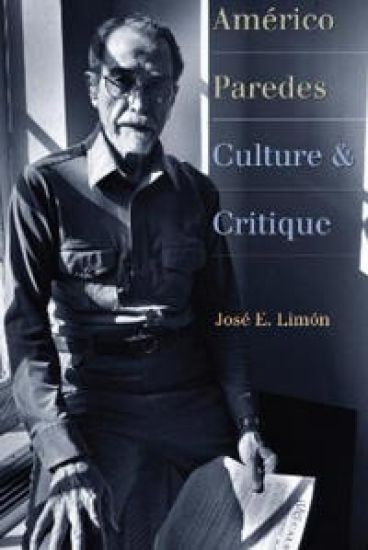
Américo Paredes

Américo Paredes

José E. Limón

University of Texas Press
2012
nidottu
Several biographies of Américo Paredes have been published over the last decade, yet they generally overlook the paradoxical nature of his life’s work. Embarking on an in-depth, critical exploration of the significant body of work produced by Paredes, José E. Limón (one of Paredes’s students and now himself one of the world’s leading scholars in Mexican American studies) puts the spotlight on Paredes as a scholar/citizen who bridged multiple arenas of Mexican American cultural life during a time of intense social change and cultural renaissance.Serving as a counterpoint to hagiographic commentaries, Américo Paredes challenges and corrects prevailing readings by contemporary critics of Paredes’s Asian period and of such works as the novel George Washington Gómez, illuminating new facets in Paredes’s role as a folklorist and public intellectual. Limón also explores how the field of cultural studies has drifted away from folklore, or “the poetics of everyday life,” while he examines the traits of Mexican American expressive culture. He also investigates the scholarly paradigm of ethnography itself, a stimulating inquiry that enhances readings of Paredes’s best-known study, “With His Pistol in His Hand,” and other works. Underscoring Paredes’s place in folklore and Mexican American literary production, the book questions the shifting reception of Paredes throughout his academic career, ultimately providing a deep hermeneutics of widely varied work. Offering new conceptions, interpretations, and perspectives, Américo Paredes gives this pivotal literary figure and his legacy the critical analysis they deserve.
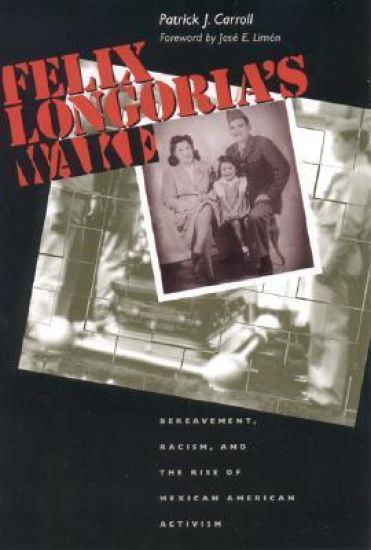
Felix Longoria's Wake

Felix Longoria's Wake

Patrick J. Carroll; José E. Limón

University of Texas Press
2003
pokkari
Winner, Tullis Prize, Texas State Historical Association, 2004Private First Class Felix Longoria earned a Bronze Service Star, a Purple Heart, a Good Conduct Medal, and a Combat Infantryman's badge for service in the Philippines during World War II. Yet the only funeral parlor in his hometown of Three Rivers, Texas, refused to hold a wake for the slain soldier because "the whites would not like it." Almost overnight, this act of discrimination became a defining moment in the rise of Mexican American activism. It launched Dr. HÉctor P. GarcÍa and his newly formed American G.I. Forum into the vanguard of the Mexican civil rights movement, while simultaneously endangering and advancing the career of Senator Lyndon B. Johnson, who arranged for Longoria's burial with full military honors in Arlington National Cemetery.In this book, Patrick Carroll provides the first fully researched account of the Longoria controversy and its far-reaching consequences. Drawing on extensive documentary evidence and interviews with many key figures, including Dr. GarcÍa and Mrs. Longoria, Carroll convincingly explains why the Longoria incident, though less severe than other acts of discrimination against Mexican Americans, ignited the activism of a whole range of interest groups from Argentina to Minneapolis. By putting Longoria's wake in a national and international context, he also clarifies why it became such a flash point for conflicting understandings of bereavement, nationalism, reason, and emotion between two powerful cultures-Mexicanidad and Americanism.
Mexican Ballads, Chicano Poems

Mexican Ballads, Chicano Poems

José E. Limón

University of California Press
1992
pokkari
Mexican Ballads, Chicano Poems combines literary theory with the personal engagement of a prominent Chicano scholar. Recalling his experiences as a student in Texas, Jose Limon examines the politically motivated Chicano poetry of the 60s and 70s. He bases his analyses on Harold Bloom's theories of literary influence but takes Bloom into the socio-political realm. Limon shows how Chicano poetry is nourished by the oral tradition of the Mexican corrido, or master ballad, which was a vital part of artistic and political life along the Mexican-U.S. border from 1890 to 1930. Limon's use of Bloom, as well as of Marxist critics Raymond Williams and Fredric Jameson, brings Chicano literature into the arena of contemporary literary theory. By focusing on an important but little-studied poetic tradition, his book challenges our ideas of the American canon and extends the reach of Hispanists and folklorists as well.