Kirjojen hintavertailu. Mukana 12 588 510 kirjaa ja 12 kauppaa.

Kirjailija

José Marín-García

Kirjat ja teokset yhdessä paikassa: 9 kirjaa, julkaisuja vuosilta 2007-2014, suosituimpien joukossa Heart Failure. Vertaile teosten hintoja ja tarkista saatavuus suomalaisista kirjakaupoista.

9 kirjaa

Kirjojen julkaisuhaarukka 2007-2014.

Mitochondria and Their Role in Cardiovascular Disease

Mitochondria and Their Role in Cardiovascular Disease

José Marín-García

Springer-Verlag New York Inc.
2014
nidottu
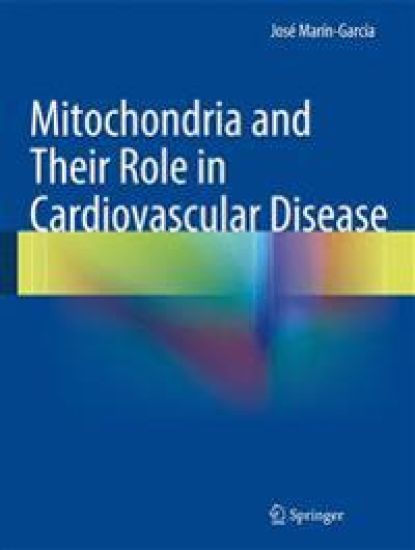
Over the past two decades, due to dramatic advances in molecular and cell biology, biochemistry, and genetics, our view on mitochondria as a relatively static cellular powerhouse has changed radically. We now know that these organelles play a critical role in the normal and in the damaged heart. Written by Dr. José Marín-García, Director of the Molecular Cardiology and Neuromuscular Institute, Mitochondria and Their Role in Cardiovascular Disease brings readers up- to-date on the many significant advances in the field of mitochondrial cardiovascular medicine. The book begins with a general introduction to mitochondria, followed by laboratory methods to study the structure and function of the organelle, regulation of replication and biogenesis, and the mechanisms and functional consequences of mitophagia and mitochondrial dynamics. Subsequent chapters deal with mitochondrial oxidative stress and the role that the organelle plays in cell signaling and cell death. Discussions will be undertaken on the biochemistry of mitochondrial cell signaling, including the nature of the proteins engaged in these processes, many of them only recently discovered. Later chapters examine the role of mitochondria and mitochondrial abnormalities in cardiovascular diseases, including their diagnosis, therapeutic options currently available, animal models of mitochondrial disease, and new frontiers in mitochondria cardiovascular medicine, including areas of research that are relatively new or developing, such as proteomics, next generation sequencing, and systems biology.
Signaling in the Heart

Signaling in the Heart

José Marín-García

Springer-Verlag New York Inc.
2014
nidottu
Signal transduction pathways are at the core of most biological processes and are critical regulators of heart physiology and pathophysiology. The heart is both a transmitter and dynamic receptor of a variety of intracellular and extracellular stimuli, playing a critical role of an integrator of diverse signaling mechanisms. Alterations in signaling pathways are contributing factors in the development and progression of a broad spectrum of diseases, ranging from dysrhythmias and atherosclerosis to hypertension and the metabolic syndrome. Targeting specific components of these signaling pathways has been shown to be effective in preclinical studies with significant therapeutic impact. This book brings together current knowledge in cardiovascular cell signal transduction mechanisms, advances in novel therapeutic approaches to improve cardiac function, and discussion of future directions. Presented from a post-genomic perspective, this exciting book introduces important new ideas in cardiovascular systems biology. It is an invaluable reference for cardiology researchers and practitioners.
Post-Genomic Cardiology

Post-Genomic Cardiology

José Marín-García

Academic Press Inc
2014
sidottu
In this second edition of Post-Genomic Cardiology, developing and new technologies such as translational genomics, next generation sequencing (NGS), bioinformatics, and systems biology in molecular cardiology are assessed in light of their therapeutic potential. As new methods of mutation screening emerge, both for the genome and for the “epigenome,? comprehensive understanding of the many mutations that underlie cardiovascular diseases and adverse drug reactions is within our reach. This book, written by respected cardiologist José Marín-García, features discussion on the Hap-Map: the largest international effort to date aiming to define the differences between our individual genomes. This unique reference further reviews and investigates genome sequences from our evolutionary relatives that could help us decipher the signals of genes, and offers a comprehensive and critical evaluation of regulatory elements from the complicated network of the background DNA.
Mitochondria and Their Role in Cardiovascular Disease

Mitochondria and Their Role in Cardiovascular Disease

José Marín-García

Springer-Verlag New York Inc.
2012
sidottu
Over the past two decades, due to dramatic advances in molecular and cell biology, biochemistry, and genetics, our view on mitochondria as a relatively static cellular powerhouse has changed radically. We now know that these organelles play a critical role in the normal and in the damaged heart. Written by Dr. José Marín-García, Director of the Molecular Cardiology and Neuromuscular Institute, Mitochondria and Their Role in Cardiovascular Disease brings readers up- to-date on the many significant advances in the field of mitochondrial cardiovascular medicine. The book begins with a general introduction to mitochondria, followed by laboratory methods to study the structure and function of the organelle, regulation of replication and biogenesis, and the mechanisms and functional consequences of mitophagia and mitochondrial dynamics. Subsequent chapters deal with mitochondrial oxidative stress and the role that the organelle plays in cell signaling and cell death. Discussions will be undertaken on the biochemistry of mitochondrial cell signaling, including the nature of the proteins engaged in these processes, many of them only recently discovered. Later chapters examine the role of mitochondria and mitochondrial abnormalities in cardiovascular diseases, including their diagnosis, therapeutic options currently available, animal models of mitochondrial disease, and new frontiers in mitochondria cardiovascular medicine, including areas of research that are relatively new or developing, such as proteomics, next generation sequencing, and systems biology.
Heart Failure

Heart Failure

José Marín-García

Humana Press Inc.
2012
nidottu
Heart Failure (HF) is the final and common pathway of all cardiovascular diseases. Heart Failure: Bench to Bedside helps address a significant need to develop new paradigms and to identify novel therapeutic targets for this pervasive disease. An authoritative contribution to the field, this book provides a detailed description of new findings and emerging methodologies, as well as a critical clinical evaluation of the complex HF syndrome and future therapies. Heart Failure: Bench to Bedside includes a primer on gene profiling and bioenergetics of the normal heart and a discussion of the molecular, genetic, biochemical and cellular techniques critical to understanding HF. Further chapters discuss cardiac remodeling, oxidative stress, and alterations in other organs and systems that are often associated with HF. This book thoughtfully evaluates current and forthcoming diagnostic techniques and therapies, pharmaceutical and pharmacogenomic-based individualized medicine, gene and cell-based therapies, and the search for new frontiers. Heart Failure: Bench to Bedside presents a clear view of up-to-date approaches to clinical diagnosis and treatment, as well as offering insightful critiques of original and creative scientific thoughts on post-genomic HF research.
Signaling in the Heart

Signaling in the Heart

José Marín-García

Springer-Verlag New York Inc.
2011
sidottu
Signal transduction pathways are at the core of most biological processes and are critical regulators of heart physiology and pathophysiology. The heart is both a transmitter and dynamic receptor of a variety of intracellular and extracellular stimuli, playing a critical role of an integrator of diverse signaling mechanisms. Alterations in signaling pathways are contributing factors in the development and progression of a broad spectrum of diseases, ranging from dysrhythmias and atherosclerosis to hypertension and the metabolic syndrome. Targeting specific components of these signaling pathways has been shown to be effective in preclinical studies with significant therapeutic impact. This book brings together current knowledge in cardiovascular cell signal transduction mechanisms, advances in novel therapeutic approaches to improve cardiac function, and discussion of future directions. Presented from a post-genomic perspective, this exciting book introduces important new ideas in cardiovascular systems biology. It is an invaluable reference for cardiology researchers and practitioners.
Aging and the Heart

Aging and the Heart

José Marín-García

Springer-Verlag New York Inc.
2010
nidottu
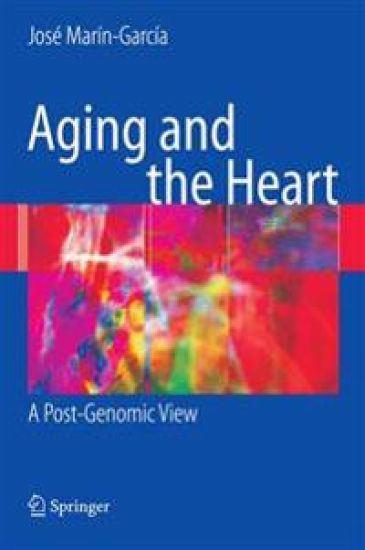
Cardiac aging, like aging in general, is a complex process involving numerous cellular and molecular changes, which along the way contribute to the expression of the multiple phenotypes of aging, "the different faces" of cardiac aging. Several plausible theories have been considered to explain aging, e.g., evolution, free radical, somatic mutation, etc; and at this time it is most likely that these different theories are intertwined with each other without a definitive "winner", reflecting a mixture of genetic and epigenetic elements found in most aged individuals with cardiovascular defects. The demonstration in numerous animal models of the dramatic alterations in life-span achieved by gene engineering or dietary modifications, such as caloric restriction, further underscores the interplay of both genetic and environmental factors involved in aging, as well as acting through molecular and signaling pathways operative in the heart and the vasculature. Aging and decreasing heart function occurring together has been amply documented, and our knowledge of age associated cardiac pathologies has outpaced our understanding of the basic mechanisms underlying these processes. At present, genomics, proteomics and recombinant DNA techniques are increasingly applied to the study of cardiac cell structure and function. Their role in aging, in general, and in the aging heart, in particular, will finally be unveiled. With the availability of the Human Genome Project, and an ever increasing number of animal models and new and exciting molecular technologies, the unraveling of the underlying basic mechanisms of cardiac aging have already begun. In this book, the genetic and molecular basis of cardiovascular aging will be discussed and a comprehensive assessment of the bioenergetics changes occurring in human and animal models of cardiac aging, current diagnostic and future therapeutic modalities will be presented.
Heart Failure

Heart Failure

José Marín-García

Humana Press Inc.
2010
sidottu
Heart Failure (HF) is the final and common pathway of all cardiovascular diseases. Heart Failure: Bench to Bedside helps address a significant need to develop new paradigms and to identify novel therapeutic targets for this pervasive disease. An authoritative contribution to the field, this book provides a detailed description of new findings and emerging methodologies, as well as a critical clinical evaluation of the complex HF syndrome and future therapies. Heart Failure: Bench to Bedside includes a primer on gene profiling and bioenergetics of the normal heart and a discussion of the molecular, genetic, biochemical and cellular techniques critical to understanding HF. Further chapters discuss cardiac remodeling, oxidative stress, and alterations in other organs and systems that are often associated with HF. This book thoughtfully evaluates current and forthcoming diagnostic techniques and therapies, pharmaceutical and pharmacogenomic-based individualized medicine, gene and cell-based therapies, and the search for new frontiers. Heart Failure: Bench to Bedside presents a clear view of up-to-date approaches to clinical diagnosis and treatment, as well as offering insightful critiques of original and creative scientific thoughts on post-genomic HF research.
Aging and the Heart

Aging and the Heart

José Marín-García

Springer-Verlag New York Inc.
2007
sidottu
Cardiac aging, like aging in general, is a complex process involving numerous cellular and molecular changes, which along the way contribute to the expression of the multiple phenotypes of aging, "the different faces" of cardiac aging. Several plausible theories have been considered to explain aging, e.g., evolution, free radical, somatic mutation, etc; and at this time it is most likely that these different theories are intertwined with each other without a definitive "winner", reflecting a mixture of genetic and epigenetic elements found in most aged individuals with cardiovascular defects. The demonstration in numerous animal models of the dramatic alterations in life-span achieved by gene engineering or dietary modifications, such as caloric restriction, further underscores the interplay of both genetic and environmental factors involved in aging, as well as acting through molecular and signaling pathways operative in the heart and the vasculature. Aging and decreasing heart function occurring together has been amply documented, and our knowledge of age associated cardiac pathologies has outpaced our understanding of the basic mechanisms underlying these processes. At present, genomics, proteomics and recombinant DNA techniques are increasingly applied to the study of cardiac cell structure and function. Their role in aging, in general, and in the aging heart, in particular, will finally be unveiled. With the availability of the Human Genome Project, and an ever increasing number of animal models and new and exciting molecular technologies, the unraveling of the underlying basic mechanisms of cardiac aging have already begun. In this book, the genetic and molecular basis of cardiovascular aging will be discussed and a comprehensive assessment of the bioenergetics changes occurring in human and animal models of cardiac aging, current diagnostic and future therapeutic modalities will be presented.