Kirjojen hintavertailu. Mukana 12 595 353 kirjaa ja 12 kauppaa.

Kirjailija

Josef Bayer

Kirjat ja teokset yhdessä paikassa: 10 kirjaa, julkaisuja vuosilta 1995-2025, suosituimpien joukossa Bavarian Syntax – The Left Clausal Periphery. Vertaile teosten hintoja ja tarkista saatavuus suomalaisista kirjakaupoista.

10 kirjaa

Kirjojen julkaisuhaarukka 1995-2025.

Bavarian Syntax – The Left Clausal Periphery
Bavarian syntax is widely known for its productive „Doubly-Filled COMP“ (DFC) property and for the rare phenomenon of inflecting complementizers. It is less widely known that DFC also extends to declaratives. Topicalization out of a preposed CP can leave a gap, with various consequences. DFC is in addition not available as unconditionally as previously thought. Short wh-words seem to blur the traditional division between heads (C) and phrases (wh-XP). As for the inner clausal syntax, Bavarian shows hierarchically organized discourse particles among which the clitic version ‘n of the particle denn plays a distinct role. Various tests as well as empirical investigations suggests that ‘n has lost its semantic residues and has turned into a wh-agreement marker. The studies presented in this book are relevant for anyone interested in German morpho-syntax and in syntactic theory, linguistic micro-variation, comparative Germanic and historical linguistics. It touches on various questions concerning the licensing of empty categories, the clausal architecture, word order and the consequences of grammaticalization for the synchronic appearance of the language. As such, the book is relevant for students and researchers of syntactic theory, variation, German(ic) syntax, German(ic) dialectology, comparative linguistics and the development of language.

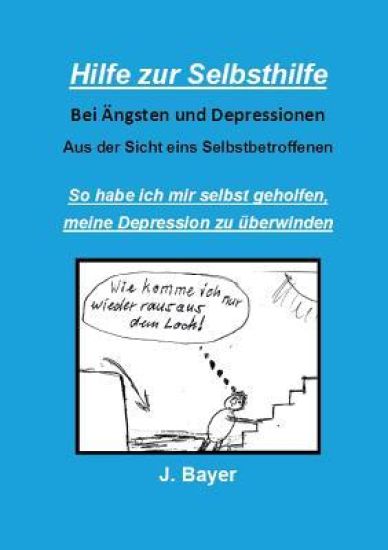
Hilfe zur Selbsthilfe bei Ängsten und Depressionen
Dieses Buch ist ein Buch aus der Sicht eines Selbstbetroffenen. Schon von fr hester Kindheit an war ich immer sehr sch chtern und zur ckhaltend und meine Stimmung war oft sehr niedergedr ckt. Im Kindergarten wurde ich von anderen Kindern immer wieder geh nselt, das gleiche Drama setzte sich auch in der Volksschule fort, nur unter noch viel h rteren Bedingungen. Hinzu kam auch, dass ich ein schlechter Sch ler war, gerade deshalb wurde ich von meinen Mitsch lern immer wieder gemobbt, ausgelacht, und verspottet. Dazu kamen immer wieder Pr geleien, manchmal hatte ich die ganze Klasse gegen mich. Geschlagen wurde ich auch immer wieder von meinen Lehrern und meinen Eltern, sodass eine depressive Phase auf die andere folgte. Im Alter von 32 Jahren kam dann zu meiner Sozialphobie und den immer wieder aufkommenden depressiven Stimmungen, noch eine Reihe von verschiedenartigen k rperlichen Schmerzen, auch im Herzbereich. Diese immer wieder auftretenden Schmerzen im Herzbereich bewirkten, von jetzt an bei mir eine furchtbare Angst vor einem Herzinfarkt und vor einem Herztod. Aber keiner der vielen rzte, die ich aufgesucht habe, konnte mir helfen und eine Psychotherapie wurde abgelehnt, mit der Begr ndung meine Schmerzen w ren chronisch und da k nnte man nichts mehr machen. Diesem Urteil der rzte wollte ich mich aber nicht beugen und habe mich im Laufe der Jahre selbst von meinen ngsten und Depressionen befreit. Dabei war es immer mein Bestreben, die beste Methode zu finden, wie ich mir selbst helfen kann. Diese Methode zur Selbsthilfe, die ich im Laufe der Jahre entwickelt habe, m chte ich in diesem Buch weitergeben, da ich annehme, dass meine Methode auch anderen Betroffenen helfen kann. Mir geht es bei diesem Buch haupts chlich darum, methodisch aufzuzeigen, wie man sich bei den verschiedenartigen ngsten selbst helfen kann. Dabei geht es nicht nur um Sozialphobien, sondern auch um viele andere spezifische ngste. Wenn man sich der Angst nicht stellt und ihr immer wied
Hilfe zur Selbsthilfe bei Ängsten und Depressionen
Dieses Buch ist ein Buch aus der Sicht eines Selbstbetroffenen. Schon von fr hester Kindheit an war ich immer sehr sch chtern und zur ckhaltend und meine Stimmung war oft sehr niedergedr ckt. Im Kindergarten wurde ich von anderen Kindern immer wieder geh nselt, das gleiche Drama setzte sich auch in der Volksschule fort, nur unter noch viel h rteren Bedingungen. Hinzu kam auch, dass ich ein schlechter Sch ler war, gerade deshalb wurde ich von meinen Mitsch lern immer wieder gemobbt, ausgelacht, und verspottet. Dazu kamen immer wieder Pr geleien, manchmal hatte ich die ganze Klasse gegen mich. Geschlagen wurde ich auch immer wieder von meinen Lehrern und meinen Eltern, sodass eine depressive Phase auf die andere folgte. Im Alter von 32 Jahren kam dann zu meiner Sozialphobie und den immer wieder aufkommenden depressiven Stimmungen, noch eine Reihe von verschiedenartigen k rperlichen Schmerzen, auch im Herzbereich. Diese immer wieder auftretenden Schmerzen im Herzbereich bewirkten, von jetzt an bei mir eine furchtbare Angst vor einem Herzinfarkt und vor einem Herztod. Aber keiner der vielen rzte, die ich aufgesucht habe, konnte mir helfen und eine Psychotherapie wurde abgelehnt, mit der Begr ndung meine Schmerzen w ren chronisch und da k nnte man nichts mehr machen. Diesem Urteil der rzte wollte ich mich aber nicht beugen und habe mich im Laufe der Jahre selbst von meinen ngsten und Depressionen befreit. Dabei war es immer mein Bestreben, die beste Methode zu finden, wie ich mir selbst helfen kann. Diese Methode zur Selbsthilfe, die ich im Laufe der Jahre entwickelt habe, m chte ich in diesem Buch weitergeben, da ich annehme, dass meine Methode auch anderen Betroffenen helfen kann.
Directionality and Logical Form
Directionality and Logical Form provides a detailed treatment of the syntax of focusing particles, such as only and even in a cross-linguistic perspective. The derivation of logical forms is shown to be under the control, not only of the ECP and subjacency, but also of directionality of government and the particular word-order parameter that holds in a given language: head-final languages systematically disallow certain derivations or readings that are available in head-initial languages. The reason is that heads that deviate in their selection properties from canonical head-finality project a directionality barrier. Various strategies are explored by which this barrier can be circumvented. Although the theory is developed mainly on the basis of the head position in German, it can be directly used to explain constraints on the scope of Wh-in-situ in Bengali and closely related languages. Audience: Syntacticians and semanticists interested in parametric variation, as well as linguists working on Germanic and/or Indo-Aryan languages.
Case and Linking in Language Comprehension

Case and Linking in Language Comprehension

Markus Bader; Josef Bayer

Springer
2010
nidottu
German is a language which has received a lot of attention in linguistics, and data from German had a substantial in?uence on the formation of linguistic theory. The in?uence this language had so far on psycholinguistics and on s- tactic processing in particular is much more limited, although the last 10 years have seen a growing interest in psycholinguistic investigations of German. The present monograph will build on earlier work and develop it further toward an account of syntactic comprehension on the basis of theoretical as well as - perimental investigations. The verb-?nal nature, the free order of constituents, and the morphological Case system of German offer a rich domain for exp- rations which will be shown to reshape our knowledge about human sentence processing in general. Much of the research which led to this monograph has been carried out at theFriedrichSchiller UniversityJenaandhasbeenconcluded atKonstanzU- versity. Our research has been supported between 1997 and 2005 by grant Ba 1178/4 of the Deutsche Forschungsgemeinschaft (DFG) under the title L- guage Comprehension and Variable Word Order - Syntactic and Extrasyntactic Factors in Processing German Sentences. We are indebted to the DFG for this continuous support over the years, and in particular to Dr. Manfred Briegel and Dr. Susanne Anschutz for their administrative help.
Case and Linking in Language Comprehension

Case and Linking in Language Comprehension

Markus Bader; Josef Bayer

Springer-Verlag New York Inc.
2006
sidottu
German is a language which has received a lot of attention in linguistics, and data from German had a substantial in?uence on the formation of linguistic theory. The in?uence this language had so far on psycholinguistics and on s- tactic processing in particular is much more limited, although the last 10 years have seen a growing interest in psycholinguistic investigations of German. The present monograph will build on earlier work and develop it further toward an account of syntactic comprehension on the basis of theoretical as well as - perimental investigations. The verb-?nal nature, the free order of constituents, and the morphological Case system of German offer a rich domain for exp- rations which will be shown to reshape our knowledge about human sentence processing in general. Much of the research which led to this monograph has been carried out at theFriedrichSchiller UniversityJenaandhasbeenconcluded atKonstanzU- versity. Our research has been supported between 1997 and 2005 by grant Ba 1178/4 of the Deutsche Forschungsgemeinschaft (DFG) under the title L- guage Comprehension and Variable Word Order - Syntactic and Extrasyntactic Factors in Processing German Sentences. We are indebted to the DFG for this continuous support over the years, and in particular to Dr. Manfred Briegel and Dr. Susanne Anschutz for their administrative help.
Directionality and Logical Form
Directionality and Logical Form provides a detailed treatment of the syntax of focusing particles, such as only and even in a cross-linguistic perspective. The derivation of logical forms is shown to be under the control, not only of the ECP and subjacency, but also of directionality of government and the particular word-order parameter that holds in a given language: head-final languages systematically disallow certain derivations or readings that are available in head-initial languages. The reason is that heads that deviate in their selection properties from canonical head-finality project a directionality barrier. Various strategies are explored by which this barrier can be circumvented. Although the theory is developed mainly on the basis of the head position in German, it can be directly used to explain constraints on the scope of Wh-in-situ in Bengali and closely related languages. Audience: Syntacticians and semanticists interested in parametric variation, as well as linguists working on Germanic and/or Indo-Aryan languages.