

Kirjailija
Josef Pieper
Kirjat ja teokset yhdessä paikassa: 65 kirjaa, julkaisuja vuosilta 1955-2025, suosituimpien joukossa Festschrift der Arbeitsgemeinschaft für Forschung des Landes Nordrhein-Westfalen zu Ehren des Herrn Ministerpräsidenten Karl Arnold. Vertaile teosten hintoja ja tarkista saatavuus suomalaisista kirjakaupoista.
65 kirjaa
Kirjojen julkaisuhaarukka 1955-2025.

In ordinary conversation, including among the 'educated,' the word 'sin' rarely gets mentioned except when one is trying to be coy or facetious. As Thomas Mann once said, 'sin' is nowadays 'an amusing word used only when one is trying to get a laugh.' But this small work will interpret sin in its true - that is, serious - meaning. What will emerge from its analysis is the discovery that the concept of sin can still serve to unlock the mystery of existence, at least for a thinking that wants to press down to the very foundations. In this work Pieper brings Plato, Augustine, and Thomas Aquinas into a living dialogue with T. S. Eliot, Andre Gide, even with Jean-Paul Sartre. As he shows in this powerful work, none of these writers leaves any doubt that the fact of sin is central: It is the willful denial of one's own life-ground, a denial that alone rightly bears the name 'sin.' Paradoxically, this reality is both willed and yet also pre-given, that is, both adventitious and yet somehow innate to our existence - a paradox which, next to the mystey of existence itself, is the most impenetrable mystery of all.
In ordinary conversation, including among the 'educated,' the word 'sin' rarely gets mentioned except when one is trying to be coy or facetious. As Thomas Mann once said, 'sin' is nowadays 'an amusing word used only when one is trying to get a laugh.' But this small work will interpret sin in its true - that is, serious - meaning. What will emerge from its analysis is the discovery that the concept of sin can still serve to unlock the mystery of existence, at least for a thinking that wants to press down to the very foundations. In this work Pieper brings Plato, Augustine, and Thomas Aquinas into a living dialogue with T. S. Eliot, Andre Gide, even with Jean-Paul Sartre. As he shows in this powerful work, none of these writers leaves any doubt that the fact of sin is central: It is the willful denial of one's own life-ground, a denial that alone rightly bears the name 'sin.' Paradoxically, this reality is both willed and yet also pre-given, that is, both adventitious and yet somehow innate to our existence - a paradox which, next to the mystey of existence itself, is the most impenetrable mystery of all.

Darstellungen und Interpretationen: Thomas von Aquin und die Scholastik
Josef Pieper
Felix Meiner Verlag
2001
sidottu
No better guide over the thousand-year period called the Middle Ages could be found than Josef Pieper. In this amazing tour de monde medievale, he moves easily back and forth between the figures and the doctrines that made medieval philosophy unique in Western thought. After reflecting on the invidious implications of the phrase "Middle Ages," Pieper turns to the fascinating personality of Boethius whose contribution to prison literature, The Consolation of Philosophy, is second only to the Bible in the number of manuscript copies. The Neo-Platonic figures - Dionysius and Eriugena - are the occasion for a discussion of negative theology. The treatment of Anselm of Canterbury's proof of God's existence involves later voices, e.g., Kant. Like other historians, Pieper is enamored of the twelfth century, which is regularly eclipsed by accounts of the thirteenth century. Pieper does justice to both. His account of the rivalry between Peter Abelard and Bernard of Clairvaux is masterful, nor does he fail to give John of Salisbury the space he deserves. The account is broken by the gradual replacement of the synthesis of faith and reason that had been achieved in the early Middle Ages by a new one that made use of Aristotle. Pieper gives a thorough and lively account of the struggle between Aristotelians and anti-Aristotelians, and the famous condemnations that put the effort of Saint Thomas Aquinas at risk. But the Summa theologiae is regarded by Pieper as the unique achievement of the period. If the early centuries, the medieval period, can be seen as moving toward the thirteenth and Thomas's unique achievement, subsequent centuries saw the decline of scholasticism and theappearance of harbingers of modern philosophy. The book closes with Pieper's thoughts on the permanent philosophical and theological significance of scholasticism and the Middle Ages. Once again, wearing his learning lightly, writing with a clarity that delights, Josef Pieper has taken the field from stuffier and more extended accounts.

Explains the meaning of death.

A single theme runs through the three essays on St. Thomas gather in this book. It is the theme of mystery or, more exactly, the response of the searching human intellect to the fact of mystery. Both the fact and the response are suggested in a short biography of St. Thomas that forms the first essay and are then sketched out in detail by a presentation of the “negative element” in his philosophy. The third essay shows that contemporary Existentialism is in basic agreement with the philosophia perennis on this fundamental element of philosophical thinking.
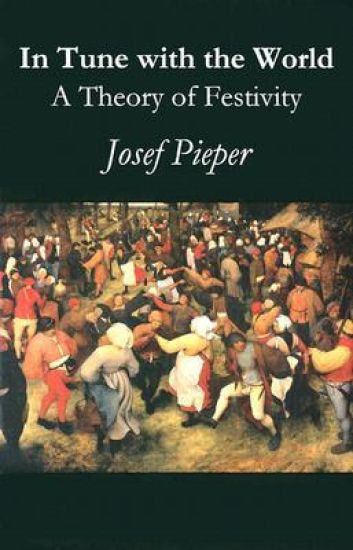
In this stimulating and still-timely study, Josef Pieper takes up a theme of paramount importance to his thinking – that festivals belong by rights among the great topics of philosophical discussion. As he develops his theory of festivity, the modern age comes under close and painful scrutiny. It is obvious that we no longer know what festivity is, namely, the celebration of existence under various symbolsPieper exposes the pseudo-festivals, in their harmless and their sinister forms: traditional feasts contaminated by commercialism; artificial holidays created in the interest of merchandisers; holidays by coercion, decreed by dictators the world over; festivals as military demonstrations; holidays empty of significance. And lastly we are given the apocalyptic vision of a nihilistic world which would seek its release not in festivities but in destruction.Formulated with Pieper's customary clarity and elegance, enhanced by brilliantly chosen quotations, this is an illuminating contribution to the understanding of traditional and contemporary experience.
In this elegantly written (and produced) work, Josef Pieper introduces the reader to an understanding that leisure is nothing less than "an attitude of mind and a condition of the soul that fosters a capacity to perceive the reality of the world." Beginning with the Greeks, and through a series of philosophic, religious, and historical examples, Pieper demonstrates that "Leisure has been, and always will be, the first foundation of any culture." Of the frenetic contemporary clamor for things, entertainment, and distraction, Pieper observes, "in our bourgeois Western world total labor has vanquished leisure. Unless we regain the art of silence and insight, the ability for non-activity, unless we substitute true leisure for our hectic amusements, we will destroy our culture -- and ourselves." For, to Pieper, slavery is a state of mind and soul into which entire peoples descend when mental, moral, spiritual, and political independence is corrupted by a preoccupation with material well-being. Long unavailable, this reprint of the original edition of 1952 includes an introduction by T. S. Eliot.



In The Four Cardinal Virtues, Joseph Pieper delivers a stimulating quartet of essays on the four cardinal virtues. He demonstrates the unsound overvaluation of moderation that has made contemporary morality a hollow convention and points out the true significance of the Christian virtues.