

Kirjailija
Josef Seifert
Kirjat ja teokset yhdessä paikassa: 14 kirjaa, julkaisuja vuosilta 2003-2021, suosituimpien joukossa The Philosophical Diseases of Medicine and their Cure. Vertaile teosten hintoja ja tarkista saatavuus suomalaisista kirjakaupoista.
14 kirjaa
Kirjojen julkaisuhaarukka 2003-2021.

Following an ardent debate in the 1930s on the question over whether something like a “Christian philosophy” exists, as Etienne Gilson, Jacques Maritain, and others held, the term was used by many thinkers and rejected by many others, not only by Heidegger who called it a contradiction in terms, an “iron wood,” but also by Thomists who wanted to see philosophy and Christian faith strictly separated. Seifert analyses five understandings of the term “Christian philosophy” which have never been expounded with such clarity and which he rejects for different, partly for opposite, reasons. He presents these senses of Christian philosophy, and his reasons for rejecting them, in clear, straight-forward language. He presents for the first time a series of eleven wholly different and thoroughly positive and fruitful ways of understanding the (rather misleading) term “Christian philosophy.” Identifying and distinguishing these legitimate ways to speak of “Christian philosophy” shed light on the manifold fruitful relations between reason and faith. In a second part of the book, Seifert gives an example of Christian philosophy in the sense of a philosophy of religion that shows the absolute presupposedness and necessity of the existence of human, divine, and angelic free will to make any sense of divine revelation and of Christian (but also of Muslim and Jewish) religion. In a third part, he presents a penetrating analysis of seven indubitable evidences that demonstrate the nature and real existence of human free will (in a so-called “libertarian” sense that rejects the thesis of the compatibility between free will and determinism). The book is introduced by the eminent Thomist philosopher, John Finnis.

Schuld Und Vergebung: Eine wahre Geschichte von der Bekehrung eines Abtreibungsarztes
Josef Seifert
Independently Published
2019
nidottu
Nahezu jedes Detail dieser Geschichte ist pure Wahrheit. Ein Abtreibungsarzt, der 60 000 Menschen get tet hat, wird nach schaurigen Tr umen, in denen ihm die von ihm ermordeten Kinder als Einj hrige, Zweij hrige, Zwanzigj hrige und Thomas von Aquin erscheinen, ein Zeuge f r den unendlichen Wert jedes menschlichen Lebens. Die Kinder fliehen im Traum vor ihm mit gellendem Aufschrei: Fort Fort Unser M rder naht Thomas, von dem der Arzt nie geh rt hatte und der die Kinder sch tzt, weist ihm mit unerbittlichen doch g tigen Worten den Weg zur Wahrheit. Nachdem er trotz seines Gesinnungswandels auf Dr ngen eines Verwandten noch eine Abtreibung durchf hrt, und auf dem Operationstisch und im entsetzlichsten seiner Tr ume das weiter schlagende Herz des Babys sieht, wird seine radikale Gesinnungs nderung Wirklichkeit.Nach einer Phase furchtbarer Gewissensqualen und Verzweiflung begegnet er der g ttlichen Barmherzigkeit durch die Betrachtung des ber hmten berlebensgro en Gem ldes Rembrandts, der das Gleichnis vom Verlorenen Sohn in berw ltigender k nstlerischer Tiefe darstellt. Der Kindesm rder f llt schluchzend vor dem Bild zu Boden. Tr nen der Reue vergie t er ber seine schweren Verbrechen. Sie mischen sich mit, und werden gel st von, Tr nen der Dankbarkeit und R hrung ber die g ttliche Barmherzigkeit. Aus einem Massenm rder, wie er selber sich bezeichnet, verwandelt er sich in einen unbedingten K mpfer f r das Leben, der Ungez hlten die Einsicht in den Wert jedes einzelnen Menschen erschlie t.Er erkennt klar die Wahrheit der Worte des hl. Thomas von Aquin, die dieser im Traum nachdr cklich und feierlich zu ihm gesprochen hat: "Ich erscheine Dir heute zum letzten Mal: wenn Du Dein m rderisches Tun nicht einstellst und Bu e tust, wird Dich ein schreckliches Schicksal ereilen.Doch will ich Dich nicht in Verzweiflung treiben noch blo durch den Blick auf Deine drohenden Strafen bewegen, Dein Leben zu ndern. Schau nur dieses herrliche Gesch pf an, trinke das Wunder dieser jungen Frau und ihrer Sch nheit in Dich ein, um das Gr uel Deiner Tat zu erkennen und jeden Mord wie den Satan selber zu meiden. In ihrem Anblick gelobe, Deine ganze Kraft f r den Schutz des Lebens jedes einzelnen Ungeborenen einzusetzen Denn jeder Mensch, ob sch n oder h sslich, ob gesund oder krank, ob bewusst oder unbewusst, ist einmalig und besitzt von Empf ngnis bis zum nat rlichen Tod eine unantastbare, heilige W rde. Auch ist er, trotz aller Lasten, die er anderen auferlegen mag, als ein Geschenk f r die Seinen und f r die ganze Menschheit auf Zeit und Ewigkeit geplant."Das Buch eignet sich vortrefflich f r erwartende M tter, die eine Abtreibung erw gen; es eignet sich auch, besonders auf Grund der Erfahrung der Bekehrung und des inneren Friedens des Abtreibungsarztes nach 60fachen Kindermord, f r Frauen, die eine Abtreibung begangen haben, f r Lebenssch tzer und junge Eltern, f r Seelsorger und Bioethiker und f r alle Menschen, denen der Schutz jedes menschlichen Lebens, das unaussprechlichen Wert besitzt, ein Herzensanliegen ist. Auf Grund seiner dramatischen Schilderung und wortgewaltigen Sprache ist das Buch auch f r Literaturabende, Kongresse ber Abtreibung oder Empf ngnisverh tung h chst empfehlenswert.

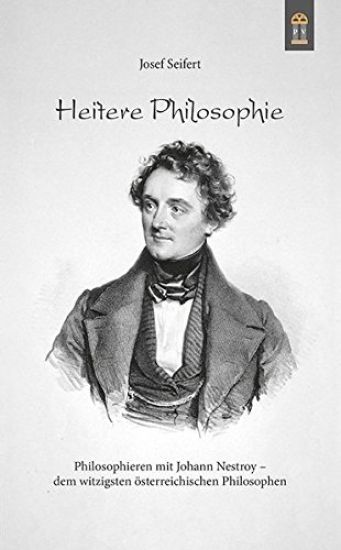
Gottes dritte Versuchung oder das Evangelium des Teufels
Josef Seifert
Patrimonium Aachen
2018
nidottu
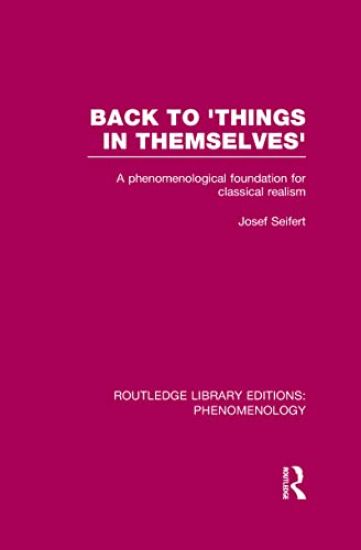
In an enlightening dialogue with Descartes, Kant, Husserl and Gadamer, Professor Seifert argues that the original inspiration of phenomenology was nothing other than the primordial insight of philosophy itself, the foundation of philosophia perennis. His radical rethinking of the phenomenological method results in a universal, objectivist philosophy in direct continuity with Plato, Aristotle and Augustine. In order to validate the classical claim to know autonomous being, the author defends Husserl's methodological principle "Back to things themselves" from empiricist and idealist critics, including the later Husserl, and replies to the arguments of Kant which attempt to discredit the knowability of things in themselves.Originally published in 1982, this book culminates in a phenomenological and critical unfolding of the Augustinian cogito, as giving access to immutable truth about necessary essences and the real existence of personal being.


In an enlightening dialogue with Descartes, Kant, Husserl and Gadamer, Professor Seifert argues that the original inspiration of phenomenology was nothing other than the primordial insight of philosophy itself, the foundation of philosophia perennis. His radical rethinking of the phenomenological method results in a universal, objectivist philosophy in direct continuity with Plato, Aristotle and Augustine. In order to validate the classical claim to know autonomous being, the author defends Husserl's methodological principle "Back to things themselves" from empiricist and idealist critics, including the later Husserl, and replies to the arguments of Kant which attempt to discredit the knowability of things in themselves.Originally published in 1982, this book culminates in a phenomenological and critical unfolding of the Augustinian cogito, as giving access to immutable truth about necessary essences and the real existence of personal being.
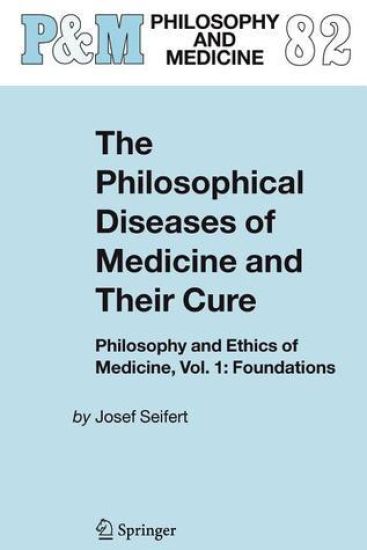
At all times physicians were bound to pursue not only medical tasks, but to reflect also on the many anthropological and metaphysical aspects of their discipline, such as on the nature of life and death, of health and sickness, and above all on the vital ethical dimensions of their practice. For centuries, almost for two millennia, how ever, those who practiced medicine lived in a relatively clearly defined ethical and implicitly philosophical or religious 'world-order' within which they could safely turn to medical practice, knowing right from wrong, or at least being told what to do and what not to do. Today, however, the situation has radically changed, mainly due to three quite different reasons: First and most obviously, physicians today are faced with a tremendous development of new possibilities and techniques which allow previously unheard of medical interventions (such as cloning, cryo-conservation, ge netic interference, etc. ) which call out for ethical reflection and wise judgment but regarding which there is no legal and medical ethical tradition. Traditional medical education did not prepare physicians for coping with this new brave world of mod em medicine. Secondly, there are the deep philosophical crises and the philosophical diseases of medicine mentioned in the preface that lead to a break-down of firm and formative legal and ethical norms for medical actions.
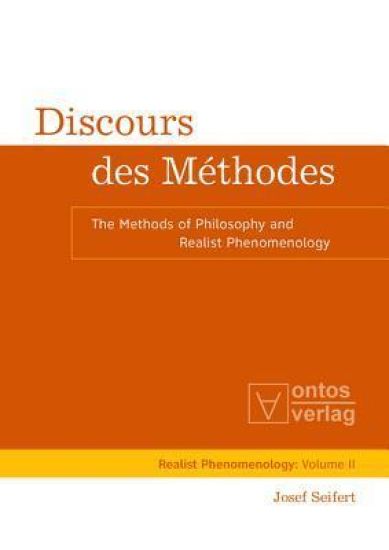
The term "method" of realist phenomenology and philosophy can refer to three kinds of things which are being explored extensively in this work: (1) Kinds of philosophical knowledge used to return to things themselves: intellectual "vision" of necessary intelligible essences, insights into necessary states of affairs, knowledge of less than necessary essences, knowledge of existence as such, of the ego cogitans and of a concretely existing world, other persons, and the absolute being, deductive forms of reasoning, and others. (2) Ways to achieve such knowledge: such as various types of distinctions, asking proper questions, correct use of analogies, and replies to objections. (3) Finally, these methods include several "tricks" and devices such as methodic doubt and epoché; these are subordinated to the other methods, and neither necessary nor universal tools of all philosophical knowledge.

De Veritate - Über die Wahrheit, Band 2, Der Streit um die Wahrheit
Josef Seifert
de Gruyter
2009
sidottu
Der Streit um die Wahrheit richtet sich vor allem gegen die Fassung der Urteilswahrheit als einer "Ubereinstimmung mit den Sachen." Eine kritische Analyse der Einwande verschiedenster alternativer Wahrheitstheorien (Evidenztheorie, Koharenztheorie, Konsens- und Diskurstheorie, pragmatische Wahrheitstheorien, existentialistisch-heideggerianische, Jasper'sche, wittgensteinianische und andere) uberwindet die Einwande gegen die klassische Korrespondenztheorie durch einen vertieften Begriff des Sachverhalts. Auch in der Verteidigung der Korrespondenztheorie durch Tarski, Popper, Albert und andere neuere Verfechter mussen diverse Mangel uberwunden werden, um zu erkennen, dass sich jene schlichte Urgegebenheit der Urteilswahrheit aus keinem Teilbereich der nicht-formalisierten Sprache und des unermesslichen Reiches des Seins, ja nicht einmal aus der Sphare des Nichts verdrangen oder durch etwas von Korrespondenz (Adaquatio) Verschiedenes ersetzen lasst."

Der erste Band des Uber die Wahrheit bietet eine philosophische Untersuchung: (1) der intrinischen und extrinsischen Bedeutungen von "Wahrheit des Seins" - etwa Seinsautonomie, Realitat, Wesensentsprechung, Entsprechung im Verhaltnis zur Idee, Intelligibilitat, absolut umfassende "innere Seinswahrheit." (2) der Wahrheit des Erkennens: Erkenntniswahrheit ist eine eigentumliche seinsentdeckende "Entsprechung" von Akten mit allen Arten von Seiendem und Sachverhalten. (3) der logischen Wahrheit als praziser Korrespondenz zwischen Urteil (Satz) und Sachverhalt. (4) Wahrheit ist nicht nur Eigenschaft der von Menschen gedachten Urteile, sondern setzt ideale, zeitlose, unendlich viele und perfekte Begriffe und Urteilsinhalte voraus. (5) Die Beziehung zwischen Wahrheit und Person gipfelt in dem letzten metaphysischen Zusammenfallen der Wahrheit selbst in allen ihren Dimensionen ontologischer, epistemologischer, axiologischer und logischer Dimensionen mit dem absoluten, personalen Sein.: "Ich bin die Wahrheit." Dieses "personale Gesicht" der Wahrheit kann aber unmoglich das eines blossen Menschen sein."

The Philosophical Diseases of Medicine and their Cure
Josef Seifert
Springer-Verlag New York Inc.
2004
sidottu
At all times physicians were bound to pursue not only medical tasks, but to reflect also on the many anthropological and metaphysical aspects of their discipline, such as on the nature of life and death, of health and sickness, and above all on the vital ethical dimensions of their practice. For centuries, almost for two millennia, how ever, those who practiced medicine lived in a relatively clearly defined ethical and implicitly philosophical or religious 'world-order' within which they could safely turn to medical practice, knowing right from wrong, or at least being told what to do and what not to do. Today, however, the situation has radically changed, mainly due to three quite different reasons: First and most obviously, physicians today are faced with a tremendous development of new possibilities and techniques which allow previously unheard of medical interventions (such as cloning, cryo-conservation, ge netic interference, etc. ) which call out for ethical reflection and wise judgment but regarding which there is no legal and medical ethical tradition. Traditional medical education did not prepare physicians for coping with this new brave world of mod em medicine. Secondly, there are the deep philosophical crises and the philosophical diseases of medicine mentioned in the preface that lead to a break-down of firm and formative legal and ethical norms for medical actions.
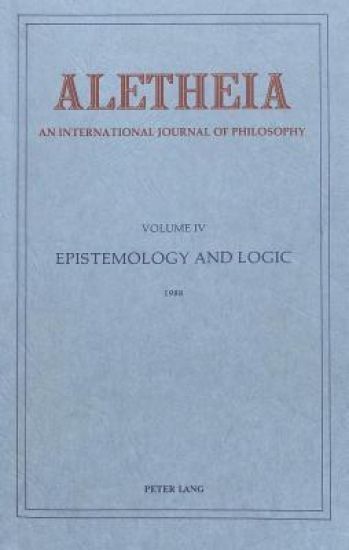
"Aletheia," an international yearbook of philosophy, is devoted to the systematic inquiry into the central themes of Western philosophy, such as the nature and kinds of knowledge, the foundations of morality, the nature of substance, of causality, value, the person, beauty, and religion. The yearbook seeks to continue the philosophical tradition of the early phenomenological realists (e.g. the early Husserl, Adolf Reinach, Alexander Pfander, Max Scheler, Roman Ingarden, and Dietrich von Hildebrand) who, in opposing historicism and Kantianism, turned -back to things themselves-. In overcoming the relativization of truth and being to individual minds, to language, economic or historical processes, or to transcendental consciousness, "Aletheia" seeks to provide a phenomenological foundation for classical realism. "Aletheia" also maintains a close and vital relationship with the Polish school of personalism and ethics (e.g. Roman Ingarden, Tadeusz Styczeń, and Karol Wojtyła), and it is hoped that the relatively recent interest of analytic philosophers in the work of Husserl, Reinach, Ingarden and others will provide new opportunities for exchange."