Kirjojen hintavertailu. Mukana 12 390 323 kirjaa ja 12 kauppaa.

Kirjailija

Joseph A. Conforti

Kirjat ja teokset yhdessä paikassa: 6 kirjaa, julkaisuja vuosilta 2006-2016, suosituimpien joukossa Another City upon a Hill. Vertaile teosten hintoja ja tarkista saatavuus suomalaisista kirjakaupoista.

6 kirjaa

Kirjojen julkaisuhaarukka 2006-2016.

Lizzie Borden on Trial

Lizzie Borden on Trial

Joseph A. Conforti

University Press of Kansas
2016
nidottu
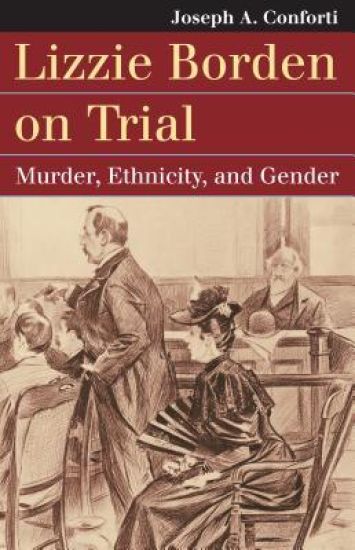
Most people could probably tell you that Lizzie Borden ""took an axe and gave her mother forty whacks,"" but few could say that, when tried, Lizzie Borden was acquitted, and fewer still, why. In Joseph A. Conforti's engrossing retelling, the case of Lizzie Borden, sensational in itself, also opens a window on a time and place in American history and culture.Surprising for how much it reveals about a legend so ostensibly familiar, Conforti's account is also fascinating for what it tells us about the world that Lizzie Borden inhabited. As Conforti—himself a native of Fall River, the site of the infamous murders—introduces us to Lizzie and her father and step-mother, he shows us why who they were matters almost as much to the trial's outcome as the actual events of August 4, 1892. Lizzie, for instance, was an unmarried woman of some privilege, a prominent religious woman who fit the profile of what some characterized as a ""Protestant nun."" She was also part of a class of moneyed women emerging in the late 19th century who had the means but did not marry, choosing instead to pursue good works and at times careers in the helping professions. Many of her contemporaries, we learn, particularly those of her class, found it impossible to believe that a woman of her background could commit such a gruesome murder.As he relates the details, known and presumed, of the murder and the subsequent trial, Conforti also fills in that background. His vividly written account creates a complete picture of the Fall River of the time, as Yankee families like the Bordens, made wealthy by textile factories, began to feel the economic and cultural pressures of the teeming population of native and foreign-born who worked at the spindles and bobbins. Conforti situates Lizzie's austere household, uneasily balanced between the well-to-do and the poor, within this social and cultural milieu—laying the groundwork for the murder and the trial, as well as the outsize reaction that reverberates to our day. As Peter C. Hoffer remarks in his preface, there are many popular and fictional accounts of this still-controversial case, ""but none so readable or so well-balanced as this.

Lizzie Borden on Trial

Lizzie Borden on Trial

Joseph A. Conforti

University Press of Kansas
2015
sidottu
Most people could probably tell you that Lizzie Borden “took an axe and gave her mother forty whacks,” but few could say that, when tried, Lizzie Borden was acquitted, and fewer still, why. In Joseph A. Conforti’s engrossing retelling, the case of Lizzie Borden, sensational in itself, also opens a window on a time and place in American history and culture.Surprising for how much it reveals about a legend so ostensibly familiar, Conforti’s account is also fascinating for what it tells us about the world that Lizzie Borden inhabited. As Conforti—himself a native of Fall River, the site of the infamous murders—introduces us to Lizzie and her father and step-mother, he shows us why who they were matters almost as much to the trial’s outcome as the actual events of August 4, 1892. Lizzie, for instance, was an unmarried woman of some privilege, a prominent religious woman who fit the profile of what some characterized as a “Protestant nun.” She was also part of a class of moneyed women emerging in the late 19th century who had the means but did not marry, choosing instead to pursue good works and at times careers in the helping professions. Many of her contemporaries, we learn, particularly those of her class, found it impossible to believe that a woman of her background could commit such a gruesome murder.As he relates the details, known and presumed, of the murder and the subsequent trial, Conforti also fills in that background. His vividly written account creates a complete picture of the Fall River of the time, as Yankee families like the Bordens, made wealthy by textile factories, began to feel the economic and cultural pressures of the teeming population of native and foreign-born who worked at the spindles and bobbins. Conforti situates Lizzie’s austere household, uneasily balanced between the well-to-do and the poor, within this social and cultural milieu—laying the groundwork for the murder and the trial, as well as the outsize reaction that reverberates to our day. As Peter C. Hoffer remarks in his preface, there are many popular and fictional accounts of this still-controversial case, “but none so readable or so wellbalanced as this.”
Another City upon a Hill

Another City upon a Hill

Joseph A. Conforti

University of Massachusetts Press
2013
nidottu
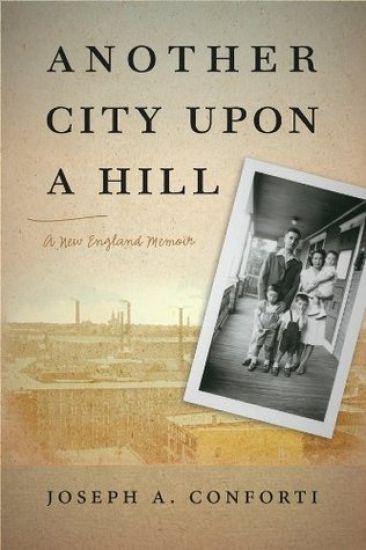
This gripping memoir is both a personal story and a portrait of a distinctive New England place--Fall River, Massachusetts, once the cotton cloth capital of America. Growing up, Joseph Conforti's world was defined by rolling hills, granite mills, and forests of triple-deckers. Conforti, whose mother was Portuguese and whose father was Italian, recounts how he negotiated those identities in a city where ethnic heritage mattered. Paralleling his own account, Conforti shares the story of his family, three generations of Portuguese and Italians who made their way in this once-mighty textile city.
Samuel Hopkins and the New Divinity Movement

Samuel Hopkins and the New Divinity Movement

Joseph a. Conforti

Wipf Stock Publishers
2008
nidottu
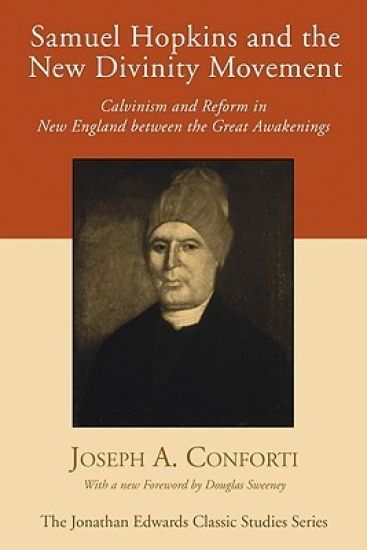
Samuel Hopkins was the closest friend and disciple of the man generally considered to be the greatest religious thinker America has produced--Jonathan Edwards. Hopkins was also a founder and leading spokesman of the New Divinity Movement, a major religious movement in New England congregationalism from 1740 to 1800. The author here combines biographical detail with a balanced and scholarly assessment of the historical and theological significance of this influential Calvinist thinker.
Saints and Strangers

Saints and Strangers

Joseph A. Conforti

Johns Hopkins University Press
2006
pokkari
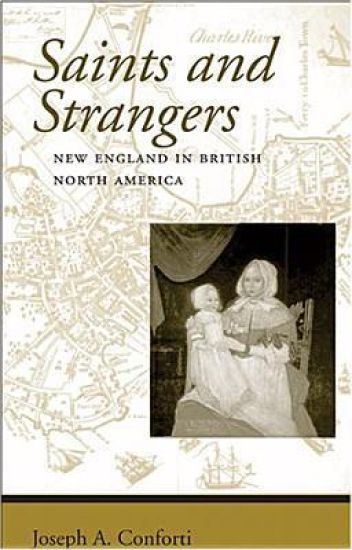
In the first general history of colonial New England to be published in over twenty-five years, Joseph A. Conforti synthesizes current and classic scholarship to explore how Puritan saints and "strangers" to Puritanism participated in the making of colonial New England. Massachusetts Governor John Winthrop's famous description of New England as a "city upon a hill" has tended to reduce the region's history to an exclusively Pilgrim-Puritan drama, a world of narrow-minded founders, the First Thanksgiving, steepled churches, and the Salem witchcraft trials. In a concise volume aimed at general readers and college students as well as historians, Conforti shows that New England was neither as Puritan nor as insular as most familiar stories imply. As the region evolved into British America's preeminent maritime region, the Atlantic Ocean served as a highway of commercial and cultural encounter, connecting white English settlers to different races and religious communities of the transatlantic world. The Puritan elect-but also Natives, African slaves, and non-Puritan white settlers-became active participants in the creation of colonial New England. Conforti discusses how these subcommunities of white, red, and black strangers to Protestant piety retained their own cultures, coexisted, and even thrived within and beyond the domains of Puritan settlement, creating tensions and pressure points in the later development of early America.
Saints and Strangers

Saints and Strangers

Joseph A. Conforti

Johns Hopkins University Press
2006
sidottu
In the first general history of colonial New England to be published in over twenty-five years, Joseph A. Conforti synthesizes current and classic scholarship to explore how Puritan saints and "strangers" to Puritanism participated in the making of colonial New England. Massachusetts Governor John Winthrop's famous description of New England as a "city upon a hill" has tended to reduce the region's history to an exclusively Pilgrim-Puritan drama, a world of narrow-minded founders, the First Thanksgiving, steepled churches, and the Salem witchcraft trials. In a concise volume aimed at general readers and college students as well as historians, Conforti shows that New England was neither as Puritan nor as insular as most familiar stories imply. As the region evolved into British America's preeminent maritime region, the Atlantic Ocean served as a highway of commercial and cultural encounter, connecting white English settlers to different races and religious communities of the transatlantic world. The Puritan elect-but also Natives, African slaves, and non-Puritan white settlers-became active participants in the creation of colonial New England. Conforti discusses how these subcommunities of white, red, and black strangers to Protestant piety retained their own cultures, coexisted, and even thrived within and beyond the domains of Puritan settlement, creating tensions and pressure points in the later development of early America.