Kirjojen hintavertailu. Mukana 12 390 323 kirjaa ja 12 kauppaa.

Kirjailija

Joseph A. Tainter

Kirjat ja teokset yhdessä paikassa: 5 kirjaa, julkaisuja vuosilta 2003-2021, suosituimpien joukossa Kuinka yhteiskunnat romahtavat. Vertaile teosten hintoja ja tarkista saatavuus suomalaisista kirjakaupoista.

Mukana myös kirjoitusasut: Joseph A Tainter

5 kirjaa

Kirjojen julkaisuhaarukka 2003-2021.

Kuinka yhteiskunnat romahtavat

Kuinka yhteiskunnat romahtavat

Joseph A. Tainter

Oppian
2021
sidottu
Kuinka yhteiskunnat romahtavat -kirjassa antropologi, professori Joseph A. Tainter tutkii useita historiallisia yhteiskuntia, jotka ovat päätyneet romahdukseen. Erityisen tarkastelun kohteena ovat Länsi-Rooman valtakunta, klassinen mayakulttuuri ja Chaco Canyonin puebloyhteiskunta. Löytyykö tuhojen taustalta yhteisiä, yleispäteviä tekijöitä, joilla on merkitystä myös nykymaailmassa? Voiko romahdus olla jopa tarkoituksenmukainen ratkaisu? Tainter yhdistää arkeologiaa, antropologiaa sekä yhteiskunta- ja taloustiedettä selittääkseen monenlaisten yhteiskuntien romahdusta. Suomenkielistä julkaisua varten professori Tainter on kirjoittanut uuden esipuheen, jossa hän esittelee tuoreimpia tutkimushankkeitaan.

L'effondrement des sociétés complexes

L'effondrement des sociétés complexes

Joseph A Tainter

Le Retour Aux Sources
2020
pokkari
La d sint gration politique est, travers l'Histoire, une caract ristique constante des soci t s humaines. Lorsque le moteur de l' conomie mondiale tousse et h site, comme il le fit en 2008 avec une gigantesque crise bancaire et mon taire, les experts se demandent si, cette fois-ci, la fin de tout est r ellement proche. Mais, au juste, quand et pourquoi les tats, les empires et les civilisations s'effondrent-ils ? Et, inversement, quand et pourquoi survivent-ils, et continuent-ils de prosp rer en bravant des p rils insens s? L'auteur passe en revue une vingtaine de cas d'effondrement, et examine les diverses explications donn es depuis plus de deux mille ans. En se concentrant sur trois cas d'effondrement bien document s, les Romains, les Mayas et les Chacoans, il d veloppe une nouvelle th orie, dont la port e est consid rable. Les id es de l'auteur soul vent ainsi des questions nouvelles et cruciales sur l'avenir des soci t s industrielles. Et bien au-del des sp cialistes des domaines tudi s, cet ouvrage int ressera tous ceux qui s'interrogent sur l'avenir de notre civilisation.
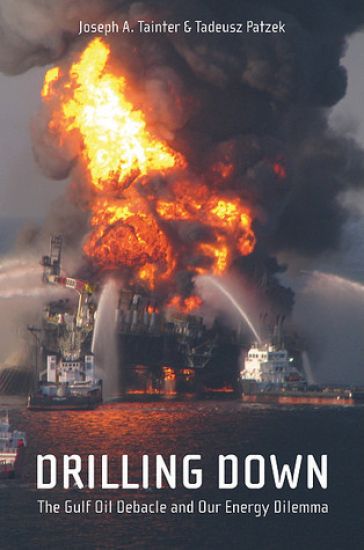
Drilling Down

Drilling Down

Joseph A. Tainter; Tadeusz W. Patzek

Springer-Verlag New York Inc.
2011
nidottu
For more than a century, oil has been the engine of growth for a society that delivers an unprecedented standard of living to many. We now take for granted that economic growth is good, necessary, and even inevitable, but also feel a sense of unease about the simultaneous growth of complexity in the processes and institutions that generate and manage that growth. As societies grow more complex through the bounty of cheap energy, they also confront problems that seem to increase in number and severity. In this era of fossil fuels, cheap energy and increasing complexity have been in a mutually-reinforcing spiral. The more energy we have and the more problems our societies confront, the more we grow complex and require still more energy. How did our demand for energy, our technological prowess, the resulting need for complex problem solving, and the end of easy oil conspire to make the Deepwater Horizon oil spill increasingly likely, if not inevitable? This book explains the real causal factors leading up to the worst environmental catastrophe in U.S. history, a disaster from which it will take decades to recover.
Supply-Side Sustainability

Supply-Side Sustainability

Timothy F. H. Allen; Joseph A. Tainter; Thomas W. Hoekstra

Columbia University Press
2003
pokkari
While environmentalists insist that lower rates of consumption of natural resources are essential for a sustainable future, many economists dismiss the notion that resource limits act to constrain modern, creative societies. The conflict between these views tinges political debate at all levels and hinders our ability to plan for the future. Supply-Side Sustainability offers a fresh approach to this dilemma by integrating ecological and social science approaches in an interdisciplinary treatment of sustainability. Written by two ecologists and an anthropologist, this book discusses organisms, landscapes, populations, communities, biomes, the biosphere, ecosystems and energy flows, as well as patterns of sustainability and collapse in human societies, from hunter-gatherer groups to empires to today's industrial world. These diverse topics are integrated within a new framework that translates the authors' advances in hierarchy and complexity theory into a form useful to professionals in science, government, and business. The result is a much-needed blueprint for a cost-effective management regime, one that makes problem-solving efforts themselves sustainable over time. The authors demonstrate that long-term, cost-effective resource management can be achieved by managing the contexts of productive systems, rather than by managing the commodities that natural systems produce.