Kirjojen hintavertailu. Mukana 12 390 323 kirjaa ja 12 kauppaa.

Kirjailija

Joseph B. Lumpkin

Kirjat ja teokset yhdessä paikassa: 32 kirjaa, julkaisuja vuosilta 2004-2019, suosituimpien joukossa Lost Books of the Bible. Vertaile teosten hintoja ja tarkista saatavuus suomalaisista kirjakaupoista.

Mukana myös kirjoitusasut: Joseph B Lumpkin

32 kirjaa

Kirjojen julkaisuhaarukka 2004-2019.

The Gnostic New Testament And Jewels From Nag Hammadi

The Gnostic New Testament And Jewels From Nag Hammadi

Joseph B. Lumpkin

Fifth Estate Publishing
2017
nidottu
This book contains the most powerful and sought after compilation of Gnostic texts available. Gnostic writings discovered in the areas of Nag Hammadi, Cairo, Oxyrynchus, and around the world have been placed in a single volume to allow the reader an appreciation of the theology and deep wisdom held in the Gnostic sect of the Christian faith. Included in this book is information on various Gnostic thoughts and beliefs, which will help the reader better navigate a Christian theology vastly different from modern day Christianity. Within the texts are notes, commentary, definitions, and theological and biblical references. This volume includes the following texts: The Gospel of Truth, The Gospel Of Thomas, The Gospel of Barnabas, The Gospel of Peter, The Apocryphon of John, The First Apocalypse of James, The Second Apocalypse of James, The Gospel of Philip, The Gospel of Judas, The Gospel Of Mary Magdalene, Eugnostos the Blessed, and The Sophia of Jesus Christ
The Sophia of Jesus Christ and Eugnostos the Blessed: The Divine Feminine and T
Presented here are the Books of "The Sophia of Jesus Christ" (also called "The Wisdom of Jesus Christ") and "Eugnostos the Blessed" with extensive commentary on the ancient texts, Gnosticism, and the Divine Feminine.Gnosticism holds a special and unique place in the formation of Christianity. The theology presented by the Gnostics demands a balance of male and female "energies". In this book we will explore Gnosticism and the Divine Feminine through the lens of two great Gnostic texts. We will see the influence of Gnosticism and how their idea of the Divine Feminine effected orthodox or mainline Christianity. The treatise of "Eugnostos the Blessed" (50-150 A.D.) and the gospel called, "The Sophia of Jesus Christ", (50-200 A.D.) are presented together in a single volume, due to their close and undeniable connection. In fact, one borrowed heavily from the other. "The Sophia of Jesus Christ", also called "The Wisdom of Jesus Christ", seems to be a later and Christianized version of "Eugnostos the Blessed", a non-Christian Gnostic text. Gnosticism is complex and deserves explanation in order to better understand the texts. Extensive history, background and commentary are provided in order to reveal the inner working of Gnosticism, the place of women in their theology, and how Gnosticism influenced the Christianity of today.
Enoch, Jubilees, Jasher

Enoch, Jubilees, Jasher

Joseph B Lumpkin

Fifth Estate Publishing
2014
pokkari
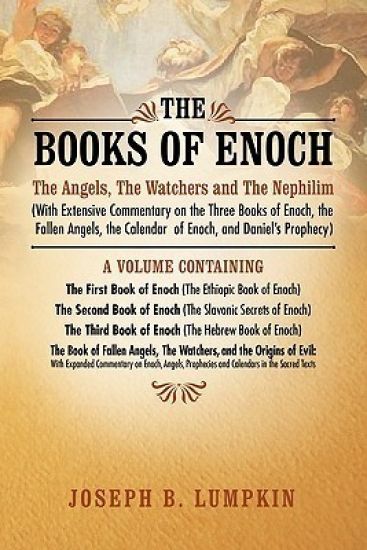
Three of the most popular and sought after apocryphal books are now presented in a single volume. -The Book of Enoch is quoted by Jude, cited by Peter, and read by the apostles, Enoch (1 Enoch) informs our ideas of angels and demons. The book describes the fall of a group of angels called, the Watchers, who took the daughters of men as wives and fathered the Nephilim (Genesis 6: 1-2). Enoch goes on to record amazing visions of heaven and the workings thereof. Enoch is an ancient Jewish religious work, traditionally ascribed to Enoch, the great-grandfather of Noah. It is regarded as canonical by the Ethiopian Orthodox Church.-The Book of Jubilees, also known as The Little Genesis and The Apocalypse of Moses, opens with an extraordinary claim of authorship. It is attributed to the very hand of Moses; penned while he was on Mount Sinai, as an angel of God dictated to him regarding those events that transpired from the beginning of the world. The story is written from the viewpoint of the angel. The angelic monolog takes place after the exodus of the children of Israel out of Egypt. The setting is atop Mount Sinai, where Moses was summoned by God. The text then unfolds as the angel reveals heaven's viewpoint of history. We are lead through the creation of man, Adam's fall from grace, the union of fallen angels and earthly women, the birth of demonic offspring, the cleansing of the earth by flood, and the astonishing claim that man's very nature was somehow changed, bringing about a man with less sinful qualities than his antediluvian counterpart. The story goes on to fill in many details in Israel's history, ending at the point in time when the dictation began on the mount.-The Book of Jasher reveals a large quantity of additional information about the period between divine creation and the time of Joshua's leadership over Israel when the Israelites enter into the land of Canaan. The Book of Jasher includes details about the antediluvian patriarchs, angels, watchers, the flood, the tower of Babel, and many other events mentioned in the Bible. The tales are expanded and infused with detail not previously available. This means we receive insight into the lives of Abraham, Noah, Enoch, Joseph, and many other biblical figures. We come to understand how they became great and why they acted as they did. We are also given hitherto unknown knowledge of historical events. We are shown how God's hand shaped history through his love and anger. We see how his disappointment with men and angels ended in earth's near total destruction.
Followers of the Way: How the Message of Jesus Became Christianity
The first fifty years of the faith were tumultuous and politically charged, not because of Roman influence, but due to disagreements within the new Jesus sect. Fundamental doctrines were forming within the fires of personal conflict among the first elders.Did Jesus set out to start a new religion or simply correct the spiritual course of Judaism?What were his intentions? What did he wish to accomplish?After his death who should best direct the new sect?Was James, the brother of Jesus, correct in wishing to keep the new sect Jewish, or was Paul sent by God to guide the new movement?James and the other elders lived with Jesus for three years. Did they understand his mission and message or did Paul, who never met Jesus in the flesh, interpret his intentions more accurately?Did Paul champion the cause, or did Paul hijack the sect and usurp authority from the pillars of the faith?By examining the earliest and most ancient texts of the faith, the original and unaltered words and intentions of Jesus may be seen in a brighter light. With fresh insight we may better understand the evolution and journey of a new movement from a small Jewish sect to a world religion.