Kirjojen hintavertailu. Mukana 12 595 353 kirjaa ja 12 kauppaa.

Kirjailija

Joseph Beuys

Kirjat ja teokset yhdessä paikassa: 13 kirjaa, julkaisuja vuosilta 2007-2025, suosituimpien joukossa Joseph Beuys: Intuition!. Vertaile teosten hintoja ja tarkista saatavuus suomalaisista kirjakaupoista.

13 kirjaa

Kirjojen julkaisuhaarukka 2007-2025.

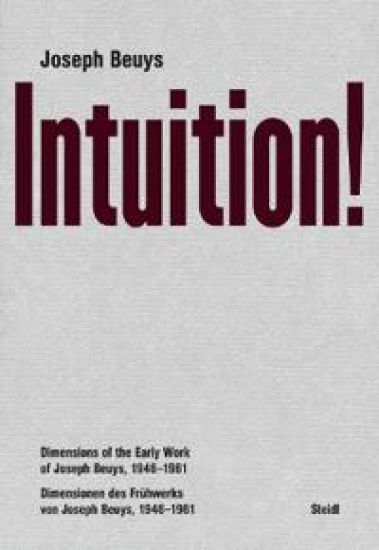
Joseph Beuys: Intuition!

Joseph Beuys: Intuition!

Joseph Beuys; Harald Kunde

Steidl Verlag
2022
sidottu
How Beuys combined his political, scientific, spiritual and artistic concerns into a compelling vision of "social sculpture"This book examines the crucial period between Joseph Beuys' (1921-86) return to his hometown of Kleve after World War II at the age of 24 and his appointment as a professor at the Kunstakademie D sseldorf in 1961. During this "incubation" phase, key themes relevant to his future work emerged, which structure this book: biography as material for artistic formation; poetry/romanticism; natural sciences: physics, chemistry, botany, zoology and geography; philosophy/anthropology and Steiner; economics, capitalism, labor, politics. The aim of this book, along with the 2021 exhibition of the same name at Museum Kurhaus Kleve for which it is the catalog, is neither to venerate a local saint of Kleve nor to topple an artist from an earlier generation. Instead it highlights the influences and ideas that saw Beuys develop from a "sensitive traditionalist" into a "visionary social sculptor."

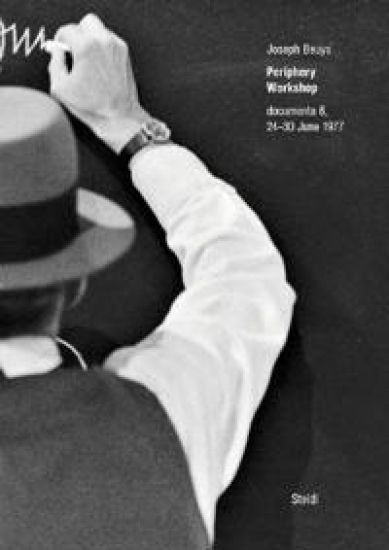
Joseph Beuys: Periphery Workshop

Joseph Beuys: Periphery Workshop

Joseph Beuys

Steidl Verlag
2022
sidottu
Diagrams as drawing as pedagogy: Beuys' Documenta workshop on expanding EuropeOn April 27 1973, Joseph Beuys (1921-86) founded the Free International University for Creativity and Interdisciplinary Research, a staunchly antiestablishment institution designed to help individuals realize their creative potential (regardless of their social, economic and educational backgrounds); and for that creativity--through art--to foster social progress. As part of the university, Beuys staged an ambitious series of 13 workshops over 100 days at Documenta 6 in 1977, including the Migrant Workshop, the Violence and Behavior Workshop, the Nuclear Energy and Alternatives Workshop, and--the subject of this book--the Periphery Workshop. At the heart of the Periphery Workshop were, in Beuys' words, the themes of "peripheral regions Europe / enlarging the EEC / France-German axis / common strategies for the regions and the Mediterranean countries." Visitors were invited to discuss and ask Beuys any question on these topics. Beuys filled dozens of blackboards with fascinating drawings, diagrams and thoughts--intricate artworks that form the basis of this book.
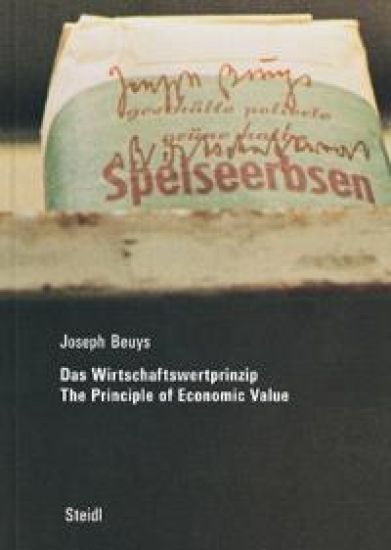
Joseph Beuys: Das Wirtschaftswertprinzip (2002)
On Beuys' sculptural indictment of economic valueA sumptuous room in the Museum of Fine Arts in Ghent in 1980: on its wall hang Flemish Old Master paintings, gleaming in their gilt frames; yet in the middle of the room stand industrial metal shelves, sparsely stocked with packets of everyday perishable products: salt, flour, olives and peas. Each packet is signed by Joseph Beuys and labeled with "1 economic value." This was Beuys' compelling installation Wirtschaftswerte (Economic Values), a declaration that culture had once and for all been reduced to economic property. The products selected were notably from the German Democratic Republic, heightening disparities between West and East, capitalism and socialism, high and low culture, the mundane and the luxurious. Das Wirtschaftswertprinzip / The Principle of Economic Value documents the original installation, which Beuys later recreated elsewhere and expanded in a series of multiples. Originally published in 1990, the book has now been redesigned by Klaus Staeck and Gerhard Steidl.
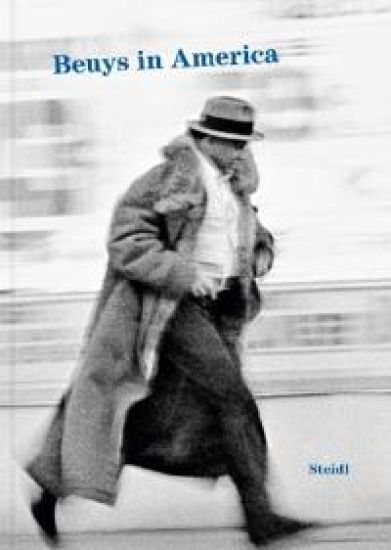
Joseph Beuys: Beuys in America

Joseph Beuys: Beuys in America

Joseph Beuys; Klaus Staeck

Steidl Verlag
2022
sidottu
A reconceived edition of Steidl's classic account of Beuys' 1974 American tourOn January 9 1974, Joseph Beuys (1921-86), together with Klaus Staeck and Gerhard Steidl, traveled for the first time to America. This trip was a carefully planned performance that took place in airplanes, taxis, hotels, universities and galleries, and was comprehensively documented in photographs and video. The tour began with a lecture at New York's New School, visited by artists including Claes Oldenburg, Lil Picard and Al Hansen; the next stop was Chicago, the site of more controversial lectures and an unexpected performance reenacting the death of John Dillinger; then Minneapolis, with more conferences and discussions. Upon returning to Germany, the hundreds of photographs and many hours of videotape were assembled, but it was only in October 1985, shortly before his death, that Beuys finalized the sequence for the book. Originally published in 1987, this new Steidl edition has been wholly reconceived by Klaus Staeck and Gerhard Steidl.
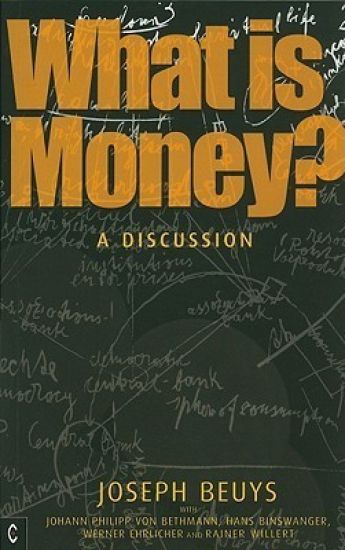
What is Money?

What is Money?

Joseph Beuys; Ulrich Rosch

Clairview Books
2010
nidottu
'If we want to achieve a different society where the principle of money operates equitably, if we want to abolish the power money has developed over people historically, and position money in relationship to freedom, equality and fraternity ...then we must elaborate a concept of culture and a concept of art where every person must be an artist...' - Joseph Beuys. The world of finance exerts a huge influence over our lives, being responsible for economic turmoil and seemingly interminable peaks and crashes. Whereas money was once a simple means of exchange, today it is a commodity in itself and as 'capital' exerts power over individuals, degrading work to tradable labour. Can we find a new way of understanding money today, so that we can begin to overcome its destructive aspects? In November 1984, a remarkable discussion took place at the Meeting House in Ulm, Germany. It featured the radical artist Joseph Beuys, two professors (of Financial Sciences and Political Economics) and a banker. Beuys would appear to be out of place among these heavyweight academics, professionals and authors. But rather than being intimidated by his fellow panellists, Beuys - also a social and political activist - demonstrates his groundbreaking thinking on the subject, and his ability to bring fresh perspectives. Here for the first time is a transcript of this debate, together with analysis by Ulrich Rosch, which will be of equal interest to artists, economists and spiritual seekers.
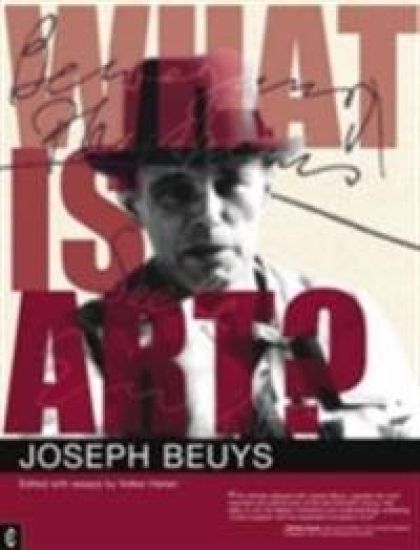
What is Art?

What is Art?

Joseph Beuys; Volker Harlan

Clairview Books
2007
nidottu
Joseph Beuys' work continues to influence and inspire practitioners and thinkers all over the world, in areas from organizational learning, direct democracy and new money forms to new art pedagogies and ecological art practices. Here, in dialogue with Volker Harlan - a close colleague, whose own work also revolves around understandings of substance and sacrament that are central to Beuys - the deeper motivations and insights underlying 'social sculpture', Beuys' expanded conception of art, are illuminated. His profound reflections, complemented with insightful essays by Volker Harlan, give a sense of the interconnectedness between all life forms, and the foundations of a path towards an ecologically sustainable future.