Kirjojen hintavertailu. Mukana 12 303 891 kirjaa ja 12 kauppaa.

Kirjailija

Joseph Blenkinsopp

Kirjat ja teokset yhdessä paikassa: 27 kirjaa, julkaisuja vuosilta 1977-2021, suosituimpien joukossa Abraham. Vertaile teosten hintoja ja tarkista saatavuus suomalaisista kirjakaupoista.

27 kirjaa

Kirjojen julkaisuhaarukka 1977-2021.

Abraham

Abraham

Joseph Blenkinsopp

William B Eerdmans Publishing Co
2015
nidottu
In this discursive commentary Joseph Blenkinsopp explores the story of Abraham -- iconic ancestor of Judaism, Christianity, and Islam -- as told in Genesis 11-25. Presented in continuous discussion rather than in verse-by-verse form, Blenkinsopp's commentary focuses on the literary and theological artistry of the narrative as a whole.Blenkinsopp discussses a range of issues raised in the Abraham saga, including confirmation of God's promises, Isaac's sacrifice and the death of Jesus, and Abraham's other beloved son, Ishmael. Each chapter has a section called "Filling in the Gaps," which probes some of the vast amount of Jewish, Christian, and Islamic commentary that the basic Genesis text has generated through the ages.In an epilogue Blenkinsopp looks at Abraham in early Christianityand expresses his own views, as a Christian, on Abraham. Readers of Blenkinsopp's Abraham: The Story of a Life will surely come away with a deeper, richer understanding of this seminal ancient figure.
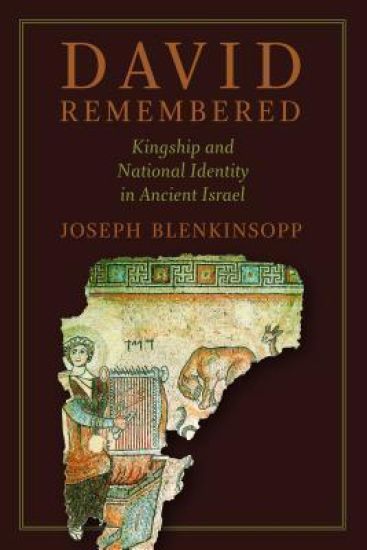
David Remembered

David Remembered

Joseph Blenkinsopp

William B Eerdmans Publishing Co
2013
nidottu
Examines the David theme in the collective mind of ancient Israel and the early church In this follow-up study to Judaism, The First Phase, Joseph Blenkinsopp traces the development of traditions about David in the collective memory of the people of Israel and the first Christians, from the extinction of the Davidic dynasty in the sixth century B.C.E. to the early common era. David Remembered is neither a biography of David nor an exegetical study of the biblical narrative about David. Rather, it focuses on the memory of David as a powerful factor in the formation of social identity, in political activity (especially in reaction to imperial rule), and in projections of the future viewed as the restoration of a never-forgotten past.
Luke's Jesus

Luke's Jesus

Joseph Blenkinsopp

Fortress Press,U.S.
2021
pokkari
The third evangelist tells the story of Jesus in clear, dramatically compelling, and humanly moving terms. His Jesus is a man of great power, a deep sense of mission, and profound compassion for those on the outskirts of society. And Luke's Gospel has the best stories--that is, parables--including a number that are unique to him. Luke's story fills in the gap between born of the virgin Mary and suffered under Pontius Pilate in the Apostles' Creed. While it is usually important for those who write biography to report how the lives of their subjects began and ended, Luke's story of Jesus's birth differs from Matthew's version, and the conclusion to Luke's account of Jesus's life ends neither with his death nor with his resurrection but with his being taken up from the earth to the heavens. The Gospel of Luke is historical in its approach, for which there are no apologies: a historical reading follows necessarily from the Christian doctrine of the incarnation, which teaches that God has entered the history of humanity through Jesus. At the same time, Luke's approach is theological: together with the other evangelists, Luke intends to show his readers that in the person of Jesus of Nazareth, God has drawn near to humanity in an inexpressible and unique way.
Essays on the Book of Isaiah

Essays on the Book of Isaiah

Joseph Blenkinsopp

Mohr Siebeck
2019
sidottu
This collection of twenty essays by Joseph Blenkinsopp on different aspects of the book of Isaiah is the product of three decades of close study of the most seminal and challenging texts of the Hebrew Bible. Five of the twenty are published here for the first time. Some deal with major themes in Isaiah, for example, universalism, the Hebrew God as creator in dialogue with Babylonian and Zoroastrian theologies of creation, theology and politics, and the Suffering Servant of the Lord God, which is of such great influence on the presentation of the life and death of Jesus in the New Testament. Others consist in close readings of specific texts in the book Aufsätze zum Buch Jesaja.
The Beauty of Holiness

The Beauty of Holiness

Joseph Blenkinsopp

T. T.Clark Ltd
2018
nidottu
Joseph Blenkinsopp presents an intertextual reading of Isaiah and the Psalms furthering his previous well-known work on the text of Isaiah. Blenkinsopp argues that, read together, these two biblical books can be shown to form a single religious vision, a way of experiencing and articulating a commitment to the fundamentals of the faith of Israel, with its own distinctive character. Blenkinsopp shows how the emphasis in Isaiah and the Psalms is on affect and emotion, the expression of joy and sorrow articulated in music, singing, and dancing; in praise, thanksgiving and lament. This represents a key difference from other parts of the Hebrew Bible where the focus is more on the Law and on the covenant at Sinai – in Isaiah and the Psalms these terms rarely occur, the focus is instead on Zion and on the Temple. Blenkinsopp shows how the temple singers, with their close connections with the circles which transmitted and eventually committed to writing the Book of Isaiah, demonstrate that the divine word is not incompatible with other forms of religious experience and expression, affective and even mystical, articulated and embodied in the performance of music, song, ritual prayer, and dance. The beauty of the Psalms is echoed strongly in Isaiah, and the Isaian vision of a Creator God, Lord of nature and history beyond the bounds of Israel, is joyfully proclaimed by the psalmists.
The Beauty of Holiness

The Beauty of Holiness

Joseph Blenkinsopp

T. T.Clark Ltd
2018
sidottu
Joseph Blenkinsopp presents an intertextual reading of Isaiah and the Psalms furthering his previous well-known work on the text of Isaiah. Blenkinsopp argues that, read together, these two biblical books can be shown to form a single religious vision, a way of experiencing and articulating a commitment to the fundamentals of the faith of Israel, with its own distinctive character. Blenkinsopp shows how the emphasis in Isaiah and the Psalms is on affect and emotion, the expression of joy and sorrow articulated in music, singing, and dancing; in praise, thanksgiving and lament. This represents a key difference from other parts of the Hebrew Bible where the focus is more on the Law and on the covenant at Sinai – in Isaiah and the Psalms these terms rarely occur, the focus is instead on Zion and on the Temple. Blenkinsopp shows how the temple singers, with their close connections with the circles which transmitted and eventually committed to writing the Book of Isaiah, demonstrate that the divine word is not incompatible with other forms of religious experience and expression, affective and even mystical, articulated and embodied in the performance of music, song, ritual prayer, and dance. The beauty of the Psalms is echoed strongly in Isaiah, and the Isaian vision of a Creator God, Lord of nature and history beyond the bounds of Israel, is joyfully proclaimed by the psalmists.
Essays on Judaism in the Pre-Hellenistic Period
The essays deal with developments during the period from the liquidation of the Judean state to the conquests of Alexander the Great. This was a critical time in the Near East and the Mediterranean world in general. It marked the end of the great Semitic empires until the rise of Islam in the seventh century A.D.,decisive changes in religion, with appeal to a creator-deity in Deutero-Isaiah, Babylonian Marduk cult, and Zoroastrianism.For the survivors of the Babylonian conquest in a post-collapse society the issue of continuity, with different groups claiming continuity with the past and possession of the traditions, there developed a situation favourable to the emergence of sects. The most pressing question, however, was what to do faced with the overwhelming power of empire, first Babylonian, then Persian. Finally, with the extinction of the native dynasty and the entire apparatus of a nation-state, the temple became the focus and emblem of group identity.
Ezra-Nehemiah (Otl)

Ezra-Nehemiah (Otl)

Joseph Blenkinsopp

WESTMINSTER JOHN KNOX PRESS
2015
sidottu
This volume, a part of the Old Testament Library series, explores the books of Ezra and NehemiahThe Old Testament Library provides fresh and authoritative treatments of important aspects of Old Testament study through commentaries and general surveys. The contributors are scholars of international standing.
Ezekiel

Ezekiel

Joseph Blenkinsopp

Westminster/John Knox Press,U.S.
2012
nidottu
This major work explores the message and meaning of Ezekiel, one of the longest and most difficult of the prophetic books. An introduction explains what is involved in reading a prophetic book, and how the book of Ezekiel was put together and structured. It looks at the form of speech used and discusses Ezekiel's author and those who transmitted, edited, and enlarged upon what he had to say. The destruction of Jerusalem is a primary concern, and attention is focused on the political and social situation of the time in order to provide a clear understanding of the political and religious crisis facing the prophet's contemporaries.
Ezra - Nehemiah

Ezra - Nehemiah

Joseph Blenkinsopp

SCM Press
2012
nidottu
This commentary has grown out of the author's long-standing interest in the religious history of the Second Temple period. It follows the usual pattern of the series with introduction, text, critical notes and commentary; the translation of the biblical text is the author's own. Its approach is shaped by the comments of an important writer on Ezra from almost sixty years ago: 'The historical perspective which sees Judaism as fulfilling its mission and then making way for the gospel and the church has an impressive inner consistency and spiritual allure, the only problem with it is the real history of Judaism.'
Pentateuch

Pentateuch

Joseph Blenkinsopp

SCM PRESS
2012
pokkari
Available for the first time in paperback, the most comprehensive and up-to-date look at the first five books of the Bible--Genesis, Exodus, Leviticus, Numbers, and Deuteronomy--where they came from, and how they came to be.
Creation, Un-creation, Re-creation

Creation, Un-creation, Re-creation

Joseph Blenkinsopp

T. T.Clark Ltd
2011
nidottu
This is a new commentary volume looking at the theological and literary motivations of "Genesis" 1-11. Joseph Blenkinsopp provides a new commentary on "Genesis" 1-11, the so-called 'Primeval History' in which the account of creation is given. Blenkinsopp works with the conviction that, from a biblical point of view, creation cannot be restricted to a single event, nor to two versions of an event (as depicted in "Genesis" 1-3) but, rather, must take in the whole period of creation arranged in the sequence: creation - uncreation - recreation (as can be derived from "Genesis" 1-11). Through the course of the commentary, presented in continuous discussion rather than in a rigid verse-by-verse form, Blenkinsopp takes into account pre-modern interpretations of the texts, especially in the Jewish interpretative tradition, as well as modern, historical-critical interpretations. Blenkinsopp works from the perspective of acknowledging the text's literary integrity as an 'authored' work, rather than focusing simply on the its background in various sources (whilst of course paying due attention to those sources). This enables Blenkinsopp's engaging discussion to focus upon the literary and theological artistry of the material at hand.
Creation, Un-creation, Re-creation

Creation, Un-creation, Re-creation

Joseph Blenkinsopp

T. T.Clark Ltd
2011
sidottu
This is a new commentary volume looking at the theological and literary motivations of "Genesis" 1-11. Joseph Blenkinsopp provides a new commentary on "Genesis" 1-11, the so-called 'Primeval History' in which the account of creation is given. Blenkinsopp works with the conviction that, from a biblical point of view, creation cannot be restricted to a single event, nor to two versions of an event (as depicted in "Genesis" 1-3) but, rather, must take in the whole period of creation arranged in the sequence: creation - uncreation - recreation (as can be derived from "Genesis" 1-11). Through the course of the commentary, presented in continuous discussion rather than in a rigid verse-by-verse form, Blenkinsopp takes into account pre-modern interpretations of the texts, especially in the Jewish interpretative tradition, as well as modern, historical-critical interpretations. Blenkinsopp works from the perspective of acknowledging the text's literary integrity as an 'authored' work, rather than focusing simply on the its background in various sources (whilst of course paying due attention to those sources). This enables Blenkinsopp's engaging discussion to focus upon the literary and theological artistry of the material at hand.
Gibeon and Israel

Gibeon and Israel

Joseph Blenkinsopp

Cambridge University Press
2009
pokkari
The site of the city of Gibeon is now identified with a fair degree of certainty with el-Jîb, a site about eight miles north-west of Jerusalem. Gibeon is mentioned about forty times in the Old Testament, and was clearly a city of some significance, particularly at the time of Saul, David and Solomon. Dr Blenkinsopp examines the evidence, principally contained in the Bible, relating to Gibeon and the Gibeonites, making use of confirmatory evidence provided by excavations at el-Jîb and ancient Near Eastern non-biblical writings. He discusses the ethnic identity of the Gibeonites, the obscure history of the ark before the transfer to Jerusalem, the role of local sanctuaries, the political and religious significance of Saul and the events which are described in the books of Samuel, Kings and Chronicles as taking place in and around Gibeon. Gibeon and Israel is likely to become a standard work of reference on the subject.
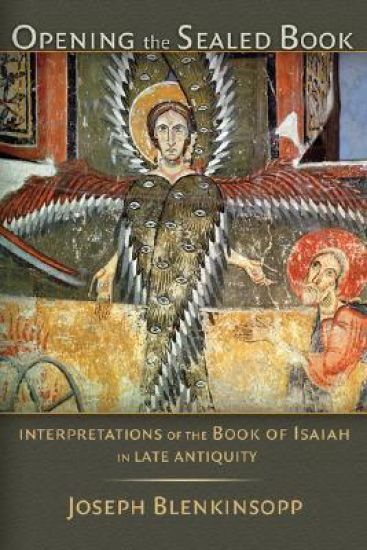
Opening the Sealed Book

Opening the Sealed Book

Joseph Blenkinsopp

William B Eerdmans Publishing Co
2007
nidottu
Of all the texts in the Hebrew and Christian scriptures, perhaps no book has a more colorful history of interpretation than Isaiah. A comprehensive history of this interpretation between the prophet Malachi and the first days of Christianity, Joseph Blenkinsopp's "Opening the Sealed Book" traces three different prophetic traditions in Isaiah - the "man of God," the critic of social structures, and the apocalyptic seer. Blenkinsopp explores the place of Isaiah in Jewish sectarianism, at Qumran, and among early Christians, touching on a number of its themes, including exile, "the remnant of Israel," martyrdom, and "the servant of the Lord." Encompassing several disciplines - hermeneutics, the Dead Sea Scrolls, Second Temple studies, Christian origins - "Opening the Sealed Book" will appeal to Jewish and Christian scholars as well as readers fascinated by the intricate and influential prophetic visions of Isaiah.
Isaiah 40-55

Isaiah 40-55

Joseph Blenkinsopp

Yale University Press
2002
pokkari
Scholars have traditionally isolated three distinct sections of what is known as the Book of Isaiah, and in Isaiah 40-55, distinguished biblical scholar Joseph Blenkinsopp provides a new translation and critical commentary on the section usually referred to as Second or Deutero Isaiah. The second volume in a three-volume commentary, it easily maintains the high standards of academic excellence established by Isaiah1-39. Second Isaiah was written in the sixth century b.c.e., in the years just before the fall of the mighty Babylonian Empire, by an anonymous prophet whom history has erroneously identified with the real Isaiah (born ca. 765 b.c.e.). Scholars know Second Isaiah was written by someone other than Isaiah because the contexts of these prophecies are so very different. When Second Isaiah was written, the prophet believed that Israel's time of suffering was drawing to a close. There was, he insisted, a new age upon them, a time of hope, peace, and renewed national prosperity. The main thrust of the prophet's argument was intended to rally the spirits of a people devastated by war and conquest. One of the most famous examples of this optimistic tone is the well-known and beloved Song of the Suffering Servant, which is found in Chapters 52-53, and about which Blenkinsopp has some challenging new ideas. The final chapters of Second Isaiah, however, are in an entirely different key as it becomes clear that the new world the prophet foresaw earlier was not going to come to pass. This despair finds its most poignant expression in the final section of the Book of Isaiah, which Blenkinsopp will address in his forthcoming third volume.
Isaiah 1-39

Isaiah 1-39

Joseph Blenkinsopp

Yale University Press
2000
pokkari
Writing a commentary on the book of Isaiah in the middle of a paradigm shift in biblical studies, and in the study of the prophetic books in particular, is no easy task. The book of Isaiah has been the object of more scholarly interest over the past two or three decades than during the preceding century. At the same time, much of the received wisdom on the formation of the book has been called into question, including such matters as the date of its several components, the standard tripartite division, the role (if any) to be assigned to the prophet Isaiah himself, and the passages dealing with the anonymous Servant of the Lord. A great deal of effort has been, and continues to be, expended in exploring new approaches to the book, both within the conventional critical methodologies and beyond them.This commentary by Joseph Blenkinsopp on the first thirty-nine chapters of the book, the first of a three-volume commentary on Isaiah, is written from a critical perspective in the belief that only in this way can these texts be given the opportunity to say what they have to say—and also in the conviction that what they have to say still retains its transforming power for those willing to listen attentively today. The result is a commentary of unequaled brilliance and insight that will stand as the definitive study of one of the Hebrew Bible’s most compelling and elusive books.
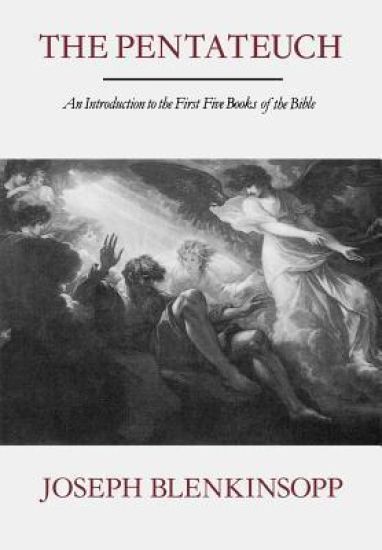
The Pentateuch

The Pentateuch

Joseph Blenkinsopp

Yale University Press
2000
pokkari
The Pentateuch (its Greek name, but also known as the Torah by the Hebrews) consists of the first five books of the Bible: Genesis, Exodus, Leviticus, Numbers, and Deuteronomy. From Adam and Eve in the Garden, to Noah's Ark, to Moses' parting of the Red Sea, to its conclusion with the death of Moses, the Pentateuch contains some of the most important and memorable stories in Western civilization. In this richly detailed work, which has become a standard in the field, renowned biblical scholar Joseph Blenkinsopp unravels (as Harold Bloom did in The Book of J) the radical scholarly opinions on just where these ancient and powerful stories come from, how they were formed, and what significance they have today. In the classroom, when professors cover these books of Moses, they turn to Dr. Blenkinsopp's classic for reliable, accessible discussions of all the important details.
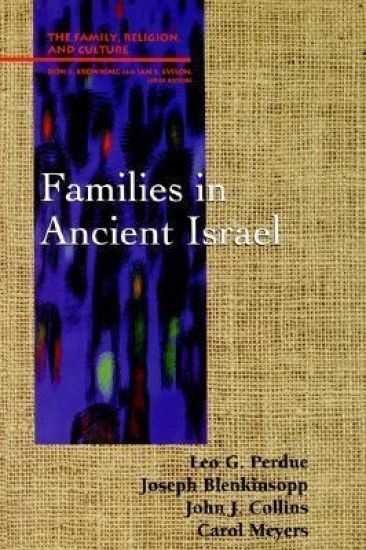
Families in Ancient Israel

Families in Ancient Israel

Leo G. Perdue; Joseph Blenkinsopp; John J. Collins; Carol L. Meyers

Westminster/John Knox Press,U.S.
1997
nidottu
Four respected scholars of the Hebrew Bible and early Judaism provide a clear portrait of the family in ancient Israel. Important theological and ethical implications are made for the family today.The Family, Culture, and Religion series offers informed and responsible analyses of the state of the American family from a religious perspective and provides practical assistance for the family's revitalization.