Kirjojen hintavertailu. Mukana 12 390 323 kirjaa ja 12 kauppaa.
Kirjailija
Joseph Cummins
Kirjat ja teokset yhdessä paikassa: 6 kirjaa, julkaisuja vuosilta 2015-2021, suosituimpien joukossa Anything for a Vote. Vertaile teosten hintoja ja tarkista saatavuus suomalaisista kirjakaupoista.
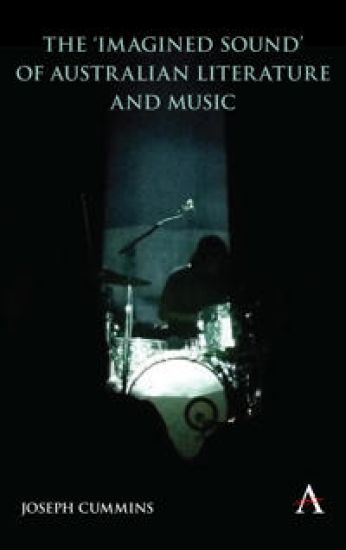
‘Imagined Sound’ is a unique cartography of the artistic, historical and political forces that have informed the post-World War II representation of Australian landscapes. It is the first book to formulate the unique methodology of ‘imagined sound’, a new way to read and listen to literature and music that moves beyond the dominance of the visual, the colonial mode of knowing, controlling and imagining Australian space. Emphasising sound and listening, this approach draws out and re-examines the key narratives that shape and are shaped by Australian landscapes and histories, stories of first contact, frontier violence, the explorer journey, the convict experience, non-Indigenous belonging, Pacific identity and contemporary Indigenous Dreaming. ‘Imagined Sound’ offers a compelling analysis of how these narratives are reharmonised in key works of literature and music.
Touted as a potential breakthrough cancer therapy in the 1980s by the scientific community and publications such as TIME and Newsweek magazine, the reputation of interferon has not lived up to its early promise. Interferons are small proteins with anti-viral and anti-cancer effects, which have the power to modulate the functioning of the immune system. But Dr. Joseph Cummins, an early interferon pioneer, holder of sixteen US medical patents, author of more than sixty scientific publications, as well as having taught veterinary medicine at the University of Missouri, University of Illinois, and Texas A & M University, argues that the current thinking on interferon is fundamentally flawed. Interferon is created in small quantities in the body in response to infection, and seems to work best at these low dosages. However, the public health cowboys, working under the assumption that anything good in tiny amounts must be better in massive amounts, pursued exactly the wrong strategy. High-dose interferon does not work in the body and may even cause problems. The first remarkable results for interferon and the flu were reported by the Soviets in the 1970s, but Western medicine discounted these findings because they believed the dosages were so low they couldn't possibly be effective. In the 1980s, when interferon was expensive to produce and only small quantities could be manufactured, the results were remarkable. Dr. Cummins was an early pioneer of low-dose interferon, and his remarkable findings among animals led to collaborations with medical doctors for human trials, even going so far as Africa at the height of the HIV-AIDS epidemic. Cummins reviews the evidence for this inexpensive, safe treatment and makes an eloquent argument for medical science to take another look at interferon to tackle today's most challenging health conditions, including COVID-19.
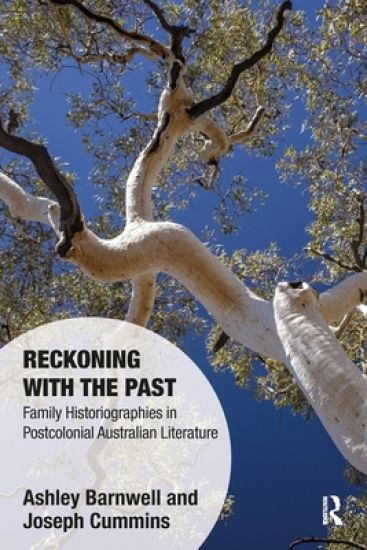
This is the first book to examine how Australian fiction writers draw on family histories to reckon with the nation’s colonial past. Located at the intersection of literature, history, and sociology, it explores the relationships between family storytelling, memory, and postcolonial identity. With attention to the political potential of family histories, Reckoning with the Past argues that authors’ often autobiographical works enable us to uncover, confront, and revise national mythologies. An important contribution to the emerging global conversation about multidirectional memory and the need to attend to the effects of colonisation, this book will appeal to an interdisciplinary field of scholarly readers.
‘Imagined Sound’ is a unique cartography of the artistic, historical and political forces that have informed the post-World War II representation of Australian landscapes. It is the first book to formulate the unique methodology of ‘imagined sound’, a new way to read and listen to literature and music that moves beyond the dominance of the visual, the colonial mode of knowing, controlling and imagining Australian space. Emphasising sound and listening, this approach draws out and re-examines the key narratives that shape and are shaped by Australian landscapes and histories, stories of first contact, frontier violence, the explorer journey, the convict experience, non-Indigenous belonging, Pacific identity and contemporary Indigenous Dreaming. ‘Imagined Sound’ offers a compelling analysis of how these narratives are reharmonised in key works of literature and music.
This is the first book to examine how Australian fiction writers draw on family histories to reckon with the nation’s colonial past. Located at the intersection of literature, history, and sociology, it explores the relationships between family storytelling, memory, and postcolonial identity. With attention to the political potential of family histories, Reckoning with the Past argues that authors’ often autobiographical works enable us to uncover, confront, and revise national mythologies. An important contribution to the emerging global conversation about multidirectional memory and the need to attend to the effects of colonisation, this book will appeal to an interdisciplinary field of scholarly readers.
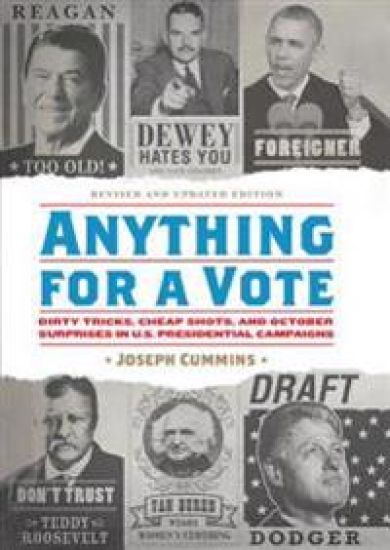
A rejacketed edition of one of our fun political backlist titles, complete with a reinvigorated interior, just in time for the 2016 election. The 2016 presidential election is looming on the horizon, and you know the campaigns are going to play rough--because dirty tricks and negative campaigning are as American as apple pie. Anything for a Vote chronicles more than 200 years of cheap shots and bad behaviour in presidential elections--from the 1796 contest between John Adams and Thomas Jefferson to the 2012 campaigns of Barack Obama and Mitt Romney. Along the way, we'll stop in: 1836 - Congressman Davy Crockett accuses candidate Martin Van Buren of secretly wearing women's clothing: He is laced up in corsets! 1864 - A Democratic newspaper alleges that Abraham Lincoln only changed his socks every 10 days. 1912 - Theodore Roosevelt is shot in the chest while preparing to give a campaign speech, then proceeds to deliver it anyway: I don't know whether you fully understand that I have just been shot, but it takes more than that to kill a bull moose! 1928 - Republicans warned that Roman Catholic candidate Al Smith was secretly plotting with the Pope -- and that the Holland Tunnel had a secret passageway leading directly to the Vatican! 1960 - Former president Harry Truman told voters that if you vote for Richard Nixon, you ought to go to hell! Rejacketed, redesigned, and expanded, this new edition of Anything for a Vote is still a valuable reminder that history does repeat itself, that lessons can be learned from the past (though they usually aren't), and that our most famous presidents are not above reproach when it comes to the dirtiest game of all-political campaigning.