Kirjojen hintavertailu. Mukana 12 459 402 kirjaa ja 12 kauppaa.

Kirjailija

Joseph D. Lichtenberg

Kirjat ja teokset yhdessä paikassa: 19 kirjaa, julkaisuja vuosilta 1991-2021, suosituimpien joukossa An Experience-based Vision of Psychoanalytic Theory and Practice. Vertaile teosten hintoja ja tarkista saatavuus suomalaisista kirjakaupoista.

19 kirjaa

Kirjojen julkaisuhaarukka 1991-2021.

An Experience-based Vision of Psychoanalytic Theory and Practice

An Experience-based Vision of Psychoanalytic Theory and Practice

Joseph D. Lichtenberg; Frank M. Lachmann; James L Fosshage

Routledge
2021
nidottu
An Experience-based Vision of Psychoanalytic Theory and Practice looks at each individual as a motivated doer doing, seeking, feeling, and intending, and relates development, sense of self, and identity to changes that are brought about in analytic psychotherapy.Based on conceptualizing experience as it is lived from infancy throughout life, this book identifies three major pathways to development and applies Lichtenberg, Lachmann, and Fosshage’s experience-based vision to psychoanalytic psychotherapy. Using detailed clinical narratives and vignettes, as well as organizational studies, the book takes up the distinction between a person’s responding to a failure in achieving a goal with disappointment and seeking an alternative path, or with disillusion and a collapse in motivation. From the variety of topics covered, the reader will get a broad overview of an experience-based analytic conception of motivation begun with Lichtenberg’s seven motivational systems. This title will be of great interest to established psychoanalysts, as well as those training in psychoanalysis and clinical counselling psychology programs.

An Experience-based Vision of Psychoanalytic Theory and Practice

An Experience-based Vision of Psychoanalytic Theory and Practice

Joseph D. Lichtenberg; Frank M. Lachmann; James L Fosshage

Routledge
2021
sidottu
An Experience-based Vision of Psychoanalytic Theory and Practice looks at each individual as a motivated doer doing, seeking, feeling, and intending, and relates development, sense of self, and identity to changes that are brought about in analytic psychotherapy.Based on conceptualizing experience as it is lived from infancy throughout life, this book identifies three major pathways to development and applies Lichtenberg, Lachmann, and Fosshage’s experience-based vision to psychoanalytic psychotherapy. Using detailed clinical narratives and vignettes, as well as organizational studies, the book takes up the distinction between a person’s responding to a failure in achieving a goal with disappointment and seeking an alternative path, or with disillusion and a collapse in motivation. From the variety of topics covered, the reader will get a broad overview of an experience-based analytic conception of motivation begun with Lichtenberg’s seven motivational systems. This title will be of great interest to established psychoanalysts, as well as those training in psychoanalysis and clinical counselling psychology programs.

From Autism and Mutism to an Enlivened Self

From Autism and Mutism to an Enlivened Self

Joseph D. Lichtenberg; Diana Thielst

Routledge
2018
sidottu
From Autism and Mutism to an Enlivened Self explores the importance of intimacy, interaction with the environment and the mind-body connection in early childhood development, with specific reference to autism. Built around a detailed case study of a severely autistic child, the book offers an illuminating account of the development and successful treatment of autism both from the perspective of the clinician and from the family. In Part I, Diana Thielst (writing under a pseudonym) gives a description of her experience with her daughter who was autistic at birth, minimally verbal at age five, and did not respond to her name. She details the severe family stress and her ineffectual attempts to get professional help. Finally, she hears of consultants who may be able to help in St. Petersburg, Russia. Guided by the consultants, Thielst and her daughter then embark on a uniquely innovative method for Anna to both build a vocabulary and for the first time learn the value of coordinated and cooperative effort. Armed with a vocabulary and a long history of solo pursuits of organizing inanimate objects, Anna suddenly begins to explore "human" interaction as revealed in comics– a turning on to an emotional life of relatedness and intimacy.In Part II, Joseph D. Lichtenberg uses his knowledge of neonate and early infancy to offer the reader an understanding of autism – its history – and a unique comparison of the normal well adapted neonate and infant at one year with the disrupted development of the child with autism. Lichtenberg’s theoretical construct of three major pathways to a healthy adapted development breaks new theoretical ground and gives enrichment to a contemporary portrayal of the autistic experience.With unusually rich clinical material grounded in accessible theory, the authors jointly offer a new perspective on understanding, treating and living with autism. From Autism and Mutism to an Enlivened Self will appeal to psychoanalysts, psychoanalytic psychotherapists and clinicians working with autistic children.
From Autism and Mutism to an Enlivened Self

From Autism and Mutism to an Enlivened Self

Joseph D. Lichtenberg; Diana Thielst

Routledge
2018
nidottu
From Autism and Mutism to an Enlivened Self explores the importance of intimacy, interaction with the environment and the mind-body connection in early childhood development, with specific reference to autism. Built around a detailed case study of a severely autistic child, the book offers an illuminating account of the development and successful treatment of autism both from the perspective of the clinician and from the family. In Part I, Diana Thielst (writing under a pseudonym) gives a description of her experience with her daughter who was autistic at birth, minimally verbal at age five, and did not respond to her name. She details the severe family stress and her ineffectual attempts to get professional help. Finally, she hears of consultants who may be able to help in St. Petersburg, Russia. Guided by the consultants, Thielst and her daughter then embark on a uniquely innovative method for Anna to both build a vocabulary and for the first time learn the value of coordinated and cooperative effort. Armed with a vocabulary and a long history of solo pursuits of organizing inanimate objects, Anna suddenly begins to explore "human" interaction as revealed in comics– a turning on to an emotional life of relatedness and intimacy.In Part II, Joseph D. Lichtenberg uses his knowledge of neonate and early infancy to offer the reader an understanding of autism – its history – and a unique comparison of the normal well adapted neonate and infant at one year with the disrupted development of the child with autism. Lichtenberg’s theoretical construct of three major pathways to a healthy adapted development breaks new theoretical ground and gives enrichment to a contemporary portrayal of the autistic experience.With unusually rich clinical material grounded in accessible theory, the authors jointly offer a new perspective on understanding, treating and living with autism. From Autism and Mutism to an Enlivened Self will appeal to psychoanalysts, psychoanalytic psychotherapists and clinicians working with autistic children.
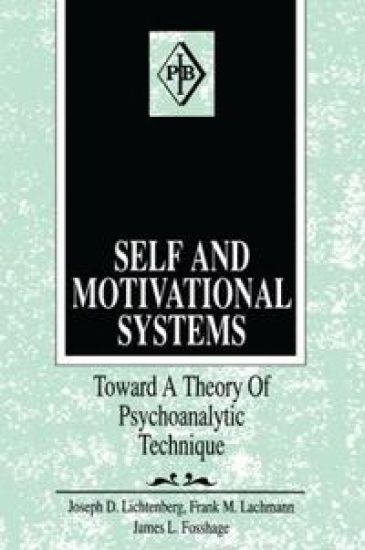
Self and Motivational Systems

Self and Motivational Systems

Joseph D. Lichtenberg; Frank M. Lachmann; James L. Fosshage

Routledge
2017
sidottu
In this sequel to Lichtenberg's Psychoanalysis and Motivation (TAP, 1989), the authors show how their revised theory of motivation provides the foundation for a new approach to psychoanalytic technique. The approach in Self and Motivational Systemsemphasizes a finely honed sensitivity to moment-to-moment analytic exchanges and an appreciation of which motivational system is dominant during that exchange. Throughout, the authors stress the creative power of psychoanalysis as a joint effort shaped by the intersubjective context of a particular analysand communicating and interacting with a particular analyst. At the heart of the analytic relationship is the analysand's expectation of evoking a vitalizing selfobject experience from the analyst and the analyst's expectation, in turn, of evoking a selfobject experience of efficacy from his or her work with the analysand.
Psychoanalysis and Infant Research

Psychoanalysis and Infant Research

Joseph D. Lichtenberg

Routledge
2017
sidottu
Lichtenberg collates and summarizes recent findings about the first two years of life in order to examine their implications for contemporary psychoanalysis. He explores the implications of these data for the unfolding sense of self, and then draws on these data to reconceptualize the analytic situation and to formulate an experiential account of the therapeutic action of analysis.
The Talking Cure

The Talking Cure

Joseph D. Lichtenberg

Routledge
2016
sidottu
Among the many elementary expositions of psychoanalysis, "The Talking Cure" is unique in focusing on the actual analytic experience. Lichtenberg's approach is humanistic, demonstrating empathic understanding of the fears and hopes of the person seeking help. He provides a "feel" for what happens during the analytic voyage of self-discovery.
Craft and Spirit

Craft and Spirit

Joseph D. Lichtenberg

Routledge
2014
nidottu
In Craft and Spirit, Joseph Lichtenberg writes of the craft of exploratory psychotherapy, by which he means the creative skill — even artistry — that mobilizes the spirit of inquiry in therapist and patient and sustains it over the course of psychotherapy. He expatiates on this craft as it pertains to patients of our time — patients who typically bring to therapy backgrounds of insecure attachment and serious concerns about safety and retraumatization. In each of ten chapters, Lichtenberg formulates a different guideline for technique, keyed to the broad domain of exploratory psychotherapies and are accompanied by numerous clinical illustrations. These guidelines seek to foster greater therapist involvement without compromising an openness to psychological exploration. They seek to sensitize therapists to the two interlacing tracks of communication that unfold in treatment: those of verbal exchange and of enactive messages. And they help guide therapist attention among interpenetrating domains of the patient’s subjectivity, the therapist’s subjectivity, and the intersubjective realm that emerges from their collaborative experience. Fusing the humanist tradition of therapeutic inquiry with knowledge gained from recent infancy and child research, Lichtenberg develops guidelines suitable to exploratory therapy with patients who communicate not only verbally but also through diverse affect states and altered cognitions. Consistently illuminating on the parallels and disjunctions between caregiver–child and therapist–patient relationships, Lichtenberg is clear about the adult-to-adult dimension of exploratory work in which “provision” is necessarily subordinate to “inquiry.” Craft and Spirit is aimed equally at prospective patients, therapists, and analysts, all of whom will be edified by this masterful demonstration of the ways in which a spirit of inquiry imbues the craft of psychotherapy, in Lichtenberg’s words, “with its liveliness of sustained purpose.”
A Spirit of Inquiry

A Spirit of Inquiry

Joseph D. Lichtenberg; Frank M. Lachmann; James L. Fosshage

Routledge
2014
nidottu
Thoroughly grounded in contemporary developmental research, A Spirit of Inquiry: Communication in Psychoanalysis explores the ecological niche of the infant-caregiver dyad and examines the evolutionary leap that permits communication to take place concurrently in verbal an nonverbal modes. Via the uniquely human capacity for speech, the authors hold, intercommunication deepens into a continuous process of listening to, sensing into, and deciphering motivation-driven messages. The analytic exchange is unique owing to a broad communicative repertoire that encompasses all the permutations of day-to-day exchanges. It is the spirit of inquiry that endows such communicative moments with an overarching sense of purpose and thereby permits analysis to become an intimate relationship decisively unlike any other.In elucidating the special character of this relationship, the authors refine their understanding of motivational systems theory by showing how exploration, previously conceptualized as a discrete motivational system, simultaneously infuses all the motivational systems with an integrative dynamic that tends to a cohesive sense of self. Of equal note is their discerning use of contemporary attachment reseach, which provides convincing evidence of the link between crucial relationships and communication.Replete with detailed case studies that illustrate both the context and nature of specific analytic inquiries, A Spirit of Inquiry presents a novel perspective, sustained by empirical research, for integrating the various communicative modalities that arise in any psychoanalytic treatment. The result is a deepened understanding of subjectivity and intersubjectivity in analytic relationships. Indeed, the book is a compelling brief for the claim that subjectivity and intersubjectivity, in their full complexity, can only be understood through clinically relevant and scientifically credible theories of motivation and communication.
Psychoanalysis and Motivational Systems

Psychoanalysis and Motivational Systems

Joseph D. Lichtenberg; Frank M. Lachmann; James L. Fosshage

Routledge
2010
nidottu
Introduced in Psychoanalysis and Motivation (1989) and further developed in Self and Motivational Systems (1992), The Clinical Exchange (1996), and A Spirit of Inquiry (2002), motivational systems theory aims to identify the components and organization of mental states and the process by which affects, intentions, and goals unfold. Motivation is described as a complex intersubjective process that is cocreated in the developing individual embedded in a matrix of relationships with others. Opening by placing motivational systems theory within a contemporary dynamic systems theory, Lichtenberg, Lachmann, and Fosshage then respond to critics of motivational systems theory. The authors present revisions to their approach to the original five motivational systems, adding two more: an affiliative and a caregiving motivational system. The authors go on to suggest, using ideas garnered from complexity theory and fractals, that motivational systems theory can help us understand how a continuity of self can be maintained despite near-constant fluctuations in interpersonal relations. They then consider how the making of inferences, explicitly and implicitly, is shaped by motivation, before applying their theory to an actual human experience - love - to demonstrate the interplay of multiple shifting motivations within an individual. Last, they present new looks at the clinical applicability of their research. Grounded in observational research of infants but relevant to psychoanalysis at any stage of life, motivational systems theory has evolved via the combined experiences of these three analysts for more than 20 years, and remains an important contribution to our understanding of the driving forces behind human experience.
Sensuality and Sexuality Across the Divide of Shame

Sensuality and Sexuality Across the Divide of Shame

Joseph D. Lichtenberg

Analytic Press,U.S.
2007
sidottu
Placed in a historical context, sexuality was once so prominent in psychoanalytic writing that sexual drive and psychoanalysis were synonymous. The exciting discovery of childhood sexuality filled the literature. Then other discoveries came to the fore until sexuality slipped far in the background. This book evokes the excitement of the original discoveries of childhood sexual experience while linking childhood sensuality and sexuality to adult attachment, romantic, and lustful love. This revised perspective offers the general reader insight into contemporary psychoanalytic thought, and presents clinicians with a perspective for exploring their patients sensuality and sexuality with renewed interest and knowledge.
Sensuality and Sexuality Across the Divide of Shame

Sensuality and Sexuality Across the Divide of Shame

Joseph D. Lichtenberg

Analytic Press,U.S.
2007
nidottu
Placed in a historical context, sexuality was once so prominent in psychoanalytic writing that sexual drive and psychoanalysis were synonymous. The exciting discovery of childhood sexuality filled the literature. Then other discoveries came to the fore until sexuality slipped far in the background. This book evokes the excitement of the original discoveries of childhood sexual experience while linking childhood sensuality and sexuality to adult attachment, romantic, and lustful love. This revised perspective offers the general reader insight into contemporary psychoanalytic thought, and presents clinicians with a perspective for exploring their patients sensuality and sexuality with renewed interest and knowledge.
Craft and Spirit

Craft and Spirit

Joseph D. Lichtenberg

Analytic Press,U.S.
2005
sidottu
In Craft and Spirit, Joseph Lichtenberg writes of the craft of exploratory psychotherapy, by which he means the creative skill — even artistry — that mobilizes the spirit of inquiry in therapist and patient and sustains it over the course of psychotherapy. He expatiates on this craft as it pertains to patients of our time — patients who typically bring to therapy backgrounds of insecure attachment and serious concerns about safety and retraumatization. In each of ten chapters, Lichtenberg formulates a different guideline for technique, keyed to the broad domain of exploratory psychotherapies and are accompanied by numerous clinical illustrations. These guidelines seek to foster greater therapist involvement without compromising an openness to psychological exploration. They seek to sensitize therapists to the two interlacing tracks of communication that unfold in treatment: those of verbal exchange and of enactive messages. And they help guide therapist attention among interpenetrating domains of the patient’s subjectivity, the therapist’s subjectivity, and the intersubjective realm that emerges from their collaborative experience. Fusing the humanist tradition of therapeutic inquiry with knowledge gained from recent infancy and child research, Lichtenberg develops guidelines suitable to exploratory therapy with patients who communicate not only verbally but also through diverse affect states and altered cognitions. Consistently illuminating on the parallels and disjunctions between caregiver–child and therapist–patient relationships, Lichtenberg is clear about the adult-to-adult dimension of exploratory work in which “provision” is necessarily subordinate to “inquiry.” Craft and Spirit is aimed equally at prospective patients, therapists, and analysts, all of whom will be edified by this masterful demonstration of the ways in which a spirit of inquiry imbues the craft of psychotherapy, in Lichtenberg’s words, “with its liveliness of sustained purpose.”
A Spirit of Inquiry

A Spirit of Inquiry

Joseph D. Lichtenberg; Frank M. Lachmann; James L. Fosshage

Analytic Press,U.S.
2002
sidottu
Thoroughly grounded in contemporary developmental research, A Spirit of Inquiry: Communication in Psychoanalysis explores the ecological niche of the infant-caregiver dyad and examines the evolutionary leap that permits communication to take place concurrently in verbal an nonverbal modes. Via the uniquely human capacity for speech, the authors hold, intercommunication deepens into a continuous process of listening to, sensing into, and deciphering motivation-driven messages. The analytic exchange is unique owing to a broad communicative repertoire that encompasses all the permutations of day-to-day exchanges. It is the spirit of inquiry that endows such communicative moments with an overarching sense of purpose and thereby permits analysis to become an intimate relationship decisively unlike any other.In elucidating the special character of this relationship, the authors refine their understanding of motivational systems theory by showing how exploration, previously conceptualized as a discrete motivational system, simultaneously infuses all the motivational systems with an integrative dynamic that tends to a cohesive sense of self. Of equal note is their discerning use of contemporary attachment reseach, which provides convincing evidence of the link between crucial relationships and communication.Replete with detailed case studies that illustrate both the context and nature of specific analytic inquiries, A Spirit of Inquiry presents a novel perspective, sustained by empirical research, for integrating the various communicative modalities that arise in any psychoanalytic treatment. The result is a deepened understanding of subjectivity and intersubjectivity in analytic relationships. Indeed, the book is a compelling brief for the claim that subjectivity and intersubjectivity, in their full complexity, can only be understood through clinically relevant and scientifically credible theories of motivation and communication.
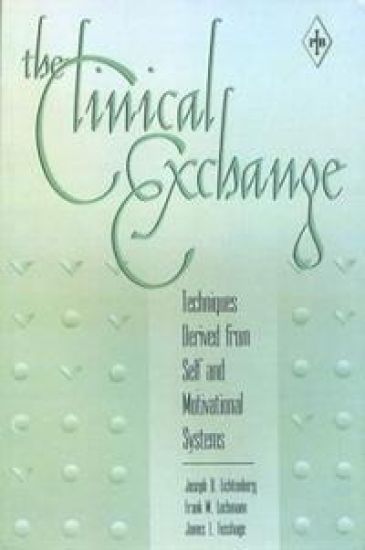
The Clinical Exchange

The Clinical Exchange

Joseph D. Lichtenberg; Frank M. Lachmann; James L. Fosshage

Analytic Press,U.S.
2001
nidottu
In this practical sequel to the same authors' Self and Motivational Systems (TAP, 1992), Lichtenberg, Lachmann, and Fosshage offer ten principles of technique to guide the clinical exchange. These principles, which pertain equally to exploratory psychotherapy and psychoanalysis, integrate the findings of self psychology with recent developmental research that has refined our understanding of the self as a center of experience and motivation. The ten principles of technique not only provide a valuable framework for attending to a wide range of motivations, but lead to basic revisions in the theory and technical management of affects, transference, and dreams.
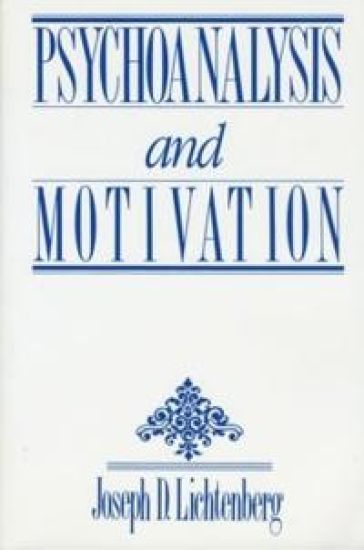
Psychoanalysis and Motivation

Psychoanalysis and Motivation

Joseph D. Lichtenberg

Analytic Press,U.S.
2001
nidottu
Carrying forward his inquiry into the nature and conditions of normal and abnormal development, Lichtenberg focuses on motivation. His goal is to offer an alternative to psychoanalytic drive theory that accommodates the developmental insights of infancy research while accounting for the entire range of phenomena addressed by the theory of instinctual drives. To this end, he propounds a comprehensive theory of the self, which then gains expression in five discrete yet interactive motivational systems.
Self and Motivational Systems

Self and Motivational Systems

Joseph D. Lichtenberg; Frank M. Lachmann; James L. Fosshage

Analytic Press,U.S.
2001
nidottu
In this sequel to Lichtenberg's Psychoanalysis and Motivation (TAP, 1989), the authors show how their revised theory of motivation provides the foundation for a new approach to psychoanalytic technique. The approach in Self and Motivational Systemsemphasizes a finely honed sensitivity to moment-to-moment analytic exchanges and an appreciation of which motivational system is dominant during that exchange. Throughout, the authors stress the creative power of psychoanalysis as a joint effort shaped by the intersubjective context of a particular analysand communicating and interacting with a particular analyst. At the heart of the analytic relationship is the analysand's expectation of evoking a vitalizing selfobject experience from the analyst and the analyst's expectation, in turn, of evoking a selfobject experience of efficacy from his or her work with the analysand.
The Talking Cure

The Talking Cure

Joseph D. Lichtenberg

Analytic Press,U.S.
1994
nidottu
Among the many elementary expositions of psychoanalysis, "The Talking Cure" is unique in focusing on the actual analytic experience. Lichtenberg's approach is humanistic, demonstrating empathic understanding of the fears and hopes of the person seeking help. He provides a "feel" for what happens during the analytic voyage of self-discovery.
Psychoanalysis and Infant Research

Psychoanalysis and Infant Research

Joseph D. Lichtenberg

Analytic Press,U.S.
1991
nidottu
Lichtenberg collates and summarizes recent findings about the first two years of life in order to examine their implications for contemporary psychoanalysis. He explores the implications of these data for the unfolding sense of self, and then draws on these data to reconceptualize the analytic situation and to formulate an experiential account of the therapeutic action of analysis.