Kirjojen hintavertailu. Mukana 12 207 140 kirjaa ja 12 kauppaa.

Kirjailija

Joseph E. LeDoux

Kirjat ja teokset yhdessä paikassa: 7 kirjaa, julkaisuja vuosilta 1978-2025, suosituimpien joukossa The Integrated Mind. Vertaile teosten hintoja ja tarkista saatavuus suomalaisista kirjakaupoista.

7 kirjaa

Kirjojen julkaisuhaarukka 1978-2025.

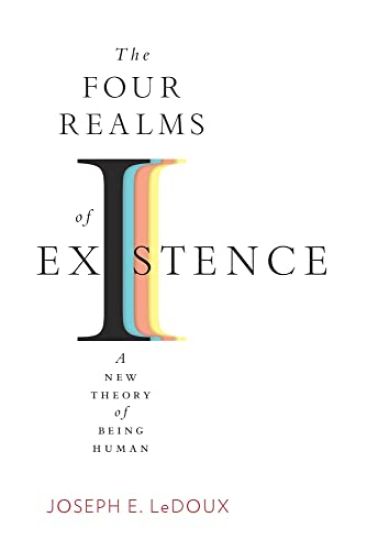
The Four Realms of Existence

The Four Realms of Existence

Joseph E. LeDoux

HARVARD UNIVERSITY PRESS
2025
nidottu
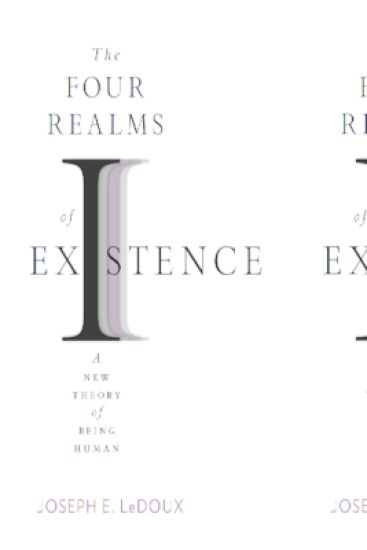
A Seminary Co-op Notable Book“A big picture perspective on the mind, decision-making, and consciousness…Provocative and stimulating.” —Philosophical Psychology“LeDoux’s aim is to provide a new theory of being human by dividing our evolutionary past into four realms: biological at the bottom, then neurobiological, cognitive and conscious…Along the way are excellent accounts of the evolution of brain structures and cognitive abilities.” —New Scientist“A rigorously scientific yet eminently readable exploration of what it means to be human.” —Publishers Weekly Modern science has largely dispensed with mind-body dualism, yet people still tend to imagine their minds as separate from their physical being. Even researchers persistently presume a “self” somehow distinct from the rest of the organism.Arguing that the self is a barrier to understanding, leading neuroscientist Joseph LeDoux offers a new framework based on four realms of existence: bodily, neural, cognitive, and conscious. Every living thing, whether bacterium or plant or animal, has a body. Animals alone then supplement such biological existence with a nervous system, which enables quick and precise control of the organism. Certain animals can also think and plan, and thus exist cognitively. Finally, some of the cognitive organisms have inner experiences of and thoughts about the world—the hallmarks of the conscious realm.These four realms cooperate continuously to create the experience of a being with a past, present, and future. The result, LeDoux shows, is not a self but an “ensemble of being” that subsumes humans’ entire existence, both as individuals and as a species.
The Four Realms of Existence

The Four Realms of Existence

Joseph E. LeDoux

HARVARD UNIVERSITY PRESS
2023
sidottu
One of the world’s leading experts on mind and brain takes us on an expedition that reveals a new view of what makes us who we are.Humans have long thought of their bodies and minds as separate spheres of existence. The body is physical—the source of aches and pains. But the mind is mental; it perceives, remembers, believes, feels, and imagines. Although modern science has largely eliminated this mind-body dualism, people still tend to imagine their minds as separate from their physical being. Even in research, the notion of the “self” as somehow distinct from the rest of the organism persists.Joseph LeDoux argues that we have hit an epistemological wall—that ideas like the self are increasingly barriers to discovery and understanding. He offers a new framework of who we are, theorizing four realms of existence—bodily, neural, cognitive, and conscious.The biological realm makes life possible. Hence, every living thing exists biologically. Animals, uniquely, supplement biological existence with a nervous system. This neural component enables them to control their bodies with speed and precision unseen in other forms of life. Some animals with nervous systems possess a cognitive realm, which allows the creation of internal representations of the world around them. These mental models are used to control a wide range of behaviors. Finally, the conscious realm allows its possessors to have inner experiences of, and thoughts about, the world.Together, LeDoux shows, these four realms make humans who and what we are. They cooperate continuously and underlie our capacity to live and experience ourselves as beings with a past, present, and future. The result, LeDoux shows, is not a self but an “ensemble of being” that subsumes our entire human existence, both as individuals and as a species.
Against Happiness

Against Happiness

Owen Flanagan; Joseph E. LeDoux; Bobby Bingle; Daniel M. Haybron; Batja Mesquita; Michele Moody-Adams; Songyao Ren; Anna Sun; Yolonda Y. Wilson

Columbia University Press
2023
sidottu
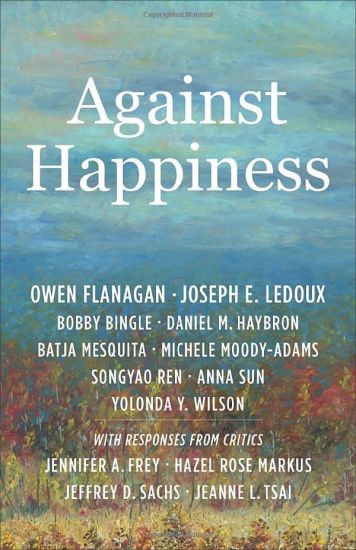
The “happiness agenda” is a worldwide movement that claims that happiness is the highest good, happiness can be measured, and public policy should promote happiness. Against Happiness is a thorough and powerful critique of this program, revealing the flaws of its concept of happiness and advocating a renewed focus on equality and justice.Written by an interdisciplinary team of authors, this book provides both theoretical and empirical analysis of the limitations of the happiness agenda. The authors emphasize that this movement draws on a parochial, Western-centric philosophical basis and demographic sample. They show that happiness defined as subjective satisfaction or a surplus of positive emotions bears little resemblance to the richer and more nuanced concepts of the good life found in many world traditions. Cross-cultural philosophy, comparative theology, and social and cultural psychology all teach that cultures and subcultures vary in how much value they place on life satisfaction or feeling happy. Furthermore, the ideas promoted by the happiness agenda can compete with rights, justice, sustainability, and equality—and even conceal racial and gender injustice.Against Happiness argues that a better way forward requires integration of cross-cultural philosophical, ethical, and political thought with critical social science. Ultimately, the authors contend, happiness should be a secondary goal—worth pursuing only if it is contingent on the demands of justice.
Against Happiness

Against Happiness

Owen Flanagan; Joseph E. LeDoux; Bobby Bingle; Daniel M. Haybron; Batja Mesquita; Michele Moody-Adams; Songyao Ren; Anna Sun; Yolonda Y. Wilson

Columbia University Press
2023
pokkari
The “happiness agenda” is a worldwide movement that claims that happiness is the highest good, happiness can be measured, and public policy should promote happiness. Against Happiness is a thorough and powerful critique of this program, revealing the flaws of its concept of happiness and advocating a renewed focus on equality and justice.Written by an interdisciplinary team of authors, this book provides both theoretical and empirical analysis of the limitations of the happiness agenda. The authors emphasize that this movement draws on a parochial, Western-centric philosophical basis and demographic sample. They show that happiness defined as subjective satisfaction or a surplus of positive emotions bears little resemblance to the richer and more nuanced concepts of the good life found in many world traditions. Cross-cultural philosophy, comparative theology, and social and cultural psychology all teach that cultures and subcultures vary in how much value they place on life satisfaction or feeling happy. Furthermore, the ideas promoted by the happiness agenda can compete with rights, justice, sustainability, and equality—and even conceal racial and gender injustice.Against Happiness argues that a better way forward requires integration of cross-cultural philosophical, ethical, and political thought with critical social science. Ultimately, the authors contend, happiness should be a secondary goal—worth pursuing only if it is contingent on the demands of justice.
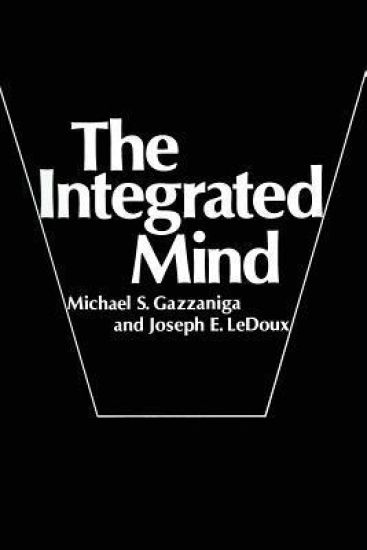
The Integrated Mind

The Integrated Mind

Michael S. Gazzaniga; Joseph E. LeDoux

Springer-Verlag New York Inc.
2013
nidottu
In this book we are trying to illuminate the persistent and nag­ ging questions of how mind, life, and the essence of being relate to brain mechanisms. We do that not because we have a commit­ ment to bear witness to the boring issue of reductionism but be­ cause we want to know more about what it's all about. How, in­ deed, does the brain work? How does it allow us to love, hate, see, cry, suffer, and ultimately understand Kepler's laws? We try to uncover clues to these staggering questions by con­ sidering the results of our studies on the bisected brain. Several years back, one of us wrote a book with that title, and the ap­ proach was to describe how brain and behavior are affected when one takes the brain apart. In the present book, we are ready to put it back together, and go beyond, for we feel that split-brain studies are now at the point of contributing to an understanding of the workings of the integrated mind. We are grateful to Dr. Donald Wilson of the Dartmouth Medi­ cal School for allowing us to test his patients. We would also like to thank our past and present colleagues, including Richard Naka­ mura, Gail Risse, Pamela Greenwood, Andy Francis, Andrea El­ berger, Nick Brecha, Lynn Bengston, and Sally Springer, who have been involved in various facets of the experimental studies on the bisected brain described in this book.
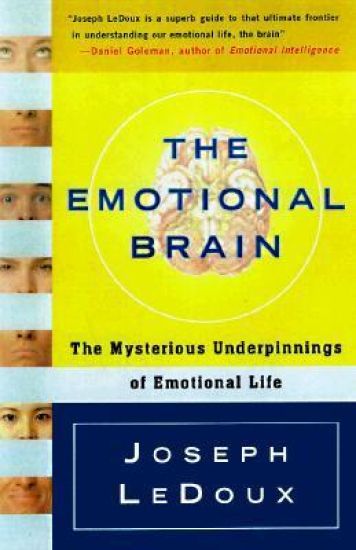
The Emotional Brain

The Emotional Brain

Joseph E. LeDoux

Simon Schuster
1998
nidottu
What happens in our brains to make us feel fear, love, hate, anger, joy? Do we control our emotions, or do they control us? Do animals have emotions? How can traumatic experiences in early childhood influence adult behavior, even though we have no conscious memory of them? In The Emotional Brain, Joseph LeDoux investigates the origins of human emotions and explains that many exist as part of complex neural systems that evolved to enable us to survive. One of the principal researchers profiled in Daniel Goleman's Emotional Intelligence, LeDoux is a leading authority in the field of neural science. In this provocative book, he explores the brain mechanisms underlying our emotions -- mechanisms that are only now being revealed.
The Integrated Mind

The Integrated Mind

Michael S. Gazzaniga; Joseph E. LeDoux

Kluwer Academic/Plenum Publishers
1978
sidottu
In this book we are trying to illuminate the persistent and nag­ ging questions of how mind, life, and the essence of being relate to brain mechanisms. We do that not because we have a commit­ ment to bear witness to the boring issue of reductionism but be­ cause we want to know more about what it's all about. How, in­ deed, does the brain work? How does it allow us to love, hate, see, cry, suffer, and ultimately understand Kepler's laws? We try to uncover clues to these staggering questions by con­ sidering the results of our studies on the bisected brain. Several years back, one of us wrote a book with that title, and the ap­ proach was to describe how brain and behavior are affected when one takes the brain apart. In the present book, we are ready to put it back together, and go beyond, for we feel that split-brain studies are now at the point of contributing to an understanding of the workings of the integrated mind. We are grateful to Dr. Donald Wilson of the Dartmouth Medi­ cal School for allowing us to test his patients. We would also like to thank our past and present colleagues, including Richard Naka­ mura, Gail Risse, Pamela Greenwood, Andy Francis, Andrea El­ berger, Nick Brecha, Lynn Bengston, and Sally Springer, who have been involved in various facets of the experimental studies on the bisected brain described in this book.