Kirjojen hintavertailu. Mukana 12 595 353 kirjaa ja 12 kauppaa.
Kirjailija
Joseph L. Awange
Kirjat ja teokset yhdessä paikassa: 19 kirjaa, julkaisuja vuosilta 2006-2025, suosituimpien joukossa Surveying for Civil and Mine Engineers. Vertaile teosten hintoja ja tarkista saatavuus suomalaisista kirjakaupoista.
This second edition of the book presents Artificial Intelligence (AI)-based Lake Victoria Basin (LVB)’s water monitoring products that stretches over 50 years from the Gravity Recovery and Climate Exchange (GRACE) and its Follow-on (GRACE-FO) satellite missions, investigates the lake's floating islands that disrupts power production, analyses LVB's groundwater, and unravels the causes of the 2018-2019 rise of its water level. In a unique cross-disciplinary approach, the book articulates the various climatic impacts and explanations from natural and anthropogenic origins, which affected Lake Victoria and its vicinity, including the drastic increase and depletion of water level in the Lake and dams, floods and droughts, water quality/security, crop health, food security, and economic implications. The book is recommended for readers from a diverse discipline, including physical and social sciences, policy, law, engineering, and disaster management. Professor C.K. Shum, Ohio State University.
This second edition of Mathematical Geosciences book adds five new topics: Solution equations with uncertainty, which proposes two novel methods for solving nonlinear geodetic equations as stochastic variables when the parameters of these equations have uncertainty characterized by probability distribution. The first method, an algebraic technique, partly employs symbolic computations and is applicable to polynomial systems having different uncertainty distributions of the parameters. The second method, a numerical technique, uses stochastic differential equation in Ito form; Nature Inspired Global Optimization where Meta-heuristic algorithms are based on natural phenomenon such as Particle Swarm Optimization. This approach simulates, e.g., schools of fish or flocks of birds, and is extended through discussion of geodetic applications. Black Hole Algorithm, which is based on the black hole phenomena is added and a new variant of the algorithm code is introduced and illustrated based on examples; The application of the Gröbner Basis to integer programming based on numeric symbolic computation is introduced and illustrated by solving some standard problems; An extension of the applications of integer programming solving phase ambiguity in Global Navigation Satellite Systems (GNSSs) is considered as a global quadratic mixed integer programming task, which can be transformed into a pure integer problem with a given digit of accuracy. Three alternative algorithms are suggested, two of which are based on local and global linearization via McCormic Envelopes; and Machine learning techniques (MLT) that offer effective tools for stochastic process modelling. The Stochastic Modelling section is extended by the stochastic modelling via MLT and their effectiveness is compared with that of the modelling via stochastic differential equations (SDE). Mixing MLT with SDE also known as frequently Neural Differential Equations is also introduced and illustratedby an image classification via a regression problem.
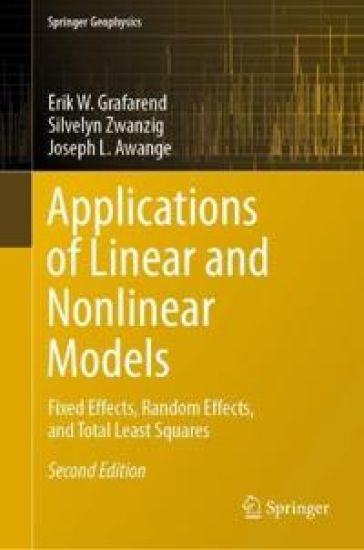
This book provides numerous examples of linear and nonlinear model applications. Here, we present a nearly complete treatment of the Grand Universe of linear and weakly nonlinear regression models within the first 8 chapters. Our point of view is both an algebraic view and a stochastic one. For example, there is an equivalent lemma between a best, linear uniformly unbiased estimation (BLUUE) in a Gauss–Markov model and a least squares solution (LESS) in a system of linear equations. While BLUUE is a stochastic regression model, LESS is an algebraic solution. In the first six chapters, we concentrate on underdetermined and overdetermined linear systems as well as systems with a datum defect. We review estimators/algebraic solutions of type MINOLESS, BLIMBE, BLUMBE, BLUUE, BIQUE, BLE, BIQUE, and total least squares. The highlight is the simultaneous determination of the first moment and the second central moment of a probability distribution in an inhomogeneous multilinear estimationby the so-called E-D correspondence as well as its Bayes design. In addition, we discuss continuous networks versus discrete networks, use of Grassmann–Plucker coordinates, criterion matrices of type Taylor–Karman as well as FUZZY sets. Chapter seven is a speciality in the treatment of an overjet. This second edition adds three new chapters:(1) Chapter on integer least squares that covers (i) model for positioning as a mixed integer linear model which includes integer parameters. (ii) The general integer least squares problem is formulated, and the optimality of the least squares solution is shown. (iii) The relation to the closest vector problem is considered, and the notion of reduced lattice basis is introduced. (iv) The famous LLL algorithm for generating a Lovasz reduced basis is explained.(2) Bayes methods that covers (i) general principle of Bayesian modeling. Explain the notion of prior distribution and posterior distribution. Choose the pragmatic approach for exploring the advantages of iterative Bayesian calculations and hierarchical modeling. (ii) Present the Bayes methods for linear models with normal distributed errors, including noninformative priors, conjugate priors, normal gamma distributions and (iii) short outview to modern application of Bayesian modeling. Useful in case of nonlinear models or linear models with no normal distribution: Monte Carlo (MC), Markov chain Monte Carlo (MCMC), approximative Bayesian computation (ABC) methods.(3) Error-in-variables models, which cover: (i) Introduce the error-in-variables (EIV) model, discuss the difference to least squares estimators (LSE), (ii) calculate the total least squares (TLS) estimator. Summarize the properties of TLS, (iii) explain the idea of simulation extrapolation (SIMEX) estimators, (iv) introduce the symmetrized SIMEX (SYMEX) estimator and its relation to TLS, and (v) short outview to nonlinear EIV models. The chapter onalgebraic solution of nonlinear system of equations has also been updated in line with the new emerging field of hybrid numeric-symbolic solutions to systems of nonlinear equations, ermined system of nonlinear equations on curved manifolds. The von Mises–Fisher distribution is characteristic for circular or (hyper) spherical data. Our last chapter is devoted to probabilistic regression, the special Gauss–Markov model with random effects leading to estimators of type BLIP and VIP including Bayesian estimation. A great part of the work is presented in four appendices. Appendix A is a treatment, of tensor algebra, namely linear algebra, matrix algebra, and multilinear algebra. Appendix B is devoted to sampling distributions and their use in terms of confidence intervals and confidence regions. Appendix C reviews the elementary notions of statistics, namely random events and stochastic processes. Appendix D introduces the basics of Groebner basis algebra, its careful definition, the Buchberger algorithm, especially the C. F. Gauss combinatorial algorithm.
This second edition of Mathematical Geosciences book adds five new topics: Solution equations with uncertainty, which proposes two novel methods for solving nonlinear geodetic equations as stochastic variables when the parameters of these equations have uncertainty characterized by probability distribution. The first method, an algebraic technique, partly employs symbolic computations and is applicable to polynomial systems having different uncertainty distributions of the parameters. The second method, a numerical technique, uses stochastic differential equation in Ito form; Nature Inspired Global Optimization where Meta-heuristic algorithms are based on natural phenomenon such as Particle Swarm Optimization. This approach simulates, e.g., schools of fish or flocks of birds, and is extended through discussion of geodetic applications. Black Hole Algorithm, which is based on the black hole phenomena is added and a new variant of the algorithm code is introduced and illustrated based on examples; The application of the Gröbner Basis to integer programming based on numeric symbolic computation is introduced and illustrated by solving some standard problems; An extension of the applications of integer programming solving phase ambiguity in Global Navigation Satellite Systems (GNSSs) is considered as a global quadratic mixed integer programming task, which can be transformed into a pure integer problem with a given digit of accuracy. Three alternative algorithms are suggested, two of which are based on local and global linearization via McCormic Envelopes; and Machine learning techniques (MLT) that offer effective tools for stochastic process modelling. The Stochastic Modelling section is extended by the stochastic modelling via MLT and their effectiveness is compared with that of the modelling via stochastic differential equations (SDE). Mixing MLT with SDE also known as frequently Neural Differential Equations is also introduced and illustratedby an image classification via a regression problem.
This book provides numerous examples of linear and nonlinear model applications. Here, we present a nearly complete treatment of the Grand Universe of linear and weakly nonlinear regression models within the first 8 chapters. Our point of view is both an algebraic view and a stochastic one. For example, there is an equivalent lemma between a best, linear uniformly unbiased estimation (BLUUE) in a Gauss–Markov model and a least squares solution (LESS) in a system of linear equations. While BLUUE is a stochastic regression model, LESS is an algebraic solution. In the first six chapters, we concentrate on underdetermined and overdetermined linear systems as well as systems with a datum defect. We review estimators/algebraic solutions of type MINOLESS, BLIMBE, BLUMBE, BLUUE, BIQUE, BLE, BIQUE, and total least squares. The highlight is the simultaneous determination of the first moment and the second central moment of a probability distribution in an inhomogeneous multilinear estimationby the so-called E-D correspondence as well as its Bayes design. In addition, we discuss continuous networks versus discrete networks, use of Grassmann–Plucker coordinates, criterion matrices of type Taylor–Karman as well as FUZZY sets. Chapter seven is a speciality in the treatment of an overjet. This second edition adds three new chapters:(1) Chapter on integer least squares that covers (i) model for positioning as a mixed integer linear model which includes integer parameters. (ii) The general integer least squares problem is formulated, and the optimality of the least squares solution is shown. (iii) The relation to the closest vector problem is considered, and the notion of reduced lattice basis is introduced. (iv) The famous LLL algorithm for generating a Lovasz reduced basis is explained.(2) Bayes methods that covers (i) general principle of Bayesian modeling. Explain the notion of prior distribution and posterior distribution. Choose the pragmatic approach for exploring the advantages of iterative Bayesian calculations and hierarchical modeling. (ii) Present the Bayes methods for linear models with normal distributed errors, including noninformative priors, conjugate priors, normal gamma distributions and (iii) short outview to modern application of Bayesian modeling. Useful in case of nonlinear models or linear models with no normal distribution: Monte Carlo (MC), Markov chain Monte Carlo (MCMC), approximative Bayesian computation (ABC) methods.(3) Error-in-variables models, which cover: (i) Introduce the error-in-variables (EIV) model, discuss the difference to least squares estimators (LSE), (ii) calculate the total least squares (TLS) estimator. Summarize the properties of TLS, (iii) explain the idea of simulation extrapolation (SIMEX) estimators, (iv) introduce the symmetrized SIMEX (SYMEX) estimator and its relation to TLS, and (v) short outview to nonlinear EIV models. The chapter onalgebraic solution of nonlinear system of equations has also been updated in line with the new emerging field of hybrid numeric-symbolic solutions to systems of nonlinear equations, ermined system of nonlinear equations on curved manifolds. The von Mises–Fisher distribution is characteristic for circular or (hyper) spherical data. Our last chapter is devoted to probabilistic regression, the special Gauss–Markov model with random effects leading to estimators of type BLIP and VIP including Bayesian estimation. A great part of the work is presented in four appendices. Appendix A is a treatment, of tensor algebra, namely linear algebra, matrix algebra, and multilinear algebra. Appendix B is devoted to sampling distributions and their use in terms of confidence intervals and confidence regions. Appendix C reviews the elementary notions of statistics, namely random events and stochastic processes. Appendix D introduces the basics of Groebner basis algebra, its careful definition, the Buchberger algorithm, especially the C. F. Gauss combinatorial algorithm.
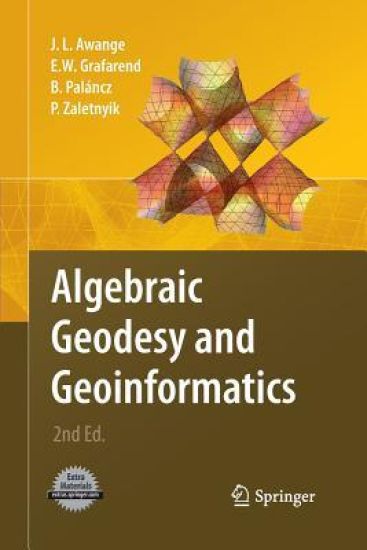
This book showcases powerful new hybrid methods that combine numerical and symbolic algorithms. Hybrid algorithm research is currently one of the most promising directions in the context of geosciences mathematics and computer mathematics in general. One important topic addressed here with a broad range of applications is the solution of multivariate polynomial systems by means of resultants and Groebner bases. But that’s barely the beginning, as the authors proceed to discuss genetic algorithms, integer programming, symbolic regression, parallel computing, and many other topics.The book is strictly goal-oriented, focusing on the solution of fundamental problems in the geosciences, such as positioning and point cloud problems. As such, at no point does it discuss purely theoretical mathematics. "The book delivers hybrid symbolic-numeric solutions, which are a large and growing area at the boundary of mathematics and computer science." Dr. Daniel Lichtbau
"Indeed, the most important part of engineering work—and also of other scientific work—is the determination of the method of attacking the problem, whatever it may be, whether an experimental investigation, or a theoretical calculation. … It is by the choice of a suitable method of attack, that intricate problems are reduced to simple phenomena, and then easily solved." Charles Proteus Steinmetz.The structure of this book is to provide a sequence of theory, workshops and practical field sessions that mimic a simple survey project, designed for civil and mining engineers. The format of the book is based on a number of years of experience gained in presenting the course at undergraduate and post graduate levels. The course is designed to guide engineers through survey tasks that the engineering industry feels is necessary for them to have a demonstrated competency in surveying techniques, data gathering and reduction, and report presentation. The courseis not designed to make engineers become surveyors. It is designed to allow an appreciation of the civil and mine engineering surveyor’s job. There are many excellent text books available on the subject of engineering surveying, but they address the surveyor, not the engineer. Hopefully this book will distil many parts of the standard text book. A lot of the material presented is scattered through very disparate sources and has been gathered into this book to show what techniques lie behind a surveyor’s repertoire of observational and computational skills, and provide an understanding of the decisions made in terms of the presentation of results. The course has been designed to run over about 6 weeks of a semester, providing a half unit load which complements a computer aided design (CAD) based design project.
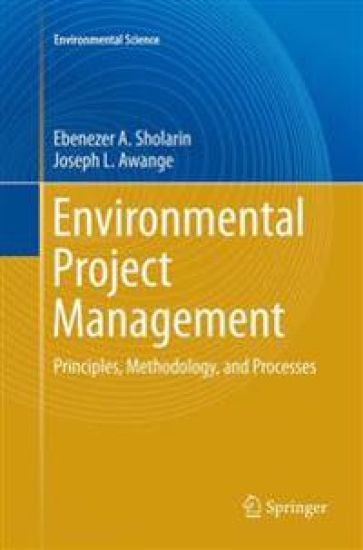
This book offers a new framework that facilitates the development of more intelligent systems and methods for data analysis and international information sharing, such as the use of satellite imaging and geospatial data to predict changes in weather conditions and shifts in water levels, and to assess the extent of the forest cover remaining on Earth that is visible from space. It brings together the many aspects of science and technology, as well as formula and analytical approaches required for more informed decision-making. It also highlights the vital importance of understanding the technological, economic and social dimensions of environmental projects that have short-term results and long-term impacts. It is unique in that it clearly distinguishes between environmental project management (EnvPM) and green project management (GreenPM), and presents an amalgamation of environmental management and project management concepts, using geospatial methods to form an EnvPM concept. The book sets a benchmark for the professionalism with which environmental projects should be planned, executed, monitored, assessed and delivered. While primarily intended for professionals responsible for the management of environmental projects or interested in improving the overall efficiency of such projects, it is also a useful handbook for managers in the private, public and non-for-profit sectors. It is a valuable resource for students at both undergraduate and master’s levels and an indispensable guide for anyone wanting to develop their skills in modern project management, environmental management and geospatial techniques.``We are the first generation to feel the impact of climate change, and the last generation that can do something about it.'' US President Obama's address to the United Nations on Climate Change and Global warming (2015)hison: This book provides an in-depth, well-researched and science-based approach to applying key project-management and spatial tools and practices in environmental projects. An important read for leaders considering projects that balance social-economic growth against minimising its ill-effects on Planet Earth. - Todd Hutchison, Global Chairman of Peopleistic group.
This book reviews the key conceptions and economic theories of poverty, explains poverty-environment nexus, and finally offers innovative socio-economic and scientific geospatial solutions for the 21st Century. The book makes it possible for our readers to understand poverty thorough a concise review of the major theoretical economic frameworks, measures of poverty, and points out the need to understand rural-urban dichotomy of poverty. We find the theories and measures to be less-than perfect and therefore point out the need to treat these measures and theories as convenient tools lacking perfect accuracy and utmost scientific reliability. It follows then that the supposedly knowledgeably crafted poverty reduction and environmental preservation solutions are inherently imperfect.The economic solutions proposed in this book transcend extant humdrum macroeconomic and policy measures targeting poverty and environmental issues. We point to a new paradigm in which private sector and other stakeholders can create new and inclusive markets where value is co-created and shared. Above all, this book offers timely state-of-the-art geospatial solutions targeting the most pressing global problems of water, e.g., the use of the Gravity Recovery and Climate Experiment (GRACE) missions to estimate changes in stored water in the water-poverty-environment nexus, pollution, agriculture and disaster management, where geospatial techniques are appliedunder strong environmental impact assessment regulatory regimes. This book provides a good summary of economic theories of poverty as well as a vivid depiction of the state of environmental degradation in the world. People often work separately on different issues that are, in fact, closely intertwined. The principle of holism is that the whole is greater than the sum of its parts, and I believe that this joint-venture of two experts on poverty and environment has produced something more than a sum of two separate monographs on the issues. Various points raised in this volume are worth heeding when we think of formulation and implementation of a truly effective post-MDGs development agenda.Yoichi Mine, Professor of Human Security and African Area Study, Graduate School of Global Studies, Doshisha University, Japan
There is no doubt that today, perhaps more than ever before, humanity faces a myriad of complex and demanding challenges. These include natural resource depletion and environmental degradation, food and water insecurity, energy shortages, diminishing biodiversity, increasing losses from natural disasters, and climate change with its associated potentially devastating consequences, such as rising sea levels.These human-induced and natural impacts on the environment need to be well understood in order to develop informed policies, decisions, and remedial measures to mitigate current and future negative impacts. To achieve this, continuous monitoring and management of the environment to acquire data that can be soundly and rigorously analyzed to provide information about its current state and changing patterns, and thereby allow predictions of possible future impacts, are essential. Developing pragmatic and sustainable solutions to address these and many other similar challenges requires the use of geodata and the application of geoinformatics.This book presents the concepts and applications of geoinformatics, a multidisciplinary field that has at its core different technologies that support the acquisition, analysis and visualization of geodata for environmental monitoring and management. We depart from the 4D to the 5D data paradigm, which defines geodata accurately, consistently, rapidly and completely, in order to be useful without any restrictions in space, time or scale to represent a truly global dimension of the digital Earth. The book also features the state-of-the-art discussion of Web-GIS. The concepts and applications of geoinformatics presented in this book will be of benefit to decision-makers across a wide range of fields, including those at environmental agencies, in the emergency services, public health and epidemiology, crime mapping, environmentalmanagement agencies, tourist industry, market analysis and e-commerce, or mineral exploration, among many others. The title and subtitle of this textbook convey a distinct message. Monitoring -the passive part in the subtitle - refers to observation and data acquisition, whereas management - the active component - stands for operation and performance. The topic is our environment, which is intimately related to geoinformatics. The overall message is: all the mentioned elements do interact and must not be separated. Hans-Peter B ahr, Prof. Dr.-Ing. Dr.h.c., Karlsruhe Institute of Technology (KIT), Germany.
Global Navigation Satellite Systems (GNSS) are revolutionizing the world in a way their original developers never envisaged. From being military “war” tools, GNSS satellites are rapidly becoming “peace” tools that play a potentially critical role in enabling changing environmental phenomenon that do not permit direct measurements to be remotely observed via their all-weather, highly accurate and continuously updatable positional time series. This is evident, for example, in their use in emerging environmental monitoring methods that are considered in this book. These include: GPS-based radio telemetry, which is enhancing ecological and conservation monitoring by more accurately mapping animal movements, their behaviours, and their impact on the environment; GNSS-meteorology, which is contributing to weather and climate change studies; GNSS-remote sensing, which, for example, allows the rapid monitoring of changes in fresh water resources and cryosphere; Geosensor network techniques, which are earning a crucial role in disaster response management; Epidemiology, for improved efficiency in tracking and studying the spread of infectious diseases and climate change effects on vector-borne diseases; and Economics, to provide data for the econometric modelling of casual impact of policies. In Environmental Impact Assessments (EIA), Strategic Environmental Assessments (SEA), and Sustainability Assessments (SA), GNSS, together with other spaced-based remote sensing techniques, are emerging, not only as modern tools that connect the developers to the community, but also provide information that support Multi-Criteria Analysis (MCA) methods, which inform decision making and policy formulations. By bringing the two fields of geodesy (the parent of GNSS technology) and environmental studies (potential users of this technology), this bookpresents the concepts of GNSS in a simplified way that can, on the one hand, be understood and utilised by environmentalists, while on the other, outlines its potential applications to environmental monitoring and management for those engaged more with its technology, which hopefully will further energise the already innovative research that is being carried out. Lastly, this book is most relevant to all the professionals whose work is related to the environment such as hydrologists, meteorologists, epidemiologists, economist, and engineers, to name just a few.A comprehensive yet candid and compelling presentation of Global Navigation Satellite Systems and its application to environmental monitoring and a host of other socio-economic activities. This is an essential and new ground breaking reading for all professional practitioners and even academics seeking to study and become involved in using Global Navigation Satellite Systems in diverse fields ranging from environmental monitoring to economic activities such as monitoring weather and climate in order to design crop failure insurance. Nathaniel O. Agola, Professor of Business and Financial Economics, Ritsumeikan University, Japan
Here we present a nearly complete treatment of the Grand Universe of linear and weakly nonlinear regression models within the first 8 chapters. Our point of view is both an algebraic view as well as a stochastic one. For example, there is an equivalent lemma between a best, linear uniformly unbiased estimation (BLUUE) in a Gauss-Markov model and a least squares solution (LESS) in a system of linear equations. While BLUUE is a stochastic regression model, LESS is an algebraic solution. In the first six chapters we concentrate on underdetermined and overdeterimined linear systems as well as systems with a datum defect. We review estimators/algebraic solutions of type MINOLESS, BLIMBE, BLUMBE, BLUUE, BIQUE, BLE, BIQUE and Total Least Squares. The highlight is the simultaneous determination of the first moment and the second central moment of a probability distribution in an inhomogeneous multilinear estimation by the so called E-D correspondence as well as its Bayes design. In addition, we discuss continuous networks versus discrete networks, use of Grassmann-Pluecker coordinates, criterion matrices of type Taylor-Karman as well as FUZZY sets. Chapter seven is a speciality in the treatment of an overdetermined system of nonlinear equations on curved manifolds. The von Mises-Fisher distribution is characteristic for circular or (hyper) spherical data. Our last chapter eight is devoted to probabilistic regression, the special Gauss-Markov model with random effects leading to estimators of type BLIP and VIP including Bayesian estimation.A great part of the work is presented in four Appendices. Appendix A is a treatment, of tensor algebra, namely linear algebra, matrix algebra and multilinear algebra. Appendix B is devoted to sampling distributions and their use in terms of confidence intervals and confidence regions. Appendix C reviews the elementary notions of statistics, namely random events and stochastic processes. Appendix D introduces the basics of Groebner basis algebra, its careful definition, the Buchberger Algorithm, especially the C. F. Gauss combinatorial algorithm.
This book offers a new framework that facilitates the development of more intelligent systems and methods for data analysis and international information sharing, such as the use of satellite imaging and geospatial data to predict changes in weather conditions and shifts in water levels, and to assess the extent of the forest cover remaining on Earth that is visible from space. It brings together the many aspects of science and technology, as well as formula and analytical approaches required for more informed decision-making. It also highlights the vital importance of understanding the technological, economic and social dimensions of environmental projects that have short-term results and long-term impacts. It is unique in that it clearly distinguishes between environmental project management (EnvPM) and green project management (GreenPM), and presents an amalgamation of environmental management and project management concepts, using geospatial methods to form an EnvPM concept. The book sets a benchmark for the professionalism with which environmental projects should be planned, executed, monitored, assessed and delivered. While primarily intended for professionals responsible for the management of environmental projects or interested in improving the overall efficiency of such projects, it is also a useful handbook for managers in the private, public and non-for-profit sectors. It is a valuable resource for students at both undergraduate and master’s levels and an indispensable guide for anyone wanting to develop their skills in modern project management, environmental management and geospatial techniques.``We are the first generation to feel the impact of climate change, and the last generation that can do something about it.'' US President Obama's address to the United Nations on Climate Change and Global warming (2015)hison: This book provides an in-depth, well-researched and science-based approach to applying key project-management and spatial tools and practices in environmental projects. An important read for leaders considering projects that balance social-economic growth against minimising its ill-effects on Planet Earth. - Todd Hutchison, Global Chairman of Peopleistic group.
While preparing and teaching ‘Introduction to Geodesy I and II’ to undergraduate students at Stuttgart University, we noticed a gap which motivated the writing of the present book: Almost every topic that we taught required some skills in algebra, and in particular, computer algebra! From positioning to transformation problems inherent in geodesy and geoinformatics, knowledge of algebra and application of computer algebra software were required. In preparing this book therefore, we have attempted to put together basic concepts of abstract algebra which underpin the techniques for solving algebraic problems. Algebraic computational algorithms useful for solving problems which require exact solutions to nonlinear systems of equations are presented and tested on various problems. Though the present book focuses mainly on the two ?elds, the concepts and techniques presented herein are nonetheless applicable to other ?elds where algebraic computational problems might be encountered. In Engineering for example, network densi?cation and robotics apply resection and intersection techniques which require algebraic solutions. Solution of nonlinear systems of equations is an indispensable task in almost all geosciences such as geodesy, geoinformatics, geophysics (just to mention but a few) as well as robotics. These equations which require exact solutions underpin the operations of ranging, resection, intersection and other techniques that are normally used. Examples of problems that require exact solutions include; • three-dimensional resection problem for determining positions and orientation of sensors, e. g. , camera, theodolites, robots, scanners etc.
This book reviews the key conceptions and economic theories of poverty, explains poverty-environment nexus, and finally offers innovative socio-economic and scientific geospatial solutions for the 21st Century. The book makes it possible for our readers to understand poverty thorough a concise review of the major theoretical economic frameworks, measures of poverty, and points out the need to understand rural-urban dichotomy of poverty. We find the theories and measures to be less-than perfect and therefore point out the need to treat these measures and theories as convenient tools lacking perfect accuracy and utmost scientific reliability. It follows then that the supposedly knowledgeably crafted poverty reduction and environmental preservation solutions are inherently imperfect.The economic solutions proposed in this book transcend extant humdrum macroeconomic and policy measures targeting poverty and environmental issues. We point to a new paradigm in which private sector and other stakeholders can create new and inclusive markets where value is co-created and shared. Above all, this book offers timely state-of-the-art geospatial solutions targeting the most pressing global problems of water, e.g., the use of the Gravity Recovery and Climate Experiment (GRACE) missions to estimate changes in stored water in the water-poverty-environment nexus, pollution, agriculture and disaster management, where geospatial techniques are appliedunder strong environmental impact assessment regulatory regimes. This book provides a good summary of economic theories of poverty as well as a vivid depiction of the state of environmental degradation in the world. People often work separately on different issues that are, in fact, closely intertwined. The principle of holism is that the whole is greater than the sum of its parts, and I believe that this joint-venture of two experts on poverty and environment has produced something more than a sum of two separate monographs on the issues. Various points raised in this volume are worth heeding when we think of formulation and implementation of a truly effective post-MDGs development agenda.Yoichi Mine, Professor of Human Security and African Area Study, Graduate School of Global Studies, Doshisha University, Japan
Recently, there has been, and continues to be, a tremendous interest on Lake Victoria and its environs, both locally and internationally. A casual browsing on the Internet indicates that the entries on the Lake have been rising phenomenally. At the same time, the issues discussed are as diverse as they are varied in their treatment of the subject, both in terms of depth and comprehensiveness. The information on Lake Victoria and its environ is scattered, isolated, and sometimes confusing even though documentation on the subject are available. Despite this situation, the fact remains that various people (e. g. , secondary and universitystudents,researchers,practitioners,etc. ,)wouldliketoaccess and know more about the Lake and its environs. Aware of the existing information gap about this world’s second largest fresh water Lake, this book is intended to provide readers with up-to-date information pertaining the Lake. The book gives an in-depth coverage of environmental issues, - source endowment, poverty amidst plenty, development opportunities, challenges and other related issues facing the Lake and its environs. It aims at providing information on the above variables, which hopefully will address the needs of various users. We have attempted to present the materials in a simple and straight forward way that will be und- standable to undergraduate students as well as advanced researchers. YetweareawarethatmostparametersoftheLakearechangingrapidly. We have therefore attempted to provide as accurate and up-to-date - formation up to the time of publishing.
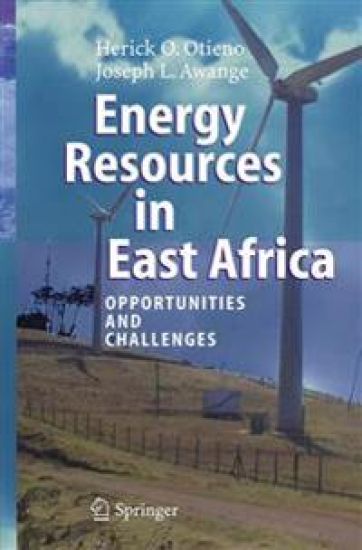
East African states have historically shared several resources including energy and common heritage of its people. This book provides information on available sources of energy in the region and how the energy suppliers can exploit them in an integrated form to produce the right blend of energy for various applications e.g., industrial, domestic and recreational uses. We provide an in-depth analysis of the advantages and disadvantages of different energy sources in-terms of environmental, industrialization, distribution costs and impacts. We hope that the book will contribute towards a sustainable exploitation of energy resources for the improvement of the people’s quality of life.
East African states have historically shared several resources including energy and common heritage of its people. This book provides information on available sources of energy in the region and how the energy suppliers can exploit them in an integrated form to produce the right blend of energy for various applications e.g., industrial, domestic and recreational uses. We provide an in-depth analysis of the advantages and disadvantages of different energy sources in-terms of environmental, industrialization, distribution costs and impacts. We hope that the book will contribute towards a sustainable exploitation of energy resources for the improvement of the people’s quality of life.
Recently, there has been, and continues to be, a tremendous interest on Lake Victoria and its environs, both locally and internationally. A casual browsing on the Internet indicates that the entries on the Lake have been rising phenomenally. At the same time, the issues discussed are as diverse as they are varied in their treatment of the subject, both in terms of depth and comprehensiveness. The information on Lake Victoria and its environ is scattered, isolated, and sometimes confusing even though documentation on the subject are available. Despite this situation, the fact remains that various people (e. g. , secondary and universitystudents,researchers,practitioners,etc. ,)wouldliketoaccess and know more about the Lake and its environs. Aware of the existing information gap about this world’s second largest fresh water Lake, this book is intended to provide readers with up-to-date information pertaining the Lake. The book gives an in-depth coverage of environmental issues, - source endowment, poverty amidst plenty, development opportunities, challenges and other related issues facing the Lake and its environs. It aims at providing information on the above variables, which hopefully will address the needs of various users. We have attempted to present the materials in a simple and straight forward way that will be und- standable to undergraduate students as well as advanced researchers. YetweareawarethatmostparametersoftheLakearechangingrapidly. We have therefore attempted to provide as accurate and up-to-date - formation up to the time of publishing.