Kirjojen hintavertailu. Mukana 12 553 816 kirjaa ja 12 kauppaa.

Kirjailija

Joseph Litvak

Kirjat ja teokset yhdessä paikassa: 7 kirjaa, julkaisuja vuosilta 1992-2027, suosituimpien joukossa Comedy Is Killing Us. Vertaile teosten hintoja ja tarkista saatavuus suomalaisista kirjakaupoista.

7 kirjaa

Kirjojen julkaisuhaarukka 1992-2027.

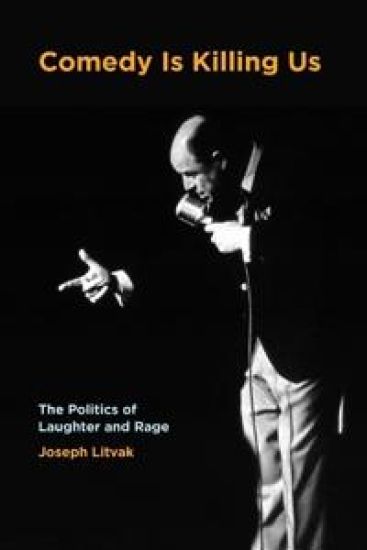
Comedy Is Killing Us

Comedy Is Killing Us

Joseph Litvak

FORDHAM UNIVERSITY PRESS
2027
pokkari
Does comedy really speak truth to power, or has it become one of power’s most effective tools? In Comedy Is Killing Us, literary and cultural critic Joseph Litvak offers a bold reckoning with the role of laughter in an age of authoritarian resurgence. Moving between political theory, media culture, and performance, Litvak argues that the modern strongman thrives not despite his ridiculousness but because of it. From twentieth-century fascist spectacle to the contemporary politics of insult comedy and "postcomedy," this book traces the deep entanglement of humor and terror across the United States and beyond. Drawing on thinkers including Lauren Berlant, Alenka Zupancic, John Limon, and Alain Badiou, Litvak challenges the comforting assumption that progressive resistance simply means reclaiming comedy’s liberatory power. Instead, he shows how even oppositional humor can reproduce structures of domination, blurring the line between comic critique and comic cruelty. Through readings of stand-up, media culture, and political performance, he situates the contemporary comedification of politics within a longer history linking laughter to fascism, nationalism, and gendered violence. Yet Litvak does not abandon comedy altogether. Turning to queer and experimental forms of postcomedy, he explores the possibility of a humor that resists both authoritarian spectacle and punitive satire. At once incisive and accessible, Comedy Is Killing Us offers an unorthodox perspective on the cultural conditions that have allowed rage-driven humor to flourish, and sketches a vision of what comedy after the present crisis might look like.
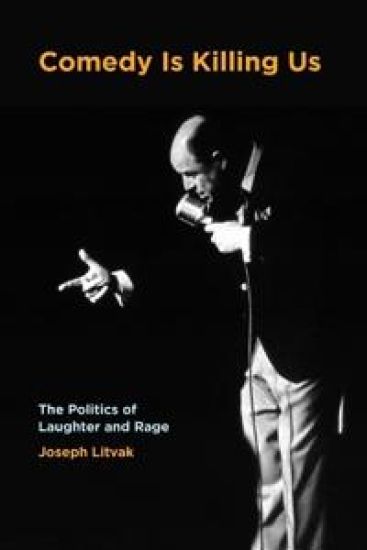
Comedy Is Killing Us

Comedy Is Killing Us

Joseph Litvak

FORDHAM UNIVERSITY PRESS
2027
sidottu
Does comedy really speak truth to power, or has it become one of power’s most effective tools? In Comedy Is Killing Us, literary and cultural critic Joseph Litvak offers a bold reckoning with the role of laughter in an age of authoritarian resurgence. Moving between political theory, media culture, and performance, Litvak argues that the modern strongman thrives not despite his ridiculousness but because of it. From twentieth-century fascist spectacle to the contemporary politics of insult comedy and "postcomedy," this book traces the deep entanglement of humor and terror across the United States and beyond. Drawing on thinkers including Lauren Berlant, Alenka Zupancic, John Limon, and Alain Badiou, Litvak challenges the comforting assumption that progressive resistance simply means reclaiming comedy’s liberatory power. Instead, he shows how even oppositional humor can reproduce structures of domination, blurring the line between comic critique and comic cruelty. Through readings of stand-up, media culture, and political performance, he situates the contemporary comedification of politics within a longer history linking laughter to fascism, nationalism, and gendered violence. Yet Litvak does not abandon comedy altogether. Turning to queer and experimental forms of postcomedy, he explores the possibility of a humor that resists both authoritarian spectacle and punitive satire. At once incisive and accessible, Comedy Is Killing Us offers an unorthodox perspective on the cultural conditions that have allowed rage-driven humor to flourish, and sketches a vision of what comedy after the present crisis might look like.

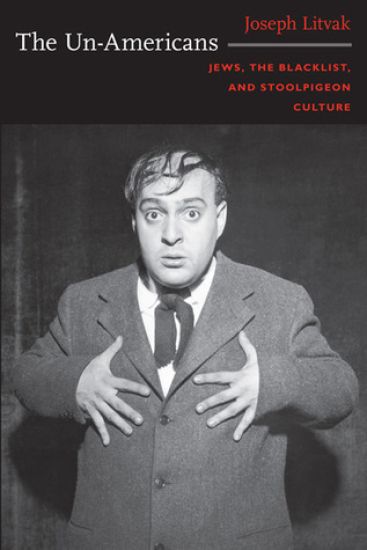
The Un-Americans

The Un-Americans

Joseph Litvak

Duke University Press
2010
sidottu
In a bold rethinking of the Hollywood blacklist and McCarthyite America, Joseph Litvak reveals a political regime that did not end with the 1950s or even with the Cold War: a regime of compulsory sycophancy, in which the good citizen is an informer, ready to denounce anyone who will not play the part of the earnest, patriotic American. While many scholars have noted the anti-Semitism underlying the House Un-American Activities Committee’s (HUAC’s) anti-Communism, Litvak draws on the work of Theodor W. Adorno, Hannah Arendt, Alain Badiou, and Max Horkheimer to show how the committee conflated Jewishness with what he calls “comic cosmopolitanism,” an intolerably seductive happiness, centered in Hollywood and New York, in show business and intellectual circles. He maintains that HUAC took the comic irreverence of the “uncooperative” witnesses as a crime against an American identity based on self-repudiation and the willingness to “name names.” Litvak proposes that sycophancy was (and continues to be) the price exacted for assimilation into mainstream American culture, not just for Jews, but also for homosexuals, immigrants, and other groups deemed threatening to American rectitude. Litvak traces the outlines of comic cosmopolitanism in a series of performances in film and theater and before HUAC, performances by Jewish artists and intellectuals such as Zero Mostel, Judy Holliday, and Abraham Polonsky. At the same time, through an uncompromising analysis of work by informers including Jerome Robbins, Elia Kazan, and Budd Schulberg, he explains the triumph of a stoolpigeon culture that still thrives in the America of the early twenty-first century.
The Un-Americans

The Un-Americans

Joseph Litvak

Duke University Press
2010
pokkari
In a bold rethinking of the Hollywood blacklist and McCarthyite America, Joseph Litvak reveals a political regime that did not end with the 1950s or even with the Cold War: a regime of compulsory sycophancy, in which the good citizen is an informer, ready to denounce anyone who will not play the part of the earnest, patriotic American. While many scholars have noted the anti-Semitism underlying the House Un-American Activities Committee’s (HUAC’s) anti-Communism, Litvak draws on the work of Theodor W. Adorno, Hannah Arendt, Alain Badiou, and Max Horkheimer to show how the committee conflated Jewishness with what he calls “comic cosmopolitanism,” an intolerably seductive happiness, centered in Hollywood and New York, in show business and intellectual circles. He maintains that HUAC took the comic irreverence of the “uncooperative” witnesses as a crime against an American identity based on self-repudiation and the willingness to “name names.” Litvak proposes that sycophancy was (and continues to be) the price exacted for assimilation into mainstream American culture, not just for Jews, but also for homosexuals, immigrants, and other groups deemed threatening to American rectitude. Litvak traces the outlines of comic cosmopolitanism in a series of performances in film and theater and before HUAC, performances by Jewish artists and intellectuals such as Zero Mostel, Judy Holliday, and Abraham Polonsky. At the same time, through an uncompromising analysis of work by informers including Jerome Robbins, Elia Kazan, and Budd Schulberg, he explains the triumph of a stoolpigeon culture that still thrives in the America of the early twenty-first century.
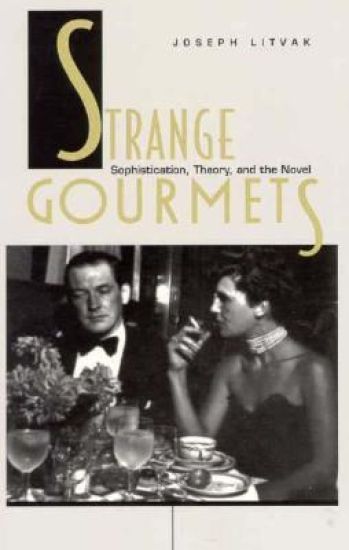
Strange Gourmets

Strange Gourmets

Joseph Litvak

Duke University Press
1997
pokkari
Theoretically sophisticated: How often has this term been used to distinguish a work of contemporary criticism, and what, exactly, does it mean? In Strange Gourmets, Joseph Litvak reclaims sophistication from its negative connotations and turns the spotlight on those who, even as they demonize sophistication, surreptitiously and extensively use it.Though commonly thought of as a kind of worldliness at its best and an elitist snobbery at its worst, sophistication, Litvak reminds us, remains tied to its earlier, if forgotten, meaning of "perversion"-a perversion whose avatars are the homosexual and the intellectual. Proceeding with his investigations from a specifically gay academic perspective, Litvak presents thoroughly inventive readings of novels by Austen, Thackeray, and Proust, and of theoretical works by Adorno and Barthes, each text epitomizing sophistication in one of its more familiar modes. Among the issues he explores are the ways in which these texts teach sophistication, the embarrassment that sophistication causes the sophisticated, and how the class politics of sophistication are inseparable from its sexual politics. Helping gay, queer, feminist, and other provocative critics to make the most of their bad publicity, Litvak mindfully celebrates sophistication’s economy of taste and pleasure.
Strange Gourmets

Strange Gourmets

Joseph Litvak

Duke University Press
1997
sidottu
Theoretically sophisticated: How often has this term been used to distinguish a work of contemporary criticism, and what, exactly, does it mean? In Strange Gourmets, Joseph Litvak reclaims sophistication from its negative connotations and turns the spotlight on those who, even as they demonize sophistication, surreptitiously and extensively use it.Though commonly thought of as a kind of worldliness at its best and an elitist snobbery at its worst, sophistication, Litvak reminds us, remains tied to its earlier, if forgotten, meaning of "perversion"-a perversion whose avatars are the homosexual and the intellectual. Proceeding with his investigations from a specifically gay academic perspective, Litvak presents thoroughly inventive readings of novels by Austen, Thackeray, and Proust, and of theoretical works by Adorno and Barthes, each text epitomizing sophistication in one of its more familiar modes. Among the issues he explores are the ways in which these texts teach sophistication, the embarrassment that sophistication causes the sophisticated, and how the class politics of sophistication are inseparable from its sexual politics. Helping gay, queer, feminist, and other provocative critics to make the most of their bad publicity, Litvak mindfully celebrates sophistication’s economy of taste and pleasure.
Caught in the Act

Caught in the Act

Joseph Litvak

University of California Press
1992
pokkari
Litvak demonstrates that private experience in the novels of Austen, Charlotte Bronte, Eliot, and James is a rigorous enactment of a public script that constructs normative gender and class identities. He suggests that the theatricality which pervades these novels enforces social norms while introducing opportunities for novelists to resist them. This approach encourages a rethinking of the genre and its cultural contexts in all their instability and ambivalence.