Kirjojen hintavertailu. Mukana 12 295 519 kirjaa ja 12 kauppaa.

Kirjailija

Joseph M. Siracusa

Kirjat ja teokset yhdessä paikassa: 28 kirjaa, julkaisuja vuosilta 2002-2025, suosituimpien joukossa Reagan, Bush, Gorbachev. Vertaile teosten hintoja ja tarkista saatavuus suomalaisista kirjakaupoista.

28 kirjaa

Kirjojen julkaisuhaarukka 2002-2025.

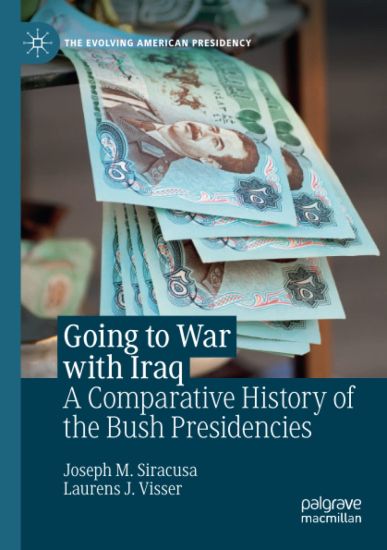
Going to War with Iraq

Going to War with Iraq

Joseph M. Siracusa; Laurens J. Visser

Springer Nature Switzerland AG
2021
nidottu
Going to War with Iraq: A Comparative History of the Bush Presidencies is the account of two United States presidents and their decision to intervene militarily in Iraq, examining the comparative domestic and international contexts in which the decisions to go to war were made by George H. W. Bush and his son George W. Bush. This book centers specifically on the issue of Saddam Hussein at home and abroad, in the lead up to hostilities with Iraq in 1991 and 2003, respectively. For George H.W. Bush, in 1991, the threat posed by Saddam came from his perceived capabilities as Iraq's leader, whereas for George W. Bush, in 2003, it was the threat posed by Saddam's perceived intentions as Iraq's leader. In both cases, the result was war with Iraq.
Going to War with Iraq

Going to War with Iraq

Joseph M. Siracusa; Laurens J. Visser

Springer Nature Switzerland AG
2019
sidottu
Going to War with Iraq: A Comparative History of the Bush Presidencies is the account of two United States presidents and their decision to intervene militarily in Iraq, examining the comparative domestic and international contexts in which the decisions to go to war were made by George H. W. Bush and his son George W. Bush. This book centers specifically on the issue of Saddam Hussein at home and abroad, in the lead up to hostilities with Iraq in 1991 and 2003, respectively. For George H.W. Bush, in 1991, the threat posed by Saddam came from his perceived capabilities as Iraq's leader, whereas for George W. Bush, in 2003, it was the threat posed by Saddam's perceived intentions as Iraq's leader. In both cases, the result was war with Iraq.
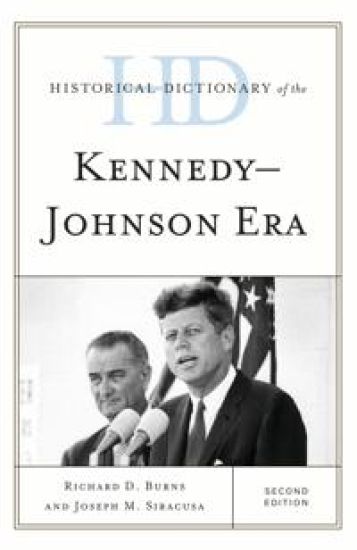
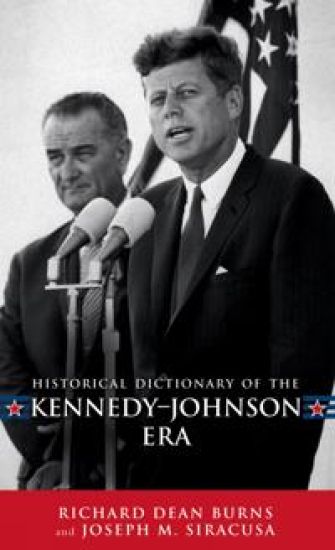
Historical Dictionary of the Kennedy-Johnson Era

Historical Dictionary of the Kennedy-Johnson Era

Richard Dean Burns; Joseph M. Siracusa

Rowman Littlefield
2015
sidottu
The recent commemoration of the fiftieth anniversary of John F. Kennedy’s election as the thirty-fifth president of the United States serves as a reminder of a period of time that many Americans perceive as idyllic. Just as his election, despite a near-run thing, had instilled a pervasive sense of hope throughout the country, his assassination stunned the entire nation, scarring the psyche of a generation of Americans. More than half a century later, JFK continues to inspire debates about the effectiveness of the presidency, as well as his own political legacy, making the senator from Massachusetts the object of many enduring myths: that he would have been one of the country’s greatest leaders had he lived, he would have kept the US out of a full-fledged Vietnam war, and that he was a martyr of right-wing assassins. His successor, Lyndon B. Johnson, who did get the US deeply involved in Vietnam while pursuing the social reforms of the Great Society at home and abroad, also casts a long shadow in the twenty-first century, as the nation continues to deal with poverty, racism, and social injustice. This second edition of Historical Dictionary of the Kennedy-Johnson Era covers its history through a chronology, an introductory essay, appendixes, and an extensive bibliography. The dictionary section has over 300 cross-referenced entries on important personalities, including the president, his advisors, his family, his opponents, and his critics, as well as members of Congress, military leaders, and international leaders. This book is an excellent access point for students, researchers, and anyone wanting to know more about John F. Kennedy.
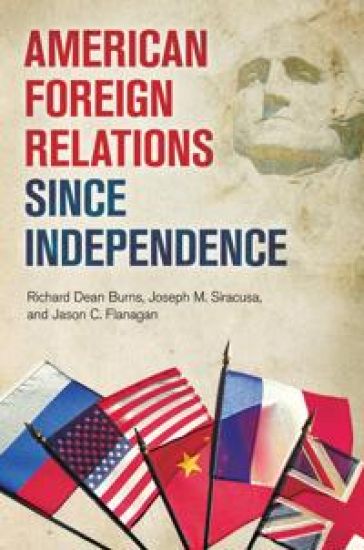
American Foreign Relations since Independence

American Foreign Relations since Independence

Richard Dean Burns; Joseph M. Siracusa; Jason C. Flanagan

Praeger Publishers Inc
2013
sidottu
This book provides a succinct and accessible interpretation of the major event and ideas that have shaped U.S. foreign relations since the American Revolution—historical factors that now affect our current debates and commitments in the Middle East as well as Europe and Asia.American Foreign Relations since Independence explores the relationship of American policies to national interest and the limits of the nation's power, reinterpreting the nature and history of American foreign relations.The book brings together the collective knowledge of three generations of diplomatic historians to create a readily accessible introduction to the subject. The authors explicitly challenge and reject the perennial debates about isolationism versus internationalism, instead asserting that American foreign relations have been characterized by the permanent tension inherent in America's desire to engage with the world and its equally powerful determination to avoid "entanglement" in the world's troubles. This work is ideally suited as a resource for students of politics, international affairs, and history, and it will provide compelling insights for informed general readers.
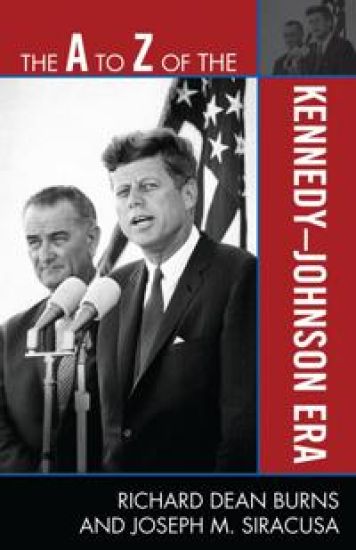
The A to Z of the Kennedy-Johnson Era

The A to Z of the Kennedy-Johnson Era

Richard Dean Burns; Joseph M. Siracusa

Scarecrow Press
2009
nidottu
In the history of the United States, few periods could more justly be regarded as the best and worst of times than the Kennedy-Johnson era. The arrival of John F. Kennedy in the White House in 1961 unleashed an unprecedented wave of hope and optimism in a large segment of the population; a wave that would come crashing down when he was assassinated only a few years later. His successor, Lyndon B. Johnson, enjoyed less popularity, but he was one of the most experienced and skilled presidents the country had ever seen, and he promised a Great Society to rival Kennedy's New Frontier. Both presidents were dogged by foreign policy disasters: Kennedy by the Bay of Pigs fiasco, although he came out ahead on the Cuban missile crisis, and Johnson from the backlash of the Vietnam War. The 1960s witnessed unprecedented progress toward racial and sexual equality, but it also played host to race and urban riots. And while impressive advances in the sciences and arts were fueling the American imagination, the counterculture rejected it all. The A to Z of the Kennedy-Johnson Era relates these events and provides extensive political, economic, and social background on this era through a detailed chronology, an introduction, appendixes, a bibliography, and several hundred cross-referenced dictionary entries on important persons, events, institutions, policies, and issues.
Reagan, Bush, Gorbachev

Reagan, Bush, Gorbachev

Norman A. Graebner; Richard Dean Burns; Joseph M. Siracusa

Praeger Publishers Inc
2008
sidottu
This work is a contemporary chronicle of the Cold War and offers an analysis of policy and rhetoric of the United States and Soviet Union during the 1980s. The authors examine the assumptions that drove political decisions and the rhetoric that defined the relationship as the Soviet Union began to implode. This work demonstrates that while the subsequent unraveling of the Soviet empire was an unintended side effect of Mikhail Gorbachev's reforms, termination of the Cold War was not. Ronald Reagan deserves full credit for recognizing Gorbachev's sincerity and his determination to change the direction of Soviet policies. For this, Reagan felt the full wrath of anticommunist hawks for doing business with a communist leader. But it was Gorbachev who concluded the superpowers had become mesmerized by ideological myths which ruled out any meaningful discussions of a possible accommodation of political issues for more than four decades. The evidence is compelling that Gorbachev himself broke the Cold War's ideological straight jacket that had paralyzed Moscow and Washington's ability to resolve their differences. Though politically weakened, Gorbachev conceded nothing to U.S. military superiority. Never did he negotiate from a position of weakness. In doing so, the last Soviet leader faced even greater political and physical risk. Without Gorbachev the end of the Cold War could have played out very differently and perhaps with great danger.
Historical Dictionary of the Kennedy-Johnson Era

Historical Dictionary of the Kennedy-Johnson Era

Richard Dean Burns; Joseph M. Siracusa

Scarecrow Press
2007
sidottu
In the history of the United States, few periods could more justly be regarded as the best and worst of times than the Kennedy-Johnson era. The arrival of John F. Kennedy in the White House in 1961 unleashed an unprecedented wave of hope and optimism in a large segment of the population; a wave that would come crashing down when he was assassinated only a few years later. His successor, Lyndon B. Johnson, enjoyed less popularity, but he was one of the most experienced and skilled presidents the country had ever seen, and he promised a Great Society to rival Kennedy's New Frontier. Both presidents were dogged by foreign policy disasters: Kennedy by the Bay of Pigs fiasco, although he came out ahead on the Cuban missile crisis, and Johnson from the backlash of the Vietnam War. The 1960s witnessed unprecedented progress toward racial and sexual equality, but it also played host to race and urban riots. And while impressive advances in the sciences and arts were fueling the American imagination, the counterculture rejected it all. The Historical Dictionary of the Kennedy-Johnson Era relates these events and provides extensive political, economic, and social background on this era through a detailed chronology, an introduction, appendixes, a bibliography, and several hundred cross-referenced dictionary entries on important persons, events, institutions, policies, and issues.
Revisiting the First Cold War

Revisiting the First Cold War

Aiden Warren; Joseph M. Siracusa

UNIVERSITY OF EXETER PRESS
2025
sidottu
Against the backdrop of major geopolitical developments, including Russia’s invasion of Ukraine and intensifying great-power competition in the Indo-Pacific, this book undertakes a comprehensive reassessment of the United States’ first Cold War strategy. In examining the machinations and dynamics of the Cold War era, it offers a nuanced understanding of today’s security challenges and the underlying continuities that may inform contemporary security strategies. While there are marked differences between the Cold War era and the geopolitics of the twenty-first century, there are also certain equivalences—increasing bipolarity, deepening polemics, sharpening distinctions between autocracies and democracies—that are very much driving developments. It is no longer questionable that the United States and China, tacit allies during the first half of the last Cold War, are engaged in their own new cold war: Chinese President Xi Jinping has proclaimed it, and a unique bipartisan consensus in the United States recognizes the contest. What, then, might previous challenges suggest about the current situation? The core objective here is to demonstrate how the greatest ever unfought war—the Soviet–American Cold War—as well as other preceding struggles, might expand our understanding and foster resilience in adapting to the evolving Sino–American rivalry. When applied with a sophisticated grasp of contemporary dynamics, the lessons of the past can guide effective policy-making, enhance strategic foresight, and advance stability amid the many uncertainties of the present century.
US Presidents and Cold War Nuclear Diplomacy

US Presidents and Cold War Nuclear Diplomacy

Aiden Warren; Joseph M. Siracusa

Springer Nature Switzerland AG
2022
nidottu
This book will illustrate that despite the variations of nuclear tensions during the Cold War period—from nuclear inception, to mass proliferation, to arms control treaties and détente, through to an intensification and “reasonable” conclusion (the INF Treaty and START being case points)—the “lessons” over the last decade are quickly being unlearned. Given debates surrounding the emerging “new Cold War,” the deterioration of relations between Russia and the United States, and the concurrent challenges being made by key nuclear states in obfuscating arms control mechanisms, this book attempts to provide a much needed revisit into US presidential foreign policy during the Cold War. Across nine chapters, the monograph traces the United States’ nuclear diplomacy and Presidential strategic thought, transitioning across the early period of Cold War arms racing through to the era’s defining conclusion. It will reveal that notwithstanding the heightened periods when great power conflict seemed imminent, arms control fora and seminal agreements were able to be devised, implemented, and provided a needed base in bringing down the specter of a cataclysmic nuclear war, as well as improving bilateral relations. This volume will be of great interest to scholars and students of American foreign policy, diplomatic history, security studies and international relations.
Diplomatic History

Diplomatic History

Joseph M. Siracusa

Oxford University Press
2021
nidottu
Diplomatic history explores the management of relations between nation-states by the process of negotiations. From the diplomacy of the American Revolution, the diplomatic origins of the Great War and its aftermath, Versailles, and the personal summitry behind the night Stalin and Churchill Divided Europe, to George W. Bush and the Iraq War, and diplomacy in the age of globalization, the management of power relationships has had an immense impact on our recent history. This Very Short Introduction updates the former Diplomacy: A Very Short Introduction and illustrates international diplomacy in action, exploring the changes in method at key historical junctures, and highlighting the very different demands that circumstances make on the practice of diplomats. Drawing on the case studies above, it makes sense of the way in which skilful diplomacy, as well as hubris, rashness, and excessive caution, can have important ramifications for the fate of nations. Based on the experiences of diplomatic history, it also locates the universal role of negotiations and identifies the key elements of success. As Joseph M. Siracusa shows, diplomacy was and is an indispensable element of statecraft, and without skilful diplomacy political success may remain elusive. Very Short Introductions: Brilliant, Sharp, Inspiring ABOUT THE SERIES: The Very Short Introductions series from Oxford University Press contains hundreds of titles in almost every subject area. These pocket-sized books are the perfect way to get ahead in a new subject quickly. Our expert authors combine facts, analysis, perspective, new ideas, and enthusiasm to make interesting and challenging topics highly readable.
US Presidents and Cold War Nuclear Diplomacy

US Presidents and Cold War Nuclear Diplomacy

Aiden Warren; Joseph M. Siracusa

Springer Nature Switzerland AG
2021
sidottu
This book will illustrate that despite the variations of nuclear tensions during the Cold War period—from nuclear inception, to mass proliferation, to arms control treaties and détente, through to an intensification and “reasonable” conclusion (the INF Treaty and START being case points)—the “lessons” over the last decade are quickly being unlearned. Given debates surrounding the emerging “new Cold War,” the deterioration of relations between Russia and the United States, and the concurrent challenges being made by key nuclear states in obfuscating arms control mechanisms, this book attempts to provide a much needed revisit into US presidential foreign policy during the Cold War. Across nine chapters, the monograph traces the United States’ nuclear diplomacy and Presidential strategic thought, transitioning across the early period of Cold War arms racing through to the era’s defining conclusion. It will reveal that notwithstanding the heightened periods when great power conflict seemed imminent, arms control fora and seminal agreements were able to be devised, implemented, and provided a needed base in bringing down the specter of a cataclysmic nuclear war, as well as improving bilateral relations. This volume will be of great interest to scholars and students of American foreign policy, diplomatic history, security studies and international relations.
Nuclear Weapons

Nuclear Weapons

Joseph M. Siracusa

Oxford University Press
2020
nidottu
Nuclear weapons have not been used in anger since the United States dropped atomic bombs on Hiroshima and Nagasaki in August 1945. Yet even after the Cold War, the Bomb is still the greatest threat facing humankind. As President Bill Clinton's first secretary of defence, Les Aspin, put it: 'The Cold War is over, the Soviet Union is no more. But the post-Cold War world is decidedly not post-nuclear'. For all the efforts to reduce nuclear stockpiles, the Bomb is here to stay. This Very Short Introduction looks at the science of nuclear weapons and how they differ from conventional weapons. Tracing the story of the nuclear bomb, Joseph Siracusa chronicles the race to acquire the H-bomb, a thermonuclear weapon with revolutionary implications; and the history of early arms control, nuclear deterrence, and non-proliferation. He also tracks the development of nuclear weapons from the origins of the Cold War in 1945 to the end of Moscow-dominated Communism in 1991, and examines the promise and prospect of missile defence, including Ronald Reagan's 'Star Wars' and George W. Bush's National Missile Defence. This third edition includes a new chapter on the development of nuclear weapons and the policies they have generated since the end of the Cold War. ABOUT THE SERIES: The Very Short Introductions series from Oxford University Press contains hundreds of titles in almost every subject area. These pocket-sized books are the perfect way to get ahead in a new subject quickly. Our expert authors combine facts, analysis, perspective, new ideas, and enthusiasm to make interesting and challenging topics highly readable.
Richard M. Nixon and European Integration

Richard M. Nixon and European Integration

Joseph M. Siracusa; Hang Thi Thuy Nguyen

Springer Nature Switzerland AG
2019
nidottu
This book re-examines the Nixon administration’s attitude and approach to the European integration project. The formulation of US policy towards European integration in the Nixon presidential years (1969-1974) was conditioned by the perceived relative decline of the United States, Western European emergence and competition, the feared Communist expansionism, and US national interests. Against that backdrop, the Nixon administration saw the need to re-evaluate its policy on Western Europe and the integration process on this continent. Underpinning this study is the extensive use of newly-released archival materials from the Nixon Presidential Library and Museum, the Library of Congress, and the State Department. Furthermore, the work is based on the public papers in the American Presidency Project and the materials on the topic of European integration and unification in the Archive of European Integration. Finally, the study has extensively used newspaper archives as well as thedeclassified online documents, memoirs and diaries of former US officials. Mining these sources made it possible to shed new light on the complexity and dynamism of the Nixon administration’s policy towards European integration.
Richard M. Nixon and European Integration

Richard M. Nixon and European Integration

Joseph M. Siracusa; Hang Thi Thuy Nguyen

Springer International Publishing AG
2018
sidottu
This book re-examines the Nixon administration’s attitude and approach to the European integration project. The formulation of US policy towards European integration in the Nixon presidential years (1969-1974) was conditioned by the perceived relative decline of the United States, Western European emergence and competition, the feared Communist expansionism, and US national interests. Against that backdrop, the Nixon administration saw the need to re-evaluate its policy on Western Europe and the integration process on this continent. Underpinning this study is the extensive use of newly-released archival materials from the Nixon Presidential Library and Museum, the Library of Congress, and the State Department. Furthermore, the work is based on the public papers in the American Presidency Project and the materials on the topic of European integration and unification in the Archive of European Integration. Finally, the study has extensively used newspaper archives as well as thedeclassified online documents, memoirs and diaries of former US officials. Mining these sources made it possible to shed new light on the complexity and dynamism of the Nixon administration’s policy towards European integration.
Weapons of Mass Destruction

Weapons of Mass Destruction

Joseph M. Siracusa; Aiden Warren

Rowman Littlefield
2017
nidottu
Whether possessed by a state or non-state actor, the specter of Weapons of Mass Destruction (WMDs), and more specifically, nuclear weapons and their associated material, present a significant threat to global security. Notwithstanding the fact that there are fewer nuclear weapons today than the massive stockpiles that existed during the height of the Cold War, the complexities relating to nuclear security have in many ways intensified amid globalization and porous borders. More states in volatile regions possess such weapons, UN Security Council states are busily modernizing their weapons, and non-states actors have made it clear their intention to use such weapons should they attain them. The emerging prospect of a cyber-attack, or a misunderstanding that could potentially evolve into a limited regional nuclear war, would both have dire global ramifications and are scenarios that should not be considered farfetched. Additionally, concerns pertaining to chemical and biological weapons, the associated ramifications relating to nuclear terrorism, and broader limitations of the NPT regime, all pose major challenges to global stability. In considering all of these areas, this foundational primer for the Rowman and Littlefield WMD Series seeks to inform and advance policy debate in ways that support international security, while also adding important connective tissue between analytical areas in the IR and historical domains that often remain separate. Offering a comprehensive analysis of the evolution and current status of WMDs, this volume will be of great interest to scholars, analysts, and students of security studies, international history, and international relations.
Weapons of Mass Destruction

Weapons of Mass Destruction

Joseph M. Siracusa; Aiden Warren

Rowman Littlefield
2017
sidottu
Whether possessed by a state or non-state actor, the specter of Weapons of Mass Destruction (WMDs), and more specifically, nuclear weapons and their associated material, present a significant threat to global security. Notwithstanding the fact that there are fewer nuclear weapons today than the massive stockpiles that existed during the height of the Cold War, the complexities relating to nuclear security have in many ways intensified amid globalization and porous borders. More states in volatile regions possess such weapons, UN Security Council states are busily modernizing their weapons, and non-states actors have made it clear their intention to use such weapons should they attain them. The emerging prospect of a cyber-attack, or a misunderstanding that could potentially evolve into a limited regional nuclear war, would both have dire global ramifications and are scenarios that should not be considered farfetched. Additionally, concerns pertaining to chemical and biological weapons, the associated ramifications relating to nuclear terrorism, and broader limitations of the NPT regime, all pose major challenges to global stability. In considering all of these areas, this foundational primer for the Rowman and Littlefield WMD Series seeks to inform and advance policy debate in ways that support international security, while also adding important connective tissue between analytical areas in the IR and historical domains that often remain separate. Offering a comprehensive analysis of the evolution and current status of WMDs, this volume will be of great interest to scholars, analysts, and students of security studies, international history, and international relations.
Language of Terror

Language of Terror

Wesley Kendall; Joseph M. Siracusa; Kevin Noguchi

Rowman Littlefield
2015
sidottu
Building on the emerging field of biopolitics of security, this research monograph demonstrates that political speech can be crafted to manipulate segments of the voting population who are inherently predisposed to being receptive to certain language. The authors, who come from both political science and behavioral neuroscience, examine how the human brain reacts to expressions of political ideology regarding terrorism. They apply these reactions to specific forms of political communication, many of which are designed to elicit a desired response in creating support for a policymaker’s agenda. By comparing and contrasting a variety of case studies, they demonstrate how similar acts accompanied by starkly different political language can create cognitive dissonance in the minds of the electorate and influence policy choices. Each chapter analyzes the content of a speech, its assimilation by different political groups, and two case studies. For example, the case of Luis Posada Carriles, a Cuban exile and former CIA agent responsible for the bombing of a Cuban airliner in 1976 is examined alongside that of Mohamed El Megrahi, the Libyan intelligence officer convicted of the bombing of Flight 103 over Lockerbie, Scotland in 1988 This unique study uses new research in neuropsychology to demonstrate how the American public’s response to various policies on terrorism is manipulated, highlighting the impact of ideological speech regarding terrorism—the “language of terror.”
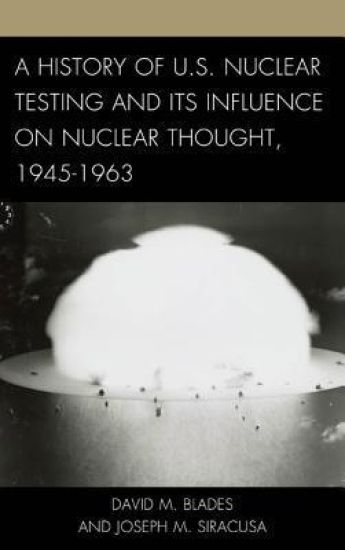
A History of U.S. Nuclear Testing and Its Influence on Nuclear Thought, 1945–1963
The story of U. S. nuclear testing between 1945 and 1963 is a vivid and exciting one, but also one of profound importance. It is a story of trailblazing scientific progress, weapons of mass destruction, superpower rivalry, accidents, radiological contamination, politics, and diplomacy. The testing of weapons that defined the course and consequences of the Cold War was itself a crucial dimension to the narrative of that conflict. Further, the central question - Why conduct nuclear tests? - was fully debated among American politicians, generals, civilians, and scientists, and ultimately it was victory for those who argued in favor of national security over diplomatic and environmental costs that normalized nuclear weapons tests. A History of U. S. Nuclear Testing and Its Influence on Nuclear Thought, 1945–1963 is an examination of this question, beginning with the road to normalization and, later, de-normalization of nuclear testing, leading to the Nuclear Test Ban Treaty in 1963. As states continue to pursue nuclear weaponry, nuclear testing remains an important political issue in the twenty-first century.