
Kirjailija
Joseph Ratzinger
Kirjat ja teokset yhdessä paikassa: 68 kirjaa, julkaisuja vuosilta 1968-2024, suosituimpien joukossa Aus Meinem Leben: Autobiographische Texte. Vertaile teosten hintoja ja tarkista saatavuus suomalaisista kirjakaupoista.
68 kirjaa
Kirjojen julkaisuhaarukka 1968-2024.

Volk und Haus Gottes in Augustins Lehre von der Kirche
Joseph Ratzinger
Herder Verlag GmbH
2011
sidottu
A fascinating and insightful volume collecting together the key writings of Joseph Ratzinger, some of them yet untranslated, from his youthful and more progressive writings, to his ‘transition period' following his disillusionment with the aftermath of Vatican II, to his time as Prefect of the Vatican's Congregation for the Doctrine of the Faith down to 2005. The emphasis will be upon Joseph Ratzinger as ‘private theologian', his many writings released in a personal capacity for such will chart the formation of and comment upon the official statements and texts released under his name in a more informative fashion than the simple inclusion of the formulaic ‘official texts' themselves. Following a section providing insight into the fundamental and systematic theological background and development of Joseph Ratzinger's thought, further thematic sections will also be included, for example, Joseph Ratzinger's writings on Ecclesiology, on Theology and the Role of Theologians, on the Eucharist, on Religious Pluralism, on Sacramental Theology, Ecumenism, on Truth, on the Contemporary Historical Era, on Magisterium and on Faith Morals etc. The volume will open with an introductory essay charting the life and career, the achievements of and the controversies surrounding the new pope. Each reading will be prefaced by a brief introduction to its context and themes and will be followed by recommended further reading on its respective subject matter.
A fascinating and insightful volume collecting together the key writings of Joseph Ratzinger, some of them yet untranslated, from his youthful and more progressive writings, to his ‘transition period' following his disillusionment with the aftermath of Vatican II, to his time as Prefect of the Vatican's Congregation for the Doctrine of the Faith down to 2005. The emphasis will be upon Joseph Ratzinger as ‘private theologian', his many writings released in a personal capacity for such will chart the formation of and comment upon the official statements and texts released under his name in a more informative fashion than the simple inclusion of the formulaic ‘official texts' themselves. Following a section providing insight into the fundamental and systematic theological background and development of Joseph Ratzinger's thought, further thematic sections will also be included, for example, Joseph Ratzinger's writings on Ecclesiology, on Theology and the Role of Theologians, on the Eucharist, on Religious Pluralism, on Sacramental Theology, Ecumenism, on Truth, on the Contemporary Historical Era, on Magisterium and on Faith Morals etc. The volume will open with an introductory essay charting the life and career, the achievements of and the controversies surrounding the new pope. Each reading will be prefaced by a brief introduction to its context and themes and will be followed by recommended further reading on its respective subject matter.
Gesammelte Schriften Band 2. Offenbarungsverständnis und Geschichtstheologie Bonaventuras
Joseph Ratzinger
Herder Verlag GmbH
2009
sidottu
In seiner Münchener Habilitationsschrift über Bonaventura zeigt der junge Dozent für Fundamentaltheologie und Dogmatik in Freising, dass es Gottes geschichtliche Selbstmitteilung ohne ihre Annahme und ihr Verstandenwerden im Glauben der Kirche nicht gäbe.
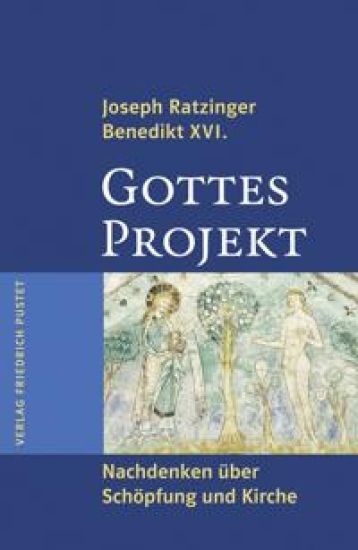
"Die Erkenntnis, dass der Mensch nicht irgendein Zufallsprodukt der Erde, sondern jeder ein Projekt Gottes ist, ist der letztlich allein tragende Grund für die Unverletzlichkeit der Menschenwürde." Joseph Ratzinger führt diesen Gedanken in einer theologischen Auslegung der biblischen Schöpfungstexte aus. So zeichnet er Gottes Projekt, das christliche Welt- und Menschenbild, in seiner bekannt klaren und brillanten Sprache nach und verhilft dem Leser zu einem tiefgründigen Verständnis der Schöpfung und des Umgangs mit ihr. Diesem Buch liegen Tonbandmitschnitte der Vorträge zu Grunde, die Joseph Kardinal Ratzinger 1985 in St. Georgen am Längsee (Österreich) hielt.

"Im Umgang mit der Liturgie entscheidet sich das Geschick von Glaube und Kirche." Joseph Ratzinger Der erste Band der Gesammelten Schriften versammelt die Texte zur Theologie der Liturgie. Die Liturgie steht im Zentrum des theologischen Denkens Joseph Ratzingers. Sie ist - in seinen Worten - "die Berührung mit dem Schönen selbst, mit der ewigen Liebe. Von ihr muss die Freude ins Haus hinausstrahlen, in ihr kann immer wieder die Mühsal des Tages verwandelt und überwunden werden. Wo Liturgie zur Lebensmitte wird, stehen wir im Raum des Apostelwortes: Freuet euch, wiederum sage ich euch: Freuet euch ... der Herr ist nahe (Phil 4,4)".
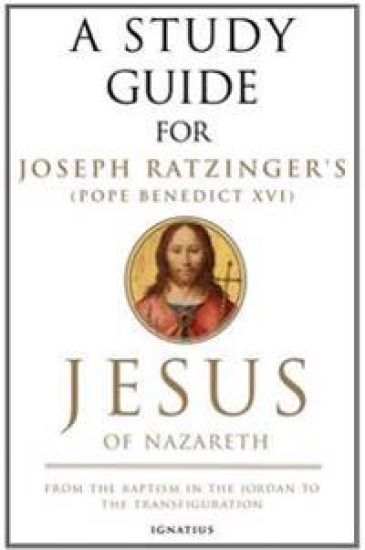
For Christians, Jesus of Nazareth is the Son of God, who died for the sins of the world, and who rose from the dead in triumph over sin and death. For non-Christians, he is almost anything else--a myth, a political revolutionary, a prophet whose teaching was misunderstood or distorted by his followers. Jesus of Nazareth is the Son of God, and no myth, revolutionary, or misunderstood prophet, insists Benedict XVI. He thinks that the best of historical scholarship, while it can't "prove" Jesus is the Son of God, certainly doesn't disprove it. Indeed, Benedict maintains that the evidence, fairly considered, brings us face-to-face with the challenge of Jesus--a real man who taught and acted in ways that were tantamount to claims of divine authority, claims not easily dismissed as lunacy or deception. Benedict XVI presents this challenge in his new book, Jesus of Nazareth: Holy Week: From the Entrance into Jerusalem to the Resurrection, the sequel volume to Jesus of Nazareth: From the Baptism in the Jordan to the Transfiguration. Why was Jesus rejected by the religious leaders of his day? Who was responsible for his death? Did he establish a Church to carry on his work? How did Jesus view his suffering and death? How should we? And, most importantly, did Jesus really rise from the dead and what does his resurrection mean? The story of Jesus raises many crucial questions. Benedict brings to his study the vast learning of a brilliant scholar, the passionate searching of a great mind, and the deep compassion of a pastor's heart. In the end, he dares readers to grapple with the meaning of Jesus' life, teaching, death, and resurrection.
Originally published in English in 1988, Joseph Ratzinger's Eschatology remains internationally recognized as a leading text on the ""last things""—heaven and hell, purgatory and judgment, death and the immortality of the soul. This highly anticipated second edition includes a new preface by Joseph Ratzinger/Pope Benedict XVI and a supplement to the bibliography by theologian Peter A. Casarella.Eschatology presents a balanced perspective of the doctrine at the center of Christian belief- the Church's faith in eternal life. Recognizing the task of contemporary eschatology as ""to marry perspectives, so that person and community, present and future, are seen in their unity,"" Joseph Ratzinger brings together recent emphasis on the theology of hope for the future with the more traditional elements of the doctrine. His book has proven to be as timeless as it is timely.
Jesus of Nazareth: From the Baptism in the Jordan to the Transfiguration
Pope Benedict XVI; Joseph Ratzinger
Image
2007
sidottu
Pope Benedict XVI's iconic life of Jesus, a rich, compelling, flesh-and-blood portrait of the central figure of the Christian faith. "This book is . . . my personal search 'for the face of the Lord.'"--Benedict XVI In this bold, momentous work, the Pope seeks to salvage the person of Jesus from today's "popular" depictions and to restore his true identity as discovered in the Gospels. Through his brilliance as a theologian and his personal conviction as a believer, the Pope incites us to encounter Jesus face to face. From Jesus of Nazareth ". . . the great question that will be with us throughout this entire book: But what has Jesus really brought, then, if he has not brought world peace, universal prosperity, and a better world? What has he brought? The answer is very simple: God. He has brought God He has brought the God who once gradually unveiled his countenance first to Abraham, then to Moses and the prophets, and then in the wisdom literature--the God who showed his face only in Israel, even though he was also honored among the pagans in various shadowy guises. It is this God, the God of Abraham, of Isaac, and of Jacob, the true God, whom he has brought to the peoples of the earth. He has brought God, and now we know his face, now we can call upon him. Now we know the path that we human beings have to take in this world. Jesus has brought God and with God the truth about where we are going and where we come from: faith, hope, and love."
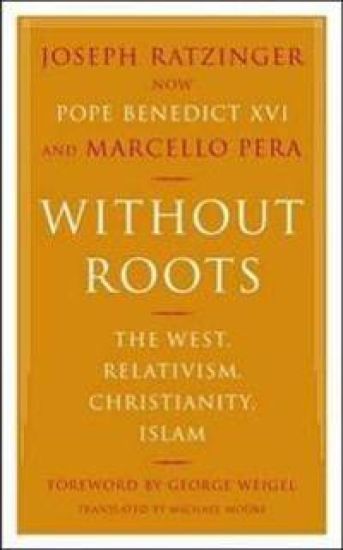
Bringing together their unique vantage points as leaders of Church and State, Cardinal Joseph Ratzinger and Marcello Pera challenge us to imagine what can be the future of a civilization that has abandoned its moral and cultural history. They call on the West to embrace a spiritual rather than political renewal -and to accept the moral values that alone can help us to make sense of changes in technology, economics, and society.
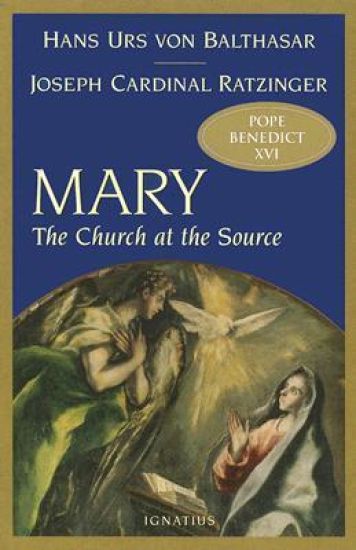
Two great theologians endeavor to recover the centrality of Marian doctrine and devotion for the contemporary Church, offering a view of Mary as both the embodiment of the Church, and the mother who cooperates in giving birth to the Church in the souls of believers.
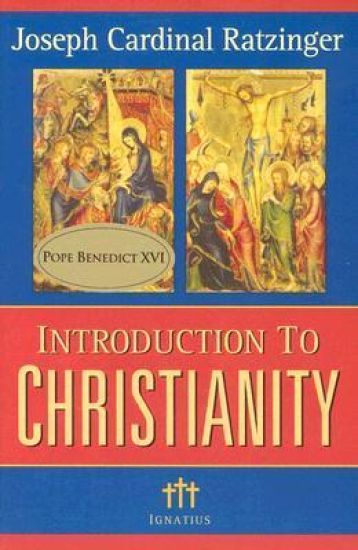
One of Cardinal Ratzinger's most important and widely read books, this volume is a revised second edition with an improved translation and an in-depth 20 page preface by the Cardinal. As he states in the preface, since this book was first published over 30 years ago, many changes and significant events have occurred in the world, and in the Church. But even so, he says he is firmly convinced that his fundamental approach in this book is still very timely and crucial for the spiritual needs of modern man. That approach puts the question of God and the question about Christ in the very center, which leads to a "narrative Christology" and demonstrates that the place for faith is in the Church.Thus, this remarkable elucidation of the Apostle's Creed gives an excellent, modern interpretation of the foundations of Christianity. Ratzinger's profound treatment of Christianity's basic truths combines a spiritual outlook with a deep knowledge of Scripture and the history of theology.
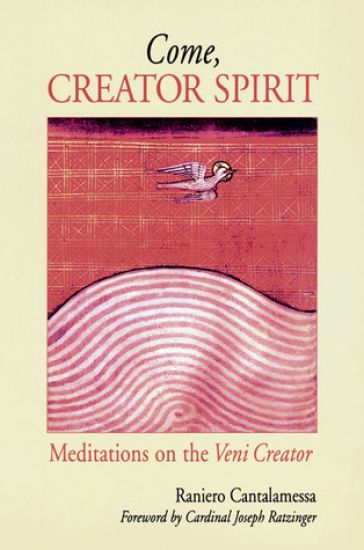
Written particularly for the Charismatic Renewal in the English-speaking world, Come, Creator Spirit is a helpful guide for a better understanding of the Holy Spirit. In this detailed commentary on the famous hymn Veni Creator, sung at the beginning of every new year, ecumenical council, and priestly ordination, Fr. Raniero Cantalamessa describes the Paraclete and gives praise to its glory. Progressing through the hymn line by line, he provides insights, reflections, hymnography of Christian traditions, and testimonies of the saints.This book describes the Church's experience of the Spirit of today, as well as the past. The biblical and theological base of the hymn opens the reader to the perspectives and inspirations in this book. Its Vision of the Holy Spirit in the history of salvation emerges as the reader progresses through the reading. In the celebration of the ecumenical character of Veni Creator, this book draws from Orthodox, Protestant, and Catholic traditions for all those who wish to seek a better understanding of the Holy Spirit.Chapters are "Spirit, Come!" “Creator,” “Fill with Heavenly Grace the Hearts that You Have Made,” “You Whom We Name the Paraclete,” “Most High Gift of God,” “Living Water,” “Fire,” “Love,” “Anointing for the Soul,” “Sevenfold in Your Gifts,” “Finger of God’s Right Hand,” “The Father’s Solemn Promise,” “Gifting Lips with the Word to Say,” “Kindle Your Light in Our Minds,” “Pour Love into Our Hearts,” “Infirmity in This Body of Ours Overcoming with Strength Secure,” “The Enemy Drive from Us Away,” “Peace Then Give without Delay,” “With You As Guide We Avoid All Cause of Harm,” “Through You May We the Father Know,” “Through You May We Know the Son As Well,” and “And You, the Spirit of Them Both, May We Always Believe.”
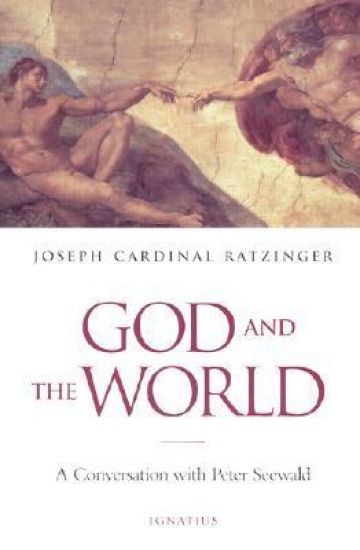
In a lengthy interview held over three days at the Abbey of Monte Cassino, the future pope answers questions on faith, God, Christ, the Church, and related topics.