
Kirjailija
Joseph Stiglitz
Kirjat ja teokset yhdessä paikassa: 16 kirjaa, julkaisuja vuosilta 1999-2025, suosituimpien joukossa Paul A. Samuelson. Vertaile teosten hintoja ja tarkista saatavuus suomalaisista kirjakaupoista.
16 kirjaa
Kirjojen julkaisuhaarukka 1999-2025.





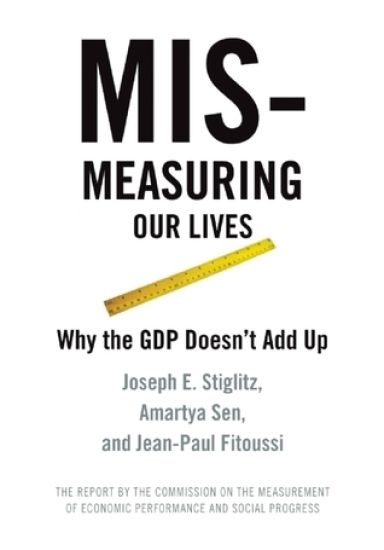
In February of 2008, amid the looming global financial crisis, President Nicolas Sarkozy of France asked Nobel Prize?winning economists Joseph Stiglitz and Amartya Sen, along with the distinguished French economist Jean Paul Fitoussi, to establish a commission of leading economists to study whether Gross Domestic Product (GDP)?the most widely used measure of economic activity?is a reliable indicator of economic and social progress. The Commission was given the further task of laying out an agenda for developing better measures. Mismeasuring Our Lives is the result of this major intellectual effort, one with pressing relevance for anyone engaged in assessing how and whether our economy is serving the needs of our society. The authors offer a sweeping assessment of the limits of GDP as a measurement of the well-being of societies?considering, for example, how GDP overlooks economic inequality (with the result that most people can be worse off even though average income is increasing); and does not factor environmental impacts into economic decisions. In place of GDP, Mismeasuring Our Lives introduces a bold new array of concepts, from sustainable measures of economic welfare, to measures of savings and wealth, to a ?green GDP.” At a time when policymakers worldwide are grappling with unprecedented global financial and environmental issues, here is an essential guide to measuring the things that matter.
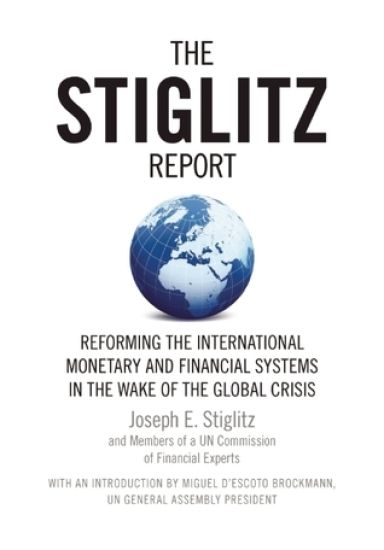
The fact that the global economy is broken may be widely accepted, but what precisely needs to be fixed has become the subject of enormous controversy. In 2008, the President of the United Nations General Assembly convened an international panel, chaired by Nobel Prize-winning economist Joseph Stiglitz and including 20 leading experts on the international monetary system, to address this crucial issue. This report controversially establishes a bold agenda for policy change, both broad in scope and profound in its ambitions.

Towards new measurement systems / Vers de nouveaux systèmes de mesure: Performances économiques et progrès social
Joseph Stiglitz; Amartya Sen
Odile Jacob
2009
nidottu
We want to make GDP the measure of everything - performance, well-being, quality of life - when it only represents a measure of market economic activity. On the contrary, it is possible to construct reliable measures of the material determinants of well-being, income distribution, quality of life, the sustainability of current developments and many other aspects of our economy and society. This is even essential if we want society to recognize itself more in the image that the mirror of statistical data reflects back to it and, above all, if we want to make informed decisions about the future. To face the future, we must first better decipher the world around us and better perceive how it is changing. There is no other way out than to improve the Arithmetic of Nations. This is precisely what this book proposes. Joseph Stiglitz is the 2001 Nobel Prize winner in Economics. After serving as Chief Economist and Senior Vice President of the World Bank, he is a professor at Columbia University in New York. Amartya Sen is the 1998 Nobel Prize winner in Economics. He is a professor at Harvard University. Jean-Paul Fitoussi is a professor at the Institut d' tudes politiques de Paris. He is also President of the French Economic Observatory.
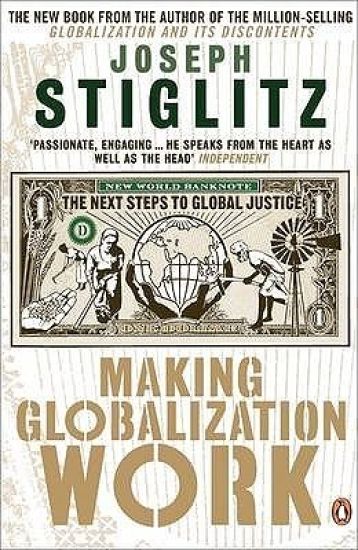
From Nobel Prize winner Joseph Stiglitz, Making Globalization Work gives real, concrete ways to deal with third world debt, make trade fair and tackle global warming. In Globalization and its Discontents Joseph Stiglitz changed the views of the public and world leaders alike by showing why globalization doesn't work for the world's poor. In this bold, ambitious follow-up, Stiglitz shows how powerful organizations such as the UN, the IMF and the World Bank can be made to consider everyone's interests. Stiglitz examines how change has occurred rapidly over the past four years, proposing solutions and looking to the future. He puts forward radical new solutions to the seemingly intractable international problems which we face - in forms that are more likely to be accepted both by the US and the developing world than previous proposals. Another world is possible, he argues, and is not only morally right, but of benefit to us all. 'Passionate, engaging ... he speaks from the heart as well as the head'Independent 'The man with a mission to save the poor ... offers a wealth of ideas for global reform'The Times 'A searing critique of conventional wisdom'Newsweek 'An excellent book ... a lodestar for those who want to achieve a different and better world'GuardianJoseph Stiglitz is one of the world's best-known economists. He was Chief Economist at the World Bank until January 2000. Before that he was Chairman of President Clinton's Council of Economic Advisers. He is currently Professor of Finance and Economics at Columbia University. He won the Nobel Prize for Economics in 2001 and is the author of the bestselling Globalization and Its Discontents and The Roaring Nineties, both published by Penguin.
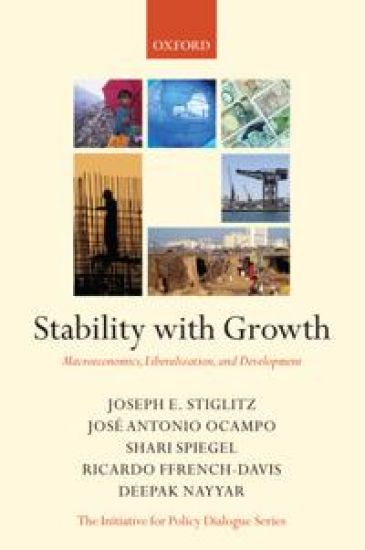
Stability with Growth
Joseph Stiglitz; José Antonio Ocampo; Shari Spiegel; Ricardo Ffrench-Davis; Deepak Nayyar
Oxford University Press
2006
nidottu
There is growing dissatisfaction with the economic policies advocated by the IMF and other international financial institutions - policies that have often resulted in stagnating growth, crises, and recessions for client countries. This book presents an alternative to "Washington Consensus" neo-liberal economic policies by showing that both macro-economic and liberalization policy must be sensitive to the particular circumstances of developing countries. One-size-fits-all policy prescriptions are likely to fail given the vast differences between countries. This book discusses how alternative approaches to economic policy can better serve developing countries both in ordinary times and in times of crisis.
Saving rates display great variation across countries and over time. They are also closely related to growth performance. This 1999 volume provides an account of key variables, institutions and policies that determine saving. Drawing from a systematic exploration of the existing literature, the collection summarizes knowledge about cross-country saving trends, the relation between saving and growth, the impact of financial policies and institutions on saving, the effect of foreign resource inflows on saving, and the links between income distribution and aggregate saving. In addition, new research results are presented on the two latter areas. The work has a strong empirical motivation: to help address real-world issues on consumption and saving in both industrial and developing countries, in order to assist in the design of rational and effective macroeconomic policies.

This book is an authoritative and radical manifesto for urgently needed changes in development cooperation. 'A Chance for the World Bank' provides an overview of the challenges faced by the World Bank, and explores how it has organized itself to deal with its mission. It proposes that, unless radical steps are taken by the World Bank, the first decade of the century will witness a ever-widening gulf between the poor and rich countries.

This book is an authoritative and radical manifesto for urgently needed changes in development cooperation. 'A Chance for the World Bank' provides an overview of the challenges faced by the World Bank, and explores how it has organized itself to deal with its mission. It proposes that, unless radical steps are taken by the World Bank, the first decade of the century will witness a ever-widening gulf between the poor and rich countries.
Towards a New Paradigm in Monetary Economics
Joseph Stiglitz; Bruce Greenwald
Cambridge University Press
2003
sidottu
Towards a New Paradigm for Monetary Economics presents a pioneer treatment of critical topics in monetary economics. Unlike the prevailing monetary theory, this book focuses not on the role of money in facilitating transactions, but on the role of credit in facilitating economic activities more broadly. The 'new paradigm' emphasizes the demand and supply of loanable funds, which in turn requires the understanding of the imperfections of information and the role of banks. One enlightening view is that credit is quite different from other commodities in the sense that the former is based on information and default risk. The book consists of two parts. The first part develops a basic model of credit based on banks' portfolio choices. The second part is dedicated to the policy implications, among which are the liberalization of financial markets, the East Asian Crisis, the 1991 US recession and the subsequent recovery.
Saving rates display great variation across countries and over time. They are also closely related to growth performance. This volume provides a state-of-the-art account of key variables, institutions and policies that determine saving. Drawing from a systematic exploration of the existing literature, the collection summarizes current knowledge about cross-country saving trends, the relation between saving and growth, the impact of financial policies and institutions on saving, the effect of foreign resource inflows on saving, and the links between income distribution and aggregate saving. In addition, new research results are presented on the two latter areas. The work has a strong empirical motivation: to help address real-world issues on consumption and saving in both industrial and developing countries, in order to assist in the design of rational and effective macroeconomic policies.