Kirjojen hintavertailu. Mukana 12 595 353 kirjaa ja 12 kauppaa.

Kirjailija

Joseph T. Glatthaar

Kirjat ja teokset yhdessä paikassa: 6 kirjaa, julkaisuja vuosilta 1995-2020, suosituimpien joukossa Forgotten Allies: The Oneida Indians and the American Revolution. Vertaile teosten hintoja ja tarkista saatavuus suomalaisista kirjakaupoista.

6 kirjaa

Kirjojen julkaisuhaarukka 1995-2020.

American Military History

American Military History

Joseph T. Glatthaar

Oxford University Press Inc
2020
nidottu
Since the first English settlers landed at Jamestown with the legacy of centuries of European warfare in tow, the military has been an omnipresent part of America. In American Military History: A Very Short Introduction, Joseph T. Glatthaar explores this relationship from its origins in the thirteen colonies to today's ongoing conflicts in the Middle East. During the Revolutionary War, tension grew between local militias and a standing army. The Founding Fathers attempted to strike a balance, enshrining an army, navy, and a "well-regulated Militia" in the Constitution. The US soon witnessed the rise of a professional military, a boon to its successes in the War of 1812, the Mexican War, and the Civil War. However, after the Civil War, the US struggled to learn that the purpose of a peacetime army is to prepare for war. When war did arrive, it arrived with a vengeance, gutting the trenches of the Great War with effective innovations: tanks, planes, machine guns, and poison gas. The US embraced the technology that would win both world wars and change the nature of battle in the Second World War. The US emerged from World War II as the most powerful nation in the war, but over the next several decades it was forced to confront the limits of its power. The nuclear era brought encounters defined by stalemate--from the Cold War conflicts of Korea and Vietnam to the wars in Afghanistan and Iraq. Since 9/11, the US has been frustrated by unconventional warfare, including terrorism and cyberwar, largely negating the technological advantage it had held. Glatthaar examines all these challenges, looking to the future of the U.S. military and its often proud and complicated legacy.
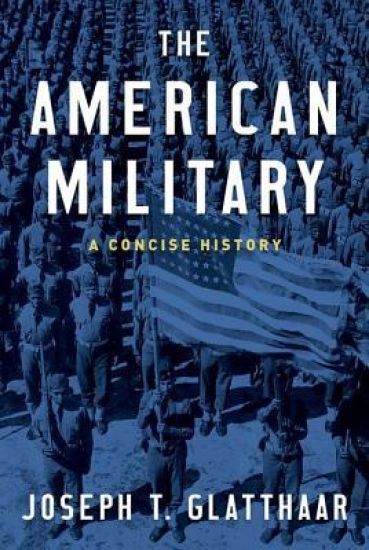
The American Military

The American Military

Joseph T. Glatthaar

Oxford University Press Inc
2018
sidottu
Since the first English settlers landed at Jamestown with the legacy of centuries of European warfare in tow, the military has been an omnipresent part of America. In The American Military: A Concise History, Joseph T. Glatthaar explores this relationship from its origins in the thirteen colonies to today's ongoing conflicts in the Middle East. Colonial Americans struggled to reconcile the rights of the citizenry to form local militias with the existence of a standing army, viewing it as a threat to civil liberty. This tension played out during the Revolution as General Washington's rag-tag band of "Continentals" was largely neglected by the public as it bravely faced the British redcoats. The Founding Fathers attempted to strike a balance, enshrining an army, navy, and a "well regulated Militia" in the Constitution. As such, the United States soon witnessed the rise of a professional military, with its commitment to selectivity and expertise, a boon to the nation's successes in the War of 1812, the Mexican War, and the Civil War to come. This system would give rise to great generals such as Ulysses S. Grant and Robert E. Lee, both graduates of West Point, and great naval commanders such as Matthew Perry, hero of the Battle of Lake Erie. As a testament to this system, the officer corps would lead the immense armies and ships of the Union and Confederacy with skill and professionalism. However, the United States quickly dismantled the world's finest army and navy after the war--but soon learned that the purpose of a peacetime army is to prepare for war. When war did arrive, it arrived with a vengeance, gutting the trenches of the Great War with effective innovations: tanks, planes, machine guns, and poison gas. The U.S. military strategically embraced the technology that would win both world wars. From the great aircraft carriers of the Pacific, the Sherman tanks of the Allied front, to the finality of the atomic bomb, this turn to technology changed the nature of battle in the Second World War. The nuclear era brought encounters defined by stalemate--from the damaging Cold War conflicts of Korea and Vietnam, and an all-time high in hostility towards the military during Vietnam, to the current engagements in Afghanistan and Iraq. Since the events of 9/11, the United States has been frustrated by unconventional warfare, including terrorism and cyberwar, largely negating the technological advantage it has held since the Second World War. Glatthaar examines this challenge, looking to the future of the U.S. military and its often proud and complicated legacy.
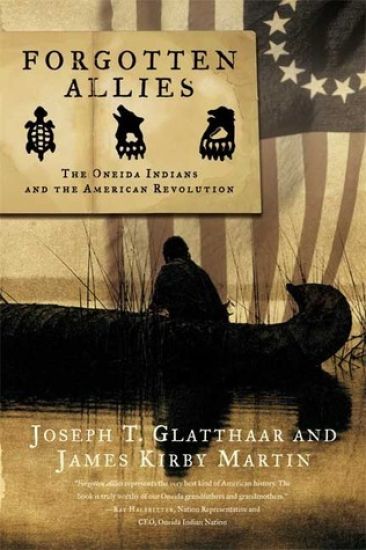
Forgotten Allies: The Oneida Indians and the American Revolution

Forgotten Allies: The Oneida Indians and the American Revolution

Joseph T. Glatthaar; James Kirby Martin

Hill Wang
2007
nidottu
Combining compelling narrative and grand historical sweep, "Forgotten Allies "offers a vivid account of the Oneida Indians, forgotten heroes of the American Revolution who risked their homeland, their culture, and their lives to join in a war that gave birth to a new nation at the expense of their own. Revealing for the first time the full sacrifice of the Oneidas in securing independence, "Forgotten Allies "offers poignant insights about Oneida culture and how it changed and adjusted in the wake of nearly two centuries of contact with European-American colonists. It depicts the resolve of an Indian nation that fought alongside the revolutionaries as their valuable allies, only to be erased from America's collective historical memory. Beautifully written, "Forgotten Allies "recaptures these lost memories and makes certain that the Oneidas' incredible story is finally told in its entirety, thereby deepening and enriching our understanding of the American experience.
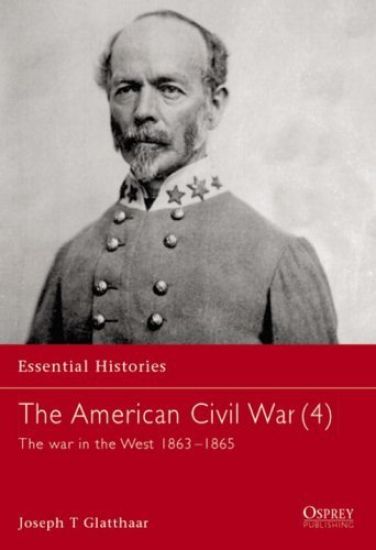
The American Civil War (4)

The American Civil War (4)

Joseph T. Glatthaar

Osprey Publishing
2001
nidottu
Union military forces suffered momentary defeat followed by sustained success in the western theatre during the second half of the American Civil War. Following the Union's defeat at Chickamauga, Ulysses S. Grant took command at Chattanooga and orchestrated a striking victory which paved the way for a Union advance against Atlanta, a confederate city second in importance only to Richmond. This volume traces the events that surrounded the capture of Atlanta, followed by Sherman's famous campaign of destruction through the southern interior which culminated in April 1865 with the surrender of the last major Confederate field army at Durham Station, North Carolina.
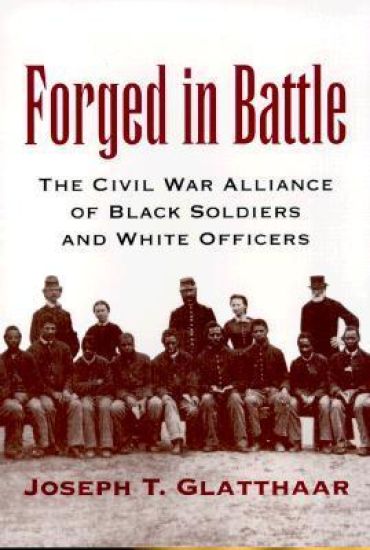
Forged in Battle

Forged in Battle

Joseph T. Glatthaar

Louisiana State University Press
2000
nidottu
Sixteen months after the start of the American Civil War, the Federal government, having vastly underestimated the length and manpower demands of the war, began to recruit black soldiers. This revolutionary policy gave 180,000 free blacks and former slaves the opportunity to prove themselves on the battlefield as part of the United States Colored Troops. By the end of the war, 37,000 in their ranks had given their lives for the cause of freedom. In Forged in Battle, originally published in 1990, award-winning historian Joseph T. Glatthaar re-creates the events that gave these troops and their 7,000 white officers justifiable pride in their contributions to the Union victory and hope of equality in the years to come. Unfortunately, as Glatthaar poignantly demonstrates, memory of the United States Colored Troops' heroic sacrifices soon faded behind the prejudice that would plague the armed forces for another century.
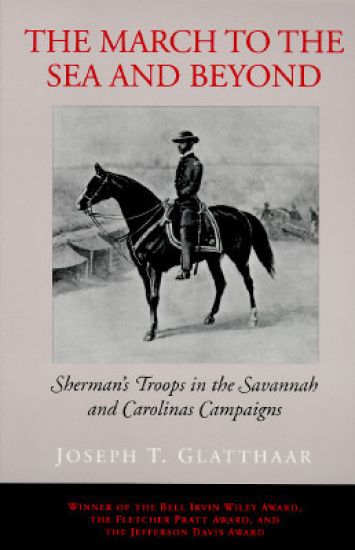
The March to the Sea and Beyond

The March to the Sea and Beyond

Joseph T. Glatthaar

Louisiana State University Press
1995
nidottu
In November, 1864, Major General William Tecumseh Sherman led an army of veteran Union troops through the heart of the Confederacy, leaving behind a path of destruction in an area that had known little of the hardships of war, devastating the morale of soldiers and civilians alike, and hastening the end of the war. In this intensively researched and carefully detailed study, chosen by Civil War Magazine as one of the best one hundred books ever written about the Civil War, Joseph T. Glatthaar examines the Savannah and Carolinas Campaigns from the perspective of the common soldiers in Sherman's army, seeking, above all, to understand why they did what they did. Glatthaar graphically describes the duties and deprivations of the march, the boredom and frustration of camp life, and the utter confusion and pure chance of battle. Quoting heavily from the letters and diaries of Sherman's men, he reveals the fears, motivations, and aspirations of the Union soldiers and explores their attitudes toward their comrades, toward blacks and southern whites, and toward the war, its destruction, and the forthcoming reconstruction.