Kirjojen hintavertailu. Mukana 12 432 542 kirjaa ja 12 kauppaa.

Kirjailija

Joseph T Mccann

Kirjat ja teokset yhdessä paikassa: 4 kirjaa, julkaisuja vuosilta 1999-2006, suosituimpien joukossa Threats in Schools. Vertaile teosten hintoja ja tarkista saatavuus suomalaisista kirjakaupoista.

Mukana myös kirjoitusasut: Joseph T. McCann

4 kirjaa

Kirjojen julkaisuhaarukka 1999-2006.

Minds on Trial

Minds on Trial

Charles Patrick Ewing; Joseph T. McCann

Oxford University Press Inc
2006
sidottu
Everyday, in courtrooms everywhere, people's lives are touched and shaped by judgments and verdicts influenced by the testimony of psychologists and other mental health experts. This casebook details 20 high-profile court cases that turned, at least in part, on the expertise of forensic psychologists and psychiatrists and involved such psychological issues as insanity, criminal profiling, capital punishment, competence to stand trial, infanticide, domestic violence, false confessions, and psychological autopsies. The defendents in these cases range from household names such as Woodly Allen, Mike Tyson, Patty Hearst, and Jeffrey Dahmer to others whose brief brush with infamy has long been forgotten. But regardless of their notoriety or celebrity status, each of these carefully selected cases teaches important lessons about the role that psychology and the other behavioral sciences play in our legal system.
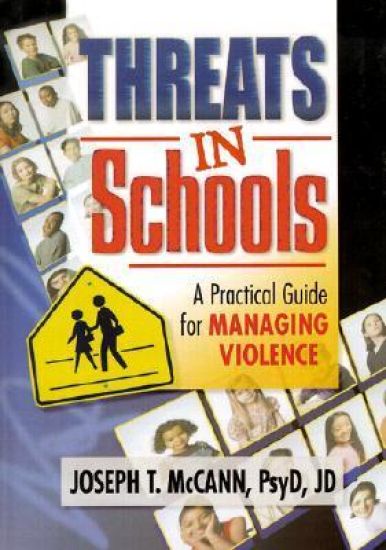
Threats in Schools

Threats in Schools

Joseph T Mccann

Routledge Member of the Taylor and Francis Group
2001
sidottu
Manage potentially violent situations in your school with these expert techniques!In the wake of several highly publicized school shootings, the problem of school violence has increasingly become a focus of concern for the general public as well as teachers, school officials, and students. Drawing on case studies from publicized violent incidents as well as from Dr. McCann's private practice, Threats in Schools: A Practical Guide for Managing Violence provides techniques for identifying, conceptualizing, assessing, and managing threatening behavior by students in school settings. Offering specific case management strategies for a variety of situations, this indispensable volume provides guidance on formulating questions to ask and suggestions for developing strategies for managing potentially violent situations.Integrating threat assessment and risk management models, this approach will help you target potential threats to property, other students, teachers, and school staff. The interdisciplinary approach recognizes that violent behavior is dependent on the characteristics of the perpetrator, victim, and setting, and that the relationship between threats and violence is not always clear. Threats in Schools offers well-grounded research, detailed case studies, and theoretical approaches to help you deal with the tough issues, including: zero-tolerance policies and their more effective alternatives why profiling techniques to identify violence-prone students are of limited use interventions to defuse potentially violent situations critical incident stress managementFive appendixes offer forms and checklists to help you plan and evaluate, including: threat assessment and management planning checklist of characteristics of perpetrators of school violence questions for evaluating general risk of violence fire-setting and bombing risk assessment sex offense risk assessmentLucidly written and illustrated with helpful tables and figures, Threats in Schools offers school officials, mental health professionals, community leaders, and the media the information they need to understand what sparks school violence and which approaches reduce the risk of it.
Threats in Schools

Threats in Schools

Joseph T Mccann

Routledge Member of the Taylor and Francis Group
2001
nidottu
Manage potentially violent situations in your school with these expert techniques!In the wake of several highly publicized school shootings, the problem of school violence has increasingly become a focus of concern for the general public as well as teachers, school officials, and students. Drawing on case studies from publicized violent incidents as well as from Dr. McCann's private practice, Threats in Schools: A Practical Guide for Managing Violence provides techniques for identifying, conceptualizing, assessing, and managing threatening behavior by students in school settings. Offering specific case management strategies for a variety of situations, this indispensable volume provides guidance on formulating questions to ask and suggestions for developing strategies for managing potentially violent situations.Integrating threat assessment and risk management models, this approach will help you target potential threats to property, other students, teachers, and school staff. The interdisciplinary approach recognizes that violent behavior is dependent on the characteristics of the perpetrator, victim, and setting, and that the relationship between threats and violence is not always clear. Threats in Schools offers well-grounded research, detailed case studies, and theoretical approaches to help you deal with the tough issues, including: zero-tolerance policies and their more effective alternatives why profiling techniques to identify violence-prone students are of limited use interventions to defuse potentially violent situations critical incident stress managementFive appendixes offer forms and checklists to help you plan and evaluate, including: threat assessment and management planning checklist of characteristics of perpetrators of school violence questions for evaluating general risk of violence fire-setting and bombing risk assessment sex offense risk assessmentLucidly written and illustrated with helpful tables and figures, Threats in Schools offers school officials, mental health professionals, community leaders, and the media the information they need to understand what sparks school violence and which approaches reduce the risk of it.
Assessing Adolescents with the MACI

Assessing Adolescents with the MACI

Joseph T. McCann

John Wiley Sons Inc
1999
sidottu
Assessing Adolescents with the MACI is an interpretive guide forusing the Millon Adolescent Clinical Inventory--the most widelyused personality assessment test for adolescents. The first bookdevoted exclusively to the MACI, this resource will prove a helpfulguide for understanding the test, interpreting the results inclinical evaluation, and making appropriate recommendations fortreatment and care management. Unlike other assessment tests developed for adults and adapted foradolescents, the MACI was created to address the unique concerns,pressures, and situations of adolescents. The MACI is alsoconstructed using an underlying theory of personality andpsychopathology. The MACI is a 160-item, 31-scale self reportinventory that was designed to assess personality styles,significant problems or concerns, and clinical symptoms inadolescents. Using a true false format, the MACI surveys a widerange of personality characteristics and clinical symptoms thattend to be a focus in psychological evaluations of teenagers thateither have or are suspected of having emotional or behavioraldifficulties. While multi-scale personality inventories such as the MACI areuseful for improving the clinician's understanding of anadolescent's personality and clinical symptoms, there are otherreasons for using such instruments. The MACI can be used toformulate diagnostic hypotheses, confirm clinical diagnoses,formulate treatment plans, or assist in decision making surroundingcase management and disposition planning. The MACI can be used asan outcome measure to evaluate changes in an adolescent'sfunctioning as a result of treatment and intervention. Of course,the MACI can also be used in research studies to investigate arange of issues that pertain to adolescent psychopathology,personality, and treatment response. Drawing on a broad range of sources, including data in the MACImanual, published research studies, unpublished research,theoretical literature, and his own experience with the test,Joseph McCann lays the groundwork for the basis of the test andthen offers an exhaustive exploration of all facets of the test.Recognizing both the strengths and weaknesses of the MACI, McCannoffers a balanced and comprehensive resource on this vitalassessment tool. "This book fills an important gap in the clinical literature . . .Joseph McCann, author of this first full text on the MACI, is thebest known workshop presenter on the topic. Assessment with theMACI will enable the student and the clinician to develop asophisticated basis for disentangling the many variations amongyoungsters, to assess both their assets and liabilities, todetermine the presence of clinical disorders, and, mostimportantly, to provide a full picture that can serve as the basisfor making decisions regarding each adolescent's welfare, that is,to be able to outline a logical course of treatment which may provemore optimally efficacious. It will guide the reader to transformthe raw MACI test data, coordinate these data with the history ofthe youngster's experience, as well as with observational andinterview information, facilitating interpretive syntheses andproviding thereby a basis to help link assessment to psychotherapy.This text is insightful and comprehensive, a work of inestimablevalue to both practicing clinicians and students." --TheodoreMillon, from the Foreword.