Kirjojen hintavertailu. Mukana 12 595 353 kirjaa ja 12 kauppaa.
Kirjailija
Joseph Wayne Smith
Kirjat ja teokset yhdessä paikassa: 8 kirjaa, julkaisuja vuosilta 1992-2020, suosituimpien joukossa Wing Chun Kung-Fu Volume 3. Vertaile teosten hintoja ja tarkista saatavuus suomalaisista kirjakaupoista.
Published in 1997. This book develops a postmodernist critique of philosophy - although not the postmodernism of literary philosophers such as Derrida. This postmodernism is one of ecological limitationism coupled with a practical common sense ’realism’. The authors affirm the reality of life-world and the primacy of practice against materialists, physicalists and reductionists. They attempt to show that orthodox Anglo-American analytic philosophy is not merely incapable of completing its own quest to supply a regionally justified system of reality, but, more importantly, it fails as well to meet the challenges of the age.
Published in 1997. This book develops a postmodernist critique of philosophy - although not the postmodernism of literary philosophers such as Derrida. This postmodernism is one of ecological limitationism coupled with a practical common sense ’realism’. The authors affirm the reality of life-world and the primacy of practice against materialists, physicalists and reductionists. They attempt to show that orthodox Anglo-American analytic philosophy is not merely incapable of completing its own quest to supply a regionally justified system of reality, but, more importantly, it fails as well to meet the challenges of the age.
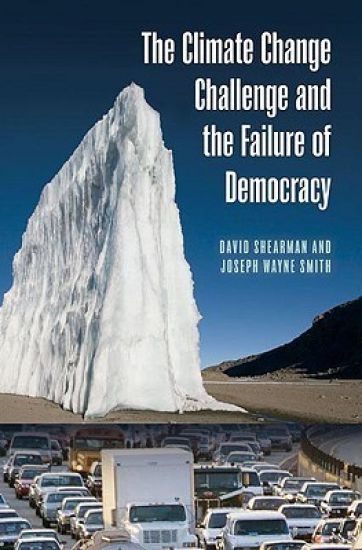
This provocative book presents compelling evidence that the fundamental problem behind environmental destruction—and climate change in particular—is the operation of liberal democracy. Climate change threatens the future of civilization, but humanity is impotent in effecting solutions. Even in those nations with a commitment to reduce greenhouse emissions, they continue to rise. This failure mirrors those in many other spheres that deplete the fish of the sea, erode fertile land, destroy native forests, pollute rivers and streams, and utilize the world's natural resources beyond their replacement rate. In this provocative book, Shearman and Smith present evidence that the fundamental problem causing environmental destruction—and climate change in particular—is the operation of liberal democracy. Its flaws and contradictions bestow upon government—and its institutions, laws, and the markets and corporations that provide its sustenance—an inability to make decisions that could provide a sustainable society. Having argued that democracy has failed humanity, the authors go even further and demonstrate that this failure can easily lead to authoritarianism without our even noticing. Even more provocatively, they assert that there is merit in preparing for this eventuality if we want to survive climate change. They are not suggesting that existing authoritarian regimes are more successful in mitigating greenhouse emissions, for to be successful economically they have adopted the market system with alacrity. Nevertheless, the authors conclude that an authoritarian form of government is necessary, but this will be governance by experts and not by those who seek power. There are in existence highly successful authoritarian structures—for example, in medicine and in corporate empires—that are capable of implementing urgent decisions impossible under liberal democracy. Society is verging on a philosophical choice between liberty or life. But there is a third way between democracy and authoritarianism that the authors leave for the final chapter. Having brought the reader to the realization that in order to halt or even slow the disastrous process of climate change we must choose between liberal democracy and a form of authoritarian government by experts, the authors offer up a radical reform of democracy that would entail the painful choice of curtailing our worldwide reliance on growth economies, along with various legal and fiscal reforms. Unpalatable as this choice may be, they argue for the adoption of this fundamental reform of democracy over the journey to authoritarianism.
We live in times of uncertainty and insecurity, at a personal, national and global level. Writers such as Samuel P. Huntington and Robert D. Kaplan, respectively, have spoken of an emerging 'clash of civilizations' and of 'coming anarchy'. This book is also concerned with the future of civilization, in particular with the conflict between economic growth and the sustainability of the biophysical lifesupport systems of the planet, arguing that the flawed system of orthodox neo-classical economics has justified the modernist belief in the necessity of unending economic growth and the ceaseless exploitation of nature.
We live in times of uncertainty and insecurity, at a personal, national and global level. Writers such as Samuel P. Huntington and Robert D. Kaplan, respectively, have spoken of an emerging 'clash of civilizations' and of 'coming anarchy'. This book is also concerned with the future of civilization, in particular with the conflict between economic growth and the sustainability of the biophysical lifesupport systems of the planet, arguing that the flawed system of orthodox neo-classical economics has justified the modernist belief in the necessity of unending economic growth and the ceaseless exploitation of nature.
The modern world is, in the authors' view, undergoing the process of meltdown—global meltdown. Having argued in an earlier book that humankind is headed for an environmental catastrophe that will either eliminate the human species or greatly reduce our numbers, the authors now focus on the breakdown of organized social order that will occur when the ecological crisis happens. Believing that civilization as we know it will not last, even without a definitive environmental cataclysm, they explore here the social, political, and philosophical ramifications of this vision.After outlining the interaction of the forces of environmental destruction, economic rationalism, and technological revolution, this book shows their impact on social problems such as immigration, racial and ethnic conflict, and the loss of personal, spiritual, and religious meaning. In the first chapter, the authors consider the effects of these social conflicts in both the non-Western and the Western world, concluding that the global meltdown theory is supported by the worldwide rise of terrorism. Chapter 2 discusses the technological and ecological forces they believe will led to a new world disorder. The work then goes on to use Australia as a case study illustrating the collision of population and environment. In the concluding chapter, the authors support their thesis further with a review of the literature on the subject.
This scientifically rigorous and philosophically sophisticated defense of environmentalism is meant to excite, educate, and alarm the reader. There is a widespread scientific and public recognition that the world is facing an environmental crisis of vast proportions. What is the relationship between the growth of human population and industrial activity on one hand and the environmental crisis on the other? If this is not determined and dealt with, Earth's ecology may be expected to collapse.
In Wing Chun Kung-fu Volume 3: Weapons & Advanced Techniques, the final Wing Chun book in this Chinese martial arts series, author Dr. Joseph Wayne Smith applies dynamic scientific methodology to Wing Chun training tools and weapons, providing a complete analysis of why and how each item is used. The reader is led step-by-step through the use of the Wing Chun Wooden-Dummy—a valuable training tool for developing trapping, striking, and kicking skills; the Wing Chun Butterfly Knives—deadly bladed weapons for both attack and defense; and the Six-and-a-Half Pole—a simple but devastating weapon in the hands of the Wing Chun fighter. The author encourages students to recognize the practical and physical benefits of traditional fighting weapons in the modern environment.