Kirjojen hintavertailu. Mukana 12 390 323 kirjaa ja 12 kauppaa.
Kirjailija
Joseph Weiss
Kirjat ja teokset yhdessä paikassa: 47 kirjaa, julkaisuja vuosilta 1993-2026, suosituimpien joukossa Weiss, J: Berthold Von Henneberg Erzbischof Von Mainz, 1484-. Vertaile teosten hintoja ja tarkista saatavuus suomalaisista kirjakaupoista.
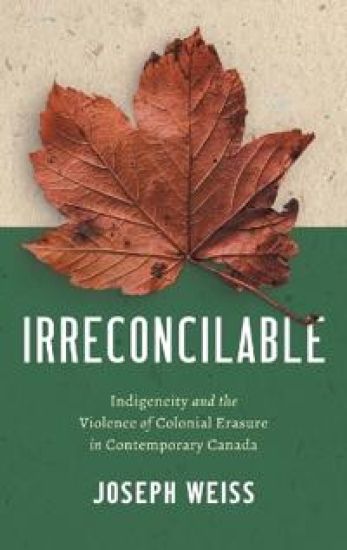
Since the early 2000s, the Canadian government has attempted reconciliation with Indigenous nations through varied efforts: treaty processes, government commissions, rebranding campaigns for settler-owned businesses, workshops for state and local officials, school curriculum changes, and a recently christened national holiday However, as Joseph Weiss argues, these state-driven initiatives reinforce Indigenous subordination to the settler state. This incisive study of the varied responses from both Indigenous Nations and individuals to reconciliation illuminates how it is implicated in ongoing colonial erasure. Critically engaging with a variety of fields, including Indigenous studies, anthropology, history, political theory, semiotics, and museum studies, Weiss captures the multiple scales at which these contested dynamics unfold and explores their underlying technologies of erasure. Irreconcilable unpacks how reconciliation offers amends for anti-Indigenous violence while disavowing responsibility for that violence, and argues that settler promises of reconciliation cannot be reconciled to the fact of Indigenous sovereignty. Nevertheless, Weiss illustrates how Indigenous Peoples refuse erasure at every turn, instead building alternate futures and lived worlds that are not always already colonially overdetermined.
Since the early 2000s, the Canadian government has attempted reconciliation with Indigenous nations through varied efforts: treaty processes, government commissions, rebranding campaigns for settler-owned businesses, workshops for state and local officials, school curriculum changes, and a recently christened national holiday However, as Joseph Weiss argues, these state-driven initiatives reinforce Indigenous subordination to the settler state. This incisive study of the varied responses from both Indigenous Nations and individuals to reconciliation illuminates how it is implicated in ongoing colonial erasure. Critically engaging with a variety of fields, including Indigenous studies, anthropology, history, political theory, semiotics, and museum studies, Weiss captures the multiple scales at which these contested dynamics unfold and explores their underlying technologies of erasure. Irreconcilable unpacks how reconciliation offers amends for anti-Indigenous violence while disavowing responsibility for that violence, and argues that settler promises of reconciliation cannot be reconciled to the fact of Indigenous sovereignty. Nevertheless, Weiss illustrates how Indigenous Peoples refuse erasure at every turn, instead building alternate futures and lived worlds that are not always already colonially overdetermined.
Combining the philosophy and musicology of T.W. Adorno, Walter Benjamin, and Gilles Deleuze, alongside an exploration of the dialectical character of music production, Joseph Weiss exposes the unresolved contradictions of contemporary music.By following the outermost mediations between nature, history, and technology, the book reflects on how advanced music critically responds to the ongoing catastrophe of both the Middle Passage and Auschwitz. Following what the author calls the “categorical imperative” of music, Weiss investigates the significance of a wide range of musical phenomena including the territorialization of the lullaby, the improvisation and sorrow song of the blues and jazz, as well as the cosmological limits of the electroacoustic avant-garde. In the era of commodity production, racialized violence and dispossession, the author defends critical music as a singular index of political possibilities.
Combining the philosophy and musicology of T.W. Adorno, Walter Benjamin, and Gilles Deleuze, alongside an exploration of the dialectical character of music production, Joseph Weiss exposes the unresolved contradictions of contemporary music.By following the outermost mediations between nature, history, and technology, the book reflects on how advanced music critically responds to the ongoing catastrophe of both the Middle Passage and Auschwitz. Following what the author calls the “categorical imperative” of music, Weiss investigates the significance of a wide range of musical phenomena including the territorialization of the lullaby, the improvisation and sorrow song of the blues and jazz, as well as the cosmological limits of the electroacoustic avant-garde. In the era of commodity production, racialized violence and dispossession, the author defends critical music as a singular index of political possibilities.
Colon cancer is one of the most common and deadly cancers. It is both preventable and curable when found early, but devastating when discovered too late. It begins silently without any signs or symptoms, and rarely gives any warning until too late. In spite of painless, accurate and inexpensive screening tests, too many people mistakenly believe they are safe and fail to protect themselves.From young movie stars and professional athletes, to world political and religious leaders anyone can get colon cancer. Nearly 50,000 needlessly die in the United States each year from this preventable and curable disease. When it is detected early nearly all of these lives could have been saved. Recently the greatest increase in colon cancer is seen in adults 20 to 40 years of age. In this book you will learn how: your diet, weight, family history, gender, and other significant factors contribute to your potential risk. You will begin to understand the essentials in personalizing your best approach to prevent colon cancer. The multiple options range from one minute painless and inexpensive tests, to the more involved invasive colonoscopy tests that require sedation or anesthesia. Understanding the options available, and selecting wisely based on your personal risk factors, is clearly explained in this potentially lifesaving book. Written by expert physicians who offer an unbiased and logical approach, Got Guts assists in identifying your best path. This guide may well be the most important book you will read to protect your health now and in the future.All three authors have experienced the hardships that follow a loved one diagnosed with colorectal cancer too late. They are dedicated and compassionate physicians with extensive clinical, academic, and research experience. Don't miss the BEST chance to make life-saving decisions for yourself and your loved ones Joseph Weiss, MD is a Gastroenterologist and professor on the faculty of University of California, San Diego (UCSD) School of Medicine. He is a popular speaker and author of numerous books regarding gut health, the microbiome, digestion and more.Danielle Weiss, MD is an Integrative Endocrinologist and on the Clinical Faculty of University of California, San Diego (UCSD) School of Medicine. She specializes in holistic health as it pertains to hormones, nutrition, metabolic concerns and more. She looks for the root cause of illness and applies the most natural approach to prevention and treatment.Nancy Cetel, MD is a women's health specialist, popular speaker and author. Dr. Cetel is passionate about empowering women to be more knowledgeable and proactive in their personal health decisions. She believes that your health is your most significant form of wealth.
Colon cancer is one of the most common and deadly cancers. It is both preventable and curable when found early, but devastating when discovered too late. It begins silently without any signs or symptoms, and rarely gives any warning until too late. In spite of painless, accurate and inexpensive screening tests, too many people mistakenly believe they are safe and fail to protect themselves.From young movie stars and professional athletes, to world political and religious leaders anyone can get colon cancer. Nearly 50,000 needlessly die in the United States each year from this preventable and curable disease. When it is detected early nearly all of these lives could have been saved. Recently the greatest increase in colon cancer is seen in adults 20 to 40 years of age. In this book you will learn how: your diet, weight, family history, gender, and other significant factors contribute to your potential risk. You will begin to understand the essentials in personalizing your best approach to prevent colon cancer. The multiple options range from one minute painless and inexpensive tests, to the more involved invasive colonoscopy tests that require sedation or anesthesia. Understanding the options available, and selecting wisely based on your personal risk factors, is clearly explained in this potentially lifesaving book. Written by expert physicians who offer an unbiased and logical approach, Got Guts assists in identifying your best path. This guide may well be the most important book you will read to protect your health now and in the future. All three authors have experienced the hardships that follow a loved one diagnosed with colorectal cancer too late. They are dedicated and compassionate physicians with extensive clinical, academic, and research experience. Don't miss the BEST chance to make life-saving decisions for yourself and your loved ones Joseph Weiss, MD is a Gastroenterologist and professor on the faculty of University of California, San Diego (UCSD) School of Medicine. He is a popular speaker and author of numerous books regarding gut health, the microbiome, digestion and more.Danielle Weiss, MD is an Integrative Endocrinologist and on the Clinical Faculty of University of California, San Diego (UCSD) School of Medicine. She specializes in holistic health as it pertains to hormones, nutrition, metabolic concerns and more. She looks for the root cause of illness and applies the most natural approach to prevention and treatment.Nancy Cetel, MD is a women's health specialist, popular speaker and author. Dr. Cetel is passionate about empowering women to be more knowledgeable and proactive in their personal health decisions. She believes that your health is your most significant form of wealth.
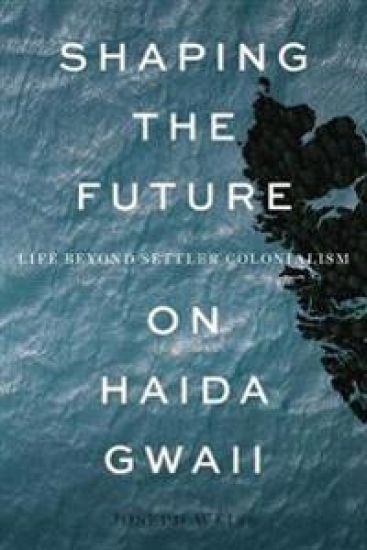
Colonialism in settler societies such as Canada depends on a certain understanding of the relationship between time and Indigenous peoples. Too often, these peoples have been portrayed as being without a future, destined either to disappear or assimilate into settler society. This book asserts quite the opposite: Indigenous peoples are not in any sense "out of time" in our contemporary world.Shaping the Future on Haida Gwaii shows how Indigenous peoples in Canada not only continue to have a future, but are at work building many different futures – for themselves and for their non-Indigenous neighbours. Through the experiences of the Haida First Nation, this book explores these possible futures in detail, demonstrating how Haida ways of thinking about time, mobility, and political leadership are at the heart of contemporary strategies for addressing the dilemmas that come with life under settler colonialism. From the threat of ecological crisis to the assertion of sovereign rights and authority, Weiss shows that the Haida people consistently turn towards their possible futures in order to work out how to live in and transform the present.
Colonialism in settler societies such as Canada depends on a certain understanding of the relationship between time and Indigenous peoples. Too often, these peoples have been portrayed as being without a future, destined either to disappear or assimilate into settler society. This book asserts quite the opposite: Indigenous peoples are not in any sense “out of time” in our contemporary world.Shaping the Future on Haida Gwaii shows how Indigenous peoples in Canada not only continue to have a future, but are at work building many different futures – for themselves and for their non-Indigenous neighbours. Through the experiences of the Haida First Nation, this book explores these possible futures in detail, demonstrating how Haida ways of thinking about time, mobility, and political leadership are at the heart of contemporary strategies for addressing the dilemmas that come with life under settler colonialism. From the threat of ecological crisis to the assertion of sovereign rights and authority, Weiss shows that the Haida people consistently turn towards their possible futures in order to work out how to live in and transform the present.