Kirjojen hintavertailu. Mukana 12 152 606 kirjaa ja 12 kauppaa.

Kirjailija

Joshua N. Hook

Kirjat ja teokset yhdessä paikassa: 8 kirjaa, julkaisuja vuosilta 2013-2025, suosituimpien joukossa Mindfulness-Based Practices in Therapy. Vertaile teosten hintoja ja tarkista saatavuus suomalaisista kirjakaupoista.

8 kirjaa

Kirjojen julkaisuhaarukka 2013-2025.

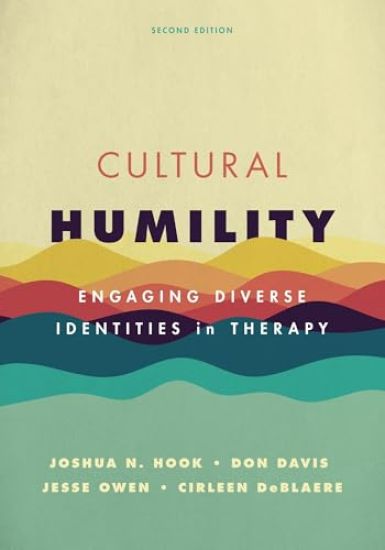
Cultural Humility

Cultural Humility

Joshua N. Hook; Don Davis; Jesse Owen; Cirleen DeBlaere

AMERICAN PSYCHOLOGICAL ASSOCIATION
2025
pokkari
Cultural Humility offers a practical approach for meaningfully engaging cultural identities in therapy, to promote connection and growth in work with clients from a variety of backgrounds. Aligns with APA Divisions 38 and 5 . The authors provide a therapeutic framework that integrates and contextualizes clinical training with the cultural issues and dynamics that arise in therapy. This fully updated second edition incorporates updated theory and research, and provides additional recommendations for how therapists from marginalized groups can navigate issues related to culture in the therapy room. The authors offer new resources to demonstrate how cultural humility and a multicultural orientation (MCO) can help therapists pinpoint and address the systemic and structural issues that can make therapy a difficult experience for many clients. Newly updated and enhanced case examples and activities are included throughout. The MCO framework involves three components-cultural humility, cultural opportunities, and cultural comfort-which together enable mental health providers to integrate culture into the therapeutic process. The first part of the book introduces the MCO framework, and outlines strategies for working to improve one's level of cultural humility and comfort in working with diverse clients, as well as the ability to recognize and engage cultural opportunities in therapy. The second part of the book illustrates the integration of the MCO model with key therapeutic processes, including developing a strong working alliance, navigating value differences, repairing the relationship after cultural ruptures, and working within one's limitations. Supplemental content to support instructor teaching is also available on the book's website, including companion exercises and resources, lecture slides, a sample syllabus, and glossary of key terms.

The Complete Researcher

The Complete Researcher

Joshua N. Hook; Don Davis; Daryl R. Van Tongeren

AMERICAN PSYCHOLOGICAL ASSOCIATION
2023
pokkari
Learning how to do research well is not easy, and for newer scholars the process can feel overwhelming. Using clear and supportive language, this book is designed to help graduate students and early career professionals in psychology develop skills to effectively work through the research process. Chapters cover the essential character traits and skills that are necessary to become an effective researcher, walk through the main steps for completing a research project from start to finish, and discuss considerations when building a career and research program. Rather than the nitty-gritty of research methods, authors Joshua N. Hook, Don E. Davis, and Daryl R. Van Tongeren focus on the big picture of what is required in research. Chapters in the first section address overarching principles-the personal growth, attributes, and habits that are important to develop to become a successful researcher. The second section illustrates the key steps in completing a research project from start to finish, from formulating an idea for a project, to completing a literature review, collecting data, analyzing data, and writing up the results. The third section discusses developing a research program and transitioning from graduate student to professional-topics such as collaborating with others in research and mentoring students. This section is full of practical advice the authors learned from mentors and from personal experience. Written for people with a broad range of career goals, and with the mentoring relationship in mind, the book helps mentors and students form productive relationships that feel mutually beneficial and rewarding. Each chapter aims to help students and professionals along their research journey, and teaches them not just how to survive the process, but thrive.
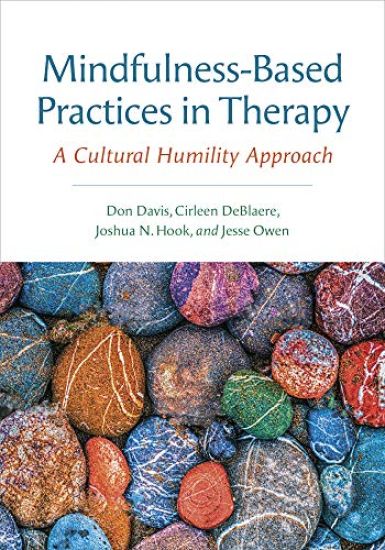
Mindfulness-Based Practices in Therapy

Mindfulness-Based Practices in Therapy

Don Davis; Cirleen DeBlaere; Joshua N. Hook; Jesse Owen

American Psychological Association
2019
pokkari
This book serves as a practical introduction to integrating mindfulness-based practices in therapy, with a focus on assessing whether it is appropriate to use or adapt mindfulness activities to the specific cultural identity or identities of clients. Eastern spirituality has exerted considerable influence on the fields of counseling and psychology through the use of mindfulness-based practices. Interventions can be adapted to account for clients' religious/spiritual identity, gender norms, racial/ethnic background, community values and pressures, personality traits, unfamiliarity with mindfulness-based practices, cognitive flexibility, and individual life experiences. The authors present an approach to integrating mindfulness in therapy that emphasizes cultural humility, which combines an accurate view of oneself (including limits in one's awareness, knowledge, and skills for working with individuals from diverse groups) with the ability to cultivate an amp quot other-oriented amp quot stance, thus enhancing one's ability to work with clients from a variety of cultural backgrounds. By incorporating this client-centered approach, therapists will be better able to align the therapy process with clients' values, narratives about change, and therapy goals.
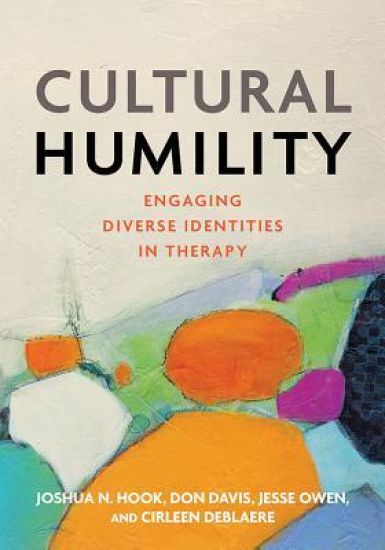
Cultural Humility

Cultural Humility

Joshua N. Hook; Don Davis; Jesse Owen; Cirleen DeBlaere

American Psychological Association
2017
sidottu
This book describes how therapists can combine multicultural theory with their own lived experience to meaningfully engage clients in issues of culture. Many mental health practitioners (MHPs) today recognize and affirm the importance of cultural background-race, ethnicity, gender, sexuality, et al-in their clients amp rsquo lives. But many MHPs struggle to address cultural issues in practice, whether because of unfamiliarity, or fear of giving offense, or because the presence of cultural differences or similarities between client and therapist that can make it difficult to view the client objectively. The authors of this book recommend that MHPs focus not on what they have learned in previous clinical or educational settings, but on what they don amp rsquo t know about the client who sits across from them. They discuss practical strategies for engaging with clients and their cultural identities, including repairing mistakes that threaten the therapeutic relationship. Through a wide range of case examples and hands-on exercises, the authors demonstrate how therapists can learn to acknowledge their limitations, and view them as opportunities to connect with clients at a deeper level.
Thriving Families: A Trauma-Informed Guidebook for the Foster and Adoptive Journey
A practical roadmap for foster and adoptive families Caring for children is deeply important to the heart of God, and adoption and foster care are important callings that connect to God's heart for children and families. But this road isn't always easy. It's important that foster and adoptive parents prepare to address their children's history of trauma, separation, and disrupted placements, which can lead to mental health, emotional, and behavioral difficulties. It is also important to understand how this journey shapes and influences our children. We cannot ignore the deep feelings and questions that children experience as they try to understand their story. How can we help them navigate their identity, and sit with them in the unknowns of their story or the grief and loss that comes up? ​ Drawing on the latest science and research on trauma, attachment, sensory processing difficulties, cultural competence, and grief and loss, authors Josh and Jenn Hook provide a trauma-informed approach to help adoptive and foster families--and the church called to care for the vulnerable in our midst--to help their children heal, grow, and thrive.
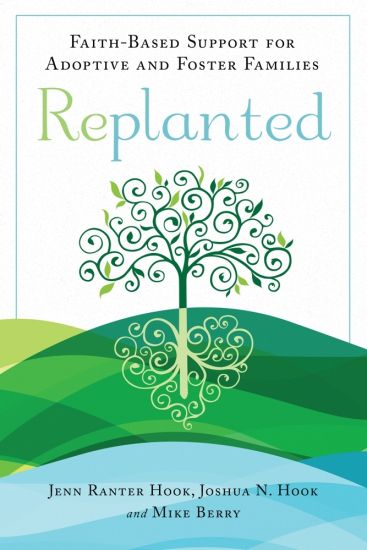
Replanted

Replanted

Jenn Ranter Hook; Joshua N. Hook; Mike Berry

TEMPLETON FOUNDATION PRESS,U.S.
2019
pokkari
Many people embark on the journey of adoption and foster care but are unprepared for the challenges that await them along the way. Replanted takes an honest look at the joys and hardships that come with choosing this journey and provides a model of faith-based support made up of three parts to help families thrive: Soil, Sunlight, and Water. Soil, or emotional support, addresses the need for grace-filled settings where families can connect with other families who understand their experience. Sunlight, or informational support, focuses on obtaining helpful training to raise children who may have unique needs or challenges. Water, or tangible support, deals with concrete resources such as medical care, child care, and financial support. Throughout the book, the Replanted model is brought to life by stories and examples based on the clinical work and personal experiences of the authors. Their candid insight will serve families who are actively involved in adoption or foster care, as well as people who are eager to help support those families.Replanted affirms that with the right support system in place, parents can answer this sacred call not only with open hearts but also with their eyes wide open.
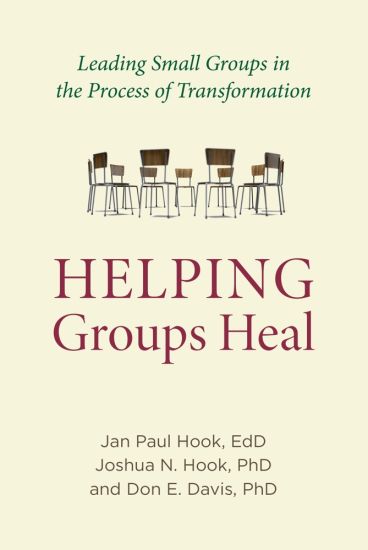
Helping Groups Heal

Helping Groups Heal

Jan Paul Hook; Joshua N. Hook; Don E. Davis

TEMPLETON FOUNDATION PRESS,U.S.
2017
pokkari
Life with others is messy. The bonds we form are often the source that drives us to helping professionals like therapists and pastors in the first place. And yet, it is from these relation­ships that our greatest moments of healing spring. Recogniz­ing the value of relationships, pastors and therapists have been leading small therapeutic groups for years. Yet few lead­ers have a specific, easy-to-follow, and researched framework to structure their groups.Helping Groups Heal presents “The Healing Cycle,” a grace-based model that facilitates healing and growth in groups. It has been tested with a variety of settings, and can be adapted to nearly any small group, from sex addiction therapy to marriage therapy to Bible studies. The basic components of “The Healing Cycle” are grace, safety, vulnerability, truth, ownership, and confession. Helping Groups Heal guides the reader through these elements, offering case studies and practical advice from the voices of researchers and practitioners. Each chapter shows how “The Healing Cycle” moves its members to share their truth, own it, and make positive change in their lives. Each step of the process allows participants to move past surface issues and find depth in their understanding of their pain. Whether you have been leading small groups for years or are about to lead your first session, Helping Groups Heal is an accessible, easy-to-follow guide through “The Healing Cycle” that will give each group member what’s needed to grow, relate, and heal.
Evidence–Based Practices for Christian Counseling and Psychotherapy

Evidence–Based Practices for Christian Counseling and Psychotherapy

Everett L. Worthington Jr.; Eric L. Johnson; Joshua N. Hook; Jamie D. Aten

Inter-Varsity Press,US
2013
nidottu
Are Christian treatments as effective as secular treatments? What is the evidence to support its success? Christians engaged in the fields of psychology, psychotherapy and counseling are living in a unique moment. Over the last couple decades, these fields have grown more and more open to religious belief and religion-accommodative therapies. At the same time, Christian counselors and psychotherapists encounter pressure (for example, from insurance companies) to demonstrate that their accommodative therapies are as beneficial as secular therapies. This raises the need for evidence to support Christian practices and treatments. The essays gathered in this volume explore evidence-based Christian treatments, practices, factors and principles. The authors mine the relevant research and literature to update practicing psychotherapists, clinical researchers, students, teachers and educated laypersons about the efficacy of certain Christian-accommodative therapies. Topics covered in the book include: devotional meditationcognitive-behavior therapypsychodynamic and process-experiential therapiescouples, marriage and family therapygroup intervention The book concludes with a review of the evidence for the various treatments discussed in the chapters, a guide for conducting clinical trials that is essential reading for current or aspiring researchers, and reflections by the editors about the future of evidence-based Christian practices. As the editors say, "more research is necessary." To that end, this volume is a major contribution to a field of inquiry that, while still in its infancy, promises to have enormous implications for future work in Christian counseling and psychotherapy. Christian Association for Psychological Studies (CAPS) Books explore how Christianity relates to mental health and behavioral sciences including psychology, counseling, social work, and marriage and family therapy in order to equip Christian clinicians to support the well-being of their clients.