Kirjojen hintavertailu. Mukana 12 595 353 kirjaa ja 12 kauppaa.

Kirjailija

Joshua Woods

Kirjat ja teokset yhdessä paikassa: 9 kirjaa, julkaisuja vuosilta 2011-2026, suosituimpien joukossa Feudal America. Vertaile teosten hintoja ja tarkista saatavuus suomalaisista kirjakaupoista.

9 kirjaa

Kirjojen julkaisuhaarukka 2011-2026.

Feudal America

Feudal America

Vladimir Shlapentokh; Joshua Woods

Pennsylvania State University Press
2012
pokkari
Do Americans live in a liberal capitalist society, where evenhanded competition rules the day, or a society in which big money, private security, and personal relations determine key social outcomes? Vladimir Shlapentokh and Joshua Woods argue that the answer to these questions cannot be found among the conventional models used to describe the nation. Offering a new analytical tool, the authors present a provocative explanation of the nature of contemporary society by comparing its essential characteristics to those of medieval European societies. Their feudal model emphasizes five elements: the weakness of the state and its inability to protect its territory, guarantee the security of its citizens, and enforce laws; conflicts and collusions between and within organizations that involve corruption and other forms of illegal or semilegal actions; the dominance of personal relations in political and economic life; the prevalence of an elitist ideology; and the use of private agents and organizations for the provision of safety and security. Feudal America urges readers to suspend their forward-thinking and futurist orientations, question linear notions of social and historical progression, and look for explanations of contemporary social problems in medieval European history.

Feudal America

Feudal America

Vladimir Shlapentokh; Joshua Woods

Pennsylvania State University Press
2011
sidottu
Do Americans live in a liberal capitalist society, where evenhanded competition rules the day, or a society in which big money, private security, and personal relations determine key social outcomes? Vladimir Shlapentokh and Joshua Woods argue that the answer to these questions cannot be found among the conventional models used to describe the nation. Offering a new analytical tool, the authors present a provocative explanation of the nature of contemporary society by comparing its essential characteristics to those of medieval European societies. Their feudal model emphasizes five elements: the weakness of the state and its inability to protect its territory, guarantee the security of its citizens, and enforce laws; conflicts and collusions between and within organizations that involve corruption and other forms of illegal or semilegal actions; the dominance of personal relations in political and economic life; the prevalence of an elitist ideology; and the use of private agents and organizations for the provision of safety and security. Feudal America urges readers to suspend their forward-thinking and futurist orientations, question linear notions of social and historical progression, and look for explanations of contemporary social problems in medieval European history.

Emerging Sports as Social Movements

Emerging Sports as Social Movements

Joshua Woods

Springer Nature Switzerland AG
2022
nidottu
This volume examines the rise of an emerging sport as a grassroots effort (or “new social movement”), arguing that the growth of non-normative sports movements occurs through two social processes: one driven primarily by product development, commercialization, and consumption, and another that relies upon public resources and grassroots efforts. Through the lens of disc golf, informed by the author’s experience both playing and researching the sport, Joshua Woods here explores how non-normative sports development depends on the consistency of insider culture and ideology, as well as on how the movement navigates a broad field of market competition, government regulation, community characteristics, public opinion, traditional media, social media and technological change. Throughout, the author probes why some sports grow faster than others, examining cultural tendencies toward sport, individual choices to participate, and the various institutional forces at play.
Emerging Sports as Social Movements

Emerging Sports as Social Movements

Joshua Woods

Springer Nature Switzerland AG
2021
sidottu
This volume examines the rise of an emerging sport as a grassroots effort (or “new social movement”), arguing that the growth of non-normative sports movements occurs through two social processes: one driven primarily by product development, commercialization, and consumption, and another that relies upon public resources and grassroots efforts. Through the lens of disc golf, informed by the author’s experience both playing and researching the sport, Joshua Woods here explores how non-normative sports development depends on the consistency of insider culture and ideology, as well as on how the movement navigates a broad field of market competition, government regulation, community characteristics, public opinion, traditional media, social media and technological change. Throughout, the author probes why some sports grow faster than others, examining cultural tendencies toward sport, individual choices to participate, and the various institutional forces at play.
Debating Immigration in the Age of Terrorism, Polarization, and Trump
This book offers a broad interdisciplinary approach to the changes in the U.S. immigration debate before and after 9/11. A nation’s reaction to foreigners has as much to do with sociology as it does with political science, economics and psychology. Without drawing on this knowledge, our understanding of the immigration debate remains mundane, partial, and imperfect. Therefore, our story accounts for multiple factors, including culture and politics, power, organizations, social psychological processes, and political change. Examining this relationship in the contemporary context requires a lengthy voyage across academic disciplines, a synthesis of seemingly contradictory assumptions, and a grasp of research traditions so vast and confusing that an accurate rendering may seem implausible. And yet, to tell the story of the immigration debate in the age of terrorism, polarization, and Trump in any other way is to tell it in part. The immigration debate in the United States has always been about openness. Two questions in particular—how open should the door be and what type of immigrant should walk through it—have characterized policy disputes for well over a century. In the current debate, expansionists want to see more legal immigrants in the U.S. and greater tolerance, if not respect, for immigrants. Restrictionists favor lower levels of immigration, stronger borders, and tighter law enforcement measures to stop the stream of ‘illegal’ migration and alleged crime. The aim of this book is to describe how these opposing views materialized in the news media, political rhetoric, and, ultimately, in policy. Much of our argument rests on the idea that history matters, that the dominant narrative about immigration is in constant flux, and that the ‘winner’ of the immigration debate is determined by a vector of contextual elements: the joint impact of current events, enduring traditions, and political-economic forces. Our approach to the immigration debate avoids deterministic claims and grand-scale projections. Although we argue with conviction that a climate of fear played an important role in shaping the debate, the fear itself and its effects on social attitudes and public policy were neither inevitable nor necessarily long lasting.
Debating Immigration in the Age of Terrorism, Polarization, and Trump
This book offers a broad interdisciplinary approach to the changes in the U.S. immigration debate before and after 9/11. A nation’s reaction to foreigners has as much to do with sociology as it does with political science, economics and psychology. Without drawing on this knowledge, our understanding of the immigration debate remains mundane, partial, and imperfect. Therefore, our story accounts for multiple factors, including culture and politics, power, organizations, social psychological processes, and political change. Examining this relationship in the contemporary context requires a lengthy voyage across academic disciplines, a synthesis of seemingly contradictory assumptions, and a grasp of research traditions so vast and confusing that an accurate rendering may seem implausible. And yet, to tell the story of the immigration debate in the age of terrorism, polarization, and Trump in any other way is to tell it in part. The immigration debate in the United States has always been about openness. Two questions in particular—how open should the door be and what type of immigrant should walk through it—have characterized policy disputes for well over a century. In the current debate, expansionists want to see more legal immigrants in the U.S. and greater tolerance, if not respect, for immigrants. Restrictionists favor lower levels of immigration, stronger borders, and tighter law enforcement measures to stop the stream of ‘illegal’ migration and alleged crime. The aim of this book is to describe how these opposing views materialized in the news media, political rhetoric, and, ultimately, in policy. Much of our argument rests on the idea that history matters, that the dominant narrative about immigration is in constant flux, and that the ‘winner’ of the immigration debate is determined by a vector of contextual elements: the joint impact of current events, enduring traditions, and political-economic forces. Our approach to the immigration debate avoids deterministic claims and grand-scale projections. Although we argue with conviction that a climate of fear played an important role in shaping the debate, the fear itself and its effects on social attitudes and public policy were neither inevitable nor necessarily long lasting.
Freaking Out

Freaking Out

Joshua Woods

Potomac Books Inc
2012
sidottu
After 9/11, research on the perceived threat of terrorism moved in several directions. Some scholars examined the social construction of terrorism, scrutinizing the political rhetoric and media coverage associated with the threat. Other researchers investigated the public's elevated worries about terrorism and their effect on public opinion, while still other analysts elucidated the post-9/11 changes in U.S. foreign and domestic policies. In Freaking Out: A Decade of Living with Terrorism, Joshua Woods unites these areas of research, interweaving the sociology and psychology of terrorism, to create a broader and more compelling explanation of how the attacks on 9/11 have changed American society. Offering a concise review of the shifting policy arena in the post-9/11 era, Woods chronicles not only major U.S. government actions, such as the wars in Afghanistan and Iraq, but also less visible changes, such as shifts in immigration policy and the use and abuse of Homeland Security funding by state and local governments. Investigating the public's response to terrorism, Woods examines the link between media coverage of terrorism and public perceptions of the threat, demonstrating how some news coverage elevates people's worries more than others. The events of 9/11 influenced the thoughts, feelings, and behaviors of public officials, members of the press, and ordinary people. The reactions of these groups are deeply interrelated, but the study of them has remained isolated and compartmentalized across several academic disciplines until now. Demonstrating the virtue of multidisciplinary synthesis, this book advances the growing field of terrorism studies in new directions.
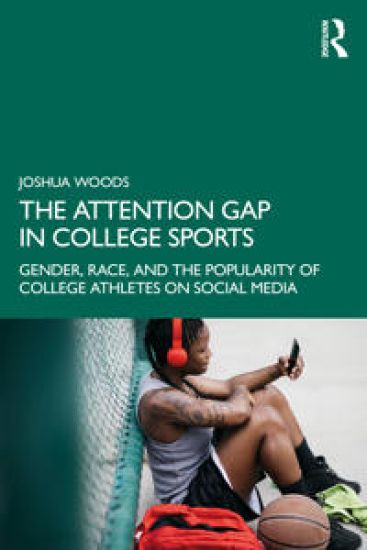
Attention Gap in College Sports

Attention Gap in College Sports

Joshua Woods

TaylorFrancis Ltd
2026
sidottu
In The Attention Gap in College Sports, Joshua Woods delves deeply into data on social media activity amongst college teams and college athletes and critically examines the ways attention, and attempts to gain it, are reconfiguring power and profit in college sports.
Attention Gap in College Sports

Attention Gap in College Sports

Joshua Woods

TaylorFrancis Ltd
2026
pokkari
In The Attention Gap in College Sports, Joshua Woods delves deeply into data on social media activity amongst college teams and college athletes and critically examines the ways attention, and attempts to gain it, are reconfiguring power and profit in college sports.