Kirjojen hintavertailu. Mukana 12 571 149 kirjaa ja 12 kauppaa.

Kirjailija

Joshua Yumibe

Kirjat ja teokset yhdessä paikassa: 4 kirjaa, julkaisuja vuosilta 2012-2019, suosituimpien joukossa Chromatic Modernity. Vertaile teosten hintoja ja tarkista saatavuus suomalaisista kirjakaupoista.

4 kirjaa

Kirjojen julkaisuhaarukka 2012-2019.

Chromatic Modernity

Chromatic Modernity

Sarah Street; Joshua Yumibe

Columbia University Press
2019
sidottu
The era of silent film, long seen as black and white, has been revealed in recent scholarship as bursting with color. Yet the 1920s remain thought of as a transitional decade between early cinema and the rise of Technicolor—despite the fact that new color technologies used in film, advertising, fashion, and industry reshaped cinema and consumer culture. In Chromatic Modernity, Sarah Street and Joshua Yumibe provide a revelatory history of how the use of color in film during the 1920s played a key role in creating a chromatically vibrant culture.Focusing on the final decade of silent film, Street and Yumibe portray the 1920s as a pivotal and profoundly chromatic period of cosmopolitan exchange, collaboration, and experimentation in and around cinema. Chromatic Modernity explores contemporary debates over color’s artistic, scientific, philosophical, and educational significance. It examines a wide range of European and American films, including Opus 1 (1921), L’Inhumaine (1923), Die Nibelungen (1924), The Phantom of the Opera (1925), The Lodger (1927), Napoléon (1927), and Dracula (1932). A comprehensive, comparative study that situates film among developments in art, color science, and industry, Chromatic Modernity reveals the role of color cinema in forging new ways of looking at and experiencing the modern world.
Chromatic Modernity

Chromatic Modernity

Sarah Street; Joshua Yumibe

Columbia University Press
2019
pokkari
The era of silent film, long seen as black and white, has been revealed in recent scholarship as bursting with color. Yet the 1920s remain thought of as a transitional decade between early cinema and the rise of Technicolor—despite the fact that new color technologies used in film, advertising, fashion, and industry reshaped cinema and consumer culture. In Chromatic Modernity, Sarah Street and Joshua Yumibe provide a revelatory history of how the use of color in film during the 1920s played a key role in creating a chromatically vibrant culture.Focusing on the final decade of silent film, Street and Yumibe portray the 1920s as a pivotal and profoundly chromatic period of cosmopolitan exchange, collaboration, and experimentation in and around cinema. Chromatic Modernity explores contemporary debates over color’s artistic, scientific, philosophical, and educational significance. It examines a wide range of European and American films, including Opus 1 (1921), L’Inhumaine (1923), Die Nibelungen (1924), The Phantom of the Opera (1925), The Lodger (1927), Napoléon (1927), and Dracula (1932). A comprehensive, comparative study that situates film among developments in art, color science, and industry, Chromatic Modernity reveals the role of color cinema in forging new ways of looking at and experiencing the modern world.
Fantasia of Color in Early Cinema

Fantasia of Color in Early Cinema

Tom Gunning; Giovanna Fossati; Joshua Yumibe; Jonathon Rosen

Amsterdam University Press
2015
sidottu
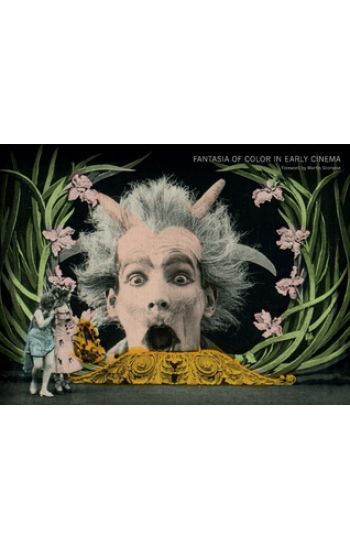
We normally think of early film as being black and white, but the first color cinematography appeared as early as the first decade of the twentieth century. In this visually stunning book, the editors present a treasure trove of early color film images from the archives of EYE Film Institute Netherlands, bringing to life their rich hues and forgotten splendor. Carefully selecting and reproducing frames from movies made before World War I, Fossati, Gunning, Rosen, and Yumibe share the images here in a full range of tones and colors. Accompanying essays discuss the history of early film and the technical processes that filmmakers employed to capture these fascinating images, while other contributions explore preservation techniques and describe the visual delights that early film has offered audiences, then and now. Featuring more than 300 color illustrations for readers to examine and enjoy, Fantasia of Color in Early Cinema will engage scholars and other readers of all ages and backgrounds.
Moving Color

Moving Color

Joshua Yumibe

Rutgers University Press
2012
nidottu
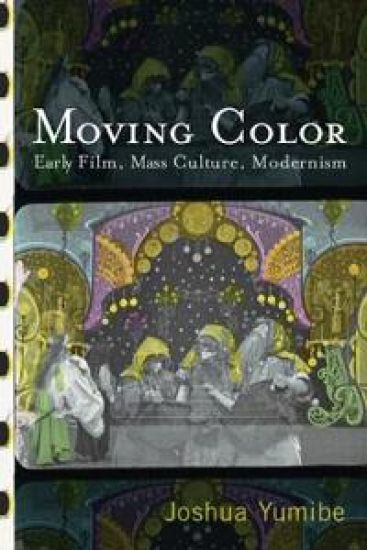
Color was used in film well before The Wizard of Oz. Thomas Edison, for example, projected two-colored films at his first public screening in New York City on April 23, 1896. These first colors of early cinema were not photographic; they were applied manually through a variety of laborious processes—most commonly by the hand-coloring and stenciling of prints frame by frame, and the tinting and toning of films in vats of chemical dyes. The results were remarkably beautiful. Moving Color is the first book-length study of the beginnings of color cinema. Looking backward, Joshua Yumibe traces the legacy of color history from the beginning of the nineteenth century to the cinema of the early twentieth century. Looking forward, he explores the implications of this genealogy on experimental and contemporary digital cinemas in which many colors have become, once again, vividly unhinged from photographic reality. Throughout this history, Moving Color revolves around questions pertaining to the sensuousness of color: how color moves us in the cinema—visually, emotionally, and physically.