Kirjojen hintavertailu. Mukana 12 390 323 kirjaa ja 12 kauppaa.
Kirjailija
Joy Harjo
Kirjat ja teokset yhdessä paikassa: 37 kirjaa, julkaisuja vuosilta 1989-2025, suosituimpien joukossa Soul Talk, Song Language. Vertaile teosten hintoja ja tarkista saatavuus suomalaisista kirjakaupoista.
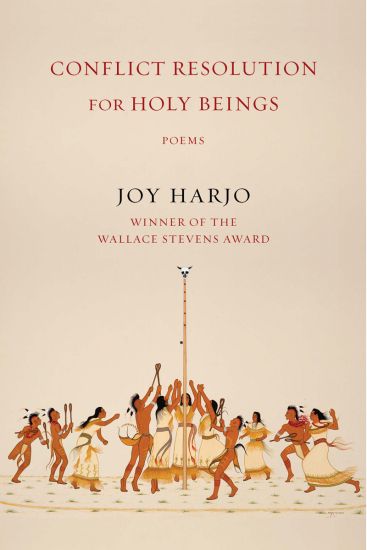
In these poems, the joys and struggles of the everyday are played against the grinding politics of being human. Beginning in a hotel room in the dark of a distant city, we travel through history and follow the memory of the Trail of Tears from the bend in the Tallapoosa River to a place near the Arkansas River. Stomp dance songs, blues and jazz ballads echo throughout. Lost ancestors are recalled. Resilient songs are born, even as they grieve the loss of their country. Called a "magician and a master" (San Francisco Chronicle), Joy Harjo is at the top of her form in Conflict Resolution for Holy Beings.
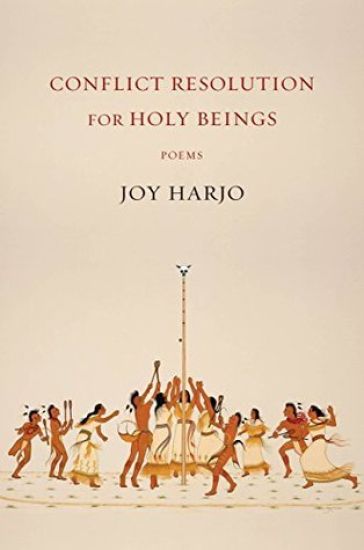
In these poems, the joys and struggles of the everyday are played against the grinding politics of being human. Beginning in a hotel room in the dark of a distant city, we travel through history and follow the memory of the Trail of Tears from the bend in the Tallapoosa River to a place near the Arkansas River. Stomp dance songs, blues, and jazz ballads echo throughout. Lost ancestors are recalled. Resilient songs are born, even as they grieve the loss of their country. Called a "magician and a master" (San Francisco Chronicle), Joy Harjo is at the top of her form in Conflict Resolution for Holy Beings.
Joy Harjo is a "poet-healer-philosopher-saxophonist," and one of the most powerful Native American voices of her generation. She has spent the past two decades exploring her place in poetry, music, dance/performance, and art. Soul Talk, Song Language gathers together in one complete collection many of these explorations and conversations. Through an eclectic assortment of media, including personal essays, interviews, and newspaper columns, Harjo reflects upon the nuances and development of her art, the importance of her origins, and the arduous reconstructions of the tribal past, as well as the dramatic confrontation between Native American and Anglo civilizations. Harjo takes us on a journey into her identity as a woman and an artist, poised between poetry and music, encompassing tribal heritage and reassessments and comparisons with the American cultural patrimony. She presents herself in an exquisitely literary context that is rooted in ritual and ceremony and veers over the edge where language becomes music.
In this transcendent memoir, grounded in tribal myth and ancestry, music and poetry, Joy Harjo details her journey to becoming a poet. Born in Oklahoma, the end place of the Trail of Tears, Harjo grew up learning to dodge an abusive stepfather by finding shelter in her imagination, a deep spiritual life, and connection with the natural world. Narrating the complexities of betrayal and love, Crazy Brave is a haunting, visionary memoir about family and the breaking apart necessary in finding a voice.
In this transcendent memoir, grounded in tribal myth and ancestry, music and poetry, Joy Harjo, one of our leading Native American voices, details her journey to becoming a poet. Born in Oklahoma, the end place of the Trail of Tears, Harjo grew up learning to dodge an abusive stepfather by finding shelter in her imagination, a deep spiritual life, and connection with the natural world. She attended an Indian arts boarding school, where she nourished an appreciation for painting, music, and poetry; gave birth while still a teenager; and struggled on her own as a single mother, eventually finding her poetic voice. Narrating the complexities of betrayal and love, Crazy Brave is a memoir about family and the breaking apart necessary in finding a voice. Harjo’s tale of a hardscrabble youth, young adulthood, and transformation into an award-winning poet and musician is haunting, unique, and visionary.
Transformative moments in the cycle of life are a time for acknowledgment, a chance to guide a child’s path in a positive and loving direction.Swirling images laden with both myth and personal meaning illustrate this unique, poetic tale of the joys and lessons of a girl’s journey through birth, youth, and finally adulthood. Within these colorful pages, family and community come together in celebration of her arrival, offering praise, love, and advice to help carry her forward through the many milestones to come, and reminding her always of how deeply she is cherished. It is a reminder, too, of our abiding connections to the natural world, and the cyclical nature of life as a whole.With its rich, symbolic artwork and captivating language, For a Girl Becoming is the perfect gift to recognize a birth, graduation, or any other significant moment in a young woman’s life. Not only for children, this lively and touching story speaks to that part in each of us who still stands at the door of becoming.
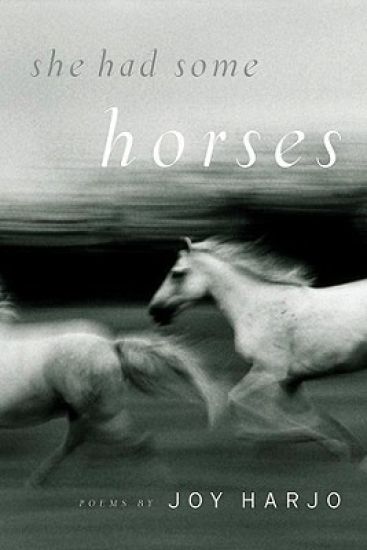
First published in 1983 and now considered a classic, She Had Some Horses is a powerful exploration of womanhood's most intimate moments. Joy Harjo's poems speak of women's despair, of their imprisonment and ruin at the hands of men and society, but also of their awakenings, power, and love.
Joy Harjo er Muscogee-indianar. Ho vart fødd i Tulsa, Oklahoma i 1951, og bur på Hawaii. Ho er diktar, musikar og universitetslærar, og turnerer ofte i USA med bandet sitt, Poetic Justice, der ho spelar saksofon. Det er trugande avgrunnar i diktinga hennar; den tragiske historia til den nordamerikanske urbefolkinga og hennar eiga eksistensielle redsle. Det historiske og personlege heng saman på ein særskild måte hos Harjo. Ho viser det indianske folkets tragedie, ikkje gjennom store slag og konfliktar, men i kvardagen, i redsle, i tankar, i rus, i kjærleik og mangel på kjærleik. Ho kartlegg fornedringa for dagens indianarar. Ho gjer det hardt, men også forsonleg. Gjendiktet ved Lars Amund Vaage
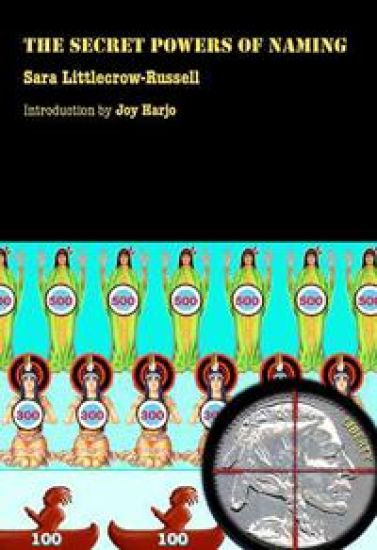
Sara Littlecrow-Russell's style emerges from the ancient and sacred tradition of storytelling, where legends were told not just to entertain, but to teach and, if necessary, to discipline. The power of the storyteller is the power of naming, to establish a relationship, a connection, and a sense of meaning. A name is both a bequest and a burden. Each of the poems in this collection is, in essence, a naming ritual. Sharply, energetically, and always provocatively, these poems name uncomfortable moments, complex emotions, and sudden, often wryly humorous realizations. As she explores how names imposed by outsiders both collide and merge with the identities that Natives create for themselves, these poems decisively counter the images of Indians as colorful dancers, stoic saints, and defeated warriors. These verses are not constructed of beautiful images, nor are they stories of redemption. Instead, Littlecrow-Russell offers stark and honest witness to urban and reservation life at the beginning of the twenty-first century. In short snaps of honed lyric and voice, she tackles topics ranging from family, love, and spirituality, to welfare, addiction, and the thorny politics of tribal identity. Her work displays tremendous bitterness and anger, but there is also dignity, humor, and plenty of irony. Candid and compelling, this collection brings fluent verse and human face to the commonly misrepresented experiences of Native Americans.
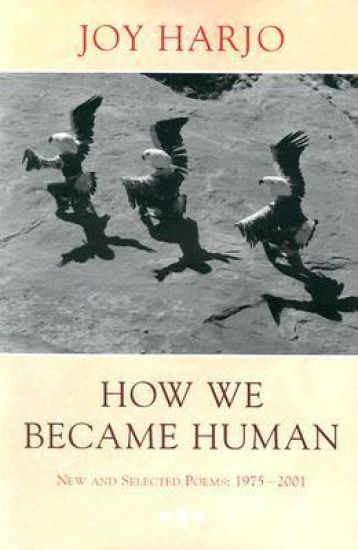
This collection gathers poems from throughout Joy Harjo's twenty-eight-year career, beginning in 1973 in the age marked by the takeover at Wounded Knee and the rejuvenation of indigenous cultures in the world through poetry and music. How We Became Human explores its title question in poems of sustaining grace.
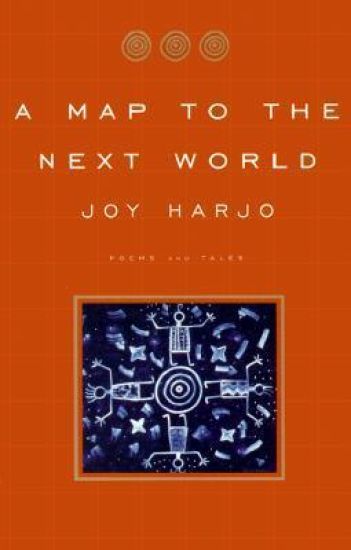
In her fifth book, Joy Harjo, one of our foremost Native American voices, melds memories, dream visions, myths, and stories from America’s brutal history into a poetic whole.
With the recently-published The Woman Who Fell from the Sky, Joy Harjo has emerged as one of the most powerful Native American voices of her generation. Over the past two decades, Harjo has refined and perfected a unique poetic voice that speaks her multifaceted experience as Native American, woman and Westerner in twentieth-century society. The Spiral of Memory gathers the conversations in which Harjo has articulated her singular yet universal perspective on the world and her poetry. She reflects upon the nuances and development of her art, the importance of her origins, the arduous reconstruction of the tribal past, the dramatic confrontation between Native American and Anglo civilizations, the existential and artistic itinerary through present-day America, and other provocative and profoundly human themes. Joy Harjo is the author of several volumes of poetry. She received awards from the National Endowment for the Arts, the Before Columbus Foundation, and the Poetry Society of America. She is Professor of English, University of New Mexico, Albuquerque. Laura Coltelli is Associate Professor of American Literature, University of Pisa.
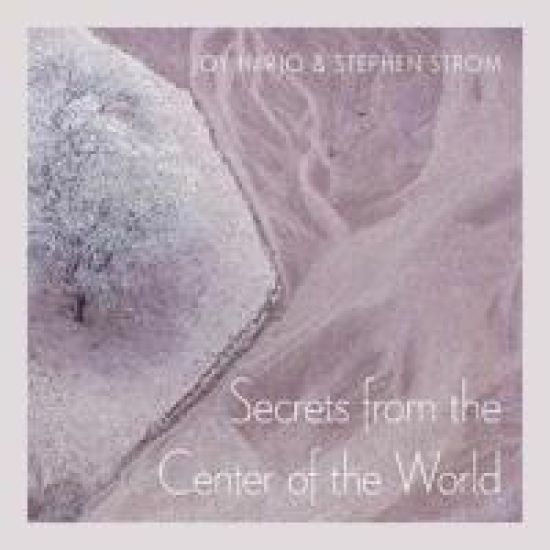
"My house is the red earth; it could be the center of the world." This is Navajo country, a land of mysterious and delicate beauty. "Stephen Strom's photographs lead you to that place," writes Joy Harjo. "The camera eye becomes a space you can move through into the powerful landscapes that he photographs. The horizon may shift and change all around you, but underneath it is the heart with which we move." Harjo's prose poems accompany these images, interpreting each photograph as a story that evokes the spirit of the Earth. Images and words harmonize to evoke the mysteries of what the Navajo call the center of the world.