Kirjojen hintavertailu. Mukana 12 390 323 kirjaa ja 12 kauppaa.
Kirjailija
Joyce P. Kaufman
Kirjat ja teokset yhdessä paikassa: 17 kirjaa, julkaisuja vuosilta 2002-2026, suosituimpien joukossa A Concise History of U.S. Foreign Policy. Vertaile teosten hintoja ja tarkista saatavuus suomalaisista kirjakaupoista.
Including new photos and expanded discussions on key issues, this updated edition offers a uniquely historical perspective of U.S. foreign policy and it's ever-changing evolution. In a fully updated Sixth Edition, this compact and accessible introduction offers a historical perspective on the evolution of U.S. foreign policy from the founding of the country to the present. Joyce P. Kaufman provides students with a clear and concise understanding of key foreign-policy decisions and why they were made. She identifies the major themes that have guided foreign policy and the reasons that the United States pursued certain policies in the context of specific periods in the nation’s history. Kaufman focuses on the major actors involved in the making of foreign policy and the changing relationships among them. She also explains the major theoretical perspectives within international relations and contextualizes key foreign policy decisions as they fit these frameworks.
Including new photos and expanded discussions on key issues, this updated edition offers a uniquely historical perspective of U.S. foreign policy and it's ever-changing evolution. In a fully updated Sixth Edition, this compact and accessible introduction offers a historical perspective on the evolution of U.S. foreign policy from the founding of the country to the present. Joyce P. Kaufman provides students with a clear and concise understanding of key foreign-policy decisions and why they were made. She identifies the major themes that have guided foreign policy and the reasons that the United States pursued certain policies in the context of specific periods in the nation’s history. Kaufman focuses on the major actors involved in the making of foreign policy and the changing relationships among them. She also explains the major theoretical perspectives within international relations and contextualizes key foreign policy decisions as they fit these frameworks.
There are currently many books and articles that look at aspects of gender or race and international relations but none that embrace a broad intersectional approach (in terms of both gender and race that goes beyond a postcolonial perspective) to the study of the field. After introducing the approach, Kaufman and Williams then proceed through critical issues in international relations and the ways in which an intersectional approach that examines race, gender, class, ethnicity, and power can help us arrive at better explanations for these IR issues. The approach in this text builds on what many of the feminist IR theorists called for to address traditional issues such as security and war. Feminist IR theorists, led by scholars such as Ann Tickner and Cynthia Enloe, asked the question “Where are the women?” as a guiding principle. Feminist approaches to IR have been a part of the field for decades, but it is only fairly recently that students of IR have broadened the approach to the field to incorporate the dimensions of race, ethnicity, and class as well as gender. Thus, we ask questions like: How does gender matter for understanding war and peace? How does race matter? Where are the men? What is intersectionality in IR? How does an intersectional approach change/broaden our understanding of international relations?
There are currently many books and articles that look at aspects of gender or race and international relations but none that embrace a broad intersectional approach (in terms of both gender and race that goes beyond a postcolonial perspective) to the study of the field. After introducing the approach, Kaufman and Williams then proceed through critical issues in international relations and the ways in which an intersectional approach that examines race, gender, class, ethnicity, and power can help us arrive at better explanations for these IR issues. The approach in this text builds on what many of the feminist IR theorists called for to address traditional issues such as security and war. Feminist IR theorists, led by scholars such as Ann Tickner and Cynthia Enloe, asked the question “Where are the women?” as a guiding principle. Feminist approaches to IR have been a part of the field for decades, but it is only fairly recently that students of IR have broadened the approach to the field to incorporate the dimensions of race, ethnicity, and class as well as gender. Thus, we ask questions like: How does gender matter for understanding war and peace? How does race matter? Where are the men? What is intersectionality in IR? How does an intersectional approach change/broaden our understanding of international relations?
This is a practical guide to designing, teaching, and coordinating service-learning courses, and for developing reciprocal community partnerships and community-based research through a lens of equity that addresses the endemic racial, social, economic, and environmental disparities across society.The text provides a comprehensive framework for developing both in-person and on-line service-learning, with a chapter on virtual delivery of courses that integrates the principles and practices described throughout the book. The authors uniquely integrate the how-to of conducting service-learning with the theoretical foundations to enact effective, equitable, and inclusive community engagement. Given this moment of enormous social inequality and divisiveness, the authors offer a new definition and set of educational principles that they characterize as Equity-Centered Community Engagement Excellence. These principles serve to guide academic and community engagement that is democratic, recognizes the voice and expertise of community partners, addresses the power imbalances between communities and academic institutions, and develops an educational experience that is potentially transformative and promotes civic responsibility.Informed by the literature of critical service-learning, critical race theory, intercultural communication theory, and social-constructivism, this book attempts to deconstruct the assumption of the preeminence of academic knowledge to reconstruct a new operational paradigm of equity-centeredness that validates community capacity to guide faculty in their redesign of service-learning curriculum, activities, collaborations, and scholarship. It is based on the principles of:·Student Agency (demonstrated as enhanced skills, knowledge, and motivation)·Community Efficacy (recognition of community assets and capacity-building)·Scholarly Advocacy (leveraging evidence-based research-based for equity-centered learning, serving, and social justice). The authors offer examples of syllabi, lessons and assignments, reflection questions, evaluation rubrics, as well as an array of teaching tips that illustrate strategies for use in the classroom and in the field.The book is addressed to faculty embarking on service-learning and to seasoned scholar practitioners looking for innovative ideas, as well as to campus administrators who coordinate community outreach or college student volunteer services, offering guidance on leveraging resources and fiscal support from external stakeholders. It is also designed to serve as a resource for professional development workshops and faculty scholar learning communities. It offers a rich compendium of ideas and examples from which faculty and practitioners can select exercises and elements to incorporate or adapt for their courses, whether designing short-term engagements or extended service-learning programs.
This is a practical guide to designing, teaching, and coordinating service-learning courses, and for developing reciprocal community partnerships and community-based research through a lens of equity that addresses the endemic racial, social, economic, and environmental disparities across society.The text provides a comprehensive framework for developing both in-person and on-line service-learning, with a chapter on virtual delivery of courses that integrates the principles and practices described throughout the book. The authors uniquely integrate the how-to of conducting service-learning with the theoretical foundations to enact effective, equitable, and inclusive community engagement. Given this moment of enormous social inequality and divisiveness, the authors offer a new definition and set of educational principles that they characterize as Equity-Centered Community Engagement Excellence. These principles serve to guide academic and community engagement that is democratic, recognizes the voice and expertise of community partners, addresses the power imbalances between communities and academic institutions, and develops an educational experience that is potentially transformative and promotes civic responsibility.Informed by the literature of critical service-learning, critical race theory, intercultural communication theory, and social-constructivism, this book attempts to deconstruct the assumption of the preeminence of academic knowledge to reconstruct a new operational paradigm of equity-centeredness that validates community capacity to guide faculty in their redesign of service-learning curriculum, activities, collaborations, and scholarship. It is based on the principles of:·Student Agency (demonstrated as enhanced skills, knowledge, and motivation)·Community Efficacy (recognition of community assets and capacity-building)·Scholarly Advocacy (leveraging evidence-based research-based for equity-centered learning, serving, and social justice). The authors offer examples of syllabi, lessons and assignments, reflection questions, evaluation rubrics, as well as an array of teaching tips that illustrate strategies for use in the classroom and in the field.The book is addressed to faculty embarking on service-learning and to seasoned scholar practitioners looking for innovative ideas, as well as to campus administrators who coordinate community outreach or college student volunteer services, offering guidance on leveraging resources and fiscal support from external stakeholders. It is also designed to serve as a resource for professional development workshops and faculty scholar learning communities. It offers a rich compendium of ideas and examples from which faculty and practitioners can select exercises and elements to incorporate or adapt for their courses, whether designing short-term engagements or extended service-learning programs.
This clear and concise text introduces four key theoretical frameworks that form the foundation of international relations—realism, liberalism, constructivism, and feminist theory—and uses levels of analysis as the primary unifying force to explain contemporary global politics. Cases on climate change; gender, peace, and security; migration; and the rise of China illustrate Kaufman's approach.The third edition explains core issues in international relations, such as the interaction of nations in a globalized world; the growing threat posed by non-state actors and civil conflicts; and the need for countries to work together to counter what have been called “existential crises,” such as climate change, which threaten human lives and the planet. Significant revisions focus on discussion of democratic backsliding, the Covid-19 pandemic, cyberterrorism and cyberwar, changes to the European Union, and expanded coverage of international political economy.
This clear and concise text introduces four key theoretical frameworks that form the foundation of international relations—realism, liberalism, constructivism, and feminist theory—and uses levels of analysis as the primary unifying force to explain contemporary global politics. Cases on climate change; gender, peace, and security; migration; and the rise of China illustrate Kaufman's approach.The third edition explains core issues in international relations, such as the interaction of nations in a globalized world; the growing threat posed by non-state actors and civil conflicts; and the need for countries to work together to counter what have been called “existential crises,” such as climate change, which threaten human lives and the planet. Significant revisions focus on discussion of democratic backsliding, the Covid-19 pandemic, cyberterrorism and cyberwar, changes to the European Union, and expanded coverage of international political economy.
Now in a fully updated edition that goes through the Trump administration and the election and formative period of the Biden administration, this compact and accessible introduction offers a historical perspective on the evolution of U.S. foreign policy from the founding of the country to the present. Joyce P. Kaufman provides students and general readers with a clear and concise understanding of key foreign-policy decisions and why they were made. She identifies the major themes that have guided foreign policy and the reasons that the United States pursued certain policies in the context of specific periods in the nation’s history. Kaufman focuses on the major actors involved in the making of foreign policy and the changing relationships among them. She also explains the major theoretical perspectives within international relations and contextualizes key foreign policy decisions as they fit these frameworks. This edition puts a particular focus on the creation of Cold War foreign policy, and why the end of the Cold War has continued to be such a challenge to the United States. Kaufman concludes with a look at the threat that the United States is facing and will continue to face, including existential threats such as climate change and disease, and how Americans can be prepared to face them.
Now in a fully updated edition that goes through the Trump administration and the election and formative period of the Biden administration, this compact and accessible introduction offers a historical perspective on the evolution of U.S. foreign policy from the founding of the country to the present. Joyce P. Kaufman provides students and general readers with a clear and concise understanding of key foreign-policy decisions and why they were made. She identifies the major themes that have guided foreign policy and the reasons that the United States pursued certain policies in the context of specific periods in the nation’s history. Kaufman focuses on the major actors involved in the making of foreign policy and the changing relationships among them. She also explains the major theoretical perspectives within international relations and contextualizes key foreign policy decisions as they fit these frameworks. This edition puts a particular focus on the creation of Cold War foreign policy, and why the end of the Cold War has continued to be such a challenge to the United States. Kaufman concludes with a look at the threat that the United States is facing and will continue to face, including existential threats such as climate change and disease, and how Americans can be prepared to face them.
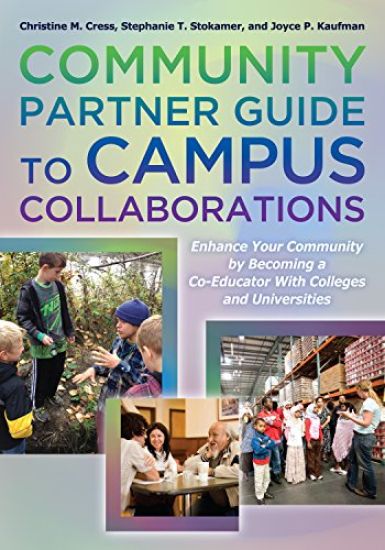
“Interacting with colleges can be confusing and frustrating. We learned the hard way through trial and error over the years. This Guide has great strategies for developing effective collaborations from the outset so that resources are leveraged for education and improvement.”—Sheila, Boys and Girls Club“VERY strong and well-written chapters with lots of gold that I think community organizations will find very helpful.”—Melia, Hands on Greater Portland“The format and visual cues make the Guide easy to scan for quick tips and ideas. Also, the information is comprehensive regarding research-based practices, but the writing is friendly and engaging for all non-profit sectors and community agencies. Lots of practical examples.”—Juan, Immigrant Empowerment* Discover Campus Resources for Identifying Volunteers and Service-Learners* Decode Confusing Language, Terminology, and Acronyms of Academe* Decipher Your Academic Partner’s Goals for Community-Based Learning and Research* Devise Empowering Learning and Serving Experiences for Students and Clients* Design Sustainable and Enriching Relationships for Enhancing CommunitiesBased upon years of field experience, this Guide is addressed to you, whether your non-profit has experience of working with university interns or volunteers but wants to deepen and increase the effectiveness of the relationship; whether your agency is starting to explore how to improve client services through a campus collaboration; or whether you work for an NGO interested in partnering with universities across borders to effect positive change and draw attention to the challenges, resources, and needs of your community. This Guide offers insights and strategies to leverage student learning and community empowerment for the benefit of both parties. Recognizing both the possibilities and the pitfalls of community-campus collaborations, it demystifies the often confusing terminology of education, explains how to locate the right individuals on campus, and addresses issues of mission, expectations for roles, tasks, training, supervision, and evaluation that can be fraught with miscommunication and misunderstanding. Most importantly it provides a model for achieving full reciprocity in what can be an unbalanced relationship between community and campus partners so that all stakeholders can derive the maximum benefit from their collaboration.This Guide is also available in sets of six or twelve, at reduced prices, to facilitate its use for planning, and for training of leaders engaged in partnerships.The Community Partner Guide to Campus Collaborations Six Copy Set978-1-62036-271-6, $87.00The Community Partner Guide to Campus Collaborations Twelve Copy Set978-1-62036-272-3, $150.00
Based upon years of field experience, this Guide is addressed to you, whether your non-profit has experience of working with university interns or volunteers but wants to deepen and increase the effectiveness of the relationship; whether your agency is starting to explore how to improve client services through a campus collaboration; or whether you work for an NGO interested in partnering with universities across borders to effect positive change and draw attention to the challenges, resources, and needs of your community.This Guide offers insights and strategies to leverage student learning and community empowerment for the benefit of both parties. Recognizing both the possibilities and the pitfalls of community-campus collaborations, it demystifies the often confusing terminology of education, explains how to locate the right individuals on campus, and addresses issues of mission, expectations for roles, tasks, training, supervision, and evaluation that can be fraught with miscommunication and misunderstanding.Most importantly it provides a model for achieving full reciprocity in what can be an unbalanced relationship between community and campus partners so that all stakeholders can derive the maximum benefit from their collaboration.
Based upon years of field experience, this Guide is addressed to you, whether your non-profit has experience of working with university interns or volunteers but wants to deepen and increase the effectiveness of the relationship; whether your agency is starting to explore how to improve client services through a campus collaboration; or whether you work for an NGO interested in partnering with universities across borders to effect positive change and draw attention to the challenges, resources, and needs of your community.This Guide offers insights and strategies to leverage student learning and community empowerment for the benefit of both parties. Recognizing both the possibilities and the pitfalls of community-campus collaborations, it demystifies the often confusing terminology of education, explains how to locate the right individuals on campus, and addresses issues of mission, expectations for roles, tasks, training, supervision, and evaluation that can be fraught with miscommunication and misunderstanding.Most importantly it provides a model for achieving full reciprocity in what can be an unbalanced relationship between community and campus partners so that all stakeholders can derive the maximum benefit from their collaboration.
“Interacting with colleges can be confusing and frustrating. We learned the hard way through trial and error over the years. This Guide has great strategies for developing effective collaborations from the outset so that resources are leveraged for education and improvement.”—Sheila, Boys and Girls Club“VERY strong and well-written chapters with lots of gold that I think community organizations will find very helpful.”—Melia, Hands on Greater Portland“The format and visual cues make the Guide easy to scan for quick tips and ideas. Also, the information is comprehensive regarding research-based practices, but the writing is friendly and engaging for all non-profit sectors and community agencies. Lots of practical examples.”—Juan, Immigrant Empowerment* Discover Campus Resources for Identifying Volunteers and Service-Learners* Decode Confusing Language, Terminology, and Acronyms of Academe* Decipher Your Academic Partner’s Goals for Community-Based Learning and Research* Devise Empowering Learning and Serving Experiences for Students and Clients* Design Sustainable and Enriching Relationships for Enhancing CommunitiesBased upon years of field experience, this Guide is addressed to you, whether your non-profit has experience of working with university interns or volunteers but wants to deepen and increase the effectiveness of the relationship; whether your agency is starting to explore how to improve client services through a campus collaboration; or whether you work for an NGO interested in partnering with universities across borders to effect positive change and draw attention to the challenges, resources, and needs of your community. This Guide offers insights and strategies to leverage student learning and community empowerment for the benefit of both parties. Recognizing both the possibilities and the pitfalls of community-campus collaborations, it demystifies the often confusing terminology of education, explains how to locate the right individuals on campus, and addresses issues of mission, expectations for roles, tasks, training, supervision, and evaluation that can be fraught with miscommunication and misunderstanding. Most importantly it provides a model for achieving full reciprocity in what can be an unbalanced relationship between community and campus partners so that all stakeholders can derive the maximum benefit from their collaboration.This Guide is also available in sets of six or twelve, at reduced prices, to facilitate its use for planning, and for training of leaders engaged in partnerships.The Community Partner Guide to Campus Collaborations Six Copy Set978-1-62036-271-6, $87.00The Community Partner Guide to Campus Collaborations Twelve Copy Set978-1-62036-272-3, $150.00
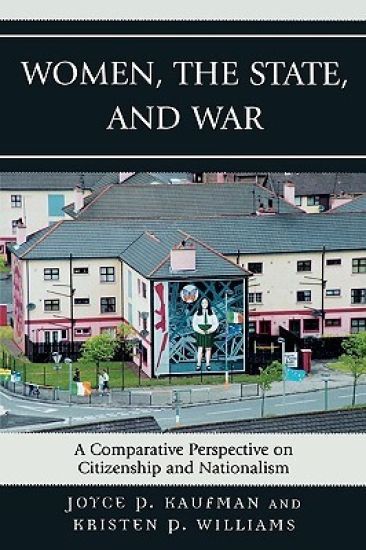
Women, the State, and War looks at the intersection of gender, citizenship, and nationalism; marriage, intermarriage, and how states gender that relationship; and the ways in which women are used as symbols to reinforce or further nationalistic goals. Women have long struggled with issues of citizenship, identity, and the challenge of being recognized as equal members of the community. Governments use feminine imagery (e.g., mother country) to create a national identity, while simultaneously minimizing the role that women play as productive contributors to the society. Authors Joyce P. Kaufman and Kristen P. Williams examine the relationship of government and women in four different countries: the United States, Israel, the former Yugoslavia, and Northern Ireland. In each case, numerous similarities appear: conflict plays a significant role in the definition of citizenship for women; women's movements have worked in contradiction to the state; and citizenship and marriage are gendered undertakings.
Women, the State, and War looks at the intersection of gender, citizenship, and nationalism; marriage, intermarriage, and how states gender that relationship; and the ways in which women are used as symbols to reinforce or further nationalistic goals. Women have long struggled with issues of citizenship, identity, and the challenge of being recognized as equal members of the community. Governments use feminine imagery (e.g., mother country) to create a national identity, while simultaneously minimizing the role that women play as productive contributors to the society. Authors Joyce P. Kaufman and Kristen P. Williams examine the relationship of government and women in four different countries: the United States, Israel, the former Yugoslavia, and Northern Ireland. In each case, numerous similarities appear: conflict plays a significant role in the definition of citizenship for women; women's movements have worked in contradiction to the state; and citizenship and marriage are gendered undertakings.
Focusing on NATO's continued crisis of identity, Joyce P. Kaufman argues that the conflicts in Croatia, Bosnia-Herzegovina, and Kosovo have proven to be critical to an alliance that has not been able to define its roles and missions in the post-Cold War world. While, on the one hand, NATO was enlarging by inviting former adversaries in Central and Eastern Europe and the former Soviet Union to join, on the other hand it has been woefully unprepared to deal with the ethnic conflicts that erupted on its borders and that could undermine the peace and stability of Europe. The author contends that the conflicts in the former Yugoslavia have potentially threatened the essence of NATO by forcing the alliance to take on the new role of peacekeeper without adequately allowing the members to examine the role the alliance wants to or should play in a largely postcommunist world. Despite ongoing discussion in NATO ministerial summits, the alliance has made little progress to date and public questions about the role and even the viability of NATO after the Cold War continue to grow. The inability to address these issues leaves NATO facing a number of pressing questions that this book tries to answer: What role can and should the alliance play in the future? And why have the ongoing conflicts in the Balkans proven to be a challenge that the alliance has been unwilling or unable to resolve?