Kirjojen hintavertailu. Mukana 12 363 183 kirjaa ja 12 kauppaa.

Kirjailija

Joyce VanTassel-Baska

Kirjat ja teokset yhdessä paikassa: 92 kirjaa, julkaisuja vuosilta 2004-2022, suosituimpien joukossa Comprehensive Curriculum for Gifted Learners. Vertaile teosten hintoja ja tarkista saatavuus suomalaisista kirjakaupoista.

92 kirjaa

Kirjojen julkaisuhaarukka 2004-2022.

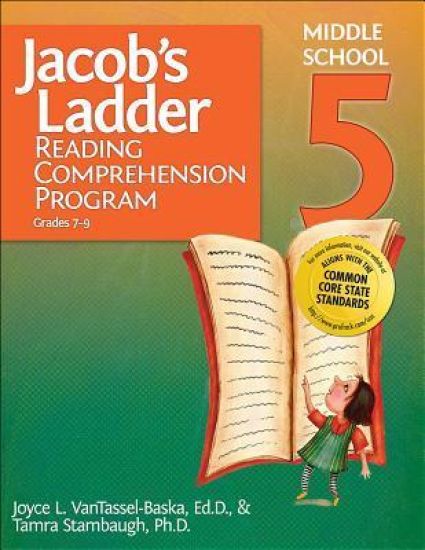
Jacob's Ladder Reading Comprehension Program, Level 5: Grades 7-9

Jacob's Ladder Reading Comprehension Program, Level 5: Grades 7-9

Joyce Vantassel-Baska; Tamra Stambaugh

Prufrock Press
2011
nidottu
The Jacob's Ladder Reading Comprehension Program targets reading comprehension skills in high-ability learners by moving students through an inquiry process from basic understanding to critical analyses of texts using a field-tested method developed by the Center for Gifted Education at The College of William and Mary. Students in grades K-9 will be able to comprehend and analyze any reading passage after completing the activities in these books. Using skill ladders connected to individual readings in poetry, short stories, and nonfiction, students move from lower order, concrete thinking skills to higher order, critical thinking skills. All of the books, geared to increasing grade levels, include high-interest readings, ladders to increase reading skill development, and easy-to-implement instructions. The ladders include multiple skills necessary for academic success, covering language arts standards such as sequencing, cause and effect, classification, making generalizations, inference, and recognizing themes and concepts. The Jacob's Ladder guides provide teachers with an explanation of the nature and substance of supplementary tasks in reading comprehension that will help prepare students for their state assessment tests. At the same time, these tasks will move students from basic reading comprehension to more critical reading behaviors. Also included are an overview of the goals and objectives of Jacob's Ladder tasks and suggestions for implementation, giving every teacher of gifted learners the tools needed to create a successful reading classroom. Grades 7-9
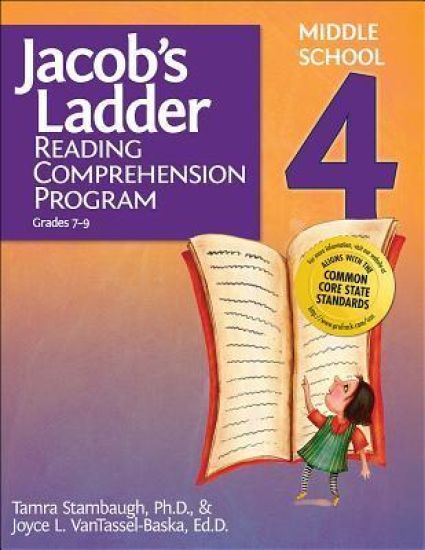
Jacob's Ladder Reading Comprehension Program - Level 4

Jacob's Ladder Reading Comprehension Program - Level 4

Joyce VanTassel-Baska; Tamra Stambaugh

Prufrock Press
2011
nidottu
The Jacob's Ladder Reading Comprehension Program targets reading comprehension skills in high-ability learners by moving students through an inquiry process from basic understanding to critical analyses of texts using a field-tested method developed by the Center for Gifted Education at The College of William and Mary. Students in grades K-9 will be able to comprehend and analyze any reading passage after completing the activities in these books. Using skill ladders connected to individual readings in poetry, short stories, and nonfiction, students move from lower order, concrete thinking skills to higher order, critical thinking skills. All of the books, geared to increasing grade levels, include high-interest readings, ladders to increase reading skill development, and easy-to-implement instructions. The ladders include multiple skills necessary for academic success, covering language arts standards such as sequencing, cause and effect, classification, making generalizations, inference, and recognizing themes and concepts. The Jacob's Ladder guides provide teachers with an explanation of the nature and substance of supplementary tasks in reading comprehension that will help prepare students for their state assessment tests. At the same time, these tasks will move students from basic reading comprehension to more critical reading behaviors. Also included are an overview of the goals and objectives of Jacob's Ladder tasks and suggestions for implementation, giving every teacher of gifted learners the tools needed to create a successful reading classroom. Grades 7-9
Teaching for Intellectual and Emotional Learning (TIEL)

Teaching for Intellectual and Emotional Learning (TIEL)

Christy Folsom; Joyce VanTassel-Baska

Rowman Littlefield Education
2009
sidottu
Responsibility, compassion, and self-direction are the kind of balanced, common sense characteristics that both teachers and students should develop. Yet, in an environment of high stakes testing, common sense and educational balance are often lost amidst constant test preparation. Teaching for Intellectual and Emotional Learning (TIEL): A Model for Creating Powerful Curriculum will help teachers and teacher educators meet their goals of mastery in basic skills and content knowledge as well as intellectual and social emotional development. Sharing the experiences of real teachers who changed their teaching and helped their students understand their learning and develop skills of self-direction and collaboration, Folsom introduces a powerful visual model that helps teachers develop standards-based curriculum that includes social-emotional learning. New ways of planning lessons and developing project-based units that focus on developing thinking skills and social emotional learning are presented. The TIEL model makes the fundamental intellectual and social emotional processes that underlie effective teaching and learning accessible to teacher educators, teachers, and students in gifted, special, and general education.
Teaching for Intellectual and Emotional Learning (TIEL)

Teaching for Intellectual and Emotional Learning (TIEL)

Christy Folsom; Joyce VanTassel-Baska

Rowman Littlefield Education
2009
nidottu
Responsibility, compassion, and self-direction are the kind of balanced, common sense characteristics that both teachers and students should develop. Yet, in an environment of high stakes testing, common sense and educational balance are often lost amidst constant test preparation. Teaching for Intellectual and Emotional Learning (TIEL): A Model for Creating Powerful Curriculum will help teachers and teacher educators meet their goals of mastery in basic skills and content knowledge as well as intellectual and social emotional development. Sharing the experiences of real teachers who changed their teaching and helped their students understand their learning and develop skills of self-direction and collaboration, Folsom introduces a powerful visual model that helps teachers develop standards-based curriculum that includes social-emotional learning. New ways of planning lessons and developing project-based units that focus on developing thinking skills and social emotional learning are presented. The TIEL model makes the fundamental intellectual and social emotional processes that underlie effective teaching and learning accessible to teacher educators, teachers, and students in gifted, special, and general education.
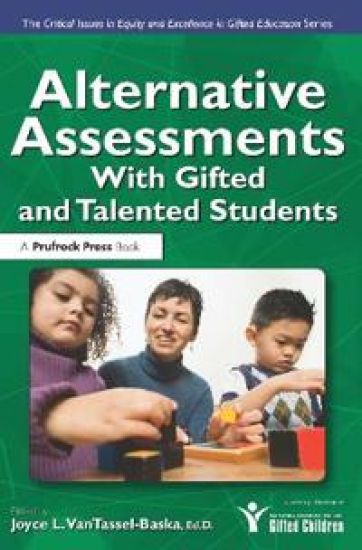
Alternative Assessments With Gifted and Talented Students
Alternative Assessments With Gifted and Talented Students provides a concise and thorough introduction to methods for identifying gifted students in the school setting.Including overviews of assessment tools and alternative methods of assessment, as well as pertinent discussions concerning the need to identify gifted and talented students, this book combines research and experience from top scholars in the field of gifted education in a convenient guide for teachers, administrators, and gifted education program directors.Topics covered include the need for nonverbal testing with traditionally unidentified students; the identification of students from minority populations; the value of using traditional assessments with students; the role of creativity tools as a measure of giftedness; and the use of portfolios, products, and performance-based assessment to document learning; among others. This handy guide to assessing and identifying gifted students is a necessity for anyone serving and working with this population.A service publication of the National Association for Gifted Children (Washington, DC)This designation indicates that this book has been jointly developed with NAGC and that this book passes the highest standards of scholarship, research, and practice.
Comprehensive Curriculum for Gifted Learners

Comprehensive Curriculum for Gifted Learners

Joyce VanTassel-Baska; Tamra Stambaugh

Pearson
2005
sidottu
Comprehensive Curriculum for Gifted Learners provides a theoretical, research-based framework and practical ideas for writing, implementing, and adapting curriculum for gifted learners in a standards-based era. Readers are first introduced to various curriculum theories, the Integrated Curriculum Model, curriculum reform, and a process for curriculum design and development, culminating in examples of key curriculum products. Specific core subject areas and non-core subject areas (including thinking skills, creativity, leadership, and the arts) are addressed with practical examples and connections to standards with adaptations for gifted learners. At-risk populations, connections to technology, interdisciplinary approaches, assessment options, and instructional and classroom management strategies are also emphasized and discussed in detail. Finally, leadership and programming options, as well as new directions in curriculum for gifted learners, provide the reader with an overall examination of a comprehensive approach for teaching, adapting, and leading best-practice initiatives in curriculum for gifted learners.
Designing and Utilizing Evaluation for Gifted Program Improvement
Offering the most effective methods for gifted education program evaluation and improvement, this book acts as a critical guide for administrators, teachers, and researchers. The book reviews the program evaluation process, presents models and strategies for effective evaluation, and provides tools for using evaluation as a foundation for program improvement. Edited by Dr. Joyce VanTassel-Baska and Dr. Annie Xuemei Feng, this resource is intended to offer step-by-step guidance in effective program improvement from the nation's leading experts on the topic. Chapters cover survey construction and implementation, use of focus groups, assessment of classroom practices, outcome assessment, alignment with the best practice standards, strategies for synthesizing your findings, and much more. This unique resource is a critical piece of the program improvement process. All Levels