Kirjailija
Juan Felipe Herrera
Kirjat ja teokset yhdessä paikassa: 25 kirjaa, julkaisuja vuosilta 1994-2023, suosituimpien joukossa The Mission. Vertaile teosten hintoja ja tarkista saatavuus suomalaisista kirjakaupoista.
25 kirjaa
Kirjojen julkaisuhaarukka 1994-2023.
In Rebozos there are celebrations, sweat lodges, songs calling out liberation, infinities of self & there is sweet corn, frijol, heart, naked earth & body, flaming waters, Quetzalcoatl, the speaking Quetzal, thorns, new words & shells, unfolding flowers, adobe, pueblos, venados, constellations, revelations of hemispheric unity, voice-stories from New Mexico, feathers & guitars, chakira, kupurisol - the essence of the sun. I enjoyed writing this book. I unshackled it, no titles, no page numbers. Sometimes I broke away from typical gendered terms in Spanish, I introduced Nahuatl deities and Huichol terms & there are drawings here & there, perhaps, like our Native weavings & yarn portals. Imagine yourself standing on a mountain at dawn, singing these poems from 1970 to 1974, at the crossroads of many social movements. At the beginning of a new wave of Latinx literature.
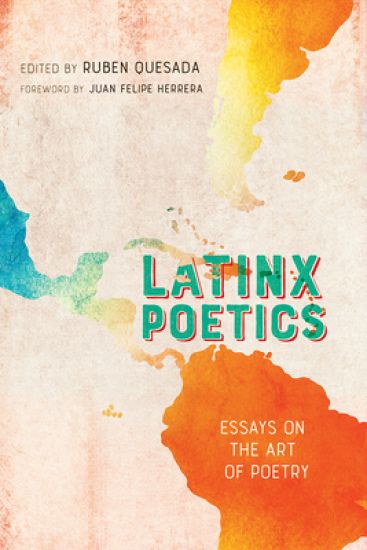
Latinx Poetics: Essays on the Art of Poetry collects personal and academic writing from Latino, Latin American, Latinx, and Luso poets about the nature of poetry and its practice. At the heart of this anthology lies the intersection of history, language, and the human experience. The collection explores the ways in which a people's history and language are vital to the development of a poet's imagination and insists that the meaning and value of poetry are necessary to understand the history and future of a people. The Latinx community is not a monolith, and accordingly the poets assembled here vary in style, language, and nationality. The pieces selected expose the depth of existing verse and scholarship by poets and scholars including Brenda Cárdenas, Daniel Borzutzky, Orlando Menes, and more than a dozen more.The essays not only expand the poetic landscape but extend Latinx and Latin American linguistic and geographical boundaries. Writers, educators, and students will find awareness, purpose, and inspiration in this one-of-a-kind anthology.
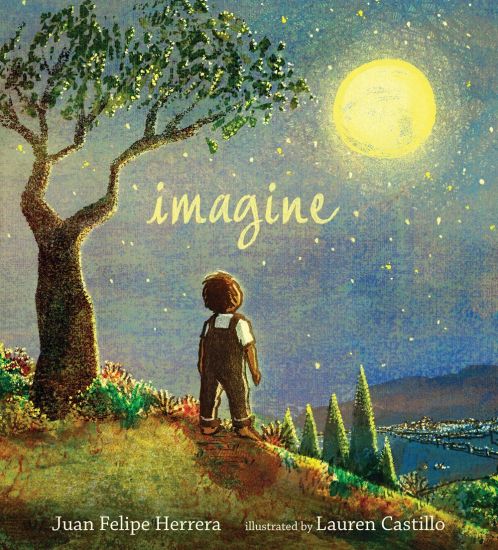
A buoyant, breathtaking poem from Juan Felipe Herrera--brilliantly illustrated by Caldecott Honoree Lauren Castillo--speaks to every dreaming heart. Have you ever imagined what you might be when you grow up? When he was very young, Juan Felipe Herrera picked chamomile flowers in windy fields and let tadpoles swim across his hands in a creek. He slept outside and learned to say goodbye to his amiguitos each time his family moved to a new town. He went to school and taught himself to read and write English and filled paper pads with rivers of ink as he walked down the street after school. And when he grew up, he became the United States Poet Laureate and read his poems aloud on the steps of the Library of Congress. If he could do all of that . . . what could you do? With this illustrated poem of endless possibility, Juan Felipe Herrera and Lauren Castillo breathe magic into the hopes and dreams of readers searching for their place in life.
A New York Times bestseller A buoyant, breathtaking poem from Juan Felipe Herrera -- brilliantly illustrated by Caldecott Honoree Lauren Castillo -- speaks to every dreaming heart. Have you ever imagined what you might be when you grow up? When he was very young, Juan Felipe Herrera picked chamomile flowers in windy fields and let tadpoles swim across his hands in a creek. He slept outside and learned to say good-bye to his amiguitos each time his family moved to a new town. He went to school and taught himself to read and write English and filled paper pads with rivers of ink as he walked down the street after school. And when he grew up, he became the United States Poet Laureate and read his poems aloud on the steps of the Library of Congress. If he could do all of that . . . what could you do? With this illustrated poem of endless possibility, Juan Felipe Herrera and Lauren Castillo breathe magic into the hopes and dreams of readers searching for their place in life.
Voted a Best Poetry Book of the Year by Library JournalIncluded in Publishers Weekly's Top 10 Poetry Books of the YearOne of LitHub's most Anticipated Books of the Year!A State of the Union from the nation’s first Latino Poet Laureate. Trenchant, compassionate, and filled with hope."Many poets since the 1960s have dreamed of a new hybrid art, part oral, part written, part English, part something else: an art grounded in ethnic identity, fueled by collective pride, yet irreducibly individual too. Many poets have tried to create such an art: Herrera is one of the first to succeed."—New York Times"Herrera has the unusual capacity to write convincing political poems that are as personally felt as poems can be."—NPR"Juan Felipe Herrera's magnificent new poems in Every Day We Get More Illegal testify to the deepest parts of the American dream—the streets and parking lots, the stores and restaurants and futures that belong to all—from the times when hope was bright, more like an intimate song than any anthem stirring the blood."—Naomi Shihab Nye, The New York Times Magazine"From Basho to Mandela, Every Day We Get More Illegal takes us on an international tour for a lesson in the history of resistance from a poet who declares, 'I had to learn . . . to take care of myself . . . the courage to listen to my self.' You hold in your hands evidence of who we really are."—Jericho Brown, author of The Tradition"These poems talk directly to America, to migrant people, and to working people. Herrera has created a chorus to remind us we are alive and beautiful and powerful."—José Olivarez, Author of Citizen Illegal"The poet comes to his country with a book of songs, and asks: America, are you listening? We better listen. There is wisdom in this book, there is a choral voice that teaches us 'to gain, pebble by pebble, seashell by seashell, the courage.' The courage to find more grace, to find flames."—Ilya Kaminsky, author of Deaf RepublicIn this collection of poems, written during and immediately after two years on the road as United States Poet Laureate, Juan Felipe Herrera reports back on his travels through contemporary America. Poems written in the heat of witness, and later, in quiet moments of reflection, coalesce into an urgent, trenchant, and yet hope-filled portrait. The struggle and pain of those pushed to the edges, the shootings and assaults and injustices of our streets, the lethal border game that separates and divides, and then: a shift of register, a leap for peace and a view onto the possibility of unity.Every Day We Get More Illegal is a jolt to the conscience—filled with the multiple powers of the many voices and many textures of every day in America."Former Poet Laureate Juan Felipe Herrera should also be Laureate of our Millennium—a messenger who nimbly traverses the transcendental liminalities of the United States . . ."—Carmen Gimenez Smith, author of Be Recorder
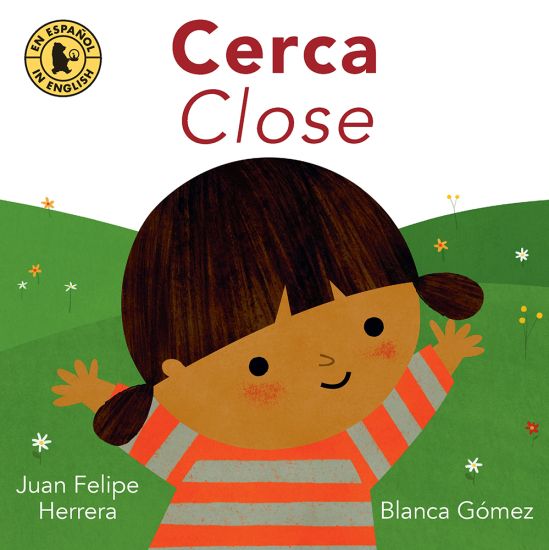
Some things are close -- cerca. Others are far -- lejos. With sweet simplicity, this charming dual-language board book and its companion volume, Cerca/Close, engage young children. El rbol de limones est lejos de mi casa. The lemon tree is far from my house. The little boy's house is far from the city, and the city is far from the ocean. What about the mountains in the distance, or the clouds in the sky, or the sun that shines over the boy as he walks?
Some things are close -- cerca. Others are far -- lejos. With sweet simplicity, this charming dual-language board book and its companion volume, Lejos/Far, engage young children. Mi cuarto est cerca de la cocina. My bedroom is close to the kitchen. As she walks from her kitchen through a daisy-filled yard to the house next door, a little girl notices things that are close to each other -- just as the little boy she goes to visit is close to her.
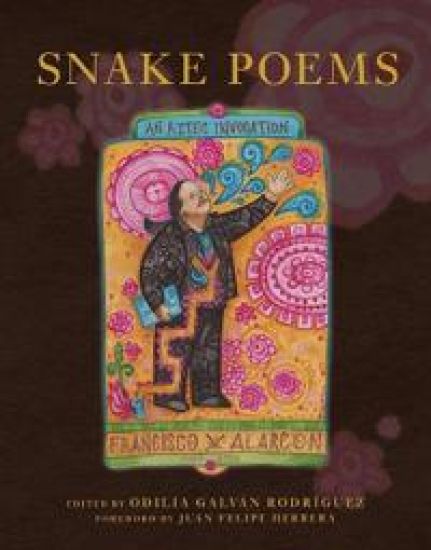
For beloved writer and mentor Francisco X. Alarcón, the collection Snake Poems: An Aztec Invocation was a poetic quest to reclaim a birthright. Originally published in 1992, the book propelled Alarcón to the forefront of contemporary Chicano letters.Alarcón was a stalwart student, researcher, and specialist on the lost teachings of his Indigenous ancestors. He first found their wisdom in the words of his Mexica (Aztec) grandmother and then by culling through historical texts. During a Fulbright fellowship to Mexico, Alarcón uncovered the writings of zealously religious Mexican priest Hernando Ruiz de Alarcón (1587–1646), who collected (often using extreme measures), translated, and interpreted Nahuatl spells and invocations.In Snake Poems Francisco Alarcón offered his own poetic responses, reclaiming the colonial manuscript and making it new. This special edition is a tender tribute to Alarcón, who passed away in 2016, and includes Nahuatl, Spanish, and English renditions of the 104 poems based on Nahuatl invocations and spells that have survived more than three centuries. The book opens with remembrances and testimonials about Alarcón's impact as a writer, colleague, activist, and friend from former poet laureate Juan Felipe Herrera and poet and activist Odilia Galván Rodríguez, who writes, ""This book is another one of those doors that [Francisco] opened and invited us to enter. Here we get to visit a snapshot in time of an ancient place of Nahuatl-speaking ancestors, and Francisco's poetic response to what he saw through their eyes.
A New York Times bestseller A buoyant, breathtaking poem from Juan Felipe Herrera -- brilliantly illustrated by Caldecott Honoree Lauren Castillo -- speaks to every dreaming heart. Have you ever imagined what you might be when you grow up? When he was very young, Juan Felipe Herrera picked chamomile flowers in windy fields and let tadpoles swim across his hands in a creek. He slept outside and learned to say good-bye to his amiguitos each time his family moved to a new town. He went to school and taught himself to read and write English and filled paper pads with rivers of ink as he walked down the street after school. And when he grew up, he became the United States Poet Laureate and read his poems aloud on the steps of the Library of Congress. If he could do all of that . . . what could you do? With this illustrated poem of endless possibility, Juan Felipe Herrera and Lauren Castillo breathe magic into the hopes and dreams of readers searching for their place in life.
Dick Evans captures the pulse of life in the Mission District, the San Francisco neighborhood known for its murals and Latin American culture—and more recently for its rapid gentrification. Intimate, colorful images depict a place filled with diverse residents, stately Victorian houses, hand-painted store signs, Carnaval dancers, Día de los Muertos celebrants, political activists, and its namesake, Mission Dolores (here juxtaposed against portraits of Native people and indigenous cultural objects). Poetry and quotations from Mission residents are interspersed throughout, deepening viewers' immersion into this community. But at the heart of the book is the Mission's famous public art: works that depict Latin American culture, resistance to political oppression, passion for environmental justice, and outrage at gentrification. Evans’s photos highlight the growing threat to the neighborhood’s character, but they also reveal the many changes that have shaped the neighborhood into its vivacious present-day identity.
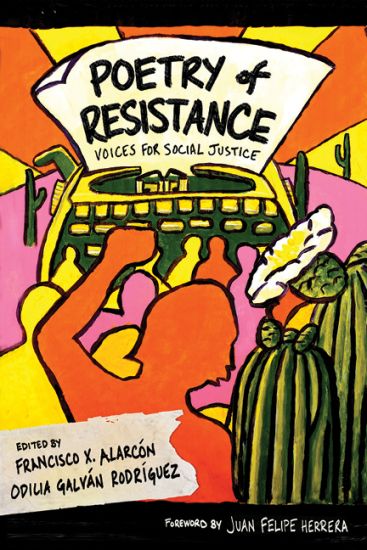
On April 20, 2010, nine Latino students chained themselves to the main doors of the Arizona State Capitol in an act of civil disobedience to protest Arizona's SB 1070. Moved by the students' actions, that same day Francisco X. Alarcón responded by writing a poem in Spanish and English titled ""Para Los Nueve del Capitolio/ For the Capitol Nine,"" which he dedicated to the students. The students replied to the poem with a collective online message. To share with the world what was taking place, Alarcón then created a Facebook page called ""Poets Responding to SB 1070"" and posted the poem, launching a powerful and dynamic forum for social justice. Since then, more than three thousand original contributions by poets and artists from around the globe have been posted to the page. Poetry of Resistance offers a selection of these works, addressing a wide variety of themes, including racial profiling, xenophobia, cultural misunderstanding, violence against refugees, shared identity, and much more. Contributors include distinguished poets such as Francisco Aragón, Devreaux Baker, Sarah Browning, Lorna Dee Cervantes, Susan Deer Cloud, Sharon Dubiago, Martín Espada, Genny Lim, Pam Uschuk, and Alma Luz Villanueva. Bringing together more than eighty writers, the anthology powerfully articulates the need for change and the primacy of basic human rights. Each poem shows the heartfelt dedication these writers and artists have to justice in a world that has become larger than borders. Poetry of Resistance is a poetic call for tolerance, reflection, reconciliation, and healing.
From U.S. Poet Laureate Juan Felipe Herrera, here are stirring poems that read like music. Awarded the Pura Belpre Honor for this book, Herrera writes in both Spanish and English about the joy and laughter and sometimes the confusion of growing up in an upside-down, jumbled-up world-between two cultures, two homes. With a crazy maraca beat, Herrera creates poetry as rich and vibrant as mole de ole and pineapple tamales ...an aroma of papaya ...a clear soup with strong garlic, so you will grow & not disappear. Herrera's words are hot & peppery, good for you. They show us what it means to laugh out loud until it feels like flying.
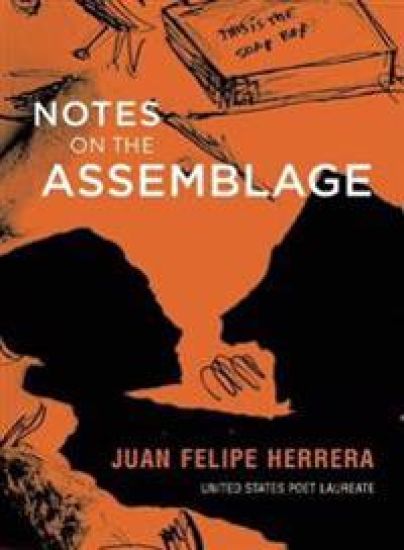
The Books We Love in 2016 - The New Yorker Best Poetry Collections of 2015 - The Washington Post Best Books 2015: Poetry - Library Journal Best Books of 2015 - NPR Books 16 Best Poetry Books of 2015 - BuzzFeed Books Juan Felipe Herrera, the first Latino Poet Laureate of the United States and son of Mexican immigrants, grew up in the migrant fields of California. Exuberant and socially engaged, reflective and healing, this collection of new work from the nation's first Latino Poet Laureate is brimming with the wide-open vision and hard-won wisdom of a poet whose life and creative arc have spanned chasms of culture in an endless crossing, dreaming and back again. "[This year] Juan Felipe Herrera's Notes on the Assemblage has been a ladder of hope ..."--Ada Limon, The New Yorker "Juan Felipe Herrera's family has gone from migrant worker to poet laureate of the United States in one generation. One generation. I am an adamant objector to the Horatio Alger myth of pulling oneself up by the bootstraps, but Herrera's story is one of epic American proportions. The heads carved into my own Mount Rushmas would be Cesar Chavez, Dolores Huerta, Frida Kahlo, El Chapulin Colorado, Selena, and Juan Felipe Herrera. Notes from the Assemblage further carves out Herrera's place in American letters."--David Tomas Martinez "At home with field workers, wage slaves, the homeless, little children, old folks, artists, traditionalists, the avant-garde, students, scholars and prisoners, the bilingual Juan Felipe Herrera is the real thing: a populist treasure. He will fulfill his appointment as U.S. Poet Laureate with the same high energy, savvy, passion, compassion, commitment and playfulness that his art and life's have always embodied. Bravo! Bravo!"--Al Young "While reporters can give you the what, when, and where of a war, a poet with the enormous gifts of Juan Herrera can give you its soul."--Ishmael Reed "I am proud that Juan Felipe Herrera has been appointed U.S. Poet Laureate, bringing his truthful, beautiful voice to all of us universally. As the first Chicano Laureate, he will empower all diverse cultures."--Janice Mirikitani "Herrera is ...a sometimes hermetic, wildly inventive, always unpredictable poet, whose work commands attention for its style alone . ..Many poets since the 1960s have dreamed of a new hybrid art, part oral, part written, part English, part something else: an art grounded in ethnic identity, fueled by collective pride, yet irreducibly individual too. Many poets have tried to create such an art: Herrera is one of the first to succeed."--The New York Times "Herrera has the unusual capacity to write convincing political poems that are as personally felt as poems can be."--National Public Radio
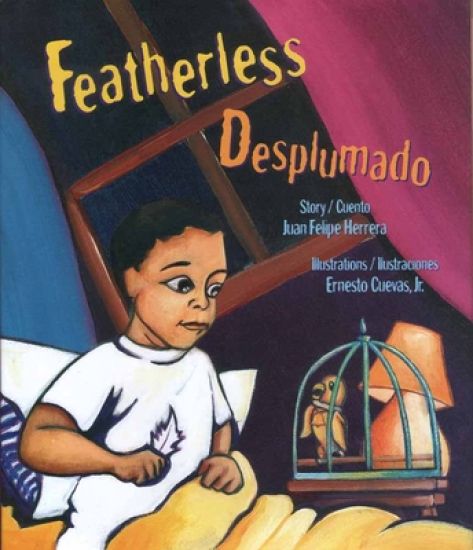
Bilingual English/Spanish. Award-winning children's book author and poet Juan Felipe Herrera offers a story of self-empowerment and friendship.Kids race across the grass, swooping like kites over an emerald sea.No one noticeshow fast I can spin my wheels.Will I ever catch up?Will they ever see me? At his new school or on the soccer field, all everyone wants to know is why Tomasito is in a wheelchair. His Papi gives Tomasisto a new pet to make him smile, but this bird is a little bit different from the rest. Before long, this boy-bird team discovers that there's more than one way to fly-on or off the soccer field-and that those cheers Tomasito hears from the sidelines just might be for him. Goooooooooooal Award-winning children's book author and poet Juan Felipe Herrera scores yet again with this sparkling story of self-empowerment and friendship. The brilliant acrylic paintings by Ernesto Cuevas, Jr., soar off the page with joy.
"I wish I could find the words to tell you the story of our village after you were killed." So begins Senegal Taxi, the new work by one of contemporary poetry's most vibrant voices, Juan Felipe Herrera. Known for his activism and writings that bring attention to oppression and injustice, Herrera turns to stories of genocide and hope in Sudan. Senegal Taxi offers the voices of three children escaping the horrors of war in Africa. Unflinching in its honesty, brutality, and beauty, the collection fiercely addresses conflict and childhood, inviting readers to engage in complex and often challenging issues. Senegal Taxi weaves together verse, dialogue, and visual art created by Herrera specifically for the book. Stylistically genre-leaping, these many layers are part of the collection's innovation. Phantom-like televisions, mud drawings, witness testimonies, insects, and weaponry are all storytellers that join the siblings for a theatrical crescendo. Each poem is told from a different point of view, which Herrera calls "mud drawings," referring to the evocative symbols of hope the children create as they hide in a cave on their way to Senegal, where they plan to catch a boat to the United States. This collection signals a poignant shift for Herrera as he continues to use his craft to focus attention on global concerns. In so doing, he offers an acknowledgment that the suffering of some is the suffering of all.
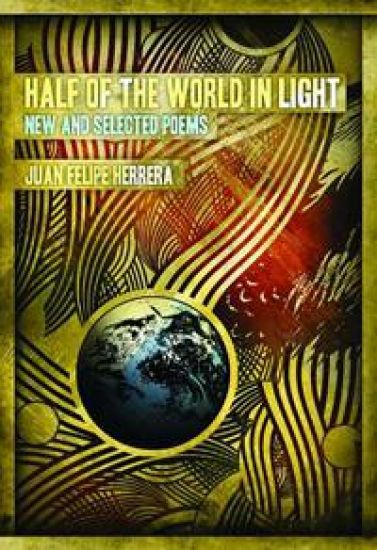
Includes an audio CD of the author reading! For nearly four decades, Juan Felipe Herrera has documented his experience as a Chicano in the United States and Latin America through stunning, memorable poetry that is both personal and universal in its impact, themes, and approach. Often political, never fainthearted, his career has been marked by tremendous virtuosity and a unique sensibility for uncovering the unknown and the unexpected. Through a variety of stages and transformations, Herrera has evolved more than almost any other Chicano poet, always re-inventing himself into a more mature and seasoned voice. Now, in this unprecedented collection, we encounter the trajectory of this highly innovative and original writer, bringing the full scope of his singular vision into view. Beginning with early material from A Certain Man and moving through thirteen of his collections into new, previously unpublished work, this assemblage also includes an audio CD of the author reading twenty-four selected poems aloud. Serious scholars and readers alike will now have available to them a representative set of glimpses into his production as well as his origins and personal development. The ultimate value of bringing together such a collection, however, is that it will allow us to better understand and appreciate the complexity of what this major American poet is all about.
Join us across the nation with "http://www.uapress.arizona.edu/news/AragonHome.php" The Wind Shifts ON TOUR The Wind Shifts gathers, for the first time, works by emerging Latino and Latina poets in the twenty-first century. Here readers will discover 25 new and vital voices including Naomi Ayala, Richard Blanco, David Dominguez, Gina Franco, Sheryl Luna, and Urayoan Noel. All of the writers included in this volume have published poetry in well-regarded literary magazines. Some have published chapbooks or first collections, but none had published more than one book at the time of selection. This results in a freshness that energizes the enterprise. Certainly there is poetry here that is political, but this is not a polemical book; it is a poetry book. While conscious of their roots, the artists are equally conscious of living in the contemporary worldfully engaged with the possibilities of subject and language. The variety is tantalizing. There are sonnets and a sestina; poems about traveling and living overseas; poems rooted in the natural world and poems embedded in suburbia; poems nourished by life on the U.S.?Mexico border and poems electrified by living in Chicago or Los Angeles or San Francisco or New York City. Some of the poetry is traditional; some is avant-garde; some is informed by traditional poetry in Spanish; some follows English forms that are hundreds of years old. There are love poems, spells that defy logic, flashes of hope, and moments of loss. In short, this is the rich and varied poetry of young, talented North American Latinos and Latinas.
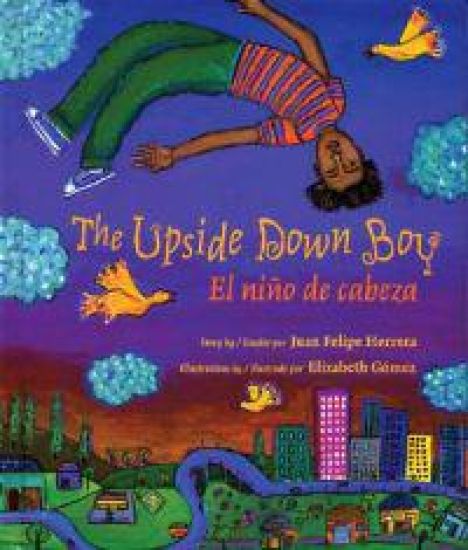
Upside Down Boy/El Nino de Cabeza
Juan Felipe Herrera; Elizabeth Gomez
Children's Book Press,U.S.
2007
nidottu
The Upside Down Boy is award-winning poet Juan Felipe Herrera's engaging memoir of the year his migrant family settled down so that he could go to school for the first time. Juanito is bewildered by the new school, and he misses the warmth of country life. Everything he does feels upside down. He eats lunch when it's recess; he goes out to play when it's time for lunch; and his tongue feels like a rock when he tries to speak English. But a sensitive teacher and loving family help him to find his voice and make a place for himself in this new world through poetry, art, and music. Juan Felipe Herrera's playful language and the colorful, magical art of Elizabeth G mez capture the universal experience of children entering a new school feeling like strangers in a world that seems upside down-at first.
Raucous adobe hearts and urban violet mascara. Televised immigration games and ethnic sit-coms. Chile con karma served on a bed of race. In a startling melange of poetry, prose, journal entries, and even a screenplay, Zen Chicano desperado Juan Felipe Herrera fixes his gaze on his own life and times to craft his most personal work to date. Notebooks of a Chile Verde Smuggler is a river of faces and phrases, jottings and reflections a personal pilgrimage and collective parade of love, mock-prophecy, and chiste. Tuning in voices from numerous time zones, languages, and minds, Herrera recalls his childhood and coming of age, his participation in the Chicano Movement, and the surreal aspects of postmodern America. He uses broad strokes to paint a historical, social, and familial portrait that moves from the twilight of the nineteenth century to the dawn of the twenty-first, then takes up a finer brush to etch the eternal tension between desire and frustration, hope and disillusionment, violence and tenderness. Here are transamerican sutras spanning metrocenters from Mexico City to San Francisco, or slinking across the border from Juarez to El Paso. Outrageous, rhythmic lists "Foodstuffs They Never Told Us About," "Things Religion Makes Me Do" that fire the imagination. Celebrations of his Plutomobile that "runs on ham hawks & bird grease," and of Chicano inventions such as cilantro aftershave and "the art of eating Vicks VapoRub with your dedos." Pushing forms to the edge of possibility while forcing readers to rethink reality as well as language, Herrera invokes childhoods and neighborhoods, stand-up clowns and Movimiento gypsies, grandmothers of the bunuelo kitchen and tragicomic soliloquies of dizzy-headed outcasts of paradise. Notebooks of a Chile Verde Smuggler is a crucible of flavorful language meant to be rolled lazily on the mind's tongue and then swallowed whole to let its hot and savory sweetness fill your soul.
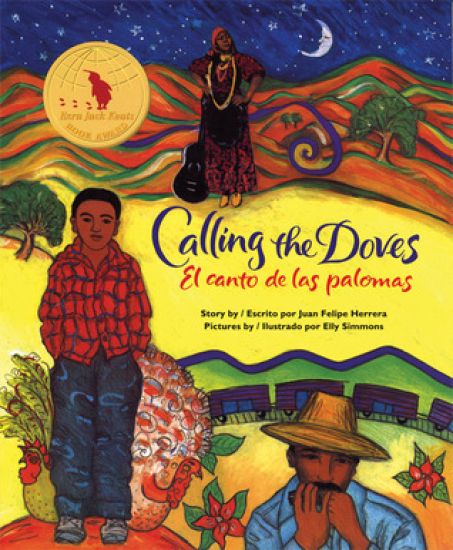
Calling the Doves/El Canto De Las Palomas
Juan Felipe Herrera; Elly (ILT) Simmons
Children's Book Press,U.S.
2001
pokkari
Now available in paperback, poet Juan Felipe Herrera's bilingual memoir paints a vivid picture of his migrant farmworker childhood. His rich, evocative prose re-creates the joy of eating under the open sky, celebrating at a fiesta with other farm families, and listening to his mother singing Mexican songs and his father calling the doves.