Kirjojen hintavertailu. Mukana 12 390 323 kirjaa ja 12 kauppaa.

Kirjailija

Juan Williams

Kirjat ja teokset yhdessä paikassa: 12 kirjaa, julkaisuja vuosilta 2003-2026, suosituimpien joukossa Saying Goodbye. Vertaile teosten hintoja ja tarkista saatavuus suomalaisista kirjakaupoista.

12 kirjaa

Kirjojen julkaisuhaarukka 2003-2026.

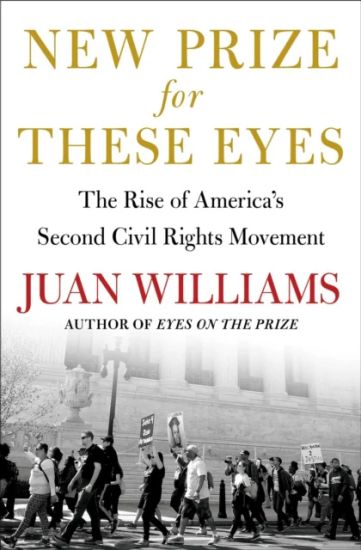
New Prize for These Eyes

New Prize for These Eyes

Juan Williams

SIMON SCHUSTER
2026
pokkari
With “arresting prose and keen insights” (Donna Brazile, New York Times bestselling author of Hacks), bestselling author Juan Williams turns his attention to the rise of a new 21st-century civil rights movement in this highly anticipated follow-up to Eyes on the Prize.More than a century of civil rights activism reached a mountaintop with the arrival of a Black man in the Oval Office. But hopes for a unified, post-racial America were deflated when Barack Obama’s presidency met with furious opposition. A white, right-wing backlash was brewing, and a volcanic new movement—a second civil rights movement—began to erupt. In New Prize for These Eyes, award-winning author Juan Williams shines a light on this historic, new movement. Who are its heroes? Where is it headed? What fires, furies, and frustrations distinguish it from its predecessor? In the 20th century, Black activists and their white allies called for equal rights and an end to segregation. They appealed to the Declaration of Independence’s defiant assertion that “all men are created equal.” They prioritized legal battles in the courtroom and legislative victories in Congress. Today’s movement is dealing with new realities. Demographic changes have placed progressive whites in a new role among the largest, youngest population of Blacks, Hispanics, and Asians in the nation’s history. The new generation is social media savvy, and they have an agenda fueled by discontent with systemic racism and the persistent scourge of police brutality. Today’s activists are making history in a new economic and cultural landscape, and they are using a new set of tools and strategies to do so. Williams brilliantly traces the arc of this new civil rights era, from Obama to Charlottesville to January 6th and a Confederate flag in the Capitol. An essential read for activists, historians, and anyone passionate about America’s future, New Prize for These Eyes is more than a recounting of history. It is a forward-looking call to action, urging Americans to get in touch with the progress made and hurdles yet to be overcome.
New Prize for These Eyes

New Prize for These Eyes

Juan Williams

SIMON SCHUSTER
2025
sidottu
In this highly anticipated follow-up to Eyes on the Prize, bestselling author Juan Williams turns his attention to the rise of a new 21st-century civil rights movement.More than a century of civil rights activism reached a mountaintop with the arrival of a Black man in the Oval Office. But hopes for a unified, post-racial America were deflated when Barack Obama’s presidency met with furious opposition. A white, right-wing backlash was brewing, and a volcanic new movement—a second civil rights movement—began to erupt. In New Prize for These Eyes, award-winning author Juan Williams shines a light on this historic, new movement. Who are its heroes? Where is it headed? What fires, furies, and frustrations distinguish it from its predecessor? In the 20th century, Black activists and their white allies called for equal rights and an end to segregation. They appealed to the Declaration of Independence’s defiant assertion that “all men are created equal.” They prioritized legal battles in the courtroom and legislative victories in Congress. Today’s movement is dealing with new realities. Demographic changes have placed progressive whites in a new role among the largest, youngest population of Blacks, Hispanics, and Asians in the nation’s history. The new generation is social media savvy, and they have an agenda fueled by discontent with systemic racism and the persistent scourge of police brutality. Today’s activists are making history in a new economic and cultural landscape, and they are using a new set of tools and strategies to do so. Williams brilliantly traces the arc of this new civil rights era, from Obama to Charlottesville to January 6th and a Confederate flag in the Capitol. An essential read for activists, historians, and anyone passionate about America’s future, New Prize for These Eyes is more than a recounting of history. It is a forward-looking call to action, urging Americans to get in touch with the progress made and hurdles yet to be overcome.

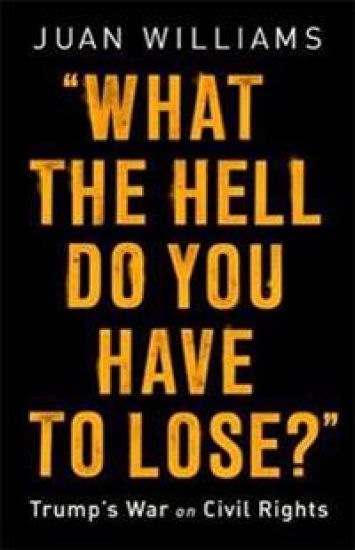
What the Hell Do You Have to Lose?

What the Hell Do You Have to Lose?

Juan Williams

PublicAffairs,U.S.
2018
sidottu
Unsympathetic, ambiguous, and openly racist remarks are a hallmark of Donald Trump's public life. They may have reached their nadir after he failed to condemn white supremacy in the wake of the violence in Charlottesville, but perhaps no remark of his is more telling than his campaign pitch to African Americans: "What the hell do you have to lose?"Quite a lot, as it turns out. In this vigorous and timely book, civil rights historian and political analyst Juan Williams issues the truth about just what African Americans have to lose, and how Trump is threatening to take it away. In Williams's lifetime, civil rights have improved, vastly and against great resistance -- including from Trump and his family. Using the 1964 Civil Rights Act as a rubric, Williams recounts the less known and forgotten stories of heroes like Bob Moses, A. Philip Randolph, and Everett Dirksen, who fought for voting rights, integration of public schools and spaces, and more.This book is not merely a much-needed and highly visible history lesson. It signals the alarm about the Trump administration's policies and intentions, which pose a threat to civil rights without precedent in modern America.In a polarized era, it's especially telling when moderates like Williams are prepared to stand up and shout. This book is clear-sighted, inspiring, and necessary, from an author with the experience and standing to make it heard.
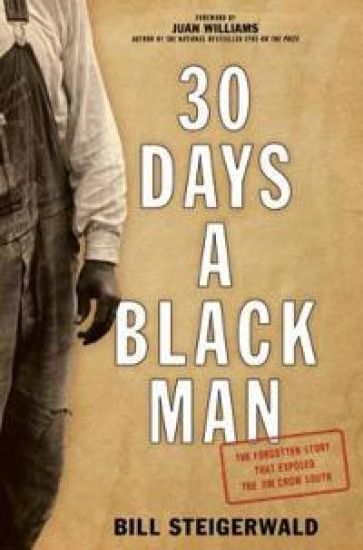
30 Days a Black Man

30 Days a Black Man

Bill Steigerwald; Juan Williams

The Lyons Press
2017
sidottu
In 1948 most white people in the North had no idea how unjust and unequal daily life was for the 10 million African Americans living in the South. But that suddenly changed after Ray Sprigle, a famous white journalist from Pittsburgh, went undercover and lived as a black man in the Jim Crow South. Escorted through the South’s parallel black society by John Wesley Dobbs, a historic black civil rights pioneer from Atlanta, Sprigle met with sharecroppers, local black leaders, and families of lynching victims. He visited ramshackle black schools and slept at the homes of prosperous black farmers and doctors. The Pittsburgh Post-Gazette reporter’s series was syndicated coast to coast in white newspapers and carried into the South only by the Pittsburgh Courier, the country’s leading black paper. His vivid descriptions and undisguised outrage at "the iniquitous Jim Crow system" shocked the North, enraged the South, and ignited the first national debate in the media about ending America’s system of apartheid. Six years before Brown v. Board of Education, seven years before the murder of Emmett Till, and thirteen years before John Howard Griffin’s similar experiment became the bestseller Black Like Me, Sprigle’s intrepid journalism blasted into the American consciousness the grim reality of black lives in the South. Author Bill Steigerwald elevates Sprigle’s groundbreaking exposé to its rightful place among the seminal events of the early Civil Rights movement.
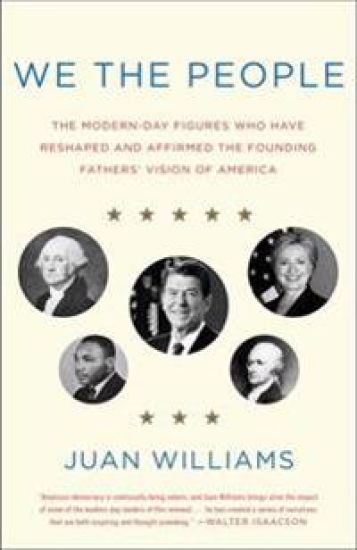
We the People: The Modern-Day Figures Who Have Reshaped and Affirmed the Founding Fathers' Vision of America
Prize-winning journalist, bestselling author, and Fox political analyst Juan Williams takes readers into the life and work of a new generation of American Founders, from Rev. Billy Graham to Martin Luther King, Jr., who honor the original Founders' vision, even as they have quietly led revolutions in American politics, immigration, economics, sexual behavior, and reshaped the landscape of the nation. What would the Founding Fathers think about America today? Over 200 years ago the Founders broke away from the tyranny of the British Empire to build a nation based on the principles of freedom, equal rights, and opportunity for all men. But life in the United States today is vastly different from anything the original Founders could have imagined in the late 1700s. The notion of an African-American president of the United States, or a woman such as Condoleezza Rice or Hillary Clinton as Secretary of State, would have been unimaginable to the men who wrote the Declaration of Independence and the Constitution, or who ratified the Constitution or the Bill of Rights. Among the modern-day pioneers Williams writes about in this compelling new book are the passionate conservative President Reagan; the determined fighters for equal rights, Thurgood Marshall and Martin Luther King, Jr.; the profound imprint of Rev. Billy Graham's evangelism on national politics; the focus on global human rights advocated by First Lady Eleanor Roosevelt; the leaders of the gay community who refused to back down during the Stonewall Riots and brought gay life into America's public square; the re-imagined role of women in contemporary life as shaped by Betty Friedan. Williams reveals how each of these modern-day founders has extended the Founding Fathers original vision and changed fundamental aspects of our country, from immigration, to the role of American labor in the economy, from modern police strategies, to the importance of religion in our political discourse. America in the 21st Century remains rooted in the Great American experiment in democracy that began in 1776. For all the changes our economy and our cultural and demographic make-up, there remains a straight line from the first Founders' original vision, to the principles and ideals of today's courageous modern day pioneers.
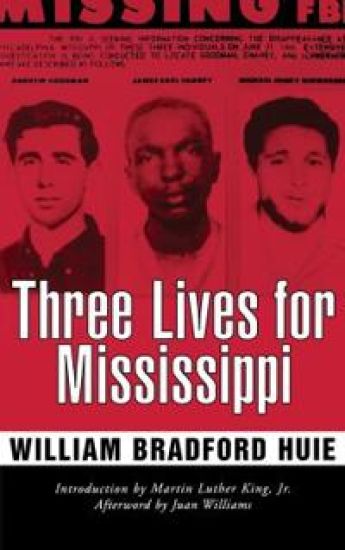
Three Lives for Mississippi

Three Lives for Mississippi

William Bradford Huie; Juan Williams

University Press of Mississippi
2017
nidottu
In the civil rights movement, 1964 was the year of Freedom Summer. On June 21, Mississippi, one of the last bastions of segregation in America and a bloody battleground in the fight for civil rights, reached the low point in its history. On that steamy night three young activists were abducted and murdered in Neshoba County near the small town of Philadelphia.Their names were James Chaney, Andrew Goodman, and Michael Schwerner. Two were from the North and labeled locally as “outside agitators.” Chaney was a Mississippi black. The murders not only shook the nation and shamed the state of Mississippi but also forced loose the iron grip of white supremacy in the South.William Bradford Huie was sent to this seething community by the New York Herald Tribune to cover the breaking story. Probing for answers and conducting interviews, he wrote this documentary account in the heat of the dangerous and dramatic moment, not in the safe zone of retrospection.This is not a political or sociological study, a collection of articles or a diary, but a journalist’s fact-filled story of people that fate brought together in a tragic confrontation. Huie tells the history of each young man and studies the personalities of the killers. He reveals not only the harrowing events in this heinous case but also the prejudice of ordinary citizens who allowed murder to serve as their defense of prejudice. He helps us know the young martyrs closely and introduces us to their killers and to the hatred and suspicion that led inexorably to murder. This edition includes Huie’s report on the trial three years later. Nineteen local men were charged. Seven were found guilty of conspiracy but none of murder.
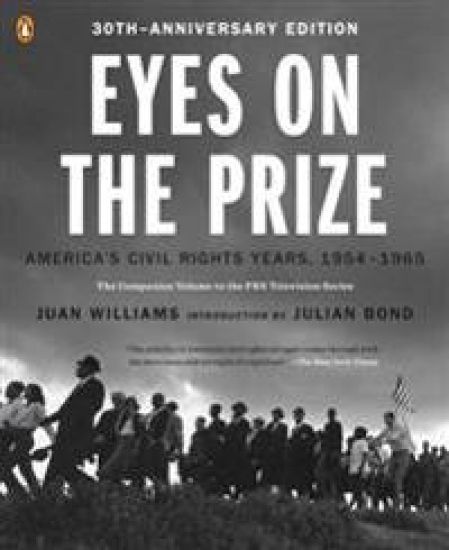
Eyes on the Prize: America's Civil Rights Years, 1954-1965
The 30th-anniversary edition of Juan Williams's celebrated account of the tumultuous early years of the civil rights movement From the Montgomery bus boycott to the Little Rock Nine to the Selma-Montgomery march, thousands of ordinary people who participated in the American civil rights movement; their stories are told in Eyes on the Prize. From leaders such as Martin Luther King, Jr., to lesser-known figures such as Barbara Rose John and Jim Zwerg, each man and woman made the decision that somethinghad to be done to stop discrimination. These moving accounts and pictures of the first decade of the civil rights movement are a tribute to the people, black and white, who took part in the fight for justice and the struggle they endured.
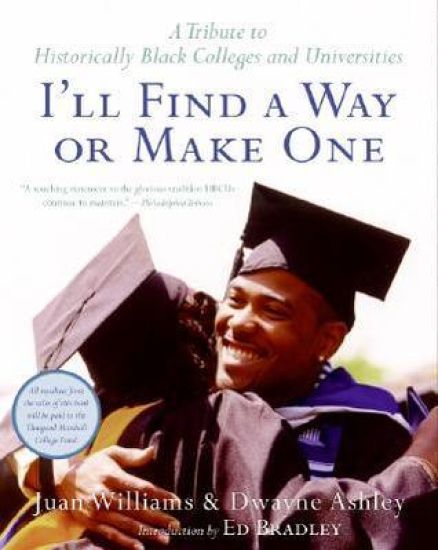
I'll Find a Way or Make One

I'll Find a Way or Make One

Juan Williams; Dwayne Ashley

HARPERCOLLINS PUBLISHERS INC
2007
nidottu
A comprehensive and definitive guide to America's 107 historically black colleges and universities, this commemorative gift book explores the historical, social, and cultural importance of the nation's HBCUs and celebrates their rich legacy.Included in this one-of-a-kind collection are: Detailed profiles of each HBCUIlluminating portraits of distinguished HBCU graduates such as Leontyne Price, Thurgood Marshall, Spike Lee, and Oprah WinfreyLittle-known anecdotes about pre-Civil War efforts to educate blacks, such as how a white pastor founded what became Lincoln University after his black prot g was excluded from Princeton's Theological SeminaryRare photographs and archival materials featuring the likes of Eleanor Roosevelt addressing students at Howard University Chronicling the history of education in the African American community, I'll Find a Way or Make One is not only an unprecedented salute to historically black colleges and universities, but also an indispensable account of some of the most important events of African Americana and American history.
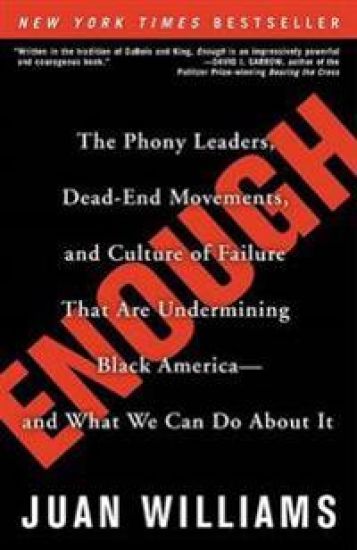
Enough

Enough

Juan Williams

Three Rivers Press
2007
pokkari
Half a century after brave Americans took to the streets to raise the bar of opportunity for all races, Juan Williams writes that too many black Americans are in crisis--caught in a twisted hip-hop culture, dropping out of school, ending up in jail, having babies when they are not ready to be parents, and falling to the bottom in twenty-first-century global economic competition. In Enough, Juan Williams issues a lucid, impassioned clarion call to do the right thing now, before we travel so far off the glorious path set by generations of civil rights heroes that there can be no more reaching back to offer a hand and rescue those being left behind. Inspired by Bill Cosby's now famous speech at the NAACP gala celebrating the fiftieth anniversary of the Brown decision integrating schools, Williams makes the case that while there is still racism, it is way past time for black Americans to open their eyes to the "culture of failure" that exists within their community. He raises the banner of proud black traditional values--self-help, strong families, and belief in God--that sustained black people through generations of oppression and flowered in the exhilarating promise of the modern civil rights movement. Williams asks what happened to keeping our eyes on the prize by proving the case for equality with black excellence and achievement. He takes particular aim at prominent black leaders--from Al Sharpton to Jesse Jackson to Marion Barry. Williams exposes the call for reparations as an act of futility, a detour into self-pity; he condemns the "Stop Snitching" campaign as nothing more than a surrender to criminals; and he decries the glorification of materialism, misogyny, and murder as a corruption of a rich black culture, a tragic turn into pornographic excess that is hurting young black minds, especially among the poor. Reinforcing his incisive observations with solid research and alarming statistical data, Williams offers a concrete plan for overcoming the obstacles that now stand in the way of African Americans' full participation in the nation's freedom and prosperity. Certain to be widely discussed and vehemently debated, Enough is a bold, perceptive, solution-based look at African American life, culture, and politics today.
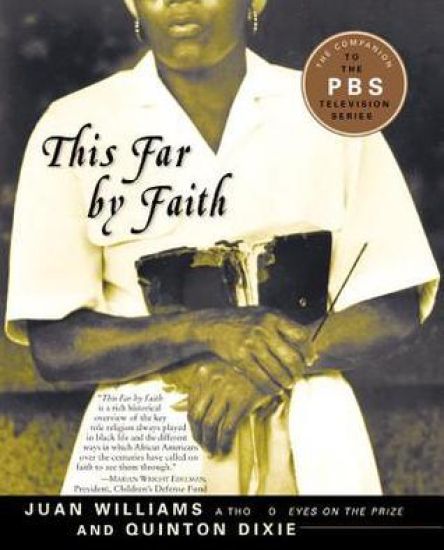
This Far By Faith

This Far By Faith

Juan Williams; Quinton Dixie

HARPERCOLLINS PUBLISHERS INC
2003
nidottu
A companion to the PBS series, This Far by Faith isthe story of how religious faith inspired the greatest social movementin American history -- the U.S. Civil Rights movement.Hailed upon publication as a beautiful, seminal book on the role of the church in the African American community as well as on the social history of America, This Far by Faith reveals the deep religious conviction that empowered a people viewed as powerless to blaze a path to freedom and deliverance, to stand and be counted in this one nation under God. Here are the stories of politics, tent revivals, and the importance of black churches as touchstones for every step of the faith journey that became the Civil Rights movement of the 1950s and 1960s.Using archival and contemporary photography, historical research, and modern-day interviews, This Far by Faith features messages from some of today's foremost religious leaders.