Kirjojen hintavertailu. Mukana 12 101 088 kirjaa ja 12 kauppaa.

Kirjailija

Jude M. Pfister

Kirjat ja teokset yhdessä paikassa: 7 kirjaa, julkaisuja vuosilta 2009-2024, suosituimpien joukossa The Jacob Ford Jr. Mansion: The Storied History of a New Jersey Home. Vertaile teosten hintoja ja tarkista saatavuus suomalaisista kirjakaupoista.

7 kirjaa

Kirjojen julkaisuhaarukka 2009-2024.

Slavery and the American Founding

Slavery and the American Founding

Jude M. Pfister

MCFARLAND CO INC
2024
pokkari
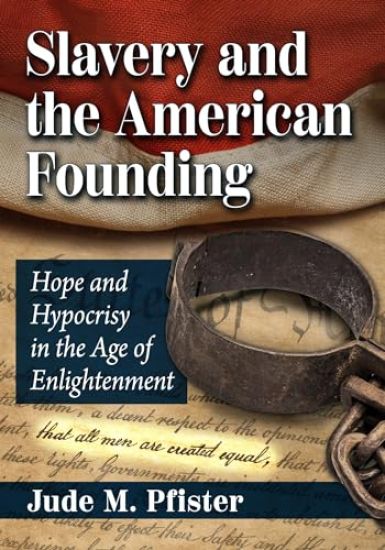
Since 1776, America's Founding mythology has attempted to portray the Founding generation as creating a new world were liberty and freedom were the inherent birthright of all peoples. We now can acknowledge that the Founders created a country conceived in liberty and freedom for themselves. The Founders, while brilliant, were nonetheless human. The enslaved, women, and other minorities were not part of the original Founding documents. "All men created equal" was a political statement, not some ethereal message of Enlightenment understanding. This book demonstrates that to understand the American Founding is to understand the totality of America. This country endured one of the most horrific civil wars in world history. That tragedy began with the American Founding and the so-called compromises entered into by state delegates to ensure national unity. Their conscious decisions, where alternatives existed to reject enslavement, defined the period from 1765 to 1800. Enslavement, and the advent of racial enslavement was a determined development of the North American colonies. Two of the most debated words from the Age of Enlightenment, freedom and liberty, not only made America independent, but also made it dependent on an execrable system rejected by most of the European thinkers who inspired the uprising against Britain.
Defining America in the Radical 1760s

Defining America in the Radical 1760s

Jude M. Pfister

McFarland Co Inc
2021
nidottu
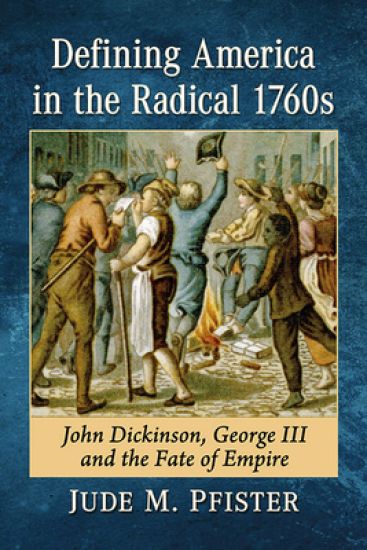
The 1760s were a period of great agitation in the American colonies. The policies implemented by the British resulted in an outcry from the Americans that inaugurated the radical ideas leading to the Revolution in 1775. John Dickinson led the way in the "war of ink" between America and Britain, which saw over 1,000 pamphlets and essays written both for and against British policy. King George III, the new British monarch, wrote extensively on the role of Britain in the colonial world and sought to find a middle way between the quickly rising feelings on both sides of the debate. This book tells the story of this radical decade as it occurred in writing, drawing from primary sources and rarely seen exchanges.
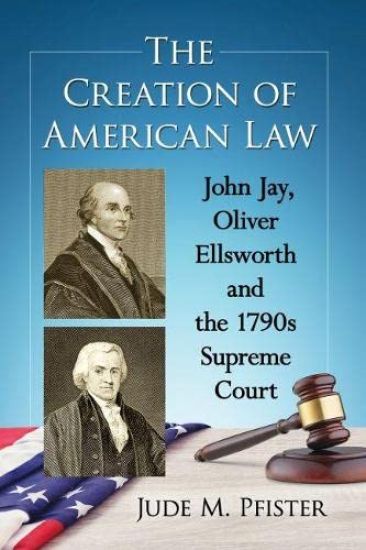
The Creation of American Law

The Creation of American Law

Jude M. Pfister

McFarland Co Inc
2018
pokkari
With the Constitutional Convention in 1787, America was set on a course to develop a unique system of law with roots in the English common law tradition. This new system, its foundations in Article III of the Constitution, called for a national judiciary headed by a supreme court--which first met in 1790. This book serves as a history of America's national law with a look at those--such as John Jay (the first Chief), James Iredell, Bushrod Washington and James Wilson--who set in motion not only the new Supreme Court, but also the new federal judiciary. These founders displayed great dexterity in maneuvering through the fraught political landscape of the 1790s.
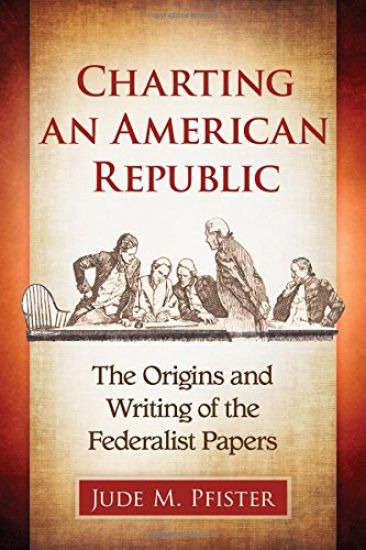
Charting an American Republic

Charting an American Republic

Jude M. Pfister

McFarland Co Inc
2016
pokkari
With the American revolutionaries in discord following victory at Yorktown and the Paris Peace Treaty of 1783, the proposed federal Constitution of 1787 faced an uncertain future when it was sent to the states for ratification. Sensing an historic moment, three authors--Alexander Hamilton, James Madison and John Jay--circulated 85 essays among their fellow statesmen, arguing for a strong federal union. Next to the Constitution itself, The Federalist papers are the most referenced statement of the Founding Fathers' intentions in forming the U.S. government. This book takes a fresh look at the papers in the context of the times in which they were created.
Morris County's Acorn Hall

Morris County's Acorn Hall

Jude M. Pfister

History Press Library Editions
2015
sidottu
Acorn Hall has always been a home. In 1852, Dr. John Schermerhorn conceived the sprawling estate and mansion, and he spent four years decorating it in a lavish Rococo style. Banker Augustus Crane later bought the estate and mansion, had it redesigned and rechristened it Acorn Hall, and it remained in his family through two world wars and numerous financial crises. Mary Crane Hone donated the landmark to the Morris County Historical Society in 1971. After its devoted members lovingly restored the hall, it became a focal point for the community and a beautiful setting for the society's collections. Today, it is imbued with a sense of purpose, tradition and reverence for the past. Local historian Jude Pfister tells the remarkable story of Morris County, New Jersey's Acorn Hall.
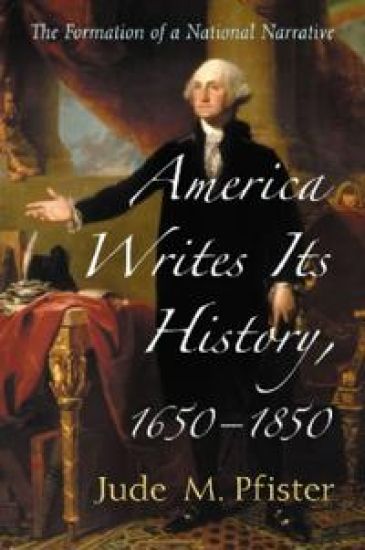
America Writes Its History, 1650-1850

America Writes Its History, 1650-1850

Jude M. Pfister

McFarland Co Inc
2014
pokkari
By turns irreverent, sympathetic and amusing, America Writes Its History, 1650-1850 adds to the public discourse on national identity as advanced through the written word. Highlighting the contributions of American writers who focused on history, the author shows that for nearly 200 years writers struggled to reflect, or influence, the public perception of America by Americans. This book is an introduction to the development of history as a written art form, and an academic discipline, during America's most crucial and impressionable period. America Writes Its History, 1650-1850 takes the reader on a historical tour of written histories--whether narrative history, novels, memoirs or plays--from the Jamestown Colony to the edge of the Civil War. What exactly did we, as Americans, think of ourselves? And more importantly; What did we want non-Americans to think of us? In other words, what was (and is) history, and who, if anyone, owns it?
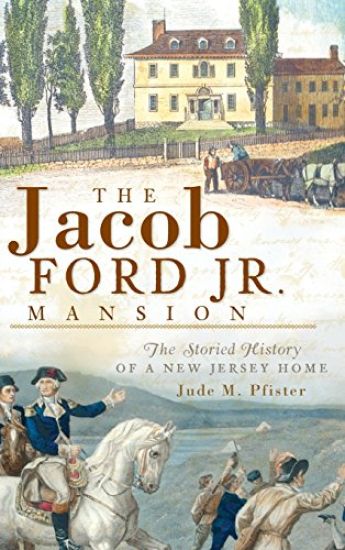
The Jacob Ford Jr. Mansion: The Storied History of a New Jersey Home

The Jacob Ford Jr. Mansion: The Storied History of a New Jersey Home

Jude M. Pfister

History Press Library Editions
2009
sidottu
In 1772, the Ford family began building what would easily become the largest home in Morristown and years later became the site of the first National Historic Park in the United States. Completed just before colonial unrest reached a boiling point, the home quickly secured a reputation as a place of prominence for supporters of colonial interests. Today, the mansion is best known as George Washington's headquarters, when it became a strategic site for Washington during a winter encampment and gained importance for its role in the American Revolution. Jude Pfister tells the story of this beloved home that has endured the tests of time and whose own history is inextricably woven into that of the country's.