Kirjojen hintavertailu. Mukana 12 361 164 kirjaa ja 12 kauppaa.

Kirjailija

Judith Butler

Kirjat ja teokset yhdessä paikassa: 102 kirjaa, julkaisuja vuosilta 1991-2026, suosituimpien joukossa Kuka pelkää sukupuolta?. Vertaile teosten hintoja ja tarkista saatavuus suomalaisista kirjakaupoista.

102 kirjaa

Kirjojen julkaisuhaarukka 1991-2026.

The Livable and the Unlivable

The Livable and the Unlivable

Judith Butler; Frédéric Worms

FORDHAM UNIVERSITY PRESS
2023
pokkari
The unlivable is the most extreme point of human suffering and injustice. But what is it exactly? How do we define the unlivable? And what can we do to prevent and repair it? These are the intriguing questions Judith Butler and Frédéric Worms discuss in a captivating dialogue situated at the crossroads of contemporary life and politics. Here, Judith Butler criticizes the norms that make life precarious and unlivable, while Frédéric Worms appeals to a "critical vitalism" as a way of allowing the hardship of the unlivable to reveal what is vital for us. For both Butler and Worms, the difference between the livable and the unlivable forms the critical foundation for a contemporary practice of care. Care and support, in all their aspects, make human life livable, that is, "more than living." To understand it, we must draw on the concrete practices of humans who are confronted with the unlivable: the refugees of today and the witnesses and survivors of past violations and genocide. They teach us what is intolerable but also undeniable about the unlivable, and what we can do to resist it. Crafted with critical rigor, mutual respect, and lively humor, the compelling dialogue transcribed and translated in this book took place at the École Normale Supérieure (ENS) on April 11, 2018, at a time when close to two thousand migrants were living in nearby makeshift camps in northern Paris. The Livable and the Unlivable showcases this 2018 dialogue in the context of Butler's and Worms's ongoing work and the evolution of their thought, as presented by Laure Barillas and Arto Charpentier in their equally engaging introduction. It concludes with a new afterword that addresses the crises unfolding in our world and the ways a philosophically rigorous account of life must confront them. While this book will be of keen interest to readers of philosophy and cultural criticism, and those interested in vitalism, new materialism, and critical theory, it is a far from merely academic text. In the conversation between Butler and Worms, we encounter questions we all grapple with in confronting the distress and precarity of our times, marked as it is by types of survival that are unlivable, from concentration camps to prisons to environmental toxicity, to forcible displacement, to the Covid pandemic. The Livable and the Unlivable at once considers longstanding philosophical questions around why and how we live, while working to retrieve a philosophy of life for today's Left.

Kønsballade

Kønsballade

Judith Butler

Forlaget THP
2023
pokkari
Kønsballade er en moderne klassiker. Gennem kritiske analyser af blandt andet Foucault, Lacan og Freud, Kristeva og Wittig tilbyder Judith Butler sine læsere en kritisk genealogi over de kategorier, hvormed køn, seksualitet og identitet traditionelt tænkes og erfares. Værket er blevet uomgængeligt for alle, der beskæftiger sig med køn og kønsstudier.
Kroppe af betydning

Kroppe af betydning

Judith Butler

Forlaget Klim
2023
nidottu
Kroppe af betydning er Butlers hovedværk om forholdet mellem vores køn, vores begær og vores krop.Her foretager hun en dyb analyse af, hvordan vores kulturs ideer – om heteroseksuelt begær, om at det feminine er passivt og det maskuline aktivt, og om hvad en mand og en kvinde overhovedet er for noget – tegner og udstanser de skabeloner, vi bruger til at forstå den biologiske verden med. De skabeloner, vi bruger til at beslutte, hvilke kroppe der er betydningsfulde nok til at kunne genkendes og navngives og hyldes som naturlige og måske endda normale – og hvilke, der forbliver usynlige, undertrykte eller sygeliggjorte.Judith Butler er en af de allermest indflydelsesrige filosoffer i vores samtid.
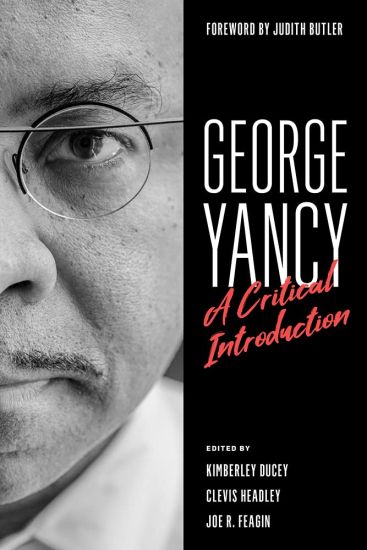
George Yancy

George Yancy

Judith Butler

BLOOMSBURY PUBLISHING PLC
2023
nidottu
This collection gives George Yancy’s transformative work in social and political philosophy and the philosophy of race the critical attention it has long deserved. Contributors apply perspectives from disciplines including philosophy, sociology, education, communication, peace and conflict studies, religion, and psychology.
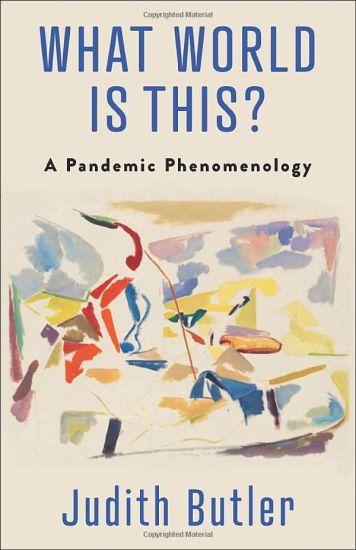
What World Is This?

What World Is This?

Judith Butler

Columbia University Press
2022
pokkari
The pandemic compels us to ask fundamental questions about our place in the world: the many ways humans rely on one another, how we vitally and sometimes fatally breathe the same air, share the surfaces of the earth, and exist in proximity to other porous creatures in order to live in a social world. What we require to live can also imperil our lives. How do we think from, and about, this common bind?Judith Butler shows how COVID-19 and all its consequences—political, social, ecological, economic—have challenged us to reconsider the sense of the world that such disasters bring about. Drawing on the work of Max Scheler, Maurice Merleau-Ponty, and critical feminist phenomenology, Butler illuminates the conditions in which we seek to make sense of our disorientation, precarity, and social bonds. What World Is This? offers a new account of interdependency in which touching and breathing, capacities that amid a viral outbreak can threaten life itself, challenge the boundaries of the body and selfhood. Criticizing notions of unlimited personal liberty and the killing forces of racism, sexism, and classism, this book suggests that the pandemic illuminates the potential of shared vulnerabilities as well as the injustice of pervasive inequalities.Exposing and opposing forms of injustice that deny the essential interrelationship of living creatures, Butler argues for a radical social equality and advocates modes of resistance that seek to establish new conditions of livability and a new sense of a shared world.
What World Is This?

What World Is This?

Judith Butler

Columbia University Press
2022
sidottu
The pandemic compels us to ask fundamental questions about our place in the world: the many ways humans rely on one another, how we vitally and sometimes fatally breathe the same air, share the surfaces of the earth, and exist in proximity to other porous creatures in order to live in a social world. What we require to live can also imperil our lives. How do we think from, and about, this common bind?Judith Butler shows how COVID-19 and all its consequences—political, social, ecological, economic—have challenged us to reconsider the sense of the world that such disasters bring about. Drawing on the work of Max Scheler, Maurice Merleau-Ponty, and critical feminist phenomenology, Butler illuminates the conditions in which we seek to make sense of our disorientation, precarity, and social bonds. What World Is This? offers a new account of interdependency in which touching and breathing, capacities that amid a viral outbreak can threaten life itself, challenge the boundaries of the body and selfhood. Criticizing notions of unlimited personal liberty and the killing forces of racism, sexism, and classism, this book suggests that the pandemic illuminates the potential of shared vulnerabilities as well as the injustice of pervasive inequalities.Exposing and opposing forms of injustice that deny the essential interrelationship of living creatures, Butler argues for a radical social equality and advocates modes of resistance that seek to establish new conditions of livability and a new sense of a shared world.
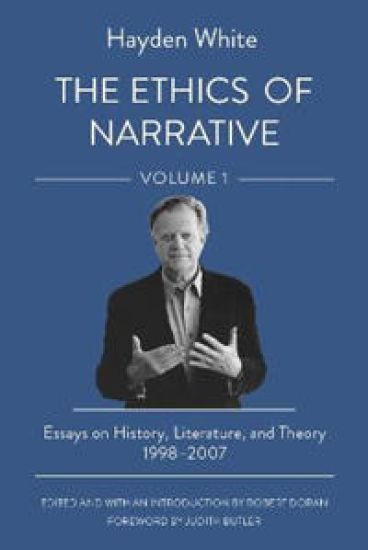
The Ethics of Narrative

The Ethics of Narrative

Hayden White; Judith Butler

CORNELL UNIVERSITY PRESS
2022
pokkari
Hayden White is widely considered to be the most influential historical theorist of the twentieth century. The Ethics of Narrative brings together nearly all of White's uncollected essays from the last two decades of his life, revealing a lesser-known side of White: that of the public intellectual. From modern patriotism and European identity to Hannah Arendt's writings on totalitarianism, from the idea of the historical museum and the theme of melancholy in art history to trenchant readings of Leo Tolstoy and Primo Levi, the first volume of The Ethics of Narrative shows White at his most engaging, topical, and capacious. Expertly introduced by editor Robert Doran, who lucidly explains the major themes, sources, and frames of reference of White's thought, this volume features five previously unpublished lectures, as well as more complete versions of several published essays, thereby giving the reader unique access to White's late thought. In addition to historical theorists and intellectual historians, The Ethics of Narrative will appeal to students and scholars across the humanities in such fields as literary and cultural studies, art history and visual studies, and media studies.
The Ethics of Narrative

The Ethics of Narrative

Hayden White; Judith Butler

CORNELL UNIVERSITY PRESS
2022
sidottu
Hayden White is widely considered to be the most influential historical theorist of the twentieth century. The Ethics of Narrative brings together nearly all of White's uncollected essays from the last two decades of his life, revealing a lesser-known side of White: that of the public intellectual. From modern patriotism and European identity to Hannah Arendt's writings on totalitarianism, from the idea of the historical museum and the theme of melancholy in art history to trenchant readings of Leo Tolstoy and Primo Levi, the first volume of The Ethics of Narrative shows White at his most engaging, topical, and capacious. Expertly introduced by editor Robert Doran, who lucidly explains the major themes, sources, and frames of reference of White's thought, this volume features five previously unpublished lectures, as well as more complete versions of several published essays, thereby giving the reader unique access to White's late thought. In addition to historical theorists and intellectual historians, The Ethics of Narrative will appeal to students and scholars across the humanities in such fields as literary and cultural studies, art history and visual studies, and media studies.
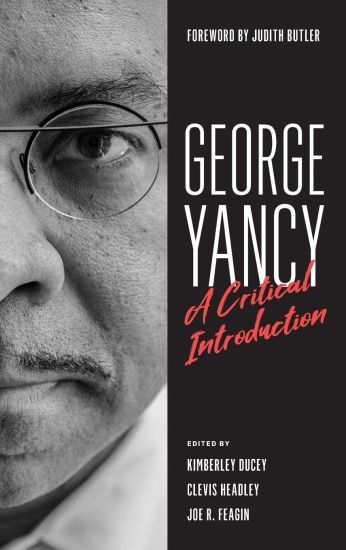
George Yancy

George Yancy

Judith Butler

BLOOMSBURY PUBLISHING PLC
2021
sidottu
This collection gives George Yancy’s transformative work in social and political philosophy and the philosophy of race the critical attention it has long deserved. Contributors apply perspectives from disciplines including philosophy, sociology, education, communication, peace and conflict studies, religion, and psychology.
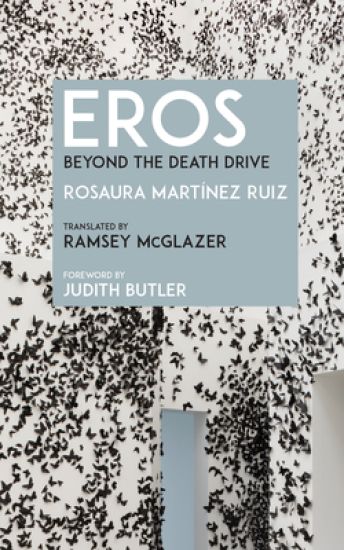
Eros

Eros

Rosaura Martínez Ruiz; Judith Butler

Fordham University Press
2021
pokkari
Eros considers a promise left unfulfilled in Sigmund Freud's Beyond the Pleasure Principle. Rosaura Martínez Ruiz argues that when the pleasure principle comes into contact with the death drive (the human tendency toward aggression or cruelty), the psyche can take detours that, without going beyond the limit of the pleasure principle, can nevertheless defer it. Eros reflects on these deviations of the pleasure principle, in the political sphere and in the intimate realm. Following these erotic paths, Martínez argues that the forces of the death drive can only be resisted if resistance is understood as an ongoing process. In such an effort, erotic action and the construction of pathways for sublimation are never-ending ethical and political tasks. We know that these tasks cannot be finally accomplished, yet they remain imperative and undeniably urgent. If psychoanalysis and deconstruction teach us that the death drive is insurmountable, through aesthetic creation and political action we can nevertheless delay, defer, and postpone it. Calling for the formation and maintenance of a "community of mourning duelists," this book seeks to imagine and affirm the kind of "erotic battalion" that might yet be mobilized against injustice. This battalion's mourning, Martínez argues, must be ongoing, open-ended, combative, and tenaciously committed to the complexity of ethical and political life.
Eros

Eros

Rosaura Martínez Ruiz; Judith Butler

Fordham University Press
2021
sidottu
Eros considers a promise left unfulfilled in Sigmund Freud's Beyond the Pleasure Principle. Rosaura Martínez Ruiz argues that when the pleasure principle comes into contact with the death drive (the human tendency toward aggression or cruelty), the psyche can take detours that, without going beyond the limit of the pleasure principle, can nevertheless defer it. Eros reflects on these deviations of the pleasure principle, in the political sphere and in the intimate realm. Following these erotic paths, Martínez argues that the forces of the death drive can only be resisted if resistance is understood as an ongoing process. In such an effort, erotic action and the construction of pathways for sublimation are never-ending ethical and political tasks. We know that these tasks cannot be finally accomplished, yet they remain imperative and undeniably urgent. If psychoanalysis and deconstruction teach us that the death drive is insurmountable, through aesthetic creation and political action we can nevertheless delay, defer, and postpone it. Calling for the formation and maintenance of a "community of mourning duelists," this book seeks to imagine and affirm the kind of "erotic battalion" that might yet be mobilized against injustice. This battalion's mourning, Martínez argues, must be ongoing, open-ended, combative, and tenaciously committed to the complexity of ethical and political life.
Excitable Speech

Excitable Speech

Judith Butler

Routledge
2021
nidottu
‘When we claim to have been injured by language, what kind of claim do we make?’ - Judith Butler, Excitable SpeechExcitable Speech is widely hailed as a tour de force and one of Judith Butler’s most important books. Examining in turn debates about hate speech, pornography and gayness within the US military, Butler argues that words can wound and linguistic violence is its own kind of violence. Yet she also argues that speech is ‘excitable’ and fluid, because its effects often are beyond the control of the speaker, shaped by fantasy, context and power structures.In a novel and courageous move, she urges caution concerning the use of legislation to restrict and censor speech, especially in cases where injurious language is taken up by aesthetic practices to diminish and oppose the injury, such as in rap and popular music. Although speech can insult and demean, it is also a form of recognition and may be used to talk back; injurious speech can reinforce power structures, but it can also repeat power in ways that separate language from its injurious power. Skillfully showing how language’s oppositional power resides in its insubordinate and dynamic nature and its capacity to appropriate and defuse words that usually wound, Butler also seeks to account for why some clearly hateful speech is taken to be iconic of free speech, while other forms are more easily submitted to censorship.In light of current debates between advocates of freedom of speech and ‘no platform’ and cancel culture, the message of Excitable Speech remains more relevant now than ever. This Routledge Classics edition includes a new Preface by the author, where she considers speech and language in the context contemporary forms of political polarization.
Excitable Speech

Excitable Speech

Judith Butler

Routledge
2021
sidottu
‘When we claim to have been injured by language, what kind of claim do we make?’ - Judith Butler, Excitable SpeechExcitable Speech is widely hailed as a tour de force and one of Judith Butler’s most important books. Examining in turn debates about hate speech, pornography and gayness within the US military, Butler argues that words can wound and linguistic violence is its own kind of violence. Yet she also argues that speech is ‘excitable’ and fluid, because its effects often are beyond the control of the speaker, shaped by fantasy, context and power structures.In a novel and courageous move, she urges caution concerning the use of legislation to restrict and censor speech, especially in cases where injurious language is taken up by aesthetic practices to diminish and oppose the injury, such as in rap and popular music. Although speech can insult and demean, it is also a form of recognition and may be used to talk back; injurious speech can reinforce power structures, but it can also repeat power in ways that separate language from its injurious power. Skillfully showing how language’s oppositional power resides in its insubordinate and dynamic nature and its capacity to appropriate and defuse words that usually wound, Butler also seeks to account for why some clearly hateful speech is taken to be iconic of free speech, while other forms are more easily submitted to censorship.In light of current debates between advocates of freedom of speech and ‘no platform’ and cancel culture, the message of Excitable Speech remains more relevant now than ever. This Routledge Classics edition includes a new Preface by the author, where she considers speech and language in the context contemporary forms of political polarization.
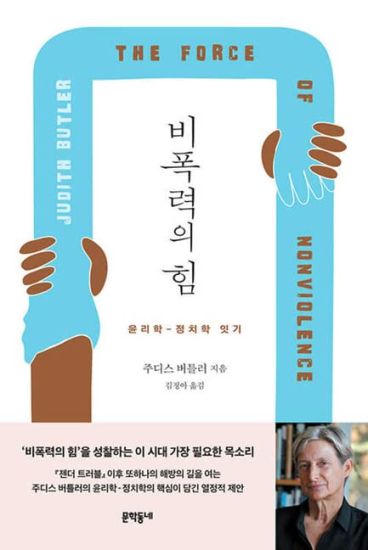
The Force of Nonviolence

The Force of Nonviolence

Judith Butler

Verso Books
2021
nidottu
Judith Butler's new book shows how an ethic of nonviolence must be connected to a broader political struggle for social equality. Further, it argues that nonviolence is often misunderstood as a passive practice that emanates from a calm region of the soul, or as an individualist ethical relation to existing forms of power. But, in fact, nonviolence is an ethical position found in the midst of the political field. An aggressive form of nonviolence accepts that hostility is part of our psychic constitution, but values ambivalence as a way of checking the conversion of aggression into violence. One contemporary challenge to a politics of nonviolence points out that there is a difference of opinion on what counts as violence and nonviolence. The distinction between them can be mobilised in the service of ratifying the state's monopoly on violence.Considering nonviolence as an ethical problem within a political philosophy requires a critique of individualism as well as an understanding of the psychosocial dimensions of violence. Butler draws upon Foucault, Fanon, Freud, and Benjamin to consider how the interdiction against violence fails to include lives regarded as ungrievable. By considering how 'racial phantasms' inform justifications of state and administrative violence, Butler tracks how violence is often attributed to those who are most severely exposed to its lethal effects. The struggle for nonviolence is found in movements for social transformation that reframe the grievability of lives in light of social equality and whose ethical claims follow from an insight into the interdependency of life as the basis of social and political equality.