Kirjojen hintavertailu. Mukana 12 515 197 kirjaa ja 12 kauppaa.

Kirjailija

Judith Eve Lipton

Kirjat ja teokset yhdessä paikassa: 7 kirjaa, julkaisuja vuosilta 2001-2018, suosituimpien joukossa Gender Gap. Vertaile teosten hintoja ja tarkista saatavuus suomalaisista kirjakaupoista.

7 kirjaa

Kirjojen julkaisuhaarukka 2001-2018.

Strength Through Peace

Strength Through Peace

Judith Eve Lipton; David P. Barash

Oxford University Press Inc
2018
sidottu
Costa Rica is the only full-fledged and totally independent country to be entirely demilitarized. Its military was abolished in 1948, with the keys to the armory handed to the Department of Education. Socially, Costa Rica is a success story. Although 94th in the world for GDP, it is in the top 10 on various measurements of health and well-being. Citizens enjoy high standards of living that include universal access to healthcare, education, and pensions. In addition, the country practices sustainable resource management, such as reforestation and the development of solar and wind power, and it expects to be carbon neutral by 2020. Hunting is illegal. 25% of the landmass is parks and reserves. The government supports universal health care, especially maternal and child health. Costa Rica even has a Blue Zone, an area where people live extraordinarily long, healthy lives. To some extent, Costa Rica is simply lucky: it was largely inaccessible, and it had virtually no precious minerals, therefore it was mostly spared the ravages of predatory colonialism. The Costa Rican people made very good social decisions, ranging from an avowed commitment to social democracy at the national level, to local land distribution to develop stable middle class farmers. But Costa Rica's neighbors have not enjoyed nearly as much peace and prosperity. It is unlikely that Costa Rica's demilitarization and its remarkable social success are coincidental; clearly, something special is going on. Through good luck, good leadership, and good decisions, Costa Rica has become arguably the sanest and most progressive country on earth. This book examines how and why Costa Rica is safe and independent without any military at all, and what the rest of us can learn from its success.
Gender Gap

Gender Gap

David P. Barash; Judith Eve Lipton

Routledge
2017
sidottu
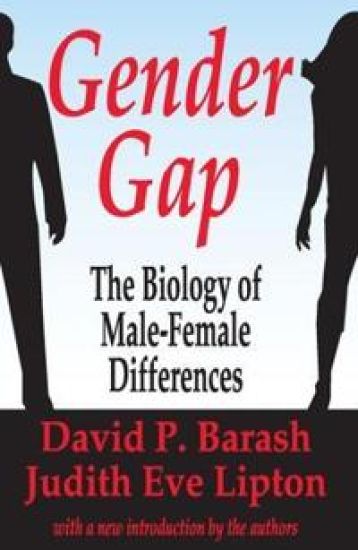
Let's face it, say Barash and Lipton: Males and females, boys and girls, men and women are different. To be sure, these differences are often heightened by distinctions in learning, cultural tradition, and social expectation, but underpinning them all is a fundamental difference that derives from biology. Throughout the natural world, males are those creatures that make sperm; females make eggs. The oft-noticed "gender gap" derives, in turn, from this "gamete gap." In Gender Gap, Barash and Lipton (husband and wife, professor and physician, biologist and psychiatrist) explain the evolutionary aspects of male-female differences.
Payback

Payback

David P. Barash; Judith Eve Lipton

Oxford University Press Inc
2011
sidottu
From the child taunted by her playmates to the office worker who feels stifled in his daily routine, people frequently take out their pain and anger on others, even those who had nothing to do with the original stress. The bullied child may kick her puppy, the stifled worker yells at his children: Payback can be directed anywhere, sometimes at inanimate things, animals, or other people. In Payback, the husband-and wife team of evolutionary biologist David Barash and psychiatrist Judith Lipton offer an illuminating look at this phenomenon, showing how it has evolved, why it occurs, and what we can do about it. Retaliation and revenge are well known to most people. We all know what it is like to want to get even, get justice, or take revenge. What is new in this book is an extended discussion of redirected aggression, which occurs not only in people but other species as well. The authors reveal that it's not just a matter of yelling at your spouse "because" your boss yells at you. Indeed, the phenomenon of redirected aggression--so-called to differentiate it from retaliation and revenge, the other main forms of payback--haunts our criminal courts, our streets, our battlefields, our homes, and our hearts. It lurks behind some of the nastiest and seemingly inexplicable things that otherwise decent people do, from road rage to yelling at a crying baby. And it exists across boundaries of every kind--culture, time, geography, and even species. Indeed, it's not just a human phenomenon. Passing pain to others can be seen in birds and horses, fish and primates--in virtually all vertebrates. It turns out that there is robust neurobiological hardware and software promoting redirected aggression, as well as evolutionary underpinnings. Payback may be natural, the authors conclude, but we are capable of rising above it, without sacrificing self-esteem and social status. They show how the various human responses to pain and suffering can be managed--mindfully, carefully, and humanely.
How Women Got Their Curves and Other Just-So Stories

How Women Got Their Curves and Other Just-So Stories

David Barash; Judith Eve Lipton

Columbia University Press
2011
pokkari
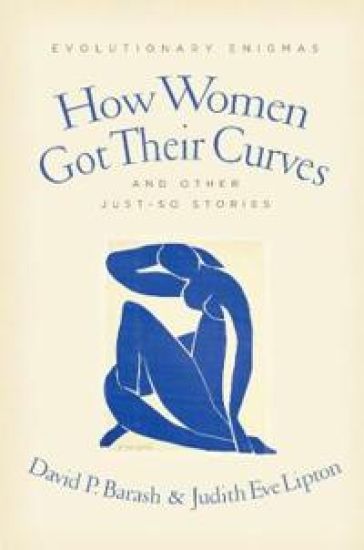
So how did women get their curves? Why do they have breasts, while other mammals only develop breast tissue while lactating, and why do women menstruate, when virtually no other beings do so? What are the reasons for female orgasm? Why are human females kept in the dark about their own time of ovulation and maximum fertility, and why are they the only animals to experience menopause? David P. Barash and Judith Eve Lipton, coauthors of acclaimed books on human sexuality and gender, discuss the theories scientists have advanced to explain these evolutionary enigmas (sometimes called "Just-So stories" by their detractors) and present hypotheses of their own. Some scientific theories are based on legitimate empirical data, while others are pure speculation. Barash and Lipton distinguish between what is solid and what remains uncertain, skillfully incorporating their expert knowledge of biology, psychology, animal behavior, anthropology, and human sexuality into their entertaining critiques. Inviting readers to examine the evidence and draw their own conclusions, Barash and Lipton tell an evolutionary suspense story that captures the excitement and thrill of true scientific detection.
How Women Got Their Curves and Other Just-So Stories

How Women Got Their Curves and Other Just-So Stories

David Barash; Judith Eve Lipton

Columbia University Press
2009
sidottu
So how did women get their curves? Why do they have breasts, while other mammals only develop breast tissue while lactating, and why do women menstruate, when virtually no other beings do so? What are the reasons for female orgasm? Why are human females kept in the dark about their own time of ovulation and maximum fertility, and why are they the only animals to experience menopause? David P. Barash and Judith Eve Lipton, coauthors of acclaimed books on human sexuality and gender, discuss the theories scientists have advanced to explain these evolutionary enigmas (sometimes called "Just-So stories" by their detractors) and present hypotheses of their own. Some scientific theories are based on legitimate empirical data, while others are pure speculation. Barash and Lipton distinguish between what is solid and what remains uncertain, skillfully incorporating their expert knowledge of biology, psychology, animal behavior, anthropology, and human sexuality into their entertaining critiques. Inviting readers to examine the evidence and draw their own conclusions, Barash and Lipton tell an evolutionary suspense story that captures the excitement and thrill of true scientific detection.
The Myth of Monogamy: Fidelity and Infidelity in Animals and People

The Myth of Monogamy: Fidelity and Infidelity in Animals and People

David P. Barash; Judith Eve Lipton

St. Martins Press-3pl
2002
nidottu
Applying new research to sex in the animal world, esteemed scientists David P. Barash and Judith Eve Lipton dispel the notion that monogamy comes naturally. In fact, as The Myth of Monogamy reveals, biologists have discovered that for nearly every species, cheating is the rule -- for both sexes. Reviewing findings from the same DNA fingerprinting science employed in the courtroom, Barash and Lipton take readers from chickadee nests to chimpanzee packs to explain why animals cheat. (Some prostitute themselves for food or protection, while others strive to couple with genetically superior or multiple mates.) The Myth of Monogamy then illuminates the implications of these dramatic new findings for humans, in our relationships, as parents, and more. The Myth of Monogamy at last brings scientific insight into this emotionally charged aspect of the ultimate dating and marriage quandary.
Gender Gap

Gender Gap

David P. Barash; Judith Eve Lipton

Transaction Publishers
2001
nidottu
Let's face it, say Barash and Lipton: Males and females, boys and girls, men and women are different. To be sure, these differences are often heightened by distinctions in learning, cultural tradition, and social expectation, but underpinning them all is a fundamental difference that derives from biology. Throughout the natural world, males are those creatures that make sperm; females make eggs. The oft-noticed "gender gap" derives, in turn, from this "gamete gap." In Gender Gap, Barash and Lipton (husband and wife, professor and physician, biologist and psychiatrist) explain the evolutionary aspects of male-female differences.