
Kirjailija
Judith Farquhar
Kirjat ja teokset yhdessä paikassa: 9 kirjaa, julkaisuja vuosilta 1996-2026, suosituimpien joukossa Ten Thousand Things. Vertaile teosten hintoja ja tarkista saatavuus suomalaisista kirjakaupoista.
9 kirjaa
Kirjojen julkaisuhaarukka 1996-2026.
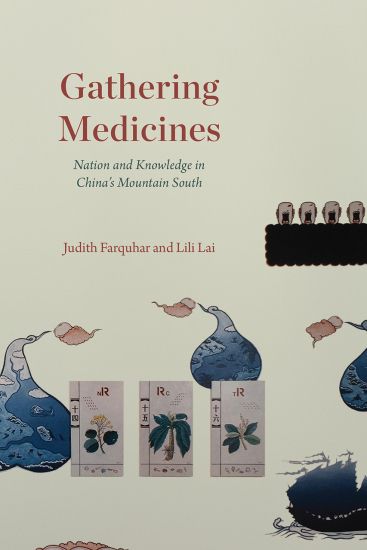
In the early 2000s, the central government of China encouraged all of the nation’s registered minorities to “salvage, sort, synthesize, and elevate” folk medical knowledges in an effort to create local health care systems comparable to the nationally supported institutions of traditional Chinese medicine. Gathering Medicines bears witness to this remarkable moment of knowledge development while sympathetically introducing the myriad therapeutic traditions of southern China. Over a period of six years, Judith Farquhar and Lili Lai worked with seven minority nationality groups in China’s southern mountains, observing how medicines were gathered and local healing systems codified. Gathering Medicines shares their intimate view of how people understand ethnicity, locality, the body, and nature. This ethnography of knowledge diversities in multiethnic China is a testament to the rural wisdom of mountain healers, one that theorizes, from the ground up, the dynamic encounters between formal statist knowledge and the popular authority of the wild.
In the early 2000s, the central government of China encouraged all of the nation’s registered minorities to “salvage, sort, synthesize, and elevate” folk medical knowledges in an effort to create local health care systems comparable to the nationally supported institutions of traditional Chinese medicine. Gathering Medicines bears witness to this remarkable moment of knowledge development while sympathetically introducing the myriad therapeutic traditions of southern China. Over a period of six years, Judith Farquhar and Lili Lai worked with seven minority nationality groups in China’s southern mountains, observing how medicines were gathered and local healing systems codified. Gathering Medicines shares their intimate view of how people understand ethnicity, locality, the body, and nature. This ethnography of knowledge diversities in multiethnic China is a testament to the rural wisdom of mountain healers, one that theorizes, from the ground up, the dynamic encounters between formal statist knowledge and the popular authority of the wild.
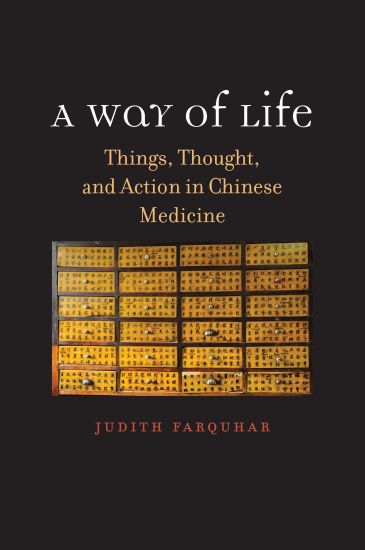
A short, thoughtful introduction to traditional Chinese medicine that looks beyond the conventional boundaries of Western biomedical science Traditional Chinese medicine is often viewed as mystical or superstitious, with outcomes requiring naïve faith. Judith Farquhar, drawing on her hard-won knowledge of social, intellectual, and clinical spheres in today’s China, here offers a concise and nuanced treatment that addresses enduring and troublesome ontological, epistemological, and ethical questions. In this work, which is based on her 2017 Terry Lectures, “Reality, Reason, and Action In and Beyond Chinese Medicine,” she considers how the modern, rationalized, and scientific field of traditional Chinese medicine constructs its very real objects (bodies, symptoms, drugs), how experts think through and sort out pathology and health (yinyang, right qi / wrong qi, stasis, flow), and how contemporary doctors act responsibly to “seek out the root” of bodily disorder. Through this refined investigation, East-West contrasts collapse, and systematic Chinese medicine, no longer a mystery or a pseudo-science, can become a philosophical ally and a rich resource for a more capacious science.
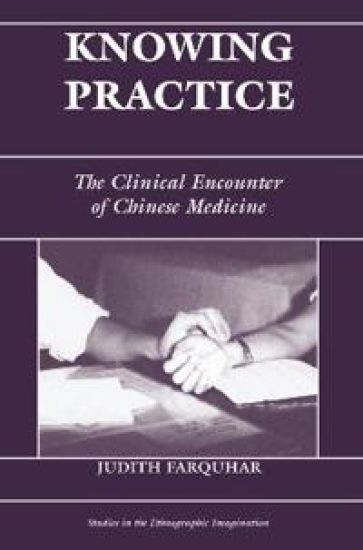
This book examines the theory and practice of traditional medicine in modern China. Farquhar describes the logic of diagnosis and treatment from the inside perspective of doctors and scholars. She demonstrates how theoretical and textual materials interweave with the practical requirements of the clinic. By showing how Chinese medical choices are m
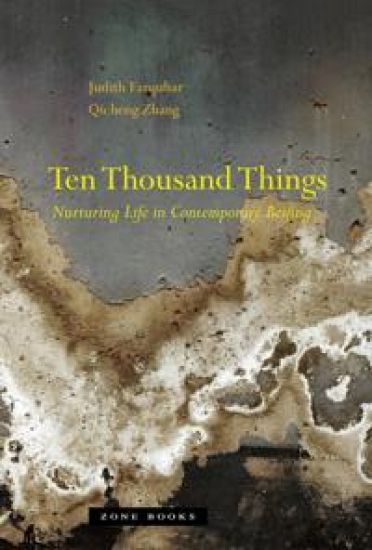
The myriad ways Beijing residents understand and nurture the good life, drawing on cultural resources ranging from ancient metaphysics to modern media.Ten Thousand Things explores the many forms of life, or, in ancient Chinese parlance "the ten thousand things" that life is and is becoming, in contemporary Beijing and beyond. Coauthored by an American anthropologist and a Chinese philosopher, the book examines the myriad ways contemporary residents of Beijing understand and nurture the good life, practice the embodied arts of everyday well-being, and in doing so draw on cultural resources ranging from ancient metaphysics to modern media. Farquhar and Zhang show that there are many activities that nurture life: practicing meditative martial arts among friends in a public park; jogging, swimming, and walking backward; dancing, singing, and keeping pet birds; connoisseurship of tea, wine, and food; and spiritual disciplines ranging from meditation to learning a foreign language. As ancient life-nurturing texts teach, the cultural practices that produce particular forms of life are generative in ten thousand ways: they "give birth to life and transform the transformations." This book attends to the patterns of city life, listens to homely advice on how to live, and interprets the great tradition of medicine and metaphysics. In the process, a manifold culture of the urban Chinese everyday emerges. The lives nurtured, gathered, and witnessed here are global and local, embodied and discursive, ecological and cosmic, civic and individual. The elements of any particular life-as long as it lasts, and with some skill and determination-can be gathered, centered, and harmonized with the way things spontaneously go. The result, everyone says, is pleasure.
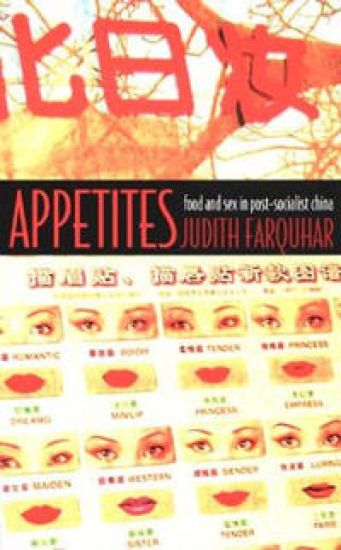
Judith Farquhar’s innovative study of medicine and popular culture in modern China reveals the thoroughly political and historical character of pleasure. Ranging over a variety of cultural terrains--fiction, medical texts, film and television, journalism, and observations of clinics and urban daily life in Beijing-Appetites challenges the assumption that the mundane enjoyments of bodily life are natural and unvarying. Farquhar analyzes modern Chinese reflections on embodied existence to show how contemporary appetites are grounded in history. From eating well in improving economic times to memories of the late 1950s famine, from the flavors of traditional Chinese medicine to modernity’s private sexual passions, this book argues that embodiment in all its forms must be invented and sustained in public reflections about personal and national life. As much at home in science studies and social theory as in the details of life in Beijing, this account uses anthropology, cultural studies, and literary criticism to read contemporary Chinese life in a materialist and reflexive mode. For both Maoist and market reform periods, this is a story of high culture in appetites, desire in collective life, and politics in the body and its dispositions.

Judith Farquhar’s innovative study of medicine and popular culture in modern China reveals the thoroughly political and historical character of pleasure. Ranging over a variety of cultural terrains--fiction, medical texts, film and television, journalism, and observations of clinics and urban daily life in Beijing-Appetites challenges the assumption that the mundane enjoyments of bodily life are natural and unvarying. Farquhar analyzes modern Chinese reflections on embodied existence to show how contemporary appetites are grounded in history. From eating well in improving economic times to memories of the late 1950s famine, from the flavors of traditional Chinese medicine to modernity’s private sexual passions, this book argues that embodiment in all its forms must be invented and sustained in public reflections about personal and national life. As much at home in science studies and social theory as in the details of life in Beijing, this account uses anthropology, cultural studies, and literary criticism to read contemporary Chinese life in a materialist and reflexive mode. For both Maoist and market reform periods, this is a story of high culture in appetites, desire in collective life, and politics in the body and its dispositions.
This book examines the theory and practice of traditional medicine in modern China. It describes the logic of diagnosis and treatment from the inside perspective of doctors and scholars, and demonstrates how theoretical and textual materials interweave with the practical requirements of the clinic.