Kirjojen hintavertailu. Mukana 12 390 323 kirjaa ja 12 kauppaa.

Kirjailija

Judith Levine

Kirjat ja teokset yhdessä paikassa: 6 kirjaa, julkaisuja vuosilta 2007-2020, suosituimpien joukossa Ain't No Trust. Vertaile teosten hintoja ja tarkista saatavuus suomalaisista kirjakaupoista.

6 kirjaa

Kirjojen julkaisuhaarukka 2007-2020.

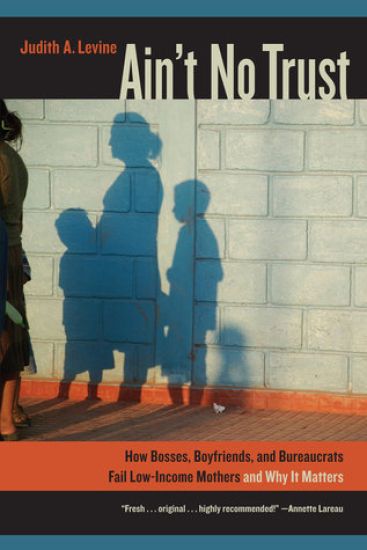
Ain't No Trust

Ain't No Trust

Judith Levine

University of California Press
2013
sidottu
Ain't No Trust explores issues of trust and distrust among low-income women in the U.S.--at work, around childcare, in their relationships, and with caseworkers--and presents richly detailed evidence from in-depth interviews about our welfare system and why it's failing the very people it is designed to help. By comparing low-income mothers' experiences before and after welfare reform, Judith A. Levine probes women's struggles to gain or keep jobs while they simultaneously care for their children, often as single mothers. By offering a new way to understand how structural factors impact the daily experiences of poor women, Ain't No Trust highlights the pervasiveness of distrust in their lives, uncovering its hidden sources and documenting its most corrosive and paralyzing effects. Levine's critique and conclusions hold powerful implications for scholars and policymakers alike.
The Feminist and The Sex Offender

The Feminist and The Sex Offender

Erica R. Meiners; Judith Levine

Verso Books
2020
nidottu
With analytical clarity and narrative force, The Feminist and the Sex Offender contends with two problems that are typically siloed in the era of #MeToo and mass incarceration: sexual and gender violence, on the one hand, and the state's unjust, ineffective, and soul-destroying response to it on the other. Is it possible to confront the culture of abuse? Is it possible to hold harm-doers accountable without recourse to a criminal justice system that redoubles injuries, fails survivors, and retrenches the conditions that made such abuse possible?Drawing on interviews, extensive research, reportage, and history, The Feminist and the Sex Offender develops an intersectional feminist approach to ending sexual violence. It maps with considerable detail the unjust sex offender regime while highlighting the alternatives we urgently need.
Moholy's Edit

Moholy's Edit

Chris Blencowe; Judith Levine

Lars Muller Publishers
2018
nidottu
The Greek island sequence montaged by Laszlo Moholy-Nagy into his legendary documentary Architects' Congress can be interpreted, like his provocative photoplastiks, as a "message in a bottle" thrown into the sea that "might take decades for someone to find and read." Capturing the incomparable Greek light, it presents a compelling glimpse of the four days and nights in August 1933 when the elite of the European architectural and artistic avant-garde-in Greece for the 4th International Congress of Modern Architecture (CIAM)-took to the Aegean in a barely-seaworthy "nut shell" that would bring them close to the brink of disaster. The "motley crew" included Le Corbusier, Fernand Leger, Amedee Ozenfant, Sigfried Giedion, Cor van Eesteren, and Otto Neurath. Crucial to the success of the surreal odyssey were members of the Greek avant-garde. Drawing on previously unpublished material-Moholy's poetically ironic letter to his wife Sibyl, Ghika's candid Memoirs of Le Corbusier, and forensic examination of the architect's sketchbooks-the authors reconstruct the epiphanies, debates, and, inevitably, estrangements at this critical moment in European history.
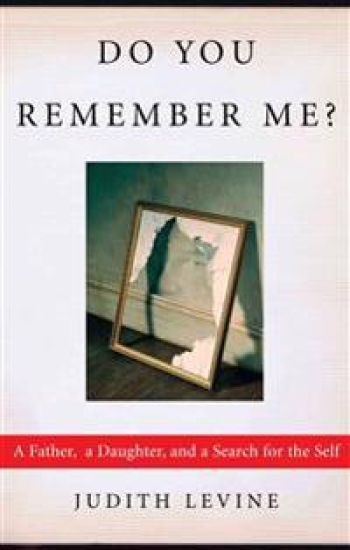
Do You Remember Me?: A Father, a Daughter, and a Search for the Self
In her award-winning book Harmful to Minors, Judith Levine radically upended our fixed ideas about childhood. Now, she tackles the other end of life in this poignant memoir of a daughter coming to terms with a difficult father who is sinking into dementia, presenting an insightful exploration of the ways we think about disability, aging, and the self as it resides in the body and the world. In prose that is unsentimental yet moving, serious yet darkly funny, complex in emotion and ideas yet spare in diction, Levine reassembles her father's personal and professional history even as he is losing track of it. She unpeels the layers of his complicated personality and uncovers information that surprises even her mother, to whom her father has been married for more than sixty years. As her father deteriorates, the family consensus about who he was and is and how best to care for him constantly threatens to collapse. Levine recounts the painful discussions, mad outbursts, and gingerly negotiations, and dissects the shifting alliances among family, friends, and a changing guard of hired caretakers. Spending more and more time with her father, she confronts a relationship that has long felt bereft of love. By caring for his needs, she learns to care about and, slowly, to love him. While Levine chronicles these developments, she looks outside her family for the sources of their perceptions and expectations, deftly weaving politics, science, history, and philosophy into their personal story. A memoir opens up to become a critique of our culture's attitudes toward the elderley. A claustrophobic account of Alzheimer's is transformed into a complex lesson about love, duty, and community. What creates a self and keeps it whole? Levine insists that only the collaboration of others can safeguard her father's self against the riddling of his brain. Embracing interdependence and vulnerability, not autonomy and productivity, as the seminal elements of our humanity, Levine challenges herself and her readers to find new meaning, even hope, in one man's mortality and our own.
Ain't No Trust

Ain't No Trust

Judith Levine

University of California Press
2013
pokkari
Ain't No Trust explores issues of trust and distrust among low-income women in the U.S.--at work, around childcare, in their relationships, and with caseworkers--and presents richly detailed evidence from in-depth interviews about our welfare system and why it's failing the very people it is designed to help. By comparing low-income mothers' experiences before and after welfare reform, Judith A. Levine probes women's struggles to gain or keep jobs while they simultaneously care for their children, often as single mothers. By offering a new way to understand how structural factors impact the daily experiences of poor women, Ain't No Trust highlights the pervasiveness of distrust in their lives, uncovering its hidden sources and documenting its most corrosive and paralyzing effects. Levine's critique and conclusions hold powerful implications for scholars and policymakers alike.
Not Buying It

Not Buying It

Judith Levine

Simon Schuster
2007
pokkari
Shocked by the commerce in everything from pet cloning to patriotism, frightened by the downward spiral of her finances and that of the trash-strewn earth, Judith Levine enlists her partner, Paul, in a radical experiment: to forgo all but the most necessary purchases for an entire year. Without consumer goods and experiences, Judith and Paul pursue their careers, nurture relationships, and try to keep their sanity, their identities, and their sense of humor intact. Tracking their progress -- and inevitable lapses -- Levine contemplates need and desire, scarcity and security, consumerism and citizenship. She asks the Big Questions: Can the economy survive without shopping? Are Q-tips necessary? Not Buying It is the confession of a woman any reader can identify with: someone who can't live without French roast coffee or SmartWool socks but who has had it up to here with overconsumption and its effects on the earth and everyone who dwells there. For the humor and intelligence of its insights, the refreshment of its skepticism, and the surprises of its conclusions, Not Buying It is sure to be on anyone's list of Necessities.