Kirjojen hintavertailu. Mukana 12 181 888 kirjaa ja 12 kauppaa.

Kirjailija

Judith Ryan

Kirjat ja teokset yhdessä paikassa: 12 kirjaa, julkaisuja vuosilta 1991-2024, suosituimpien joukossa Mastectomy Moments: of Asymmetrical Me. Vertaile teosten hintoja ja tarkista saatavuus suomalaisista kirjakaupoista.

12 kirjaa

Kirjojen julkaisuhaarukka 1991-2024.

The Novel After Theory

The Novel After Theory

Judith Ryan

Columbia University Press
2014
pokkari
Novels began to incorporate literary theory in unexpected ways in the late twentieth century. Through allusion, parody, or implicit critique, theory formed an additional strand in fiction that raised questions about the nature of authorship and the practice of writing. Studying this phenomenon provides fresh insight into the recent development of the novel and the persistence of modern theory beyond the period of its greatest success. In this book, Judith Ryan opens these questions to a range of readers, drawing them into debates over the value of theory. Ryan investigates what prompted fiction writers to incorporate and respond to theory nearly thirty years ago. Designed for readers unfamiliar with the complexities of theory, Ryan's book introduces the discipline's major trends and controversies and notes the salient ideas of a carefully selected set of individual thinkers. Ryan follows novelists' adaptation to and engagement with arguments drawn from theory as they translate abstract ideas into language, structure, and fictional strategy. At the core of her book is a fascinating microstudy of French poststructuralism in its dialogue with narrative fiction. Investigating theories of textuality, psychology, and society in the work of Don DeLillo, Thomas Pynchon, J. M. Coetzee, Margaret Atwood, W. G. Sebald, and Umberto Eco, as well as Monika Maron, Alain Robbe-Grillet, Marguerite Duras, Marilynne Robinson, David Foster Wallace, and Christa Wolf, Ryan identifies subtle negotiations between author and theory and the richness this dynamic adds to texts. Resetting the way we think and learn about literature, her book reads current literary theory while uniquely tracing its shaping of a genre.
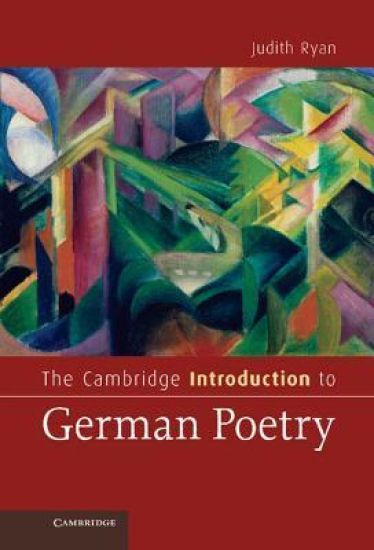
The Cambridge Introduction to German Poetry

The Cambridge Introduction to German Poetry

Judith Ryan

Cambridge University Press
2012
sidottu
German poetry has long held a special place within the Western literary tradition. Its major achievements include Luther's hymns, Goethe's unequalled poetic versatility, the Romantics' lyric songs and the challenging poetry of Hölderlin, Rilke and Celan. Combining readings of traditional poems with fresh examples, Judith Ryan conveys the rich rewards that come with reading German poetry. Organized thematically, the book demonstrates the significance of the poems in their time while also showing their resonance in later periods. The nuanced readings in this book serve as ideal examples for close engagement with the primary texts. Quotations are given in the original German and translated into English prose. Special sections give guidance on how to approach an unfamiliar text and how to compose a close reading; an appendix on German metrics and a glossary of technical terms are also provided, along with further reading for those ready to explore more widely.
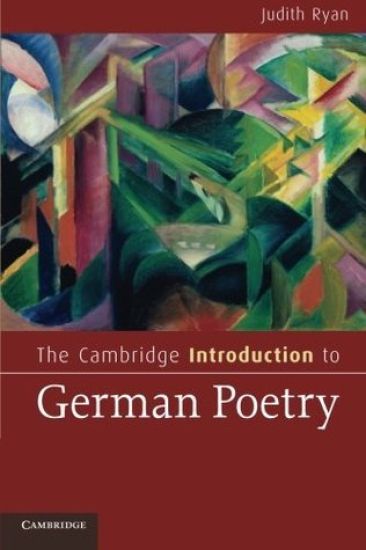
The Cambridge Introduction to German Poetry

The Cambridge Introduction to German Poetry

Judith Ryan

Cambridge University Press
2012
pokkari
German poetry has long held a special place within the Western literary tradition. Its major achievements include Luther's hymns, Goethe's unequalled poetic versatility, the Romantics' lyric songs and the challenging poetry of Hölderlin, Rilke and Celan. Combining readings of traditional poems with fresh examples, Judith Ryan conveys the rich rewards that come with reading German poetry. Organized thematically, the book demonstrates the significance of the poems in their time while also showing their resonance in later periods. The nuanced readings in this book serve as ideal examples for close engagement with the primary texts. Quotations are given in the original German and translated into English prose. Special sections give guidance on how to approach an unfamiliar text and how to compose a close reading; an appendix on German metrics and a glossary of technical terms are also provided, along with further reading for those ready to explore more widely.
The Novel After Theory

The Novel After Theory

Judith Ryan

Columbia University Press
2011
sidottu
Novels began to incorporate literary theory in unexpected ways in the late twentieth century. Through allusion, parody, or implicit critique, theory formed an additional strand in fiction that raised questions about the nature of authorship and the practice of writing. Studying this phenomenon provides fresh insight into the recent development of the novel and the persistence of modern theory beyond the period of its greatest success. In this book, Judith Ryan opens these questions to a range of readers, drawing them into debates over the value of theory. Ryan investigates what prompted fiction writers to incorporate and respond to theory nearly thirty years ago. Designed for readers unfamiliar with the complexities of theory, Ryan's book introduces the discipline's major trends and controversies and notes the salient ideas of a carefully selected set of individual thinkers. Ryan follows novelists' adaptation to and engagement with arguments drawn from theory as they translate abstract ideas into language, structure, and fictional strategy. At the core of her book is a fascinating microstudy of French poststructuralism in its dialogue with narrative fiction. Investigating theories of textuality, psychology, and society in the work of Don DeLillo, Thomas Pynchon, J. M. Coetzee, Margaret Atwood, W. G. Sebald, and Umberto Eco, as well as Monika Maron, Alain Robbe-Grillet, Marguerite Duras, Marilynne Robinson, David Foster Wallace, and Christa Wolf, Ryan identifies subtle negotiations between author and theory and the richness this dynamic adds to texts. Resetting the way we think and learn about literature, her book reads current literary theory while uniquely tracing its shaping of a genre.
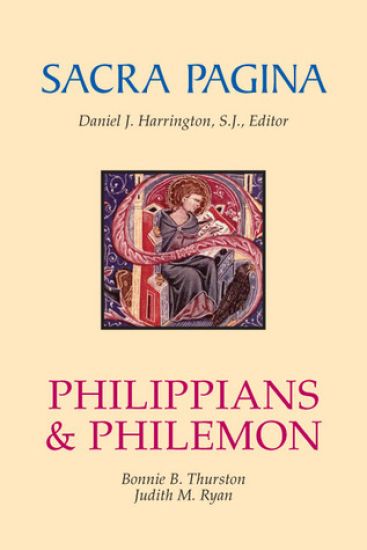
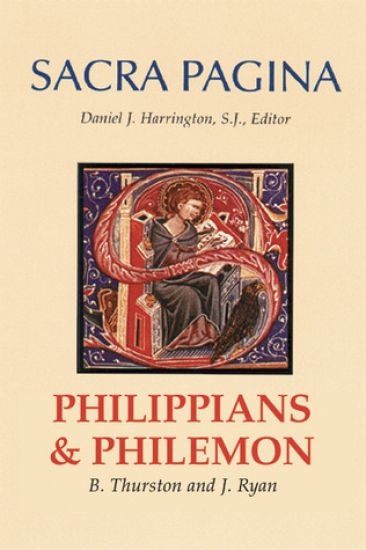
Sacra Pagina

Sacra Pagina

Bonnie B. Thurston; Judith Ryan

Liturgical Press
2009
pokkari
Although relatively brief, Philippians is one of the most interesting and beloved of Paul’s undisputed epistles. In Philippians and Philemon, Bonnie Thurston makes a convincing case that canonical Philippians is as Paul wrote it, one letter. Although there is not enough specific evidence to “name names,” she suggests a number of possible audiences. A translation conforming as closely as possible to the original Greek is provided, along with a careful analysis of the language of the letter that yields insights into the context and theological underpinning of this epistle.The apostle’s very brief letter to Philemon stands solidly within the Pauline collection of authentic and canonical letters. In this volume, Judith Ryan argues that Philemon makes two specific appeals. The first seeks to elicit Philemon’s partnership and his community’s support in welcoming Onesimus back as both beloved brother and honored guest. The second requests that Onesimus be allowed to use the freedom he already has to serve Christ and his Gospel. In this commentary Ryan provides a fresh translation, critical notes for each verse, and interpretation on defined sections. She situates the letter in the historical context of slavery in the ancient world and shows how Paul combined his theology with contemporary rhetorical strategies to produce an effective challenge to his audience.Bonnie B. Thurston, PhD, lives in West Virginia in solitude. She is ordained in the Christian Church (Disciples of Christ) and the author of several books, including The Spiritual Landscape of Mark and Religious Vows, the Sermon on the Mount, and Christian Living (Liturgical Press) and Preaching Mark (Fortress Press).Judith M. Ryan, PhD,STL, is associate professor of New Testament at the University of St. Thomas School of Theology at St. Mary's Seminary, Houston, Texas. Previously she taught at Catholic University of America, Fordham University, the University of Scranton, College Misericordia, and St. Mary's Seminary and University, Baltimore, Maryland.
Rilke, Modernism and Poetic Tradition

Rilke, Modernism and Poetic Tradition

Judith Ryan

Cambridge University Press
2006
pokkari
If the rise of modernism is the story of a struggle between the burden of tradition and a desire to break free of it, then Rilke's poetic development is a key example of this tension at work. Taking a sceptical view of Rilke's own myth of himself as a solitary genius, Judith Ryan reveals how deeply his writing is embedded in the culture of its day. She traces his often desperate attempts to grapple with problems of fashion, influence and originality as he shaped his career during the crucial decades in which modernism was born. This 1999 book was the first systematic study of Rilke's trajectory from aestheticism to modernism as seen through the lens of his engagement with poetic tradition and the visual arts. It is full of surprising discoveries about individual poems. Above all, it shifts the terms of the debate about Rilke's place in modern literary history.
Sacra Pagina

Sacra Pagina

Bonnie B. Thurston; Judith Ryan

Liturgical Press
2004
sidottu
Although relatively brief, Philippians is one of the most interesting and beloved of Paul’s undisputed epistles. In Philippians and Philemon, Bonnie Thurston makes a convincing case that canonical Philippians is as Paul wrote it, one letter. Although there is not enough specific evidence to “name names,” she suggests a number of possible audiences. A translation conforming as closely as possible to the original Greek is provided, along with a careful analysis of the language of the letter that yields insights into the context and theological underpinning of this epistle.The apostle’s very brief letter to Philemon stands solidly within the Pauline collection of authentic and canonical letters. In this volume, Judith Ryan argues that Philemon makes two specific appeals. The first seeks to elicit Philemon’s partnership and his community’s support in welcoming Onesimus back as both beloved brother and honored guest. The second requests that Onesimus be allowed to use the freedom he already has to serve Christ and his Gospel. In this commentary Ryan provides a fresh translation, critical notes for each verse, and interpretation on defined sections. She situates the letter in the historical context of slavery in the ancient world and shows how Paul combined his theology with contemporary rhetorical strategies to produce an effective challenge to his audience.Bonnie B. Thurston, PhD, lives in West Virginia in solitude. She is ordained in the Christian Church (Disciples of Christ) and the author of several books, including The Spiritual Landscape of Mark and Religious Vows, the Sermon on the Mount, and Christian Living (Liturgical Press) and Preaching Mark (Fortress Press).Judith M. Ryan, PhD,STL, is associate professor of New Testament at the University of St. Thomas School of Theology at St. Mary's Seminary, Houston, Texas. Previously she taught at Catholic University of America, Fordham University, the University of Scranton, College Misericordia, and St. Mary's Seminary and University, Baltimore, Maryland.
Rilke, Modernism and Poetic Tradition

Rilke, Modernism and Poetic Tradition

Judith Ryan

Cambridge University Press
1999
sidottu
If the rise of modernism is the story of a struggle between the burden of tradition and a desire to break free of it, then Rilke's poetic development is a key example of this tension at work. Taking a sceptical view of Rilke's own myth of himself as a solitary genius, Judith Ryan reveals how deeply his writing is embedded in the culture of its day. She traces his often desperate attempts to grapple with problems of fashion, influence and originality as he shaped his career during the crucial decades in which modernism was born. This 1999 book was the first systematic study of Rilke's trajectory from aestheticism to modernism as seen through the lens of his engagement with poetic tradition and the visual arts. It is full of surprising discoveries about individual poems. Above all, it shifts the terms of the debate about Rilke's place in modern literary history.
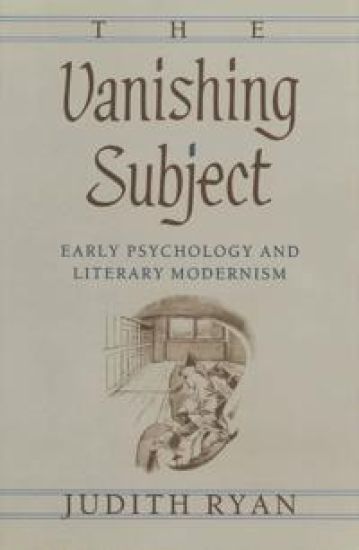
The Vanishing Subject

The Vanishing Subject

Judith Ryan

University of Chicago Press
1991
sidottu
Is thinking personal? Or should we not rather say, "it thinks," just as we say, "it rains"? In the late nineteenth century a number of psychologies emerged that began to divorce consciousness from the notion of a personal self. They asked whether subject and object are truly distinct, whether consciousness is unified or composed of disparate elements, what grounds exist for regarding today's "self" as continuous with yesterday's. If the American pragmatist William James declared himself, on balance, in favor of a "real and verifiable personal identity which we feel," his Austrian counterpart, the empiricist Ernst Mach, propounded the view that "the self is unsalvageable." The Vanishing Subject is the first comprehensive study of the impact of these pre-Freudian debates on modernist literature. In lucid and engaging prose, Ryan traces a complex set of filiations between writers and thinkers over a sixty-year period and restores a lost element in the genesis and development of modernism. From writers who see the "self" as nothing more or less than a bundle of sensory impressions, Ryan moves to others who hesitate between empiricist and Freudian views of subjectivity and consciousness, and to those who wish to salvage the self from its apparent disintegration. Finally, she looks at a group of writers who abandon not only the dualisms of subject and object, but dualistic thinking altogether. Literary impressionism, stream-of-consciousness and point-of-view narration, and the question of epiphany in literature acquire a new aspect when seen in the context of the "psychologies without the self." Rilke's development of a position akin to phenomenology, Henry and Alice James's relation to their psychologist brother, Kafka's place in the modernist movements, Joyce's rewriting of Pater, Proust's engagement with contemporary thought, Woolf's presentation of consciousness, and Musil's projection of a utopian counter-reality are problems familiar to readers and critics: The Vanishing Subject radically revises the way we see them.