
Kirjailija
Judith Scheele
Kirjat ja teokset yhdessä paikassa: 8 kirjaa, julkaisuja vuosilta 2009-2026, suosituimpien joukossa Village Matters. Vertaile teosten hintoja ja tarkista saatavuus suomalaisista kirjakaupoista.
8 kirjaa
Kirjojen julkaisuhaarukka 2009-2026.
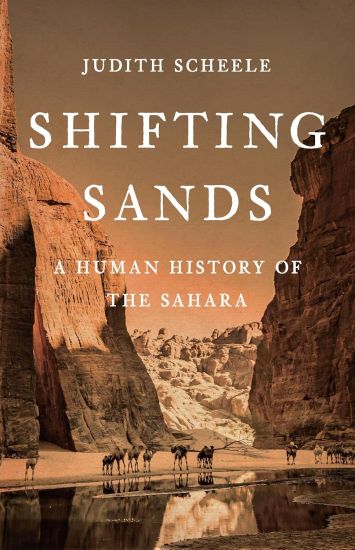
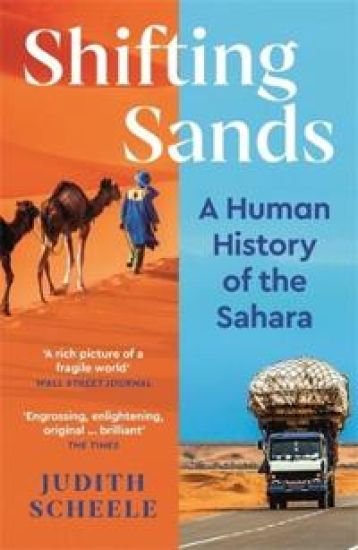
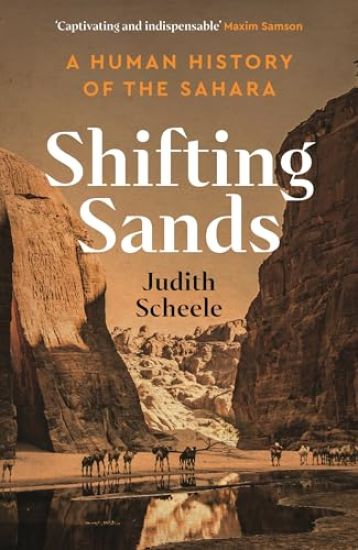
An expansive history of the Sahara from prehistory to the present that shows how Saharans have, over time, built complex and cosmopolitan lives despite scarcity, conquest, and the relentless challenges of the desert environment What comes to mind when we think about the Sahara? Rippling sand dunes, sun-blasted expanses, camel drivers and their caravans perhaps. Or famine, climate change, civil war, desperate migrants stuck in a hostile environment. The Sahara stretches across 3.2 million square miles, hosting several million inhabitants and a corresponding variety of languages, cultures, and livelihoods. But beyond ready-made images of exoticism and squalor, we know surprisingly little about its history and the people who call it home. Shifting Sands is about that other Sahara, not the empty wasteland of the romantic imagination but the vast and highly differentiated space in which Saharan peoples and, increasingly, new arrivals from other parts of Africa live, work, and move. It takes us from the ancient Roman Empire through the bloody colonial era to the geopolitics of the present, questioning easy clich s and exposing fascinating truths along the way. From the geology of the region to the religions, languages, and cultural and political forces that shape and fracture it, this landmark book tells the compelling story of a place that sits at the heart of our world, and whose future holds implications for us all.
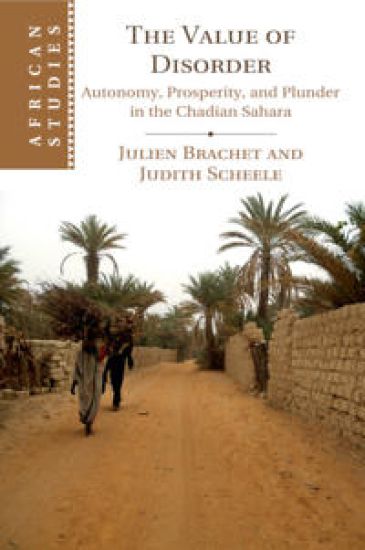
Despite being central to the development of Saharan regional connectivity, northern Chad has been closed to researchers since the late 1960s and thus remains virtually unknown to scholarship. Based on long-term fieldwork, The Value of Disorder is an original and in-depth account of the area and its Tubu majority inhabitants. Julien Brachet and Judith Scheele examine trans-border connectivity and trade; civil war and rebellion; wealth creation and dispersal; labour and gender relations; and aspirations to moral autonomy in northern Chad from an internal point of view - a point of view that in turn participates in a dynamic process of regional interdependence. Vividly ethnographic, the book gives precedence to local categories of value, while asking broader questions about the nature of non-state regional political organisation. Questions that inform current political developments in the Sahara more widely, and have the potential to challenge key concepts in Saharan studies and the social sciences.
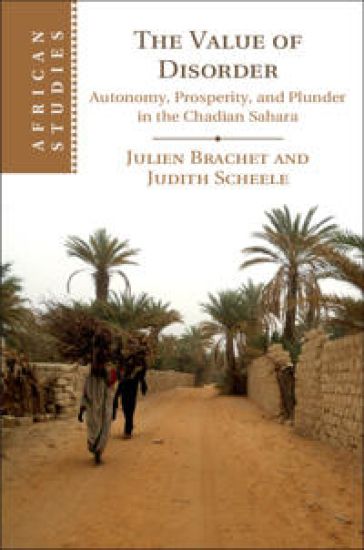
Despite being central to the development of Saharan regional connectivity, northern Chad has been closed to researchers since the late 1960s and thus remains virtually unknown to scholarship. Based on long-term fieldwork, The Value of Disorder is an original and in-depth account of the area and its Tubu majority inhabitants. Julien Brachet and Judith Scheele examine trans-border connectivity and trade; civil war and rebellion; wealth creation and dispersal; labour and gender relations; and aspirations to moral autonomy in northern Chad from an internal point of view - a point of view that in turn participates in a dynamic process of regional interdependence. Vividly ethnographic, the book gives precedence to local categories of value, while asking broader questions about the nature of non-state regional political organisation. Questions that inform current political developments in the Sahara more widely, and have the potential to challenge key concepts in Saharan Studies and the social sciences.
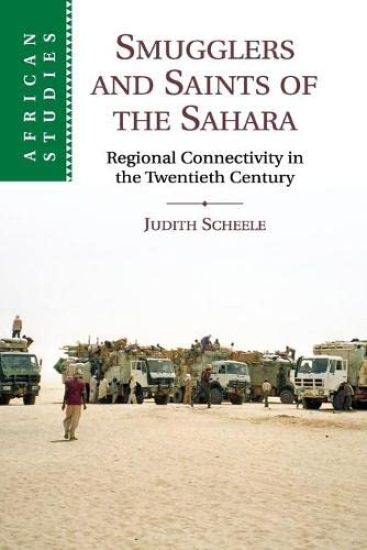
Smugglers and Saints of the Sahara describes life on and around the contemporary border between Algeria and Mali, exploring current developments in a broad historical and socioeconomic context. Basing her findings on long-term fieldwork with trading families, truckers, smugglers and scholars, Judith Scheele investigates the history of contemporary patterns of mobility from the late nineteenth century to the present. Through a careful analysis of family ties and local economic records, this book shows how long-standing mobility and interdependence have shaped not only local economies, but also notions of social hierarchy, morality and political legitimacy, creating patterns that endure today and that need to be taken into account in any empirically-grounded study of the region.
Smugglers and Saints of the Sahara describes life on and around the contemporary border between Algeria and Mali, exploring current developments in a broad historical and socioeconomic context. Basing her findings on long-term fieldwork with trading families, truckers, smugglers and scholars, Judith Scheele investigates the history of contemporary patterns of mobility from the late nineteenth century to the present. Through a careful analysis of family ties and local economic records, this book shows how long-standing mobility and interdependence have shaped not only local economies, but also notions of social hierarchy, morality and political legitimacy, creating patterns that endure today and that need to be taken into account in any empirically-grounded study of the region.
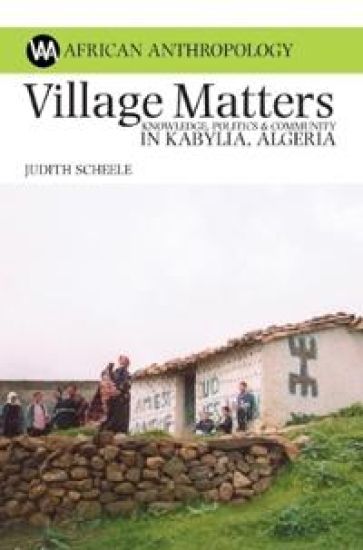
Traces Kabylia's history through French occupation, the Algerian war of independence, and the political turmoil that followed. Kabylia is a Berber-speaking, densely populated mountainous region east of Algiers, that has played an important part in Algerian pre- and post-independence politics, and continues to be troublesome to central government. But 'Kabylia' is also an ideal, shaped and shared by a variety of intellectual trends both in Algeria and in France. Kabylia was seen by sociologically minded nineteenth-century French authors as a model of primitive democracy and became central to their debates about good government, the nature of 'race', nationhood, and the social bond. These qualities have by now largely been appropriated by Kabyles themselves, and have become central to Kabyle self-images discussed on numerous websites run by Kabyle emigrants in France as much as by local parties and associations in Kabylia itself. Central to this image is the Kabyles' attachment to their home villages. But what exactly makes a village a village? And how can this emphasis on communal autonomy be articulated within a modern nation-state? These are the questions this book tries to answer through an in-depth case study of one particular village, analysing the contemporary debates that animate it, and tracing its history through the French conquest and occupation, the Algerian war of independence, and the political turmoil, including the challenge of Islamist politics, that followed independence. The 'village', as much as Kabylia as a whole, emerges as a place made by its internal contradictions, and that can only be understood with reference to the position it occupies within the various intellectual, political, economic and cultural 'world-systems' of which it is part. Judith Scheele is a Research Fellow at Magdalen College, Oxford