Kirjojen hintavertailu. Mukana 12 417 202 kirjaa ja 12 kauppaa.
Kirjailija
Judith Warren Little
Kirjat ja teokset yhdessä paikassa: 4 kirjaa, julkaisuja vuosilta 2010-2024, suosituimpien joukossa The American Public School Teacher. Vertaile teosten hintoja ja tarkista saatavuus suomalaisista kirjakaupoista.
At its heart are the National Education Association’s “Status of the American Public School Teacher” surveys, which are conducted every five years and offer unprecedented insights into the professional lives and experiences of teachers nationwide. This volume analyses and summarises the survey’s findings, while also offering commentaries on the findings from leading figures in the worlds of education, business, politics, and research.
An unflinching yet ultimately hopeful appraisal of the workplace factors that determine career risk and resilience among K–12 teachers, informed by the lessons of the COVID-19 crisis In Going the Distance, Lora Bartlett, Alisun Thompson, Judith Warren Little, and Riley Collins examine the professional conditions that support career commitment among K–12 educators--and the factors that threaten teacher retention. Drawing insight from the period of significant teacher turnover and burnout both during and beyond COVID-19 school shutdowns in the United States, the authors offer clear guidance for policies and practices that meet the needs of teachers and nourish a robust teaching workforce. The work presents vivid firsthand accounts of teaching during crisis that were captured as part of the Suddenly Distant Research Project, a longitudinal study of the experiences of seventy-five teachers in nine states over thirty months, from the school closures of spring 2020 through two full school years. The authors characterize the pandemic as a perspective-shifting experience that exposed existing structural problems and created new ones: a widespread sociopolitical framing of teaching as an occupation constrained by strict regulation and oversight, an overreliance on test-based accountability, a decline in public investment in education, and growing legislative constraints on what teachers could teach. Identifying contextual differences between teachers who left and those who persevered, the work calls for solutions--including increased teacher voice, collaborative workplace cultures, and reforming school accountability systems--that support teachers to pursue ambitious educational goals in ordinary times and equip them to respond rapidly and capably in times of crisis.
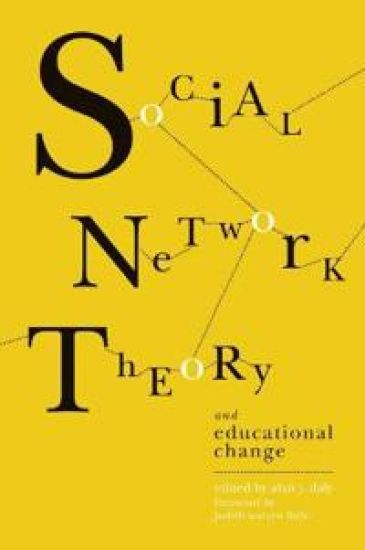
Social Network Theory and Educational Change offers a provocative and fascinating exploration of how social networks in schools can impede or facilitate the work of education reform. Drawing on the work of leading scholars, the book comprises a series of studies examining networks among teachers and school leaders, contrasting formal and informal organizational structures, and exploring the mechanisms by which ideas, information, and influence flow from person to person and group to group. The case studies provided in the book reflect a rich variety of approaches and methodologies, showcasing the range and power of this dynamic new mode of analysis. An introductory chapter places social network theory in context and explains the basic tools and concepts, while a concluding chapter points toward new directions in the field. Taken together, they make a powerful statement: that the success or failure of education reform ultimately is not solely the result of technical plans and blueprints, but of the relational ties that support or constrain the pace, depth, and direction of change. This unique volume provides an invaluable introduction to an emerging and increasingly important field of education research.
Social Network Theory and Educational Change offers a provocative and fascinating exploration of how social networks in schools can impede or facilitate the work of education reform. Drawing on the work of leading scholars, the book comprises a series of studies examining networks among teachers and school leaders, contrasting formal and informal organizational structures, and exploring the mechanisms by which ideas, information, and influence flow from person to person and group to group. The case studies provided in the book reflect a rich variety of approaches and methodologies, showcasing the range and power of this dynamic new mode of analysis. An introductory chapter places social network theory in context and explains the basic tools and concepts, while a concluding chapter points toward new directions in the field. Taken together, they make a powerful statement: that the success or failure of education reform ultimately is not solely the result of technical plans and blueprints, but of the relational ties that support or constrain the pace, depth, and direction of change. This unique volume provides an invaluable introduction to an emerging and increasingly important field of education research.