Kirjojen hintavertailu. Mukana 12 459 402 kirjaa ja 12 kauppaa.

Kirjailija

Judson L. Jeffries

Kirjat ja teokset yhdessä paikassa: 3 kirjaa, julkaisuja vuosilta 2006-2017, suosituimpien joukossa The Portland Black Panthers. Vertaile teosten hintoja ja tarkista saatavuus suomalaisista kirjakaupoista.

3 kirjaa

Kirjojen julkaisuhaarukka 2006-2017.

The Portland Black Panthers

The Portland Black Panthers

Lucas N. N. Burke; Judson L. Jeffries

University of Washington Press
2017
pokkari
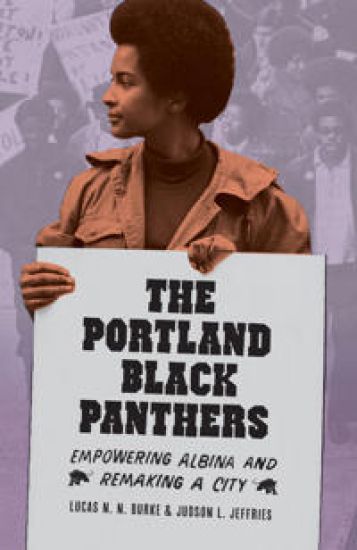
Portland, Oregon, though widely regarded as a liberal bastion, also has struggled historically with ethnic diversity; indeed, the 2010 census found it to be "America's whitest major city." In early recognition of such disparate realities, a group of African American activists in the 1960s formed a local branch of the Black Panther Party in the city's Albina District to rally their community and be heard by city leaders. And as Lucas Burke and Judson Jeffries reveal, the Portland branch was quite different from the more famous—and infamous—Oakland headquarters. Instead of parading through the streets wearing black berets and ammunition belts, Portland's Panthers were more concerned with opening a health clinic and starting free breakfast programs for neighborhood kids. Though the group had been squeezed out of local politics by the early 1980s, its legacy lives on through the various activist groups in Portland that are still fighting many of the same battles.Combining histories of the city and its African American community with interviews with former Portland Panthers and other key players, this long-overdue account adds complexity to our understanding of the protracted civil rights movement throughout the Pacific Northwest.A V Ethel Willis White Book
The Portland Black Panthers

The Portland Black Panthers

Lucas N. N. Burke; Judson L. Jeffries

University of Washington Press
2016
sidottu
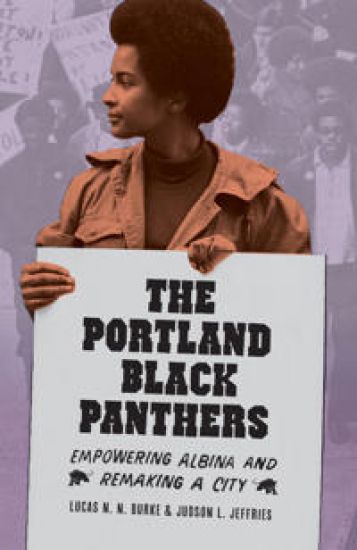
Portland, Oregon, though widely regarded as a liberal bastion, also has struggled historically with ethnic diversity; indeed, the 2010 census found it to be "America's whitest major city." In early recognition of such disparate realities, a group of African American activists in the 1960s formed a local branch of the Black Panther Party in the city's Albina District to rally their community and be heard by city leaders. And as Lucas Burke and Judson Jeffries reveal, the Portland branch was quite different from the more famous—and infamous—Oakland headquarters. Instead of parading through the streets wearing black berets and ammunition belts, Portland's Panthers were more concerned with opening a health clinic and starting free breakfast programs for neighborhood kids. Though the group had been squeezed out of local politics by the early 1980s, its legacy lives on through the various activist groups in Portland that are still fighting many of the same battles.Combining histories of the city and its African American community with interviews with former Portland Panthers and other key players, this long-overdue account adds complexity to our understanding of the protracted civil rights movement throughout the Pacific Northwest.A V Ethel Willis White Book
Huey P. Newton

Huey P. Newton

Judson L. Jeffries

University Press of Mississippi
2006
nidottu
Huey P. Newton's powerful legacy to the Black Panther movement and the civil rights struggle has long been obscured. Conservatives harp on Newton's drug use and on the circumstances of his death in a crack-related shooting. Liberals romanticize his black revolutionary rhetoric and idealize his message. In Huey P. Newton: The Radical Theorist, Judson L. Jeffries considers the entire arc of Newton's political role and influence on civil rights history and African American thought. Jeffries argues that, contrary to popular belief, Newton was one of the most important political thinkers in the struggle for civil rights. Huey P. Newton's political career spanned two decades. Like many freedom fighters, he was a complex figure. His international reputation was forged as much from his passionate defense of black liberation as from his highly publicized confrontations with police. His courage to address police brutality won him admirers in ghettos, on college campuses, and in select Hollywood circles. Newton gave Black Power a compelling urgency and played a pivotal role in the politics of black America during the 1960s and 1970s. Few would deny that Newton's life (1942-1989) was strewn with incidences of violence and that his police record was long. But Newton's struggles with police took place in a rich and troubled context that included urban unrest, police brutality, government repression, and an intense debate over civil rights tactics. Stripped of history and interpretation, the violence of Newton's life brought emphatic indictments of him. Newton's death attracted widespread media attention. However, pundits offered little on Newton as freedom fighter or as theoretician and activist. Huey P. Newton: The Radical Theorist dispels myths about Newton's life, but the book is primarily an in-depth examination of Newton's ideas. By exploring this charismatic leader, Jeffries's book makes a valuable contribution to the scant literature on Newton, while also exposing the core tenets and evolving philosophies of the Black Panther Party. Judson L. Jeffries is an assistant professor of political science at Purdue University. He is the author of Virginia's Native Son: The Election and Administration of Governor L. Douglas Wilder (2000), and his work has been published in such periodicals as Western Journal of Black Studies, Journal of Political Science, and Ethnic and Racial Studies.