Kirjojen hintavertailu. Mukana 12 290 406 kirjaa ja 12 kauppaa.

Kirjailija

Juha I. Uitto

Kirjat ja teokset yhdessä paikassa: 8 kirjaa, julkaisuja vuosilta 2017-2026, suosituimpien joukossa Visioning Higher Education for Contemporary Global Challenges. Vertaile teosten hintoja ja tarkista saatavuus suomalaisista kirjakaupoista.

8 kirjaa

Kirjojen julkaisuhaarukka 2017-2026.

Visioning Higher Education for Contemporary Global Challenges

Visioning Higher Education for Contemporary Global Challenges

Peter H. Koehn; Phyllis Bo-yuen Ngai; Juha I. Uitto

TAYLOR FRANCIS LTD
2026
nidottu
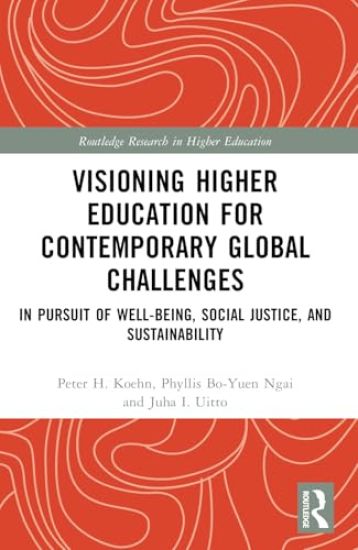
Visioning presents a roadmap for university leaders to vitalize higher education in response to global problems. It addresses structural, programmatic, and curricular gaps in ways designed to prepare current and future generations for unfolding socio-ecological challenges. The book introduces five urgent and interconnected global challenges (sustainable development, climate change, migration, global health, and social justice) demanding attention from higher-education institutions worldwide. Each of these five chapters explores the challenge and then shifts focus to the needed roles of forward-looking higher-education institutions. These roles include building critical consciousness, developing competencies, inspiring global actions, exercising leadership at all levels, conducting evaluations, and undertaking innovative initiatives. The book also proposes three specific initiatives: (1) creation of linked academic Centers for Contemporary Global Challenges; (2) establishment of South-North Higher-Education Consortia; and (3) initiation of a Global Challenges Corps, supported by transnational-competence preparation. It also provides an evaluation methodology to assess the traction of the proposed educational vision. The concluding chapter offers a pathway to fill existing programmatic gaps and equip future generations to address global challenges. This authoritative and insightful book is essential reading for university leaders, educators, and learners worldwide. It provides practical strategies and a future-preparatory vision for universities to address rising global challenges.
Visioning Higher Education for Contemporary Global Challenges

Visioning Higher Education for Contemporary Global Challenges

Peter H. Koehn; Phyllis Bo-Yuen Ngai; Juha I. Uitto

TAYLOR FRANCIS LTD
2024
sidottu
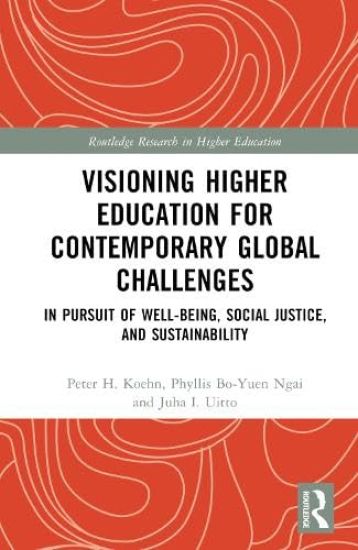
Visioning presents a roadmap for university leaders to vitalize higher education in response to global problems. It addresses structural, programmatic, and curricular gaps in ways designed to prepare current and future generations for unfolding socio-ecological challenges.The book introduces five urgent and interconnected global challenges (sustainable development, climate change, migration, global health, and social justice) demanding attention from higher-education institutions worldwide. Each of these five chapters explores the challenge and then shifts focus to the needed roles of forward-looking higher-education institutions. These roles include building critical consciousness, developing competencies, inspiring global actions, exercising leadership at all levels, conducting evaluations, and undertaking innovative initiatives. The book also proposes three specific initiatives: (1) creation of linked academic Centers for Contemporary Global Challenges; (2) establishment of South-North Higher-Education Consortia; and (3) initiation of a Global Challenges Corps, supported by transnational-competence preparation. It also provides an evaluation methodology to assess the traction of the proposed educational vision. The concluding chapter offers a pathway to fill existing programmatic gaps and equip future generations to address global challenges.This authoritative and insightful book is essential reading for university leaders, educators, and learners worldwide. It provides practical strategies and a future-preparatory vision for universities to address rising global challenges.
Migrant Health and Resilience

Migrant Health and Resilience

Peter H. Koehn; Phyllis Bo-Yuen Ngai; Juha I. Uitto; Diana M. Diaków

TAYLOR FRANCIS LTD
2024
nidottu
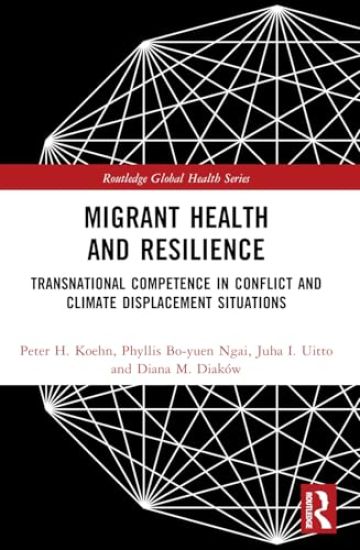
In an era of escalating conflict-induced and climate-induced migration and cross-border interaction, transnational-competence (TC) preparation for displaced persons, members of their host communities, humanitarian responders, and health-care professionals is increasingly critical. Building on insights from those engaged with a range of humanitarian crises and global-justice contexts, along with multidisciplinary research findings, this cutting-edge volume provides practical guidelines for preparing stakeholders for effective short-term and long-term responses to challenges arising in the wake of population dislocation generated by armed conflict, persecution, and climate change. Addressing the need to equip humanitarian care-givers and care-receivers with valuable skills for working together across barriers and boundaries, the guidance presented in the book enables educators, trainers, and field-based multinational and local responders to enhance and evaluate the quality and sustainability of humanitarian efforts that promote and bolster resilience and belonging and augment well-being, justice, and sustainable development. It features comprehensive TC-teaching and learning strategies coupled with tailored on-site and remote approaches and methods. Authoritative and insightful, Migrant Health and Resilience will be essential reading for the staff of NGOs, international organizations, national and local governments, and professional bodies working in development and humanitarian-crisis contexts, as well as for students, higher-education instructors, scholars, and evaluators.
Migrant Health and Resilience

Migrant Health and Resilience

Peter H. Koehn; Phyllis Bo-Yuen Ngai; Juha I. Uitto; Diana M. Diaków

TAYLOR FRANCIS LTD
2023
sidottu
In an era of escalating conflict-induced and climate-induced migration and cross-border interaction, transnational-competence (TC) preparation for displaced persons, members of their host communities, humanitarian responders, and health-care professionals is increasingly critical. Building on insights from those engaged with a range of humanitarian crises and global-justice contexts, along with multidisciplinary research findings, this cutting-edge volume provides practical guidelines for preparing stakeholders for effective short-term and long-term responses to challenges arising in the wake of population dislocation generated by armed conflict, persecution, and climate change. Addressing the need to equip humanitarian care-givers and care-receivers with valuable skills for working together across barriers and boundaries, the guidance presented in the book enables educators, trainers, and field-based multinational and local responders to enhance and evaluate the quality and sustainability of humanitarian efforts that promote and bolster resilience and belonging and augment well-being, justice, and sustainable development. It features comprehensive TC-teaching and learning strategies coupled with tailored on-site and remote approaches and methods. Authoritative and insightful, Migrant Health and Resilience will be essential reading for the staff of NGOs, international organizations, national and local governments, and professional bodies working in development and humanitarian-crisis contexts, as well as for students, higher-education instructors, scholars, and evaluators.
Environmental Evaluation and Global Development Institutions

Environmental Evaluation and Global Development Institutions

Geeta Batra; Juha I. Uitto; Osvaldo N. Feinstein

TAYLOR FRANCIS LTD
2023
nidottu
Evaluation is increasingly important for finding sustainable solutions for the people and the planet, based on a systematic analysis of what works, for whom, and under what circumstances, and to contribute to the achievement of the Sustainable Development Goals, as they pertain to the environment.This book explores why the Global Environment Facility (GEF) invests in evaluation for accountability and learning to inform its decision-making on programming priorities, and how this leads to wiser funding decisions and better program performance on the ground. The book is based on real-life experiences of how to make evaluation count for international environmental action. Drawing upon comprehensive evaluations of the GEF, it provides unique insights from authors responsible for designing, implementing, and disseminating the findings of the evaluations. No other multilateral development or environment agency places evaluation fully at the center of their decision-making. The book outlines the trends in the global environment and the changing landscape of international environmental finance. It defines the role of the GEF and explains its institutional framework and the unique partnership that involves donor and recipient countries, multilateral development banks, UN agencies, nongovernmental organizations (NGOs), and national agencies in the developing countries. Further, it provides useful pointers to other organizations wishing to enhance evidence-based decision-making for improving their relevance, performance, and impact.The book will be most suitable for graduate-level, specialized study in a variety of disciplines such as environmental and development economics, political science, international relations, geography, sociology, and social anthropology.The Open Access version of this book, available at http://www.taylorfrancis.com, has been made available under a Creative Commons Attribution-Non Commercial-No Derivatives 4.0 license.
Environmental Evaluation and Global Development Institutions

Environmental Evaluation and Global Development Institutions

Geeta Batra; Juha I. Uitto; Osvaldo N. Feinstein

Taylor Francis Ltd
2021
sidottu
Evaluation is increasingly important for finding sustainable solutions for the people and the planet, based on a systematic analysis of what works, for whom, and under what circumstances, and to contribute to the achievement of the Sustainable Development Goals, as they pertain to the environment.This book explores why the Global Environment Facility (GEF) invests in evaluation for accountability and learning to inform its decision-making on programming priorities, and how this leads to wiser funding decisions and better program performance on the ground. The book is based on real-life experiences of how to make evaluation count for international environmental action. Drawing upon comprehensive evaluations of the GEF, it provides unique insights from authors responsible for designing, implementing, and disseminating the findings of the evaluations. No other multilateral development or environment agency places evaluation fully at the center of their decision-making. The book outlines the trends in the global environment and the changing landscape of international environmental finance. It defines the role of the GEF and explains its institutional framework and the unique partnership that involves donor and recipient countries, multilateral development banks, UN agencies, nongovernmental organizations (NGOs), and national agencies in the developing countries. Further, it provides useful pointers to other organizations wishing to enhance evidence-based decision-making for improving their relevance, performance, and impact.The book will be most suitable for graduate-level, specialized study in a variety of disciplines such as environmental and development economics, political science, international relations, geography, sociology, and social anthropology.The Open Access version of this book, available at http://www.taylorfrancis.com, has been made available under a Creative Commons Attribution-Non Commercial-No Derivatives 4.0 license.
Universities and the Sustainable Development Future

Universities and the Sustainable Development Future

Peter H. Koehn; Juha I. Uitto

Routledge
2017
nidottu
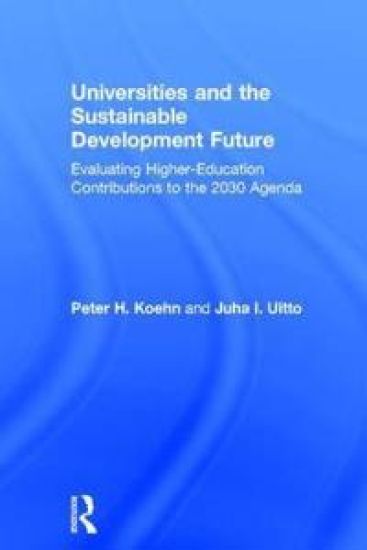
Since the mid-1970s, a series of international declarations that link environment and sustainable development to all aspects of higher learning have been endorsed and signed by universities around the world. Although university involvement in sustainable-development research and outreach has increased substantially, systematic learning from higher-education engagements has been limited. Universities and the Sustainable Development Future offers institutions of higher learning around the world practical guidelines that can be applied contextually to produce credible evidence regarding the outcome and impact of their teaching, research, and transnational-partnering activities. Drawing on innovative applications of lessons from experience with international-development cooperation, this book demonstrates the utility of a flexible framework that will inspire substantial improvements in the ways universities evaluate and improve their sustainable-development undertakings aimed at promoting Agenda 2030. This book promotes an inclusive evaluation framework that will allow universities to illuminate sustainable-development outcomes, and it provides a cutting-edge resource for students, scholars, and policy makers with an interest in sustainable development, climate change, and evaluation challenges.
Universities and the Sustainable Development Future

Universities and the Sustainable Development Future

Peter H. Koehn; Juha I. Uitto

Routledge
2017
sidottu
Since the mid-1970s, a series of international declarations that link environment and sustainable development to all aspects of higher learning have been endorsed and signed by universities around the world. Although university involvement in sustainable-development research and outreach has increased substantially, systematic learning from higher-education engagements has been limited. Universities and the Sustainable Development Future offers institutions of higher learning around the world practical guidelines that can be applied contextually to produce credible evidence regarding the outcome and impact of their teaching, research, and transnational-partnering activities. Drawing on innovative applications of lessons from experience with international-development cooperation, this book demonstrates the utility of a flexible framework that will inspire substantial improvements in the ways universities evaluate and improve their sustainable-development undertakings aimed at promoting Agenda 2030. This book promotes an inclusive evaluation framework that will allow universities to illuminate sustainable-development outcomes, and it provides a cutting-edge resource for students, scholars, and policy makers with an interest in sustainable development, climate change, and evaluation challenges.