Kirjojen hintavertailu. Mukana 12 126 717 kirjaa ja 12 kauppaa.

Kirjailija

Jules J. Berman

Kirjat ja teokset yhdessä paikassa: 23 kirjaa, julkaisuja vuosilta 2006-2026, suosituimpien joukossa Proofs and Logical Arguments Supporting the Foundational Laws of Physics. Vertaile teosten hintoja ja tarkista saatavuus suomalaisista kirjakaupoista.

23 kirjaa

Kirjojen julkaisuhaarukka 2006-2026.

Proofs and Logical Arguments Supporting the Foundational Laws of Physics
For scientists, students, and curious laypersons, this compilation, Proofs and Logical Arguments Supporting the Foundational Laws of Physics: A Handy Guide for Students and Scientists examines the most important laws and relationships taught in science courses, attaching a short and accessible proof or logical argument for each assertion. Every thoughtful person should seek to understand why we think we know what we say we know about the natural world. Otherwise, we may as well surrender ourselves to a world ruled by magic. In 136 essays, readers are provided with proofs and logical arguments supporting the laws and relationships that serve as the foundation of our rational understanding of reality. Among the essays included in this book, we will find proofs of Pauli’s exclusion principle, Heisenberg’s uncertainty principle, the principles of special relativity, the Schrodinger wave equation, Noether’s theorem, and many of the laws of physics and chemistry that no scientist should accept on blind faith alone. Laypersons will find that the ideas discussed in this volume are always thought-provoking and sometimes inspiring. For university undergraduates, the book will serve as an introduction to the core sciences. Graduate students may find this book to be a handy cross-disciplinary reference that explains how the tools of their own selected discipline have emerged from fundamental principles that unify all the sciences. Jules J. Berman received two baccalaureate degrees from MIT (from the Department of Mathematics, and from the Department of Earth and Planetary Sciences). He holds a PhD from Temple University, and an MD, from the University of Miami. His postdoctoral studies were completed at the US National Institutes of Health, and his residency was completed at the George Washington University Medical Center in Washington, DC. Dr. Berman served as Chief of Anatomic Pathology, Surgical Pathology, and Cytopathology at the Veterans administration Medical Center in Baltimore, Maryland, where he also held joint appointments at the University of Maryland Medical Center and at the Johns Hopkins Medical Institutions. In 1998, he transferred back to the US National Institutes of Health, as a Medical Officer, and as the Program Director for Pathology Informatics in the Cancer Diagnosis Program at the National Cancer Institute. Dr. Berman is a past president of the Association for Pathology Informatics, and is the 2011 recipient of the Association’s Lifetime Achievement Award. He has first-authored more than 100 journal articles and has written more than 20 single-author science books.

Fundamentals of Reality

Fundamentals of Reality

Jules J. Berman

De Gruyter
2025
sidottu
The premise of this book is that by understanding the initial conditions at the origins of reality, we can comprehend how all of our observable physical systems (including chemical and biological systems) have emerged. The book focuses on familiar principles of quantum physics and provides very simple derivations of the Heisenberg Uncertainty Principle, Pauli's Exclusion Principle, Schrodinger's wave equation, Noether's theorem, and the Continuity Equation. Background is provided in group theory and symmetries. Using these concepts, the book explores the nature of vacuum, of fundamental constants and particles, and of physical laws. Building on these basic principles, the book explains the emergence of atoms, the natural elements, chemical reactions, and life. In the process, numerous paradoxes are encountered and solved.
Proofs and Logical Arguments Supporting the Foundational Laws of Physics
For scientists, students, and curious laypersons, this compilation, Proofs and Logical Arguments Supporting the Foundational Laws of Physics: A Handy Guide for Students and Scientists examines the most important laws and relationships taught in science courses, attaching a short and accessible proof or logical argument for each assertion.Every thoughtful person should seek to understand why we think we know what we say we know about the natural world. Otherwise, we may as well surrender ourselves to a world ruled by magic. In 136 essays, readers are provided with proofs and logical arguments supporting the laws and relationships that serve as the foundation of our rational understanding of reality. Among the essays included in this book, we will find proofs of Pauli’s exclusion principle, Heisenberg’s uncertainty principle, the principles of special relativity, the Schrodinger wave equation, Noether’s theorem, and many of the laws of physics and chemistry that no scientist should accept on blind faith alone.Laypersons will find that the ideas discussed in this volume are always thought-provoking and sometimes inspiring. For university undergraduates, the book will serve as an introduction to the core sciences. Graduate students may find this book to be a handy cross-disciplinary reference that explains how the tools of their own selected discipline have emerged from fundamental principles that unify all the sciences.Jules J. Berman received two baccalaureate degrees from MIT (from the Department of Mathematics, and from the Department of Earth and Planetary Sciences). He holds a PhD from Temple University, and an MD, from the University of Miami. His postdoctoral studies were completed at the US National Institutes of Health, and his residency was completed at the George Washington University Medical Center in Washington, DC. Dr. Berman served as Chief of Anatomic Pathology, Surgical Pathology, and Cytopathology at the Veterans administration Medical Center in Baltimore, Maryland, where he also held joint appointments at the University of Maryland Medical Center and at the Johns Hopkins Medical Institutions. In 1998, he transferred back to the US National Institutes of Health, as a Medical Officer, and as the Program Director for Pathology Informatics in the Cancer Diagnosis Program at the National Cancer Institute. Dr. Berman is a past president of the Association for Pathology Informatics, and is the 2011 recipient of the Association’s Lifetime Achievement Award. He has first-authored more than 100 journal articles and has written more than 20 single-author science books.

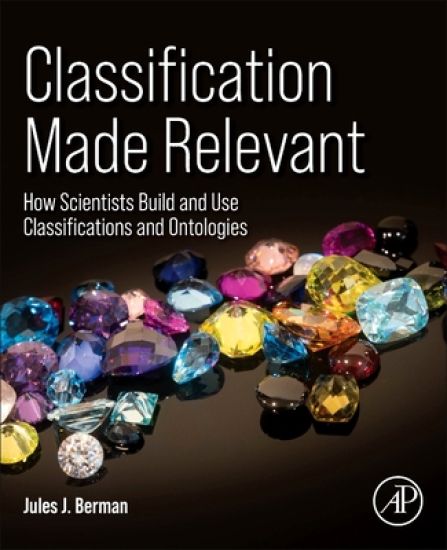
Classification Made Relevant

Classification Made Relevant

Jules J. Berman

ELSEVIER SCIENCE TECHNOLOGY
2022
nidottu
Classification Made Relevant: How Scientists Build and Use Classifications and Ontologies explains how classifications and ontologies are designed and used to analyze scientific information. The book presents the fundamentals of classification, leading up to a description of how computer scientists use object-oriented programming languages to model classifications and ontologies. Numerous examples are chosen from the Classification of Life, the Periodic Table of the Elements, and the symmetry relationships contained within the Classification Theorem of Finite Simple Groups. When these three classifications are tied together, they provide a relational hierarchy connecting all of the natural sciences. The book's chapters introduce and describe general concepts that can be understood by any intelligent reader. With each new concept, they follow practical examples selected from various scientific disciplines. In these cases, technical points and specialized vocabulary are linked to glossary items where the item is clarified and expanded.
Logic and Critical Thinking in the Biomedical Sciences
All too often, individuals engaged in the biomedical sciences assume that numeric data must be left to the proper authorities (e.g., statisticians and data analysts) who are trained to apply sophisticated mathematical algorithms to sets of data. This is a terrible mistake. Individuals with keen observational skills, regardless of their mathematical training, are in the best position to draw correct inferences from their own data and to guide the subsequent implementation of robust, mathematical analyses. Volume 2 of Logic and Critical Thinking in the Biomedical Sciences provides readers with a repertoire of deductive non-mathematical methods that will help them draw useful inferences from their own data.Volumes 1 and 2 of Logic and Critical Thinking in the Biomedical Sciences are written for biomedical scientists and college-level students engaged in any of the life sciences, including bioinformatics and related data sciences.
Logic and Critical Thinking in the Biomedical Sciences
Science is not a collection of facts. Science is the process by which we draw inferences from facts. Volume I of Logic and Critical Thinking in the Biomedical Sciences invites readers to linger over a collection of common observations to see what inferences can be drawn, when one applies a bit of deductive logic. If we just think about what we observe, it is often possible to discover profound biomedical insights.Volumes 1 and 2 of Logic and Critical Thinking in the Biomedical Sciences are written for biomedical scientists and college-level students engaged in any of the life sciences, including bioinformatics and related data sciences.
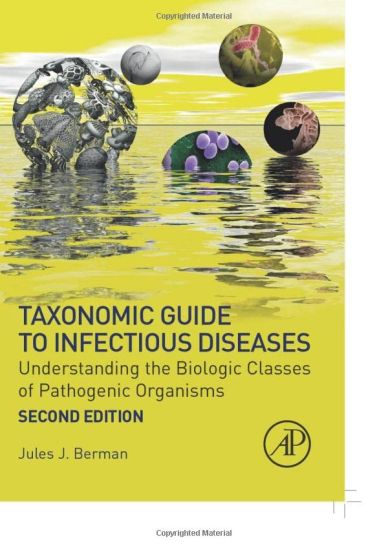
Taxonomic Guide to Infectious Diseases

Taxonomic Guide to Infectious Diseases

Jules J. Berman

Academic Press Inc
2019
nidottu
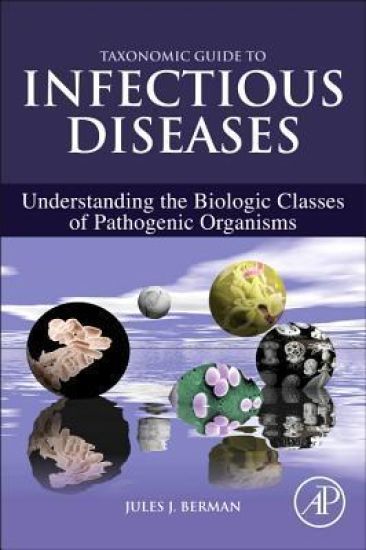
Taxonomic Guide to Infectious Diseases: Understanding the Biologic Classes of Pathogenic Organisms, Second Edition tackles the complexity of clinical microbiology by assigning every infectious organism to one of 40+ taxonomic classes and providing a description of the defining traits that apply to all the organisms within each class. This edition is an updated, revised and greatly expanded guide to the classes of organisms that infect humans. This book will provide students and clinicians alike with a simplified way to understand the complex fields of clinical microbiology and parasitology.
Evolution's Clinical Guidebook

Evolution's Clinical Guidebook

Jules J. Berman

Academic Press Inc
2019
nidottu
Evolution's Clinical Guidebook: Translating Ancient Genes into Precision Medicine demonstrates, through well-documented examples, how an understanding of the phylogenetic ancestry of humans allows us to make sense out of the flood of genetic data streaming from modern laboratories and how it can lead us to new ways to prevent, diagnose and treat diseases. Topics cover evolution and human genome, meiosis and other recombinants events, embryology, speciation, phylogeny, rare and common diseases, and the evolution of aging. This book is a valuable source for bioinformaticians and those in the biomedical field who need knowledge, down to gene level, to fully comprehend currently available data.
Methods in Medical Informatics

Methods in Medical Informatics

Jules J. Berman

CRC Press
2018
nidottu
Too often, healthcare workers are led to believe that medical informatics is a complex field that can only be mastered by teams of professional programmers. This is simply not the case. With just a few dozen simple algorithms, easily implemented with open source programming languages, you can fully utilize the medical information contained in clinical and research datasets. The common computational tasks of medical informatics are accessible to anyone willing to learn the basics.Methods in Medical Informatics: Fundamentals of Healthcare Programming in Perl, Python, and Ruby demonstrates that biomedical professionals with fundamental programming knowledge can master any kind of data collection. Providing you with access to data, nomenclatures, and programming scripts and languages that are all free and publicly available, this book — Describes the structure of data sources used, with instructions for downloading Includes a clearly written explanation of each algorithmOffers equivalent scripts in Perl, Python, and Ruby, for each algorithmShows how to write short, quickly learned scripts, using a minimal selection of commands Teaches basic informatics methods for retrieving, organizing, merging, and analyzing data sourcesProvides case studies that detail the kinds of questions that biomedical scientists can ask and answer with public data and an open source programming languageRequiring no more than a working knowledge of Perl, Python, or Ruby, Methods in Medical Informatics will have you writing powerful programs in just a few minutes. Within its chapters, you will find descriptions of the basic methods and implementations needed to complete many of the projects you will encounter in your biomedical career.
Principles and Practice of Big Data

Principles and Practice of Big Data

Jules J. Berman

Academic Press Inc
2018
nidottu
Principles and Practice of Big Data: Preparing, Sharing, and Analyzing Complex Information, Second Edition updates and expands on the first edition, bringing a set of techniques and algorithms that are tailored to Big Data projects. The book stresses the point that most data analyses conducted on large, complex data sets can be achieved without the use of specialized suites of software (e.g., Hadoop), and without expensive hardware (e.g., supercomputers). The core of every algorithm described in the book can be implemented in a few lines of code using just about any popular programming language (Python snippets are provided). Through the use of new multiple examples, this edition demonstrates that if we understand our data, and if we know how to ask the right questions, we can learn a great deal from large and complex data collections. The book will assist students and professionals from all scientific backgrounds who are interested in stepping outside the traditional boundaries of their chosen academic disciplines.
Precision Medicine and the Reinvention of Human Disease
Despite what you may have read in the popular press and in social media, Precision Medicine is not devoted to finding unique treatments for individuals, based on analyzing their DNA. To the contrary, the goal of Precision Medicine is to find general treatments that are highly effective for large numbers of individuals who fall into precisely diagnosed groups. We now know that every disease develops over time, through a sequence of defined biological steps, and that these steps may differ among individuals, based on genetic and environmental conditions. We are currently developing rational therapies and preventive measures, based on our precise understanding of the steps leading to the clinical expression of diseases. Precision Medicine and the Reinvention of Human Disease explains the scientific breakthroughs that have changed the way that we understand diseases, and reveals how medical scientists are using this new knowledge to launch a medical revolution.
Data Simplification

Data Simplification

Jules J. Berman

Morgan Kaufmann Publishers In
2016
nidottu
Data Simplification: Taming Information With Open Source Tools addresses the simple fact that modern data is too big and complex to analyze in its native form. Data simplification is the process whereby large and complex data is rendered usable. Complex data must be simplified before it can be analyzed, but the process of data simplification is anything but simple, requiring a specialized set of skills and tools. This book provides data scientists from every scientific discipline with the methods and tools to simplify their data for immediate analysis or long-term storage in a form that can be readily repurposed or integrated with other data. Drawing upon years of practical experience, and using numerous examples and use cases, Jules Berman discusses the principles, methods, and tools that must be studied and mastered to achieve data simplification, open source tools, free utilities and snippets of code that can be reused and repurposed to simplify data, natural language processing and machine translation as a tool to simplify data, and data summarization and visualization and the role they play in making data useful for the end user.
Repurposing Legacy Data

Repurposing Legacy Data

Jules J. Berman

Elsevier Science Publishing Co Inc
2015
nidottu
Repurposing Legacy Data: Innovative Case Studies takes a look at how data scientists have re-purposed legacy data, whether their own, or legacy data that has been donated to the public domain. Most of the data stored worldwide is legacy data—data created some time in the past, for a particular purpose, and left in obsolete formats. As with keepsakes in an attic, we retain this information thinking it may have value in the future, though we have no current use for it. The case studies in this book, from such diverse fields as cosmology, quantum physics, high-energy physics, microbiology, psychiatry, medicine, and hospital administration, all serve to demonstrate how innovative people draw value from legacy data. By following the case examples, readers will learn how legacy data is restored, merged, and analyzed for purposes that were never imagined by the original data creators.
Rare Diseases and Orphan Drugs

Rare Diseases and Orphan Drugs

Jules J. Berman

Academic Press Inc
2014
sidottu
Rare Diseases and Orphan Drugs shows that much of what we now know about common diseases has been achieved by studying rare diseases. It proposes that future advances in the prevention, diagnosis, and treatment of common diseases will come as a consequence of our accelerating progress in the field of rare diseases. Understanding the complex steps in the development of common diseases, such as cancer, cardiovascular disease, and metabolic diseases, has proven a difficult problem. Rare diseases, however, are often caused by aberrations of a single gene. In rare diseases, we may study how specific genetic defects can trigger a series of events that lead to the expression of a particular disease. Often, the disease process manifested in a certain rare disease is strikingly similar to the disease process observed in a common disease. This work ties the lessons learned about rare diseases to our understanding of common ones. Chapters covering the number of common diseases are minimized, while rare diseases are introduced as single diseases or as members of diseases classes. After reading this book, readers will appreciate how further research into the rare diseases may lead to new methods for preventing, diagnosing, and treating all diseases, rare or common.
Principles of Big Data

Principles of Big Data

Jules J. Berman

Morgan Kaufmann Publishers In
2013
nidottu
Principles of Big Data helps readers avoid the common mistakes that endanger all Big Data projects. By stressing simple, fundamental concepts, this book teaches readers how to organize large volumes of complex data, and how to achieve data permanence when the content of the data is constantly changing. General methods for data verification and validation, as specifically applied to Big Data resources, are stressed throughout the book. The book demonstrates how adept analysts can find relationships among data objects held in disparate Big Data resources, when the data objects are endowed with semantic support (i.e., organized in classes of uniquely identified data objects). Readers will learn how their data can be integrated with data from other resources, and how the data extracted from Big Data resources can be used for purposes beyond those imagined by the data creators.
Taxonomic Guide to Infectious Diseases

Taxonomic Guide to Infectious Diseases

Jules J. Berman

Academic Press Inc
2012
sidottu
In the past few decades, there have been great advances in the phylogenetic classification of infectious diseases of man. Taxonomic Guide to Infectious Diseases organizes this information into a standard biological classification and provides a short, clinically-oriented description of every genus (class) of infectious organism. It covers an overview of modern taxonomy, including a description of the kingdoms of life and the evolutionary principles underlying the class hierarchy, and each following chapter will describe one phylum and the genera that contain infectious species. Taxonomic Guide to Infectious Diseases is written in an engaging, narrative style, providing the reader with an easy to digest yet clinically-oriented story of the pathogenic features of each genus. Designed for researchers, clinicians and students of infectious diseases, medical microbiology and pathology.
Methods in Medical Informatics

Methods in Medical Informatics

Jules J. Berman

Taylor Francis Inc
2010
sidottu
Too often, healthcare workers are led to believe that medical informatics is a complex field that can only be mastered by teams of professional programmers. This is simply not the case. With just a few dozen simple algorithms, easily implemented with open source programming languages, you can fully utilize the medical information contained in clinical and research datasets. The common computational tasks of medical informatics are accessible to anyone willing to learn the basics.Methods in Medical Informatics: Fundamentals of Healthcare Programming in Perl, Python, and Ruby demonstrates that biomedical professionals with fundamental programming knowledge can master any kind of data collection. Providing you with access to data, nomenclatures, and programming scripts and languages that are all free and publicly available, this book — Describes the structure of data sources used, with instructions for downloading Includes a clearly written explanation of each algorithmOffers equivalent scripts in Perl, Python, and Ruby, for each algorithmShows how to write short, quickly learned scripts, using a minimal selection of commands Teaches basic informatics methods for retrieving, organizing, merging, and analyzing data sourcesProvides case studies that detail the kinds of questions that biomedical scientists can ask and answer with public data and an open source programming languageRequiring no more than a working knowledge of Perl, Python, or Ruby, Methods in Medical Informatics will have you writing powerful programs in just a few minutes. Within its chapters, you will find descriptions of the basic methods and implementations needed to complete many of the projects you will encounter in your biomedical career.
Precancer: The Beginning And The End Of Cancer

Precancer: The Beginning And The End Of Cancer

Jules J. Berman

Jones and Bartlett Publishers, Inc
2009
nidottu
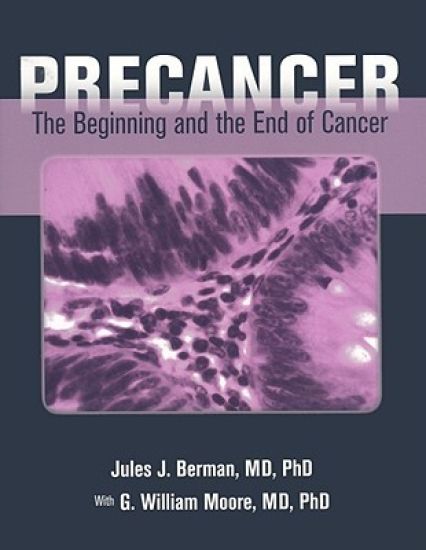
Nearly every type of cancer passes through a precancer phase, during which it cannot metastasize or invade other tissues. While medicine is not always successful in treating or curing advanced stages of cancers, recent advances in our understanding of carcinogenesis have helped us to develop strategies to prevent, diagnose, and treat many cancers at the precancer stage. Research in this field is escalating rapidly as the evidence increasingly shows that the number of annual cancer deaths could be drastically reduced through the effective treatment and cure of precancer lesions. This book begins by explaining why it has been so difficult to cure cancers, followed by a review of precancer biology, with descriptions of the most common precancer lesions. The final chapters provide practical socio-political and medical goals for precancer treatment, including discussions of the economics and politics of treating precancers.
Neoplasms: Principles Of Development And Diversity

Neoplasms: Principles Of Development And Diversity

Jules J. Berman

Jones and Bartlett Publishers, Inc
2008
nidottu
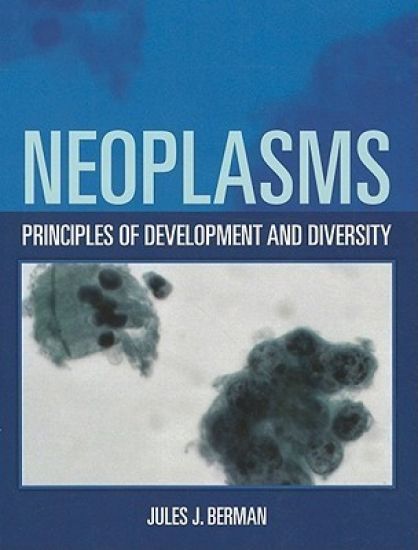
This unique text is devoted to the full range of neoplastic properties exhibited by the comprehensive collection of human neoplasms. Like no other book of it's kind, it approaches cancer biology by surveying the diversity of neoplasms and by building a classification of neoplasms based on an understanding of the cellular options for tumor development. By grouping neoplasms into a comprehensive classification, we can develop class-specific methods to prevent, detect, and treat cancers. The book is divided into three broad units: speciation, classification and eradication. In the process of developing a classification for neoplasms, dozens of the fundamental questions in neoplastic development are asked and answered. Neoplasms provides readers with a fascinating and enjoyable way to learn the otherwise arcane and dense subject of human tumor diversity.
Perl: The Programming Language

Perl: The Programming Language

Jules J. Berman

Jones and Bartlett Publishers, Inc
2008
nidottu
A perfect companion to Computer Science Illuminated or Concepts in Computing, as well as an excellent primer, Perl: The Programming Language offers a clear introduction to this practical language. Perl has been known to be the all-purpose tool in programming and system administration. This overview describes the fundamentals of this efficient open-source programming system. Beginning programmers will be relieved this dynamic language is not only easy to learn but easy to implement as well.