Kirjojen hintavertailu. Mukana 12 438 939 kirjaa ja 12 kauppaa.

Kirjailija

Juli L. Gittinger

Kirjat ja teokset yhdessä paikassa: 6 kirjaa, julkaisuja vuosilta 2018-2025, suosituimpien joukossa American Apocalyptic. Vertaile teosten hintoja ja tarkista saatavuus suomalaisista kirjakaupoista.

6 kirjaa

Kirjojen julkaisuhaarukka 2018-2025.

American Apocalyptic

American Apocalyptic

Juli L. Gittinger

Springer International Publishing AG
2025
nidottu
In this book, Juli Gittinger argues that America's fascination (obsession?) with the apocalypse is a synthesis of religion, popular culture, and politics in a way that is particular to the US and consonant with mythological-historical narratives of America. As a result, we can identify American apocalypticism as a sort of religion in itself that is closely tied to "civil religion," that has a worldview and rituals that create identifiable communities and connects American mythology to apocalyptic anxieties. Gittinger discusses how various cultures and groups form as a result of this obsession, and that these communities form their own rituals and responses in various forms of "prepping" or survivalist practices. She lays out an argument for a broad eschatology prevalent in the US that extends beyond traditional religious designations to form an apocalyptic worldview that is built into our narrative as a country, as well as furthered by popular culture and media's contributionto apocalyptic anxieties. Subsequently, Gittinger uses case studies of apocalyptic events--current or speculative--that reveal how our anxieties about the end of the world (as we know it) inform our culture, as well as religious narratives that emerge from such crises.
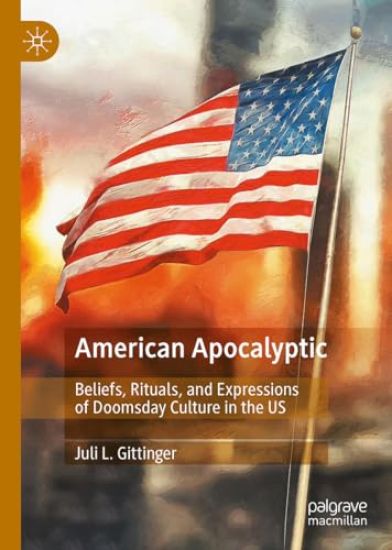
American Apocalyptic

American Apocalyptic

Juli L. Gittinger

Springer International Publishing AG
2024
sidottu
In this book, Juli Gittinger argues that America’s fascination (obsession?) with the apocalypse is a synthesis of religion, popular culture, and politics in a way that is particular to the US and consonant with mythological-historical narratives of America. As a result, we can identify American apocalypticism as a sort of religion in itself that is closely tied to “civil religion,” that has a worldview and rituals that create identifiable communities and connects American mythology to apocalyptic anxieties. Gittinger discusses how various cultures and groups form as a result of this obsession, and that these communities form their own rituals and responses in various forms of “prepping” or survivalist practices. She lays out an argument for a broad eschatology prevalent in the US that extends beyond traditional religious designations to form an apocalyptic worldview that is built into our narrative as a country, as well as furthered by popular culture and media’s contributionto apocalyptic anxieties. Subsequently, Gittinger uses case studies of apocalyptic events—current or speculative—that reveal how our anxieties about the end of the world (as we know it) inform our culture, as well as religious narratives that emerge from such crises.

Personhood in Science Fiction

Personhood in Science Fiction

Juli L. Gittinger

Springer Nature Switzerland AG
2020
nidottu
This book addresses the topic of personhood—who is a “person” or “human,” and what rights or dignities does that include—as it has been addressed through the lens of science fiction. Chapters include discussions of consciousness and the soul, artificial intelligence, dehumanization and othering, and free will. Classic and modern sci-fi texts are engaged, as well as film and television. This book argues that science fiction allows us to examine the profound question of personhood through its speculative and imaginative nature, highlighting issues that are already visible in our present world.
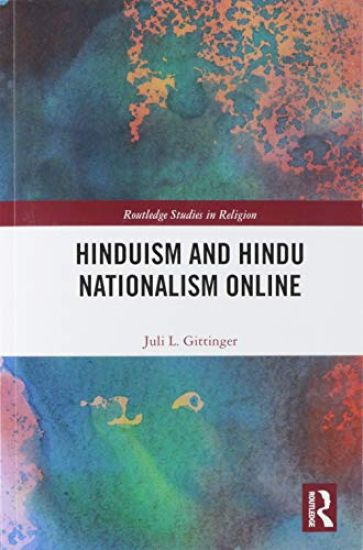
Hinduism and Hindu Nationalism Online

Hinduism and Hindu Nationalism Online

Juli L. Gittinger

Routledge
2020
nidottu
The way people encounter ideas of Hinduism online is often shaped by global discourses of religion, pervasive Orientalism and (post)colonial scholarship. This book addresses a gap in the scholarly debate around defining Hinduism by demonstrating the role of online discourses in generating and projecting images of Hindu religion and culture. This study surveys a wide range of propaganda, websites and social media in which definitions of Hinduism are debated. In particular, it focuses on the role of Hindu nationalism in the presentation and management of Hinduism in the electronic public sphere. Hindu nationalist parties and individuals are highly invested in discussions and presentations of Hinduism online, and actively shape discourses through a variety of strategies. Analysing Hindu nationalist propaganda, cyber activist movements and social media presence, as well as exploring methodological strategies that are useful to the field of religion and media in general, the book concludes by showing how these discourses function in the wider Hindu diaspora. Building on religion and media research by highlighting mechanical and hermeneutic issues of the Internet and how it affects how we encounter Hinduism online, this book will be of significant interest to scholars of religious studies, Hindu studies and digital media.
Personhood in Science Fiction

Personhood in Science Fiction

Juli L. Gittinger

Springer Nature Switzerland AG
2019
sidottu
This book addresses the topic of personhood—who is a “person” or “human,” and what rights or dignities does that include—as it has been addressed through the lens of science fiction. Chapters include discussions of consciousness and the soul, artificial intelligence, dehumanization and othering, and free will. Classic and modern sci-fi texts are engaged, as well as film and television. This book argues that science fiction allows us to examine the profound question of personhood through its speculative and imaginative nature, highlighting issues that are already visible in our present world.
Hinduism and Hindu Nationalism Online

Hinduism and Hindu Nationalism Online

Juli L. Gittinger

Routledge
2018
sidottu
The way people encounter ideas of Hinduism online is often shaped by global discourses of religion, pervasive Orientalism and (post)colonial scholarship. This book addresses a gap in the scholarly debate around defining Hinduism by demonstrating the role of online discourses in generating and projecting images of Hindu religion and culture. This study surveys a wide range of propaganda, websites and social media in which definitions of Hinduism are debated. In particular, it focuses on the role of Hindu nationalism in the presentation and management of Hinduism in the electronic public sphere. Hindu nationalist parties and individuals are highly invested in discussions and presentations of Hinduism online, and actively shape discourses through a variety of strategies. Analysing Hindu nationalist propaganda, cyber activist movements and social media presence, as well as exploring methodological strategies that are useful to the field of religion and media in general, the book concludes by showing how these discourses function in the wider Hindu diaspora. Building on religion and media research by highlighting mechanical and hermeneutic issues of the Internet and how it affects how we encounter Hinduism online, this book will be of significant interest to scholars of religious studies, Hindu studies and digital media.