Kirjojen hintavertailu. Mukana 12 390 323 kirjaa ja 12 kauppaa.

Kirjailija

Julia Bryan-Wilson

Kirjat ja teokset yhdessä paikassa: 9 kirjaa, julkaisuja vuosilta 2011-2025, suosituimpien joukossa Liza Lou. Vertaile teosten hintoja ja tarkista saatavuus suomalaisista kirjakaupoista.

Mukana myös kirjoitusasut: Julia Bryan Wilson

9 kirjaa

Kirjojen julkaisuhaarukka 2011-2025.

Liza Lou

Liza Lou

Julia Bryan Wilson; Cathleen Chaffee

RIZZOLI INTERNATIONAL PUBLICATIONS
2022
sidottu
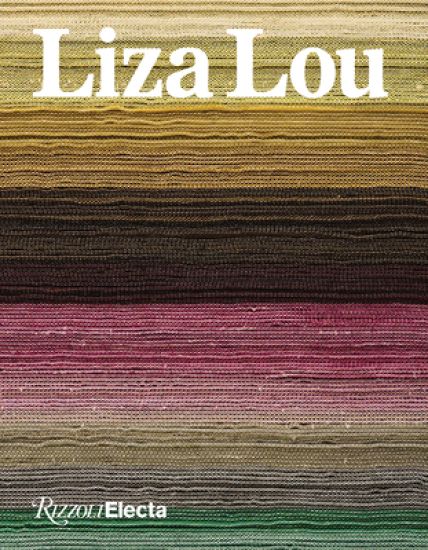
Liza Lou first gained attention in 1996 when her room-sized sculpture Kitchen was shown at the New Museum in New York. Representing five years of individual labour, this groundbreaking work subverted standards of art by introducing glass beads as a fine art material. The project blurred the rigid boundary between fine art and craft, and established Lou s long-standing exploration of materiality, process, and beauty. Working within a craft metier has led the artist to work in a variety of socially engaged settings, from community groups in Los Angeles, to a collective she founded in Durban, South Africa in 2005, to a women s prison in Belm, Brazil, and a bead embroidery collective in Mumbai, India. Over the past 15 years, Lou has focused on a poetic approach to abstraction as a way to highlight the process under-lying her work. In this comprehensive volume that considers the entirety of her singular vision, curators, art historians, and artists offer important perspectives on the breadth of her work.
Sharon Hayes

Sharon Hayes

Julia Bryan-Wilson; Jeannine Tang; Lanka Tattersall

Phaidon Press Ltd
2018
nidottu
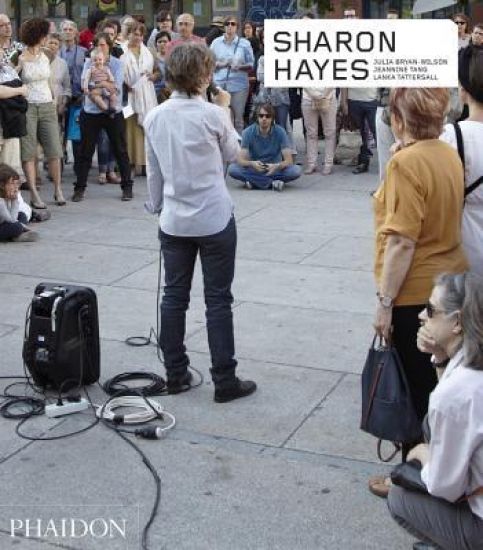
The first comprehensive publication to capture Hayes's unique blend of performance and social engagement which has been at the forefront of questions of feminist history, queer time, and protest culture for over a decade American artist Sharon Hayes uses photography, film, video, sound, performance, and text to interrogate the intersections between the personal and collective sphere. Her deeply affective and queer approach to history and politics draws particular attention to the language of twentieth-century activism as well as drama, anthropology, and journalism. This book is the first to feature all of Hayes's most significant projects, from the ten-hour performance My Fellow American 1981-1988 to her Monument Lab addressing the absence of monuments to women in Philadelphia. A professor of fine art at the University of Pennsylvania, Hayes’s work has been shown at the 2010 Whitney Biennial, Documenta 12 in Kassel, and the 55th Venice Biennale, as well as in the most prestigious museums around the world. Her re-examination of protest, speech, and history is one of the most powerful reflections of the complexity and the urgency of our times.
Art in the Making

Art in the Making

Glenn Adamson; Julia Bryan-Wilson

Thames Hudson Ltd
2016
sidottu
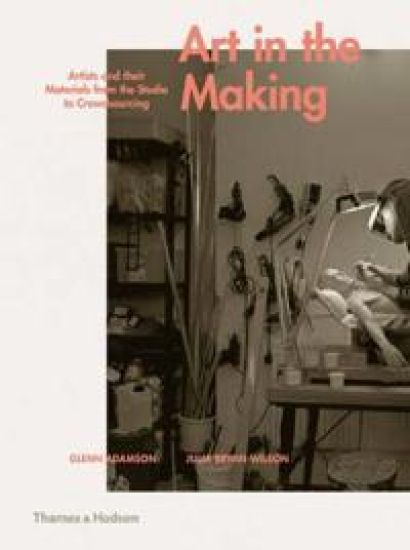
Today’s artists have an unprecedented level of choice with regard to materials and methods available to them, yet the processes involved in making artworks are rarely addressed in books or exhibitions on art. Here, Glenn Adamson and Julia Bryan-Wilson argue that the materials and methods used to make artworks hold the key to artists’ motivations, their attitudes to authorship, uniqueness and the value of objects, the economic and social contexts from which they emerge, and their approach to the perceived opposition between materiality and conceptualism in art. The book’s introduction sets out a history of trends in artistic production and the possible catalysts for the proliferation of production strategies since the mid-twentieth century, followed by nine chapters that explore different methods and media. Detailed examples are interwoven with the discussion, including visuals that reveal the intricacies of each technique or material and its overall effect when presented as an artwork. Artists featured include Ai Weiwei, Ron Arad, Chris Burden, Katharina Fritsch, Isa Genzken, Jeff Koons, Los Carpinteros, Haroon Mirza, Takashi Murakami, Gerhard Richter, Doris Salcedo and Santiago Sierra
Liz Collins

Liz Collins

Glenn Adamson; Julia Bryan-Wilson

HIRMER VERLAG
2025
nidottu
This groundbreaking volume positions Liz Collins as a singular figure who not only synthesises fine art, craft and fashion and textile design, but also advocates fiercely for queer and feminist politics. Collins is a queer feminist artist known for her radical deployment of fibre, her activism around labour and gender politics, and her exploration of the borderlands between art, design and craft. Motherlode assembles her work from the late 1990s to the present day, introducing needlework, drawings and including documentation and large-scale sculpture. Contributors survey her life and career, address her unique relationship to craft and labour, and celebrate vital resonances in her work.
At pynte på Madalenas tråde

At pynte på Madalenas tråde

Julia Bryan-Wilson

-
2024
nidottu
Den queerfeministiske kunsthistoriker Julia Bryan-Wilsons essay At pynte på Madalenas tråde taler ind i samtidskunstens store engagement i tekstile praksisser. Med udgangspunkt i den brasilianske broderi- og multikunstner Madalena Santos Reinbolt spørger essayet kritisk til tekstilkunstnens nylige inklusion i kunstens hvide kube, hvorved dens relation til vigtige globale traditioner, omsorgspraksisser og kollektivt arbejde kan gå tabt.
Louise Nevelson's Sculpture

Louise Nevelson's Sculpture

Julia Bryan-Wilson

YALE UNIVERSITY PRESS
2023
nidottu
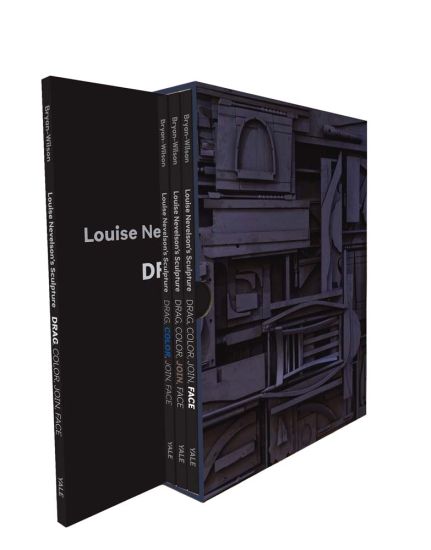
A daring reassessment of Louise Nevelson, an icon of twentieth-century art whose innovative procedures relate to gendered, classed, and racialized forms of making “Here is a book that is not only a transformative study of a single artist but also a record of the scholar’s own labor—and her devotion.”—Artforum In this radical rethinking of the art of Louise Nevelson (1899–1988), Julia Bryan-Wilson provides a long-overdue critical account of a signature figure in postwar sculpture. A Ukraine-born Jewish immigrant, Nevelson persevered in the male-dominated New York art world. Nonetheless, her careful procedures of construction—in which she assembled found pieces of wood into elaborate structures, usually painted black—have been little studied. Organized around a series of key operations in Nevelson’s own process (dragging, coloring, joining, and facing), the book comprises four slipcased, individually bound volumes that can be read in any order. Both form and content thus echo Nevelson’s own modular sculptures, the gridded boxes of which the artist herself rearranged. Exploring how Nevelson’s making relates to domesticity, racialized matter, gendered labor, and the environment, Bryan-Wilson offers a sustained examination of the social and political implications of Nevelson’s art. The author also approaches Nevelson’s sculptures from her own embodied subjectivity as a queer feminist scholar. She forges an expansive art history that places Nevelson’s assemblages in dialogue with a wide array of marginalized worldmaking and underlines the artist’s proclamation of allegiance to blackness.
Flags of Freedom

Flags of Freedom

Mette Winckelmann; Julia Bryan-Wilson; Milena Høgsberg; Jérôme Sans

-
2021
nidottu
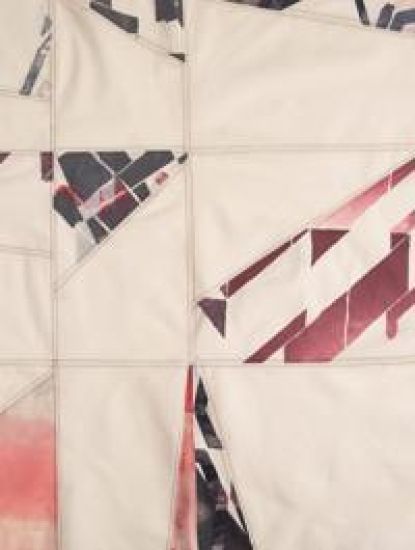
‘Flags of Freedom’ er på én gang et katalog og et bogværk. Det er vokset ud af Mette Winckelmanns (f.1971) soloprojekt med samme navn, der blev vist på Le Bicolore og derefter på Munkeruphus. Udstillingerne og Winckelmanns kunstneriske praksis belyses gennem en samtale mellem kunstneren og kurator Jérôme Sans og ledsages af essays af kunsthistoriker og queerteoretiker Julia Bryan-Wilson samt kurator Milena Høgsberg. At være i en proces og forholde sig kritisk til både sin egen kontekst og perspektiv er en af grundpillerne i ‘Flags of Freedom’. Bogen afspejler Winckelmanns praksis og viser hvordan Mette Winckelmann med sin kunst skubber til formgivningsprincipper, konventioner og teknikker inden for materialebrug, som et billede på den virkelighed og realitet, man som krop og identitet forhandler med sin omverden. I det kunstneriske råderum nyfortolkes emner som frihed og diversitet, der både forholder sig til og sprænger genrer og kategorier.Mette Winckelmann (f. 1971) er uddannet fra Det Kgl. Danske Kunstakademi i 2003 og har bl.a. udstillet på Moderna Museet i Malmø, Sorø Kunstmuseum, Aros og Nosbaum & Reading Art Contemporain i Luxembourg, samt lavet udsmykninger i det offentlige rum til bl.a. Viborg Kunsthal. Winckelmann er desuden repræsenteret på Statens Museum for Kunst i København og repræsenteret i ‘Vitamin P, New Perspectives in Painting’ (Phaidon, okt. 2016). Hun var i 2013 blandt de nominerede til den prestigefyldte Carnegie Art Award og modtog i 2019 Statens Kunstfonds 3-årige arbejdslegat.
Fray

Fray

Julia Bryan-Wilson

University of Chicago Press
2017
sidottu
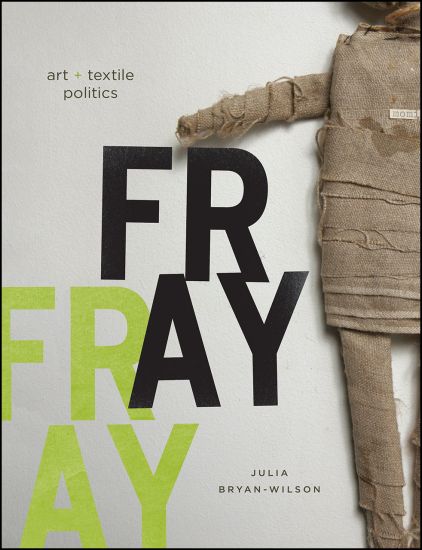
In 1974, women in a feminist consciousness-raising group in Eugene, Oregon, formed a mock organization called the Ladies Sewing Circle and Terrorist Society. Emblazoning its logo onto t-shirts, the group wryly envisioned female collective textile making as a practice that could upend conventions, threaten state structures, and wreak political havoc. Elaborating on this example as a prehistory to the more recent phenomenon of "craftivism" the politics and social practices associated with handmaking Fray explores textiles and their role at the forefront of debates about process, materiality, gender, and race in times of economic upheaval. Closely examining how amateurs and fine artists in the United States and Chile turned to sewing, braiding, knotting, and quilting amid the rise of global manufacturing, Julia Bryan-Wilson argues that textiles unravel the high/low divide and urges us to think flexibly about what the politics of textiles might be. Her case studies from the 1970s through the 1990s including the improvised costumes of the theater troupe the Cockettes, the braided rag rugs of US artist Harmony Hammond, the thread-based sculptures of Chilean artist Cecilia Vicuna, the small hand-sewn tapestries depicting Pinochet's torture, and the NAMES Project AIDS Memorial Quilt are often taken as evidence of the inherently progressive nature of handcrafted textiles. Fray, however, shows that such methods are recruited to often ambivalent ends, leaving textiles very much "in the fray" of debates about feminized labor, protest cultures, and queer identities; the malleability of cloth and fiber means that textiles can be activated, or stretched, in many ideological directions. The first contemporary art history book to discuss both fine art and amateur registers of handmaking at such an expansive scale, Fray unveils crucial insights into how textiles inhabit the broad space between artistic and political poles high and low, untrained and highly skilled, conformist and disobedient, craft and art.
Art Workers

Art Workers

Julia Bryan-Wilson

University of California Press
2011
pokkari
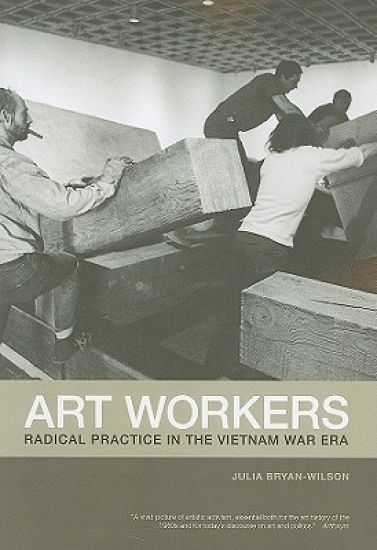
During the late 1960s and early 1970s, in response to the political turbulence generated by the Vietnam War, an important group of American artists and critics sought to expand the definition of creative labor by identifying themselves as 'art workers'. In the first book to examine this movement, Julia Bryan-Wilson shows how a polemical redefinition of artistic labor played a central role in minimalism, process art, feminist criticism, and conceptualism. In her close examination of four seminal figures of the period - American artists Carl Andre, Robert Morris, and Hans Haacke, and art critic Lucy Lippard - Bryan-Wilson frames an engrossing new argument around the double entendre that 'art works'. She traces the divergent ways in which these four artists and writers rallied around the 'art worker' identity, including participating in the Art Workers' Coalition - a short-lived organization founded in 1969 to protest the war and agitate for artists' rights - and the New York Art Strike. By connecting social art history and theories of labor, this book illuminates the artworks and protest actions that were central to this pivotal era in both American art and politics. This is a Best Book of 2009, "Artforum Magazine".