Kirjojen hintavertailu. Mukana 12 152 606 kirjaa ja 12 kauppaa.

Kirjailija

Julia Gallagher

Kirjat ja teokset yhdessä paikassa: 6 kirjaa, julkaisuja vuosilta 2011-2020, suosituimpien joukossa Why Mugabe Won. Vertaile teosten hintoja ja tarkista saatavuus suomalaisista kirjakaupoista.

6 kirjaa

Kirjojen julkaisuhaarukka 2011-2020.

Why Mugabe Won

Why Mugabe Won

Stephen Chan; Julia Gallagher

Cambridge University Press
2020
pokkari
The 2013 general elections in Zimbabwe were widely expected to mark a shift in the nation's political system, and a greater role for the opposition Movement for Democratic Change (MDC), led by Prime Minister Morgan Tsvangirai. However, the results, surprisingly, were overwhelmingly in favour of long-time President Robert Mugabe, who swept the presidential, parliamentary and senatorial polls under relatively credible and peaceful conditions. In this book, a valuable and accessible read for both students and scholars working in African politics, and those with a general interest in the politics of the region, Stephen Chan and Julia Gallagher explore the domestic and international context of these landmark elections. Drawing on extensive research among political elites, grassroots activists and ordinary voters, Chan and Gallagher examine the key personalities, dramatic events, and broader social and political context of Mugabe's success, and what this means as Zimbabwe moves towards a future without Mugabe.
Zimbabwe's International Relations

Zimbabwe's International Relations

Julia Gallagher

Cambridge University Press
2020
pokkari
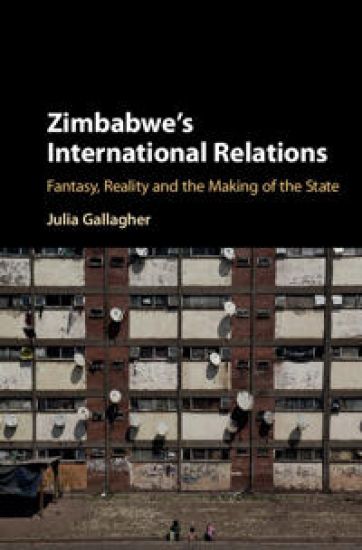
Zimbabwe is a state that has undergone significant ruptures in its domestic and international politics in recent years. This book explores how Zimbabwean citizens have, under difficult circumstances, reconstructed ideas of their state by imagining the wider world. Unlike other work on international relations, which tends to focus on the state level, this book is based on the accounts of ordinary people. Drawing on interviews with more than two hundred Zimbabweans, collected over three years, Gallagher explores how citizens draw on emotional responses to the international to find and construct different 'others'. While this unique and compelling read will appeal to those researching Zimbabwe, Gallagher's wider conclusions will interest those studying and advancing the broader theoretical debates of international relations.
Zimbabwe's International Relations

Zimbabwe's International Relations

Julia Gallagher

Cambridge University Press
2017
sidottu
Zimbabwe is a state that has undergone significant ruptures in its domestic and international politics in recent years. This book explores how Zimbabwean citizens have, under difficult circumstances, reconstructed ideas of their state by imagining the wider world. Unlike other work on international relations, which tends to focus on the state level, this book is based on the accounts of ordinary people. Drawing on interviews with more than two hundred Zimbabweans, collected over three years, Gallagher explores how citizens draw on emotional responses to the international to find and construct different 'others'. While this unique and compelling read will appeal to those researching Zimbabwe, Gallagher's wider conclusions will interest those studying and advancing the broader theoretical debates of international relations.
Why Mugabe Won

Why Mugabe Won

Stephen Chan; Julia Gallagher

Cambridge University Press
2017
sidottu
The 2013 general elections in Zimbabwe were widely expected to mark a shift in the nation's political system, and a greater role for the opposition Movement for Democratic Change (MDC), led by Prime Minister Morgan Tsvangirai. However, the results, surprisingly, were overwhelmingly in favour of long-time President Robert Mugabe, who swept the presidential, parliamentary and senatorial polls under relatively credible and peaceful conditions. In this book, a valuable and accessible read for both students and scholars working in African politics, and those with a general interest in the politics of the region, Stephen Chan and Julia Gallagher explore the domestic and international context of these landmark elections. Drawing on extensive research among political elites, grassroots activists and ordinary voters, Chan and Gallagher examine the key personalities, dramatic events, and broader social and political context of Mugabe's success, and what this means as Zimbabwe moves towards a future without Mugabe.
Britain and Africa Under Blair

Britain and Africa Under Blair

Julia Gallagher

Manchester University Press
2013
nidottu
Africa was a key focus of Britain’s foreign policy under Tony Blair. Military intervention in Sierra Leone, increases in aid and debt relief, and grand initiatives such as the Commission for Africa established the continent as a place in which Britain could ‘do good’.Britain and Africa under Blair: in pursuit of the good state critically explores Britain’s fascination with Africa. It argues that, under New Labour, Africa represented an area of policy that appeared to transcend politics. Gradually, it came to embody an ideal state activity around which politicians, officials and the wider public could coalesce, leaving behind more contentious domestic and international issues.Building on the story of Britain and Africa under Blair, the book, now available in paperback, draws wider conclusions about the role of ‘good’ and idealism in foreign policy. In particular, it discusses how international relationships provide opportunities to create and pursue ideals, and why they are essential for the well-being of political communities. It argues that state actors project the idea of ‘good’ onto idealised, distant objects, in order to restore a sense of the ‘good state’.The book makes a distinctive and original contribution to debates about the role of ethics in international relations, and will be of particular interest to academics, policy-makers and students of international relations, Africa and British foreign policy, as well as anyone interested in ethics in international affairs.
Britain and Africa Under Blair

Britain and Africa Under Blair

Julia Gallagher

Manchester University Press
2011
sidottu
Africa was a key focus of Britain’s foreign policy under Tony Blair. Military intervention in Sierra Leone, increases in aid and debt relief, and grand initiatives such as the Commission for Africa established the continent as a place in which Britain could ‘do good’.Britain and Africa under Blair: in pursuit of the good state critically explores Britain’s fascination with Africa. It argues that, under New Labour, Africa represented an area of policy that appeared to transcend politics. Gradually, it came to embody an ideal state activity around which politicians, officials and the wider public could coalesce, leaving behind more contentious domestic and international issues.Building on the story of Britain and Africa under Blair, the book draws wider conclusions about the role of ‘good’ and idealism in foreign policy. In particular, it discusses how international relationships provide opportunities to create and pursue ideals, and why they are essential for the wellbeing of political communities. It argues that state actors project the idea of ‘good’ onto idealised, distant objects, in order to restore a sense of the ‘good state’.The book makes a distinctive and original contribution to debates about the role of ethics in international relations and will be of particular interest to academics, policy-makers and students of international relations, Africa and British foreign policy, and to anyone interested in ethics in international affairs.