Kirjojen hintavertailu. Mukana 12 390 323 kirjaa ja 12 kauppaa.

Kirjailija

Julia M. H. Smith

Kirjat ja teokset yhdessä paikassa: 4 kirjaa, julkaisuja vuosilta 1992-2007, suosituimpien joukossa Europe after Rome. Vertaile teosten hintoja ja tarkista saatavuus suomalaisista kirjakaupoista.

4 kirjaa

Kirjojen julkaisuhaarukka 1992-2007.

Europe after Rome

Europe after Rome

Julia M. H. Smith

Oxford University Press
2007
nidottu
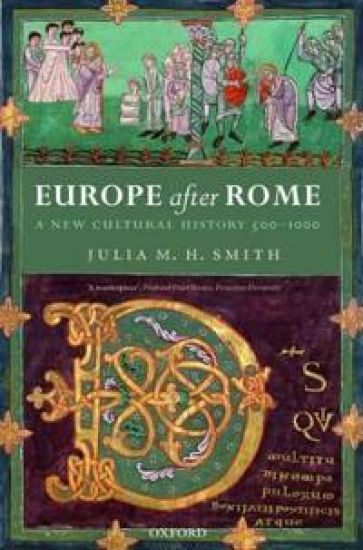
This is the first single-author study in over fifty years to offer an integrated appraisal of the early Middle Ages as a dynamic and formative period in European history. Written in an attractive and accessible style, it makes extensive use of original sources to introduce early medieval men and women at all levels of society from slave to emperor, and allows them to speak to the reader in their own words. It overturns traditional narratives and instead offers an entirely fresh approach to the centuries from c.500 to c.1000. Rejecting any notion of a dominant, uniform early medieval culture, it argues that the fundamental characteristic of the early middle ages is diversity of experience. To explain how the men and women who lived in this period ordered their world in cultural, social, and political terms, it employs an innovative methodology combining cultural history, regional studies, and gender history. Ranging comparatively from Ireland to Hungary and from Scotland and Scandinavia to Spain and Italy, the analysis highlights three themes: regional variation, power, and the legacy of Rome. The book's eight chapters examine the following subjects: Speaking and Writing; Living and Dying; Friends and Relations; Men and Women; Labour and Lordship; Getting and Giving; Kingship and Christianity; Rome and the Peoples of Europe. Collectively, they establish the complex cultural realities which distinguished Europe in the period between the end of the central institutions of the western Roman empire in the fifth century and the emergence of a Rome-centred papal monarchy from the late eleventh century onwards. In the context of debates about the social, religious and cultural meaning of 'Europe' in the early twenty-first century, this books seeks the origins of European cultural pluralism and diversity in the early Middle Ages.
Province and Empire

Province and Empire

Julia M. H. Smith

Cambridge University Press
2006
pokkari
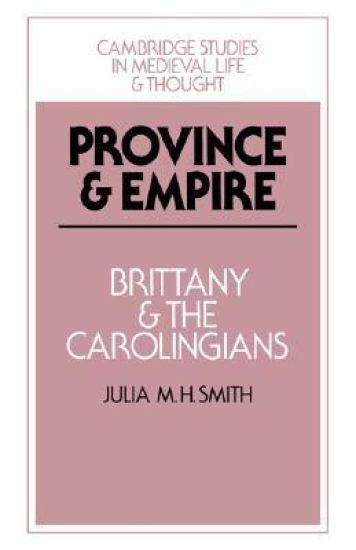
This book offers ideas about the processes of political and cultural change in the early Middle Ages. The main focus is on relations between the centre and periphery of the Carolingian empire, in particular on the development of Brittany as a territorial principality in the ninth and tenth centuries. A major theme is the interaction of Carolingian imperial policies, Frankish aristocratic feuding, and local Breton communities. Other issues discussed include economy and society in Brittany and Neustria, the impact of Carolingian imperialism on local Breton communities, changes in the political, ecclesiastical and social structures arising from Carolingian overlordship of Brittany, the interaction of Celtic and Carolingian culture, and the construction of an early medieval ethnic identity. The book shows how regional autonomy and self-regulating villages were as integral to the Carolingian world as court politics, cultural imperialism and frontier strife, and it argues that, in order to understand both the establishment and the collapse of the Carolingian empire, politics at the periphery demand as much attention as politics at the centre.
Europe after Rome

Europe after Rome

Julia M. H. Smith

Oxford University Press
2005
sidottu
This is the first single-author study in over fifty years to offer an integrated appraisal of the early Middle Ages as a dynamic and formative period in European history. Written in an attractive and accessible style, it makes extensive use of original sources to introduce early medieval men and women at all levels of society from slave to emperor, and allows them to speak to the reader in their own words. It overturns traditional narratives and instead offers an entirely fresh approach to the centuries from c.500 to c.1000. Rejecting any notion of a dominant, uniform early medieval culture, it argues that the fundamental characteristic of the early middle ages is diversity of experience. To explain how the men and women who lived in this period ordered their world in cultural, social, and political terms, it employs an innovative methodology combining cultural history, regional studies, and gender history. Ranging comparatively from Ireland to Hungary and from Scotland and Scandinavia to Spain and Italy, the analysis highlights three themes: regional variation, power, and the legacy of Rome. The book's eight chapters examine the following subjects: Speaking and Writing; Living and Dying; Friends and Relations; Men and Women; Labour and Lordship; Getting and Giving; Kingship and Christianity; Rome and the Peoples of Europe. Collectively, they establish the complex cultural realities which distinguished Europe in the period between the end of the central institutions of the western Roman empire in the fifth century and the emergence of a Rome-centred papal monarchy from the late eleventh century onwards. In the context of debates about the social, religious and cultural meaning of 'Europe' in the early twenty-first century, this books seeks the origins of European cultural pluralism and diversity in the early Middle Ages.
Province and Empire

Province and Empire

Julia M. H. Smith

Cambridge University Press
1992
sidottu
This book offers new thinking about the processes of political and cultural change in the early Middle Ages. The main focus is on relations between the centre and periphery of the Carolingian empire, in particular on the development of Brittany as a territorial principality in the ninth and tenth centuries. A major theme is the interaction of Carolingian imperial policies, Frankish aristocratic feuding, and local Breton communities. Other issues discussed include economy and society in Brittany and Neustria, the impact of Carolingian imperialism on local Breton communities, changes in the political, ecclesiastical, and social structures arising from Carolingian overlordship of Brittany, the interaction of Celtic and Carolingian culture, and the construction of an early medieval ethnic identity. The book shows how regional autonomy and self-regulating villages were as integral to the Carolingian world as court politics, cultural imperialism and frontier strife, and it argues that, in order to understand both the establishment and the collapse of the Carolingian empire, politics at the periphery demand as much attention as poltics at the centre.